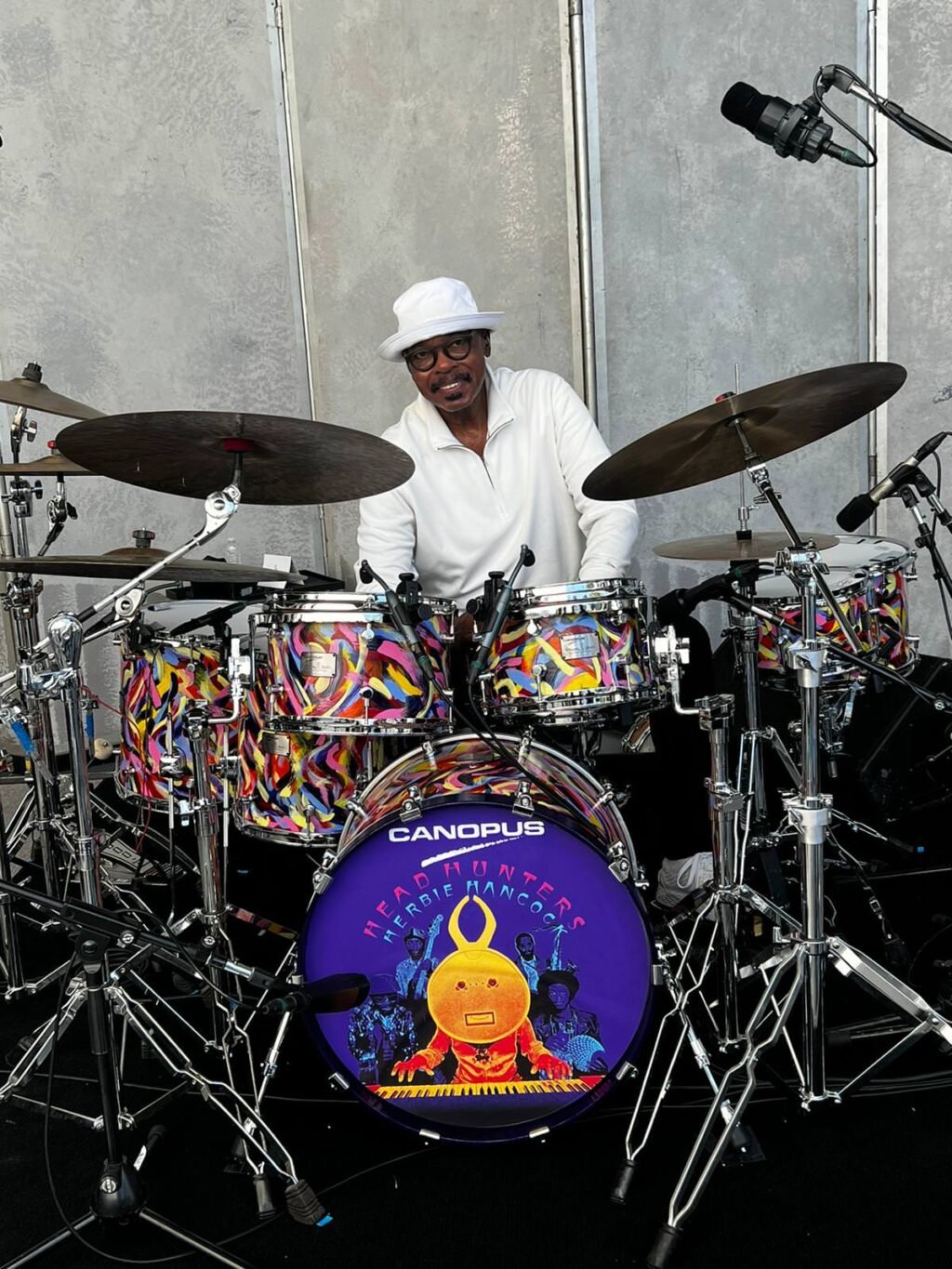
Harvey Mason Reshapes Jazz Education Today
Harvey Mason reshapes jazz education today by bridging the gap between legendary foundational performance and modern digital production, leveraging his decades as a master drummer, studio icon, and educator to train the next generation...
Harvey Mason reshapes jazz education today by bridging the gap between legendary foundational performance and modern digital production, leveraging his decades as a master drummer, studio icon, and educator to train the next generation of multi-genre musicians through mentorship, masterclasses, and curriculum innovation.
Contents
The Evolution of Jazz Pedagogy in the Modern Era
Jazz education has undergone a massive transformation over the past few decades. Moving away from rigid, strictly academic environments, modern jazz instruction requires a delicate balance of traditional swing, bebop language, and contemporary urban grooves like funk, fusion, and hip-hop. Historically, learning jazz meant sitting in dark clubs, transcribing dusty vinyl records by ear, and participating in localized jam sessions. While these foundational methods remain invaluable, today’s student must navigate a digitally integrated music industry where home production suites, click tracks, and cross-genre collaboration are standard requirements for professional survival.
Amidst this changing landscape, legendary drummer, producer, and composer Harvey Mason occupies a unique vantage point. As a founding member of the iconic jazz-fusion supergroup Fourplay and one of the most recorded studio drummers in music history—having performed with artists ranging from Herbie Hancock and George Benson to Michael Jackson and Barbra Streisand—Mason brings firsthand industry reality into educational spaces. Rather than treating jazz as a museum piece frozen in the mid-twentieth century, Mason approaches it as a living, breathing language that constantly absorbs contemporary rhythms and technological innovations.
Harvey Mason’s Pedagogical Framework and Core Philosophy
At the heart of Harvey Mason's approach to teaching is the concept of versatility and deep listening. Modern music education often overemphasizes technical speed at the expense of groove, pocket, and ensemble awareness. Mason consistently stresses that a great musician is, above all, a great listener who serves the song.
The Core Pillars of Mason’s Teaching Method
- The Pocket and Timekeeping: Absolute mastery of internal tempo, whether playing a swinging ride cymbal pattern or a complex syncopated funk beat.
- Genre Fluidity: The ability to move seamlessly between straight-ahead jazz, R&B, pop, latin, and fusion without losing authenticity.
- Studio Etiquette and Professionalism: Understanding microphone placement, chart reading, efficient tracking under pressure, and collaborative studio dynamics.
- Ear Training and Transcription: Developing the ability to hear a musical phrase once and execute it with proper stylistic inflection.
By embedding these principles into masterclasses, clinics, and university residencies across the globe, Mason helps students understand that technical proficiency is merely a tool to express musical emotion. His pedagogy challenges students to look beyond sheet music and develop an intuitive feel for syncopation and dynamics.
Bridging Generations: Masterclasses and University Residencies
One of the most profound ways Harvey Mason reshapes jazz education today is through direct, hands-on engagement with students at institutions like the Berklee College of Music, the Thelonious Monk Institute (now the Herbie Hancock Institute of Jazz), and various international conservatories. In these settings, Mason transitions from a remote studio legend to an accessible, encouraging mentor.
During masterclasses, Mason often deconstructs iconic tracks he played on, explaining the collaborative decisions that shaped legendary recordings. For aspiring student drummers and rhythm sections, hearing the backstory of how a specific groove was conceived on the spot during a recording session provides an invaluable real-world perspective that textbooks cannot capture. This direct transmission of institutional knowledge helps bridge the generational divide between the architects of classic jazz-fusion and contemporary student musicians.
The Impact of Digital Media and Online Platforms
Modern music education is no longer confined to physical classrooms. The widespread adoption of video streaming, online masterclass platforms, and virtual clinics has allowed master musicians like Harvey Mason to scale their educational impact globally.
Students in remote regions who lack access to major urban jazz hubs can now study rhythmic concepts, drum tuning techniques, and ensemble dynamics directly from industry icons. Mason’s involvement in digital educational content ensures that foundational jazz concepts remain accessible to a worldwide audience. Furthermore, digital platforms allow educators to demonstrate subtle technical nuances—such as stick height, finger control, and pedal technique—using high-definition video close-ups that were impossible to capture in traditional, crowded lecture halls.
Comparing Traditional Jazz Training vs. Modern Integrated Pedagogy
To understand how Harvey Mason and other contemporary educators are shifting the educational paradigm, it is helpful to contrast historical training methods with modern pedagogical approaches.
| Educational Dimension | Traditional Jazz Training (Mid-20th Century) | Modern Integrated Pedagogy (Influenced by Artists like Harvey Mason) |
|---|---|---|
| Primary Learning Environment | Live jam sessions, smoky clubs, and direct mentorship by older peers. | Structured university programs, online masterclasses, and hybrid digital studios. |
| Stylistic Scope | Focused primarily on swing, bebop, hard bop, and early modal jazz. | Cross-disciplinary fluency spanning jazz, fusion, funk, hip-hop, and electronic music. |
| Technology Integration | Minimal; reliance on acoustic instruments and physical sheet music. | Heavy integration of digital audio workstations (DAWs), click tracks, and virtual collaboration. |
| Professional Preparation | Learning by trial and error on tour and in physical recording studios. | Comprehensive instruction covering studio etiquette, publishing, and home-studio production. |
This evolution does not render traditional methods obsolete; rather, it builds upon them, ensuring that students possess both the historical reverence required for jazz and the technical adaptability demanded by the modern music marketplace.
Common Pitfalls in Modern Jazz Education
As jazz education has become more institutionalized, certain recurring challenges have emerged. Recognizing and avoiding these pitfalls is a central theme in Harvey Mason’s advisory work with young musicians.
Over-Intellectualization Over Groove
Many modern students approach jazz with a purely mathematical mindset, focusing on complex chord substitutions, polyrhythms, and modal scales while neglecting the fundamental groove. Mason frequently reminds students that if an audience cannot tap their feet to the music, the intellectual complexity loses its communicative power.
Neglecting Studio Literacy
Traditional conservatory programs often prioritize live performance over studio recording techniques. Because the modern music industry relies heavily on home tracking, remote session work, and pristine microphone technique, students who lack studio literacy face a steep learning curve upon graduation. Mason’s background as a premier session player helps demystify the recording process for aspiring professionals.
Ignoring Historical Roots
While exploring contemporary fusion and modern jazz-pop crossover styles is essential, forgetting the lineage of innovators like Max Roach, Art Blakey, Elvin Jones, and Tony Williams strips modern playing of its historical weight. Mason consistently encourages young artists to study the masters before attempting to deconstruct the genre.
Practical Steps for Aspiring Jazz Musicians
For students and emerging professionals looking to apply the educational philosophies championed by Harvey Mason, a structured, intentional approach to practice is vital.
- Immerse Yourself in the Recordings: Do not rely solely on transcriptions. Listen deeply to the original records, paying attention to how rhythm sections breathe, interact, and respond to soloists.
- Develop Impeccable Time: Practice with a metronome, but challenge yourself by placing the click on beats two and four, or using varying subdivisions to test your internal clock.
- Cross-Train Across Genres: Step outside the jazz comfort zone. Study R&B pocket drumming, Latin percussion patterns, and rock backbeats to expand your rhythmic vocabulary.
- Prioritize Collaborative Listening: When playing in an ensemble, practice lowering your volume so you can hear every nuance of your bandmates' performance.
- Seek Out Mentorship: Attend live clinics, participate in workshops, and actively engage with experienced educators who have real-world touring and recording experience.
Frequently Asked Questions
Who is Harvey Mason and why is he significant to jazz education?
Harvey Mason is a legendary jazz, fusion, and pop drummer, producer, and composer who has played on thousands of recordings. His significance to education lies in his ability to translate decades of high-level studio and touring experience into practical, real-world mentorship for contemporary student musicians.
How has jazz education changed in recent decades?
Jazz education has evolved from informal club-based apprenticeships into structured academic programs and digital platforms. Modern instruction emphasizes cross-genre versatility, studio recording literacy, and digital integration alongside traditional swing and bebop foundations.
What is the importance of groove in jazz drumming?
Groove refers to the infectious, rhythmic feel and pocket of the music. While technical complexity is important, groove ensures the music remains engaging, danceable, and emotionally resonant for the listener.
How can students benefit from masterclasses by industry icons?
Masterclasses provide firsthand accounts of real-world professional environments, demystifying the recording and performance process in ways textbooks cannot replicate. They offer students direct access to institutional knowledge, personalized feedback, and career guidance.
What should a modern jazz musician study beyond traditional scales?
Modern musicians should study studio recording techniques, digital audio workstations, multiple musical genres (such as funk, Latin, and R&B), active ensemble listening, and the historical lineage of their instrument.
Conclusion and Next Actions
Harvey Mason reshapes jazz education today by ensuring that the wisdom of the studio golden era directly informs the digital-native generation of musicians. By emphasizing groove, stylistic versatility, deep listening, and professional literacy, his educational footprint extends far beyond the drum kit. For students, educators, and working professionals alike, the actionable takeaway is clear: embrace the history of the art form, master the fundamentals of time and pocket, and remain relentlessly adaptable to the evolving demands of the global music landscape.
Image Gallery