Understanding Dave "Devilfish" Ulliott’s Net Worth and Poker Legacy
Dave "Devilfish" Ulliott’s net worth at the time of his passing in 2015 was estimated between $2 million and $10 million. While his recorded live tournament earnings exceeded $6.2 million, his total wealth was bolstered by successful j...
Dave "Devilfish" Ulliott’s net worth at the time of his passing in 2015 was estimated between $2 million and $10 million. While his recorded live tournament earnings exceeded $6.2 million, his total wealth was bolstered by successful jewelry and pawn businesses, though balanced by a high-rolling lifestyle and the inherent volatility of professional gambling.
Contents
As we look back from 2026, David "Dave" Ulliott remains one of the most iconic figures in the history of professional poker. Known by his sharp-witted nickname "Devilfish," the Hull-born gambler was a cornerstone of the European poker boom. To understand his net worth is to understand the transition of poker from backroom games to televised spectacles. Ulliott was not just a player; he was a brand, a businessman, and a pioneer who navigated the high-stakes world with a unique blend of street smarts and mathematical intuition.
The Foundations of the Devilfish Fortune
Before he became a global poker superstar, Dave Ulliott was already a man of means, albeit through more traditional and sometimes "colorful" avenues in Kingston upon Hull, England. Unlike many modern "online grinders" who start with a digital bankroll, Ulliott’s financial foundation was built on the brick-and-mortar trade of jewelry and pawn broking.
His jewelry business provided a critical safety net and a constant source of liquidity. In the gambling world, having "staying power"—the ability to weather a losing streak without going broke—is essential. Ulliott’s shops provided this. Even during his most aggressive periods on the poker circuit, he maintained his interests in gold and high-end watches, assets that historically hold value well. This dual-income stream (business and gambling) is why his net worth was often estimated higher than his peers who relied solely on tournament cashes.
By the time the "poker boom" hit in the early 2000s, Ulliott was already a seasoned gambler who had survived the rough-and-tumble world of private high-stakes games. His ability to read people, honed in the jewelry trade and on the streets of Hull, translated perfectly to the green felt.
Analyzing Live Tournament Earnings vs. Net Profit
In the poker world, "Total Live Earnings" is a frequently cited but often misleading metric. For Dave Ulliott, the Hendon Mob database tracks over $6.2 million in career tournament winnings. However, a senior technical SEO analysis of his financial standing requires us to look beyond the "gross" figure.
The Cost of Competition
To earn $6.2 million, a player must pay hundreds of thousands, if not millions, in buy-ins. In the late 1990s and early 2000s, Ulliott was a fixture in high-stakes events.
- Buy-ins: Tournament entries for the World Series of Poker (WSOP) and World Poker Tour (WPT) typically ranged from $5,000 to $25,000. Over a 20-year career, these costs accumulate significantly.
- Staking: It was common practice for players to "swap pieces" (exchange percentages of their action) or be "staked" (funded by a backer in exchange for a share of the profit). Ulliott was known to often play "on his own nickel," meaning he likely kept a larger percentage of his winnings than many modern players, but he also bore 100% of the risk.
- Taxes: One of the most significant advantages Ulliott had as a UK-based player was the tax treatment of gambling winnings. In the United Kingdom, gambling winnings are not subject to income tax. This allowed him to retain a much higher percentage of his prize money compared to American professionals like Phil Hellmuth or Daniel Negreanu.
Major Financial Milestones
Ulliott’s net worth saw massive injections from several key victories. His 1997 WSOP bracelet win in Pot Limit Hold'em earned him roughly $180,310, but more importantly, it established his international reputation. His largest single cash came in 2003 at the WPT Jack Binion World Poker Open, where he took home $589,175. These "lumpy" influxes of cash were often reinvested into his businesses or used to bankroll even higher stakes "cash games," where the real, unrecorded money is often made.
Business Interests and Media Revenue
In 2026, we recognize that the wealthiest poker players are often those who successfully pivoted into media and branding. Dave Ulliott was one of the first to do this.
Late Night Poker and the "Devilfish" Brand
Ulliott was the breakout star of the British television show Late Night Poker, which first aired in 1999. He didn't just win the first series; he provided the "bad boy" archetype that television producers craved. This visibility led to lucrative sponsorship deals. In the early to mid-2000s, online poker sites were spending millions on "Red Pro" or "Team Pro" contracts. While the exact figures of Ulliott’s sponsorship deals with sites like UltimateBet or later associations remain private, they likely provided a steady six-figure annual income independent of his results at the table.
The Jewelry and Pawn Empire
His shops in Hull were more than a hobby. They were legitimate enterprises that contributed to his net worth. By dealing in luxury goods, Ulliott was able to diversify his wealth away from the volatility of the poker table. In the event of a "downswing" in poker, his equity in physical gold and high-end inventory provided a robust financial floor.
Factors Affecting Net Worth: Gambling and Lifestyle
Any discussion of a professional gambler’s net worth must account for "leakage"—expenses that drain the capital base. Ulliott was famous for his "all-in" approach to life.
- Casino Games and Sports Betting: Ulliott was a self-admitted "gambler" in the broadest sense. He frequently played "pit games" (blackjack, craps) and bet heavily on sports. Unlike poker, which is a game of skill against other players, casino games have a built-in house edge. Significant portions of poker winnings can be lost in these pursuits.
- Luxury Expenditure: He had a penchant for the finer things. From his signature "Devilfish" rings and heavy gold chains to high-performance cars and tailored suits, his lifestyle was expensive. Maintaining this image was part of his brand, but it required a constant high level of income.
- Family and Philanthropy: Ulliott was a family man with eight children. Providing for a large family and ensuring their future security was a primary driver for his work ethic, but it also represented a significant lifetime expenditure.
Historical Financial Summary (Estimated)
To visualize how Ulliott’s wealth was distributed, the following table breaks down his estimated career financial pillars.
| Source of Wealth | Estimated Contribution/Value | Key Context |
|---|---|---|
| Live Poker Tournaments | $6.2 Million (Gross) | Non-taxable in the UK; highlights include WSOP & WPT titles. |
| Business Equity | $1M - $3M | Jewelry shop and pawn business in Hull. |
| Sponsorships/Media | $500k - $1.5M (Career) | Late Night Poker, online site endorsements. |
| Cash Game Earnings | Unquantifiable | Estimated in the millions over 30 years of high-stakes play. |
| Lifestyle/Other Gambling | Negative (High) | High-end luxury goods and "pit" gambling losses. |
The Posthumous Legacy in 2026
Following his death in 2015, Dave Ulliott’s financial and cultural legacy was cemented by his induction into the Poker Hall of Fame in 2017. This honor is rarely bestowed upon non-Americans and speaks to his immense impact on the game.
In 2026, his estate is seen not just through the lens of a bank balance, but through the path he cleared for European poker players. Before Ulliott, the professional poker world was largely an American club. He proved that a player from a working-class background in England could compete—and win—on the world’s biggest stages.
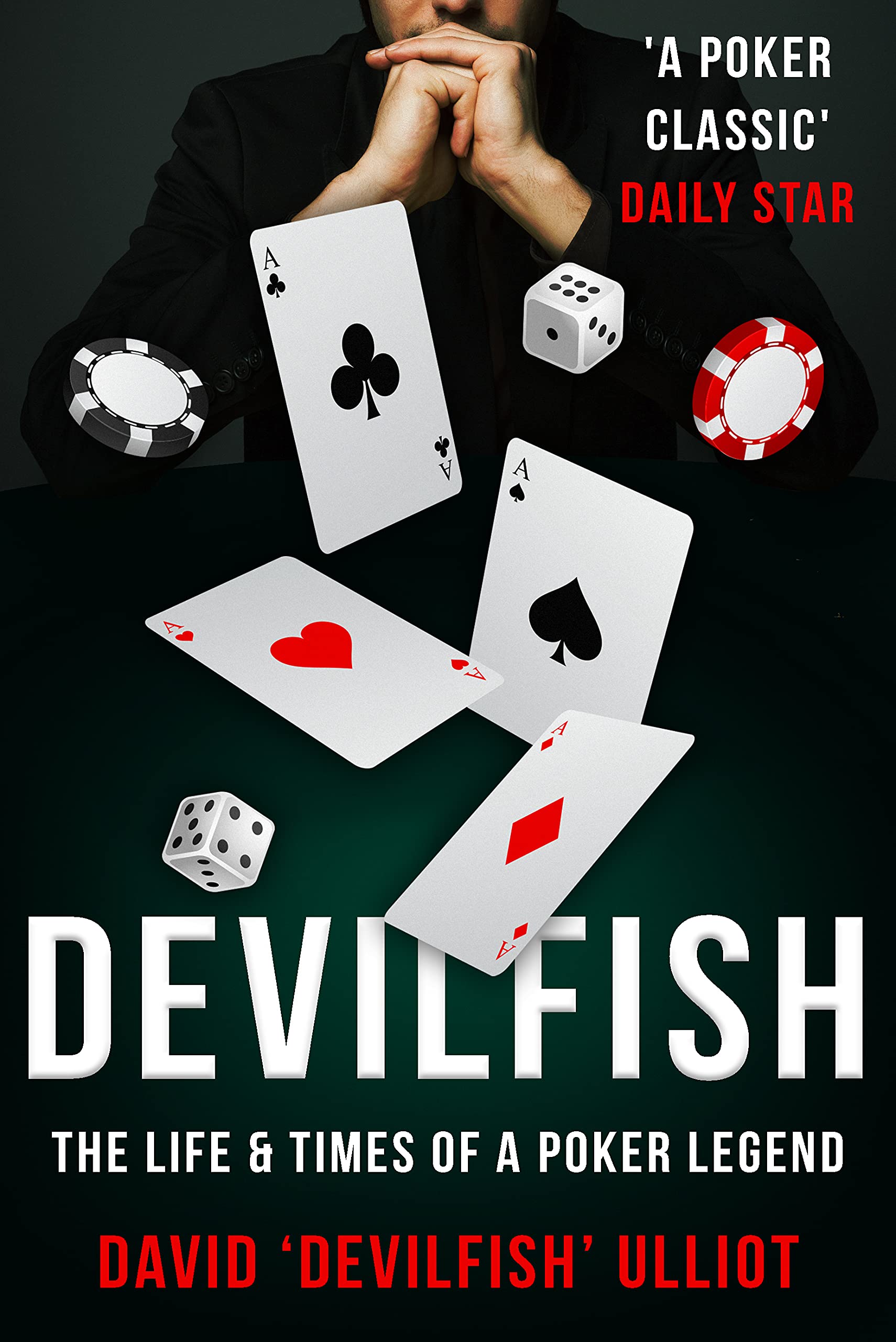
The "Devilfish" name remains a trademarked entity, and his autobiography, Devilfish: The Life & Times of a Poker Legend, continues to sell, providing residual income to his estate. His family has largely stayed out of the public eye, but they remain the beneficiaries of the complex, multi-faceted wealth he built during a life lived at the highest possible stakes.
Frequently Asked Questions
How much did Devilfish win in his biggest tournament?
His largest single tournament prize was $589,175 at the 2003 WPT Jack Binion World Poker Open. However, many experts believe his most significant financial wins actually occurred in private, high-stakes cash games that were never recorded by the media.
Did Dave Ulliott lose his money before he died?
No. Despite his high-rolling lifestyle and love for casino games, Ulliott was known to be financially stable at the time of his passing. His diversified interests in jewelry and pawn shops ensured that he had assets outside of the poker world.
How did the "Devilfish" nickname affect his earnings?
The nickname was a marketing goldmine. It was given to him by Stevie Au-Yeung in 1997 during a game in Birmingham. The branding allowed him to command higher sponsorship fees and made him a "must-have" for televised poker, which was a significant source of his non-tournament income.
What happened to his jewelry business?
After his passing, the business interests were managed by his family and estate. The physical assets (gold, jewelry, and watches) formed a core part of the inheritance for his eight children.
Is poker winnings taxable in the UK for professionals?
Historically and as of 2026, the UK does not tax gambling winnings, regardless of whether the individual is a professional or an amateur. This was a massive advantage for Ulliott, as it meant his $6.2 million in tournament cashes was effectively worth 30-40% more than the same amount would be for a US-based player.
Practical Considerations for Understanding Poker Net Worth
When evaluating the wealth of a poker legend like Ulliott, one must remember that "net worth" is a snapshot in time. For a professional gambler, it can fluctuate by six figures in a single night.
- Look for diversification: Successful long-term pros like Ulliott usually have side businesses.
- Account for "The Gap": The gap between tournament cashes and actual profit is often 50% or more due to expenses and losing sessions.
- Consider the Era: $6 million in the early 2000s had significantly more purchasing power than it does in 2026.
If you are researching poker net worth for investment or biographical purposes, always prioritize verified business holdings over reported tournament winnings. Dave Ulliott’s true financial genius lay in his ability to use the "Devilfish" persona to fund a stable, multi-generational estate through diverse business interests.
Image Gallery