Understanding Life Insurance Benefits in Georgia: Tax Rules and Exemptions
Life insurance benefits in Georgia are generally not subject to state income tax when paid out as a lump sum to a named beneficiary following the insured's passing. However, understanding how these financial payouts interact with feder...
Life insurance benefits in Georgia are generally not subject to state income tax when paid out as a lump sum to a named beneficiary following the insured's passing. However, understanding how these financial payouts interact with federal regulations, estate taxes, and interest earnings is essential for accurate financial planning.
Contents
Navigating the financial aftermath of losing a loved one involves numerous administrative and legal responsibilities. Among the most pressing concerns for beneficiaries is how the resulting funds will be treated by tax authorities. For residents of Georgia, the state tax code provides a favorable environment for life insurance proceeds, aligning closely with federal guidelines while offering specific regional exemptions. Yet, "tax-free" does not mean that every single dollar associated with a life insurance policy escapes taxation entirely. Certain conditions—such as interest accumulation, policy ownership structures, and large estates—can introduce tax liabilities that catch unprepared beneficiaries off guard.
The Core Principle: Income Tax Exemption on Death Benefits
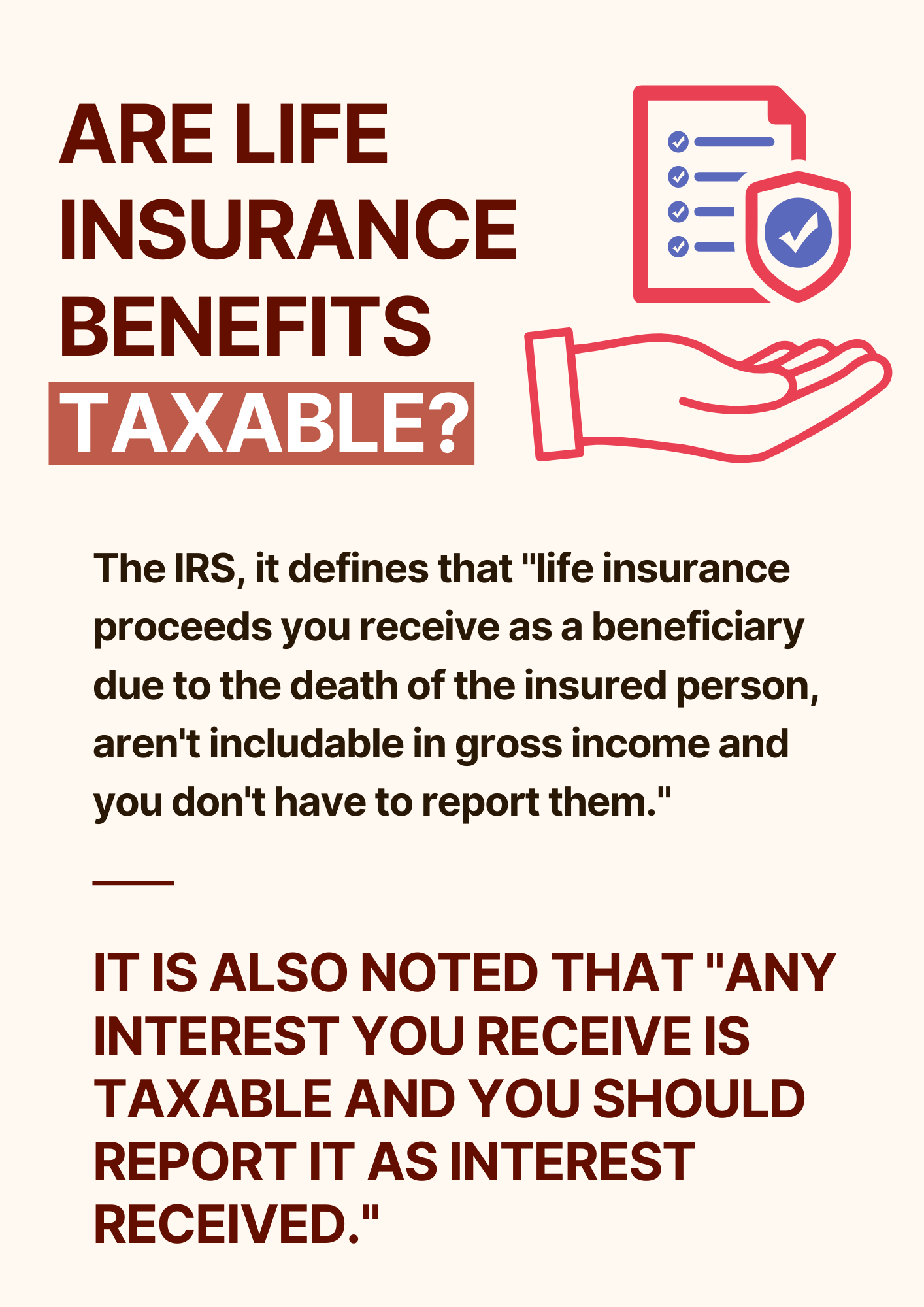
At both the state and federal levels, the foundational rule regarding life insurance is that death benefits paid out as a lump sum are generally excluded from gross income. Under Section 101(a) of the Internal Revenue Code, which sets the baseline for federal treatment, gross income does not include amounts received under a life insurance contract if such amounts are paid by reason of the death of the insured. The state of Georgia follows this overarching principle for state income tax purposes.
When a policyholder passes away, the insurance company disburses the death benefit to the designated beneficiaries. Because this money is classified as a death benefit rather than earned income, wages, or capital gains, the state of Georgia does not levy an income tax on the principal amount. Whether the payout is fifty thousand dollars or several million, the primary distribution arrives tax-free to the individual or entity named in the policy contract.
Why the Distinction Matters for Beneficiaries
For families dealing with funeral costs, mortgage payments, and daily living expenses, knowing that the full lump-sum payout is protected from income tax provides critical financial stability. Beneficiaries are not required to report the death benefit as taxable income on their Georgia state individual income tax returns. This exemption ensures that the financial safety net designed by the policyholder remains intact without being diminished by immediate tax collection.
When Life Insurance Benefits Can Be Taxed in Georgia
While standard death benefits received as a lump sum are income-tax-free, specific scenarios can trigger tax obligations. Understanding these exceptions helps policyholders and beneficiaries avoid unexpected tax bills.
1. Interest Earned on Delayed Payouts
If a beneficiary chooses not to take the death benefit as an immediate lump sum and instead leaves the funds with the insurance company to accumulate interest, that interest is taxable. While the original death benefit principal remains exempt from state and federal income tax, any interest generated after the insured's death must be reported as taxable income. The insurance company will typically issue a Form 1099-INT at the end of the year detailing the interest earned, which must be declared on both federal and Georgia state tax returns.
2. Installment Payments (The Interest Element)
When a policy allows the death benefit to be paid out over a period of years through structured installments rather than a single lump sum, the payout is divided into two parts: the principal amount and an interest element. The portion of each payment that represents the prorated principal remains tax-free. However, the portion that represents interest earned on the declining balance is subject to ordinary income tax.
3. Transfer-for-Value Rule
A major trap in life insurance taxation is the transfer-for-value rule. If a life insurance policy is sold or transferred to another party for valuable consideration (such as cash or other property) during the insured's lifetime, the tax-exempt status of the death benefit can be compromised. When the insured dies, the new owner may have to pay ordinary income tax on the portion of the death benefit that exceeds the consideration they paid plus any subsequent premiums they invested. Georgia tax law generally respects federal interpretations in this area, meaning commercial transfers of policies can lead to significant state tax exposure.
Federal vs. Georgia State Tax Treatment
To fully grasp how life insurance policies are taxed, it is helpful to look at how state rules interact with federal mandates.
| Tax Category | Federal Tax Treatment | Georgia State Tax Treatment |
|---|---|---|
| Lump-Sum Death Benefit | Tax-free (IRC Section 101) | Tax-free (Aligns with federal exclusion) |
| Accumulated Interest | Taxable as ordinary income | Taxable as ordinary income |
| Installment Interest | Taxable as ordinary income | Taxable as ordinary income |
| State Estate Tax | None (Federal estate tax applies to high estates) | None (Georgia estate tax decoupled) |
As shown in the table above, Georgia maintains a tax-friendly stance by mirroring federal exemptions on standard death benefits while imposing no independent state-level estate tax.
Georgia Estate Tax and Inheritance Considerations
Beyond income tax, individuals often worry about estate taxes reducing the value of a life insurance policy. Historically, states levied estate or inheritance taxes on accumulated wealth transferred after death.
Georgia completely abolished its state-level estate tax (often referred to as the "pick-up tax") for deaths occurring on or after July 1, 2005. Because Georgia has no state estate tax or inheritance tax, life insurance proceeds included in a decedent's gross estate for federal purposes are not subject to a separate state estate levy.
Federal Estate Tax Implications
Even though Georgia does not tax estates, the federal estate tax still applies to estates that exceed the federal exemption threshold. Under federal law, the death benefit of a life insurance policy is included in the insured's gross estate if the insured retained "incidents of ownership" in the policy at the time of death. Incidents of ownership include the right to change beneficiaries, surrender or cancel the policy, assign it, or borrow against its cash value.
If an individual's total estate—including the life insurance death benefit—exceeds the federal estate tax exemption limit, the entire estate may be subject to federal estate taxes. To mitigate this, high-net-worth individuals frequently utilize legal structures such as an Irrevocable Life Insurance Trust (ILIT) to remove the policy from their taxable estate.
Taxation of Cash Value and Living Benefits
Permanent life insurance policies, such as whole life, universal life, and variable life, accumulate a cash value component during the policyholder's lifetime. How this cash value is treated depends on how it is accessed.
- Policy Withdrawals: Withdrawals taken from the cash value of a permanent policy are generally treated on a "first-in, first-out" (FIFO) basis. This means withdrawals up to the total amount of premiums paid (the policy's "cost basis") are considered a return of principal and are completely tax-free. Withdrawals exceeding the cost basis are taxed as ordinary income.
- Policy Loans: Borrowing against the cash value of a life insurance policy is generally not treated as taxable income, provided the policy remains active and in force. Because the loan is secured by the policy's cash value, it is viewed by the IRS and state tax authorities as a loan rather than a distribution of earnings. However, if the policy lapses or is surrendered while a loan is outstanding, the outstanding loan balance is treated as taxable income to the extent that the cash value exceeds the cost basis.
- Surrendering the Policy: If a policyholder chooses to cancel a permanent life insurance policy and take the cash surrender value, the payout is taxable to the extent that the surrender value exceeds the total premiums paid into the policy.
Common Mistakes and Misconceptions
When dealing with life insurance benefits in Georgia, policyholders and beneficiaries frequently encounter avoidable misunderstandings regarding tax liability.
- Assuming Beneficiary Designations Do Not Matter: Failing to name a specific individual or living trust as a beneficiary can cause the death benefit to default to the insured's estate. If the proceeds pass through probate into the estate, they may become subject to creditor claims and complicate overall estate administration, even if the funds themselves are not strictly income-taxed.
- Confusing Policy Dividends with Taxable Income: Dividends paid out by mutual life insurance companies are typically treated as a return of premium rather than taxable income, provided the total dividends received do not exceed the total cumulative premiums paid for the policy.
- Overlooking Trust Ownership Rules: Transferring an existing policy into an ILIT requires careful navigation of the three-year rule under federal tax law. If the insured passes away within three years of transferring the policy into the trust, the death benefit may still be pulled back into their taxable estate.
Frequently Asked Questions
Are life insurance proceeds considered taxable income in Georgia?
No. Lump-sum death benefits paid to a named beneficiary upon the death of the insured are exempt from Georgia state income tax and federal income tax.
Does Georgia charge an inheritance tax on life insurance payouts?
No. Georgia does not levy a state inheritance tax or a state estate tax, meaning beneficiaries receive their full payouts without state-level deductions of this nature.
What happens if I leave the life insurance payout with the insurance company to earn interest?
The original death benefit principal remains tax-free, but any interest earned on that money after the insured's death is treated as taxable income and must be reported on your state and federal tax returns.
Are withdrawals from the cash value of a permanent life insurance policy taxable?
Withdrawals up to the amount of premiums you have paid into the policy are tax-free because they represent a return of your principal. Withdrawals that exceed your total paid premiums are subject to ordinary income tax.
Do I need to report a life insurance payout on my Georgia state tax return?
If the payout was received as a standard lump-sum death benefit, you generally do not need to report it as taxable income on your Georgia state tax return. However, if you received Form 1099-INT reflecting interest earned on delayed distributions, that specific interest portion must be reported.
Next Steps for Policyholders and Beneficiaries
To ensure that life insurance benefits are managed correctly and remain as tax-efficient as possible, proactive steps should be taken long before a claim is filed. Policyholders should regularly review their beneficiary designations, ensure their contact information is up to date with insurers, and consult with a qualified financial advisor or estate planning attorney—particularly if their estate approaches federal tax thresholds or involves complex business structures. Beneficiaries who receive payouts involving installment options or accumulated interest should consult a certified public accountant or tax professional to ensure accurate reporting of any taxable earnings.
Image Gallery