Deconstructing the Erykah Badu Interview: Key Conversations, Musical Lore, and Cultural Insights
Erykah Badu’s interviews offer a rare glimpse into the mind of one of neo-soul’s pioneer architects. Spanning long-form journalism, broadcast radio, and intimate digital archives, her conversations explore analog production, holistic w...
Erykah Badu’s interviews offer a rare glimpse into the mind of one of neo-soul’s pioneer architects. Spanning long-form journalism, broadcast radio, and intimate digital archives, her conversations explore analog production, holistic wellness, maternal wisdom, and radical empathy. Studying her most significant media appearances reveals how her candid philosophical outlook directly shapes her musical legacy.
Contents
Why Erykah Badu’s Interviews Stand Out in Music History
For over three decades, Erykah Badu has approached press junkets and media profiles with the same improvisational mastery that defines her studio recordings. Where many high-profile musicians rely on media trainers and pre-scripted promotional talking points, Badu consistently subverts interview formats. She turns standard press rounds into philosophical dialogues, comedy sessions, or masterclasses in artistic autonomy.
Understanding an Erykah Badu interview requires recognizing her broader cultural role. She is not merely a Grammy Award-winning singer-songwriter; she is a producer, a certified birth doula, an herbalist, a fashion icon, and a prominent voice in contemporary African American culture. Consequently, journalists approaching Badu rarely get a standard routine about album release dates. Instead, interviewers must navigate her non-linear conversational style, sharp wit, and deep grounding in metaphysical and socio-political themes.
Her media presence serves as an ongoing historical record of the neo-soul movement and the legendary late-1990s Soulquarians collective at Electric Lady Studios. Her interviews capture crucial context regarding how classic albums like Baduizm (1997), Mama's Gun (2000), and the New Amerykah installments (2008–2010) were conceived, recorded, and received by the public.
Landmark Erykah Badu Interviews You Need to Explore
While Badu has granted hundreds of interviews across television, print, radio, and digital streaming platforms, several long-form conversations stand out for their depth, technical detail, and cultural impact.
- Erykah Badu Media Archive Taxonomy
- Technical / Music (RBMA Lecture 2008)
- Album breakdowns
- Soulquarians history
- Philosophical / Deep (Vulture 2018 Profile)
- Radical empathy
- Spiritual cosmology
- Cultural / Radio (Breakfast Club / Ebro)
- Relationships & Tea
- Doula practice
- Technical / Music (RBMA Lecture 2008)
1. The 2018 Vulture Profile by David Marchese
Perhaps her most widely discussed print interview, this profile published by Vulture generated extensive media commentary due to Badu’s provocative reflections on human nature, forgiveness, and moral absolutism.
In the profile, Badu articulated her belief in looking for the "light" in all people, refusing to participate in binary online cancel culture. The conversation went viral for her unconventional—and controversial—philosophical stances regarding figures in history and contemporary pop culture. Beyond the headlines, the interview stands as a stark demonstration of her adherence to non-duality and personal spiritual frameworks, demonstrating her refusal to soften her views for public relations approval.
2. The Red Bull Music Academy (RBMA) Lecture (2008)
For musicians, audio engineers, and music historians, Badu’s long-form video lecture for the Red Bull Music Academy remains the definitive breakdown of her creative methodology. Conducted around the release of New Amerykah Part One (4th World War), this extended session covers:
- Vocal Layering and Arrangement: How she uses her voice as an instrument, stacking harmonies without conventional sheet music.
- Collaborations with J Dilla: Detailed stories of working with the late hip-hop producer J Dilla in Detroit, explaining how his unquantized, loose drum programming altered her approach to rhythm and phrasing.
- Studio Dynamics with the Soulquarians: Inside accounts of session work alongside Questlove, D’Angelo, James Poyser, and Roy Hargrove.
3. The Breakfast Club Appearances (Power 105.1)
Badu’s visits to The Breakfast Club morning radio show showcase her humor, warmth, and ability to steer chaotic broadcast environments into meaningful dialogues. Across her appearances, she has discussed:
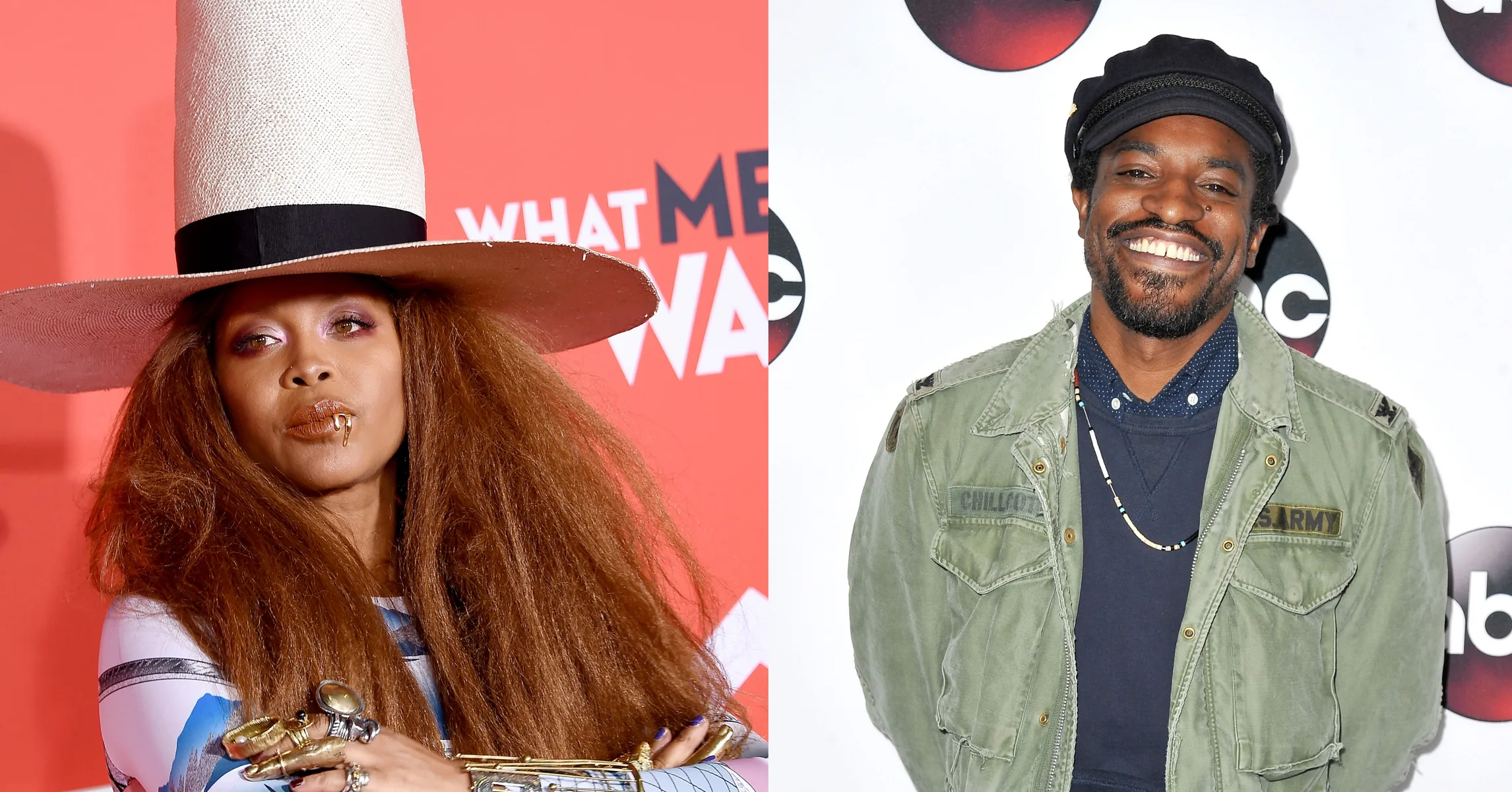
- Her harmonious approach to co-parenting with Andre 3000, Jay Electronica, and The D.O.C.
- Her work as a practicing doula, explaining how assisting women through labor grounds her outside the entertainment industry.
- Her famous "Baduizm" herbal tea blends and holistic health remedies.
- The nature of artistic inspiration and maintaining personal boundaries in the public eye.
4. The GQ & Vogue Creative Profiles
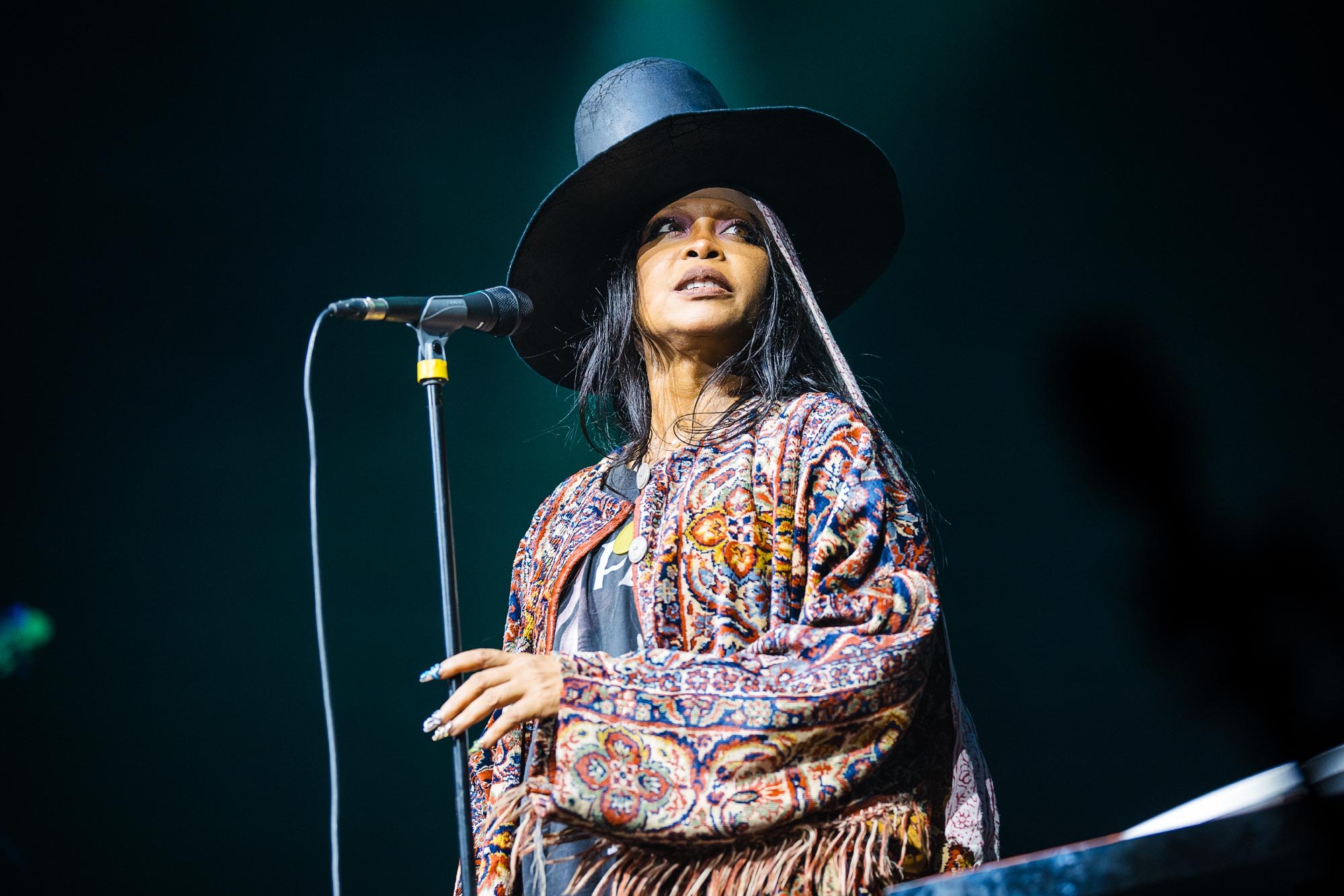
In high-fashion print profiles published across her career, Badu addresses her distinctive visual aesthetic—ranging from her signature headwraps and tall top hats during the late 1990s to her avant-garde street style in recent decades. These interviews detail her belief that clothing operates as an energetic armor and an extension of musical performance.
Key Themes That Define Erykah Badu’s Public Discourse
A thematic analysis of her media catalog highlights recurring topics that define her worldview and artistic philosophy.
Sonic Craftsmanship and Analog Warmth
Badu frequently uses interviews to defend analog sound recording, live instrumentation, and sonic texture. She often speaks in detail about drum tuning, bass frequencies, and microphone selection. Her technical knowledge demystifies the idea that singer-songwriters only handle vocals, establishing her central role as a arranger and executive producer across her discography.
The Doula Practice and Holistic Birth
One of the most unique aspects of Badu's interviews is her ongoing discussion of her work as a birth doula. Having assisted in the delivery of dozens of babies over two decades, she speaks with deep reverence about the childbirth process. In her interviews, she frequently contrasts the artificial world of celebrity with the grounding reality of supporting laboring mothers, viewing both music and birth work as forms of energy stewardship.
- Erykah Badu's Dual Creative Spheres
- Sonic Stewardship
- Analog arrangement
- Soulquarian collaborations
- Vocal layering & rhythm
- Birth Stewardship
- Doula care & labor support
- Holistic health & herbs
- Grounding life transition
- Sonic Stewardship
Radical Empathy and Metaphysical Cosmology
Rooted in teachings from the Nation of Gods and Earths (Five-Percent Nation), Kemetic spirituality, and metaphysics, Badu’s conversational framing assumes that all matter and human behavior are interconnected. When interviewers ask her about social conflicts or public controversies, her answers consistently reflect an observer’s perspective—seeking to understand the root cause of behavior rather than issuing immediate judgment.
Co-Parenting and Matriarchal Leadership
As a mother to three children fathered by three prominent hip-hop artists, Badu’s family life has often drawn press curiosity. In interviews, she routinely disarms sensationalized questions by describing her household as a supportive, unified matriarchy. She emphasizes communication, mutual artistic respect, and shared responsibility, offering a modern model for blended family management.
Comparative Breakdown of Major Erykah Badu Interviews
To help listeners, journalists, and researchers navigate her extensive archive, the following table organizes her most significant recorded conversations by platform, period, and core thematic value.
| Outlet / Platform | Year | Format | Primary Focus | Best For |
|---|---|---|---|---|
| Red Bull Music Academy | 2008 | Video / Live Q&A | Production, J Dilla, New Amerykah, Soulquarians | Music producers & audio engineers |
| Vulture (David Marchese) | 2018 | Print / Long-form | Human empathy, spirituality, cancel culture, legacy | Cultural critics & bio-researchers |
| The Breakfast Club | Various | Radio / Video Stream | Relationships, doula work, humor, holistic health | Casual fans & pop-culture followers |
| NPR Music (Tiny Desk/Talks) | 2018 | Video / Audio | Live arrangements, vocal technique, band direction | Live music enthusiasts |
| GQ Magazine Profile | 2020 | Print / Digital | Fashion evolution, personal style, creative aging | Style historians & visual artists |
| Ebro in the Morning (Hot 97) | Various | Radio / Audio | Hip-hop history, Dallas music scene, live touring | Hip-hop historians |
How to Access and Archive Erykah Badu Interviews
For researchers, musicologists, and fans seeking complete, unedited media recordings, navigating her media footprint requires knowing where original sources reside:
- Official Video Archives: The Red Bull Music Academy maintains full, high-definition video archives of her 2008 lecture on their official website and YouTube channel. These remain the best source for unedited commentary on her songwriting.
- Audio Podcasts and Broadcast Stations: Broadcast radio interviews from Power 105.1 (The Breakfast Club) and Hot 97 (Ebro in the Morning) are fully archived on their respective YouTube channels, preserving the unedited audio and video of her appearances.
- Print Archives: Publications like Vulture, The New York Times, GQ, and Pitchfork retain digital paywalled or open-access archives of her major cover stories. When reading print pieces, note whether the interview is presented as a direct Q&A transcript or a narrative profile, as narrative profiles heavily edit spoken cadence.
Contextualizing Controversial Interview Statements
Because Badu speaks openly without reliance on scripted corporate soundbites, certain interview moments have generated media controversy. Understanding these moments requires examining her fundamental philosophical framework:
- The Framework of Observation: Badu frequently describes herself as an observer of human nature rather than an enforcer of social norms. When she expresses empathy for disgraced figures in public discourse, she views it through a lens of universal human fallibility rather than approval of harmful behavior.
- Subversion of Media Traps: When interviewers ask leading questions designed to elicit scandalous headlines, Badu often responds with absurdism, humor, or intentionally challenging counter-questions to break the standard interviewer-interviewee power dynamic.
- Nuance Over Soundbites: Short social media clips often strip her quotes of their wider context. Full-length audio or video transcripts usually reveal that her statements are part of longer, multi-layered philosophical reflections.
Frequently Asked Questions
What is Erykah Badu’s most technical interview about music production?
Her 2008 Red Bull Music Academy (RBMA) lecture in Madrid/Barcelona is her most detailed technical interview. In it, she explains her songwriting techniques, vocal arrangements, drum mixing preferences, and her close working relationships with J Dilla and Questlove.
Where does Erykah Badu discuss her work as a doula?
Badu has discussed her doula practice in multiple interviews, including her appearances on The Breakfast Club, her profile in The New Yorker, and various health and wellness podcasts. She details how she got into midwifery, her training, and how delivering babies keeps her grounded.
How does Erykah Badu handle controversial questions in interviews?
She typically addresses controversial questions by reframing them through her personal spiritual philosophy, using humor, or challenging the premise of the question entirely. She rarely gives conventional corporate PR answers, preferring candid, unfiltered responses.
Did Erykah Badu do an interview detailing the making of Baduizm?
Yes. Over the years, she has reflected on her 1997 debut album Baduizm across several retrospective interviews, including anniversary pieces for Pitchfork, Grammy.com, and her long-form RBMA lecture, explaining how she mixed traditional jazz vocals with contemporary hip-hop drum loops.
Why are Erykah Badu’s interviews so popular among music fans?
Her interviews are popular because they offer authentic, unpredictable, and deeply intellectual insights. Rather than executing standard promotional tours, she engages in open, philosophical conversations that reveal her genuine artistic process and personal worldview.
Recommended Next Steps for Listeners and Researchers
To gain a complete understanding of Erykah Badu’s artistic philosophy through her interviews, follow this structured viewing and reading path:
- Start with the Sonic Craft: Watch the complete 2008 Red Bull Music Academy lecture on YouTube to understand her foundation as an arranger, producer, and session leader.
- Explore the Cultural Cosmology: Read the 2018 Vulture profile by David Marchese to examine her philosophical stance on empathy, public perception, and individual sovereignty.
- Watch the Broadcast Radio Appearances: Listen to her multi-year appearances on The Breakfast Club to experience her conversational humor, maternal perspective, and thoughts on modern music culture.
- Cross-Reference with the Music: Listen to her albums Mama's Gun and New Amerykah Part One alongside these interviews to hear how the production choices and lyrical themes directly align with her spoken words.
Image Gallery