The Florence Nightingale Pledge: Full Text, History, and Modern Nursing Ethics
The Florence Nightingale Pledge is a solemn oath taken by nursing students entering the profession, traditionally recited during pinning ceremonies to affirm commitment to ethical care, patient confidentiality, and professional integri...
The Florence Nightingale Pledge is a solemn oath taken by nursing students entering the profession, traditionally recited during pinning ceremonies to affirm commitment to ethical care, patient confidentiality, and professional integrity. Created in 1893 by Lystra Gretter and a committee at the Farrand Training School for Nurses in Detroit, Michigan, the pledge was named in honor of Florence Nightingale, though Nightingale herself did not compose it.
Contents
The Origin and History of the Nightingale Pledge
The Nightingale Pledge was drafted to establish a formal ethical standard for the emerging profession of trained nursing in the late nineteenth century. At the time, formal nursing education was undergoing rapid professionalization, transitioning from informal caregiving to a structured discipline grounded in hygiene, clinical observation, and medical instruction.
Lystra Gretter, the principal of the Farrand Training School for Nurses at Harper Hospital in Detroit, led a committee to craft a statement of purpose for graduating classes. Drawing inspiration from the Hippocratic Oath taken by physicians, Gretter sought an oath that articulated the moral obligations, moral purity, and public duty expected of registered nurses. The committee named the text the "Florence Nightingale Pledge" to pay homage to the founder of modern nursing, whose work during the Crimean War and subsequent establishing of the Nightingale Training School at St. Thomas' Hospital in London revolutionized healthcare delivery.
In 1935, Lystra Gretter revised the pledge to broaden its ethical scope. The original phrasing included a promise to "pass my life in purity," which reflected Victorian moral standards. The 1935 revision expanded the nurse's commitment beyond individual bedside care, introducing an explicit obligation to act as a "missionary of health" dedicated to community welfare.
Full Text of the Florence Nightingale Pledge
Understanding the pledge requires reviewing both its original historical form and its updated twentieth-century revision. While individual nursing schools often adapt the text to align with contemporary bioethics, these two historical versions form the baseline of the oath.
The Original 1893 Text
The Original 1893 Nightingale Pledge
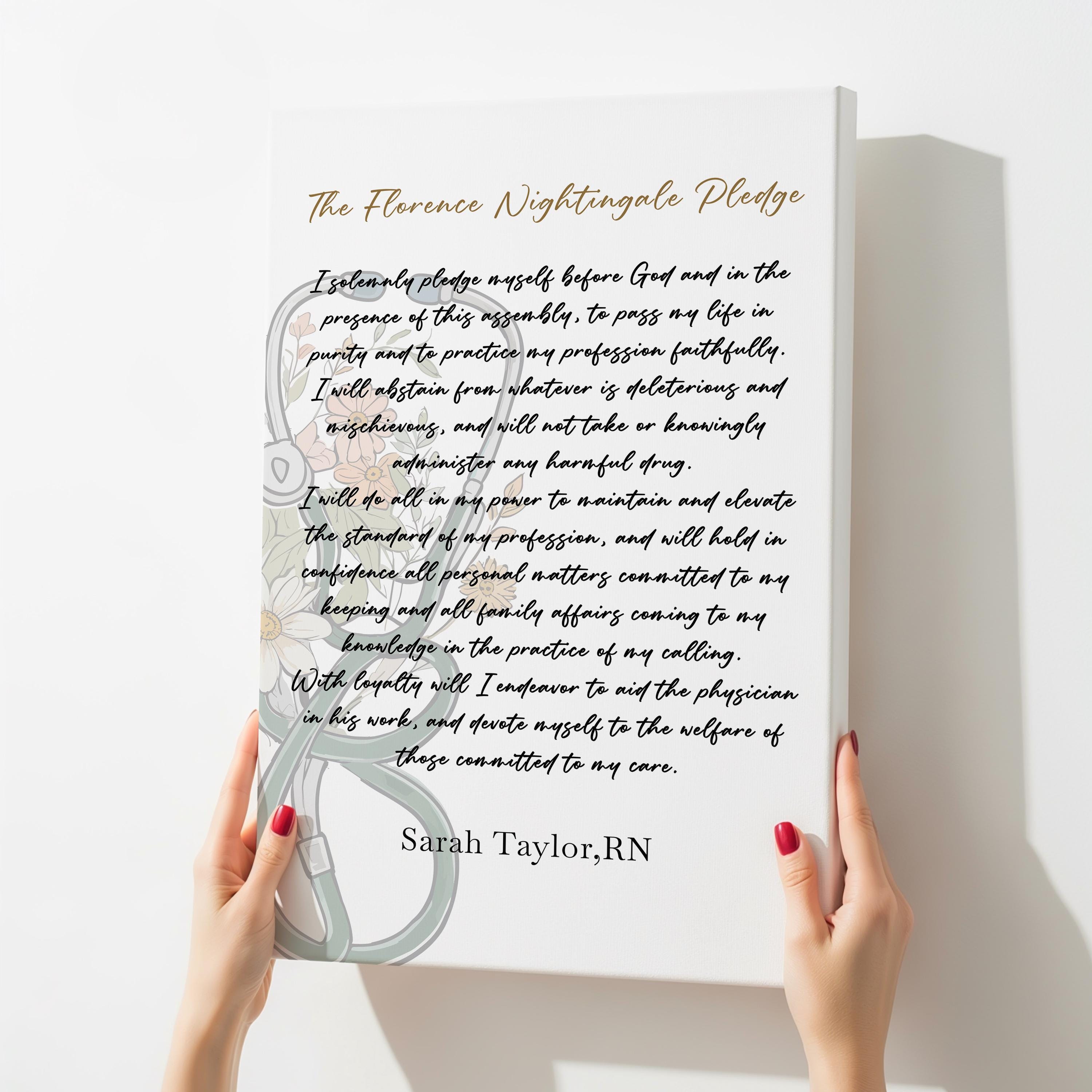
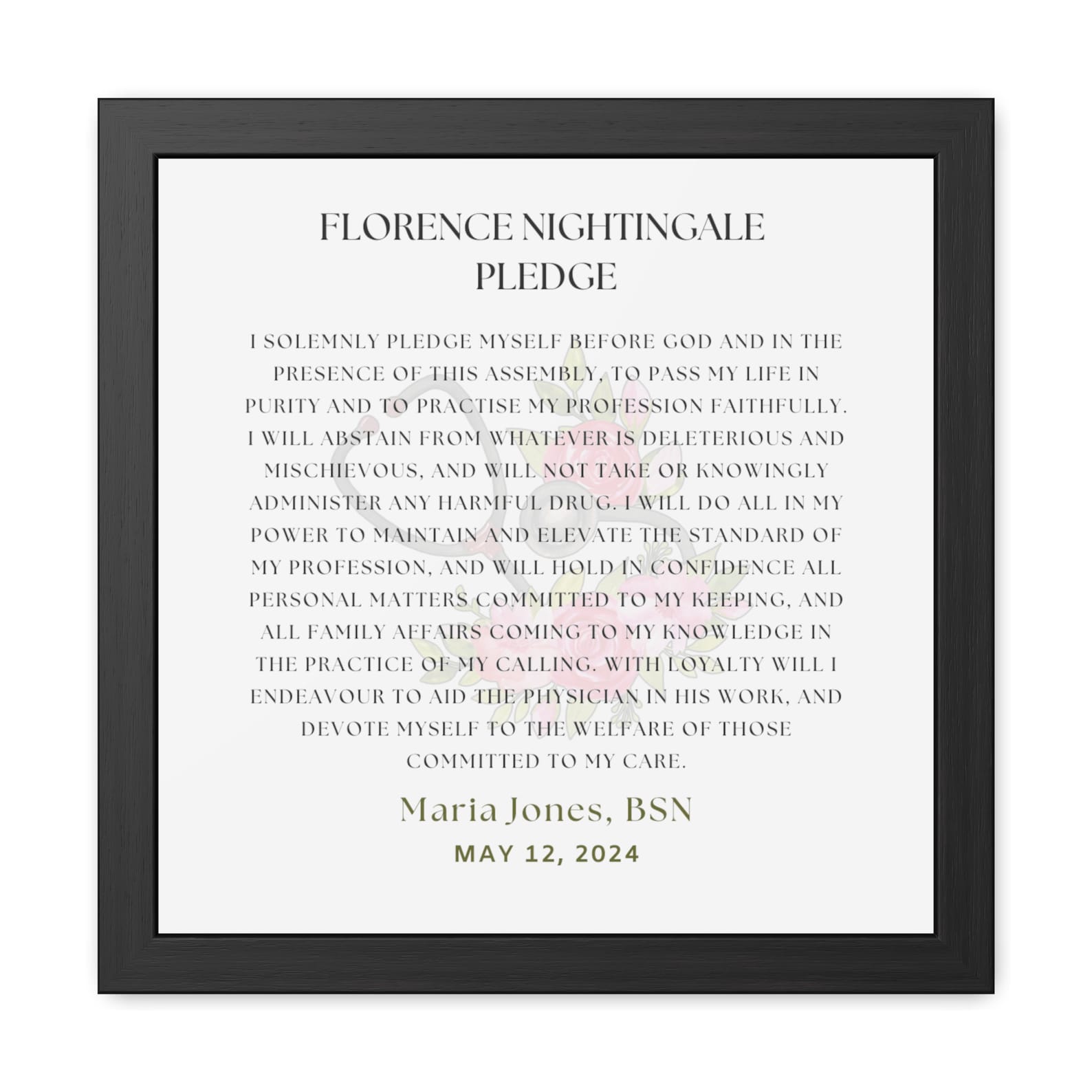
I solemnly pledge myself before God and in the presence of this assembly, to pass my life in purity and to practice my profession faithfully. I will abstain from whatever is deleterious and mischievous, and will not take or knowingly administer any harmful drug. I will do all in my power to maintain and elevate the standard of my profession, and will hold in confidence all personal matters committed to my keeping and all family affairs coming to my knowledge in the practice of my calling. With loyalty will I endeavor to aid the physician in his work, and devote myself to the welfare of those committed to my care.
The Revised 1935 Text
The Revised 1935 Nightingale Pledge
I solemnly pledge myself before God and in the presence of this assembly, to pass my life in purity and to practice my profession faithfully. I will abstain from whatever is deleterious and mischievous, and will not take or knowingly administer any harmful drug. I will do all in my power to maintain and elevate the standard of my profession, and will hold in confidence all personal matters committed to my keeping and all family affairs coming to my knowledge in the practice of my calling. With loyalty will I endeavor to aid the physician in his work, and devote myself to the welfare of those committed to my care, and as a 'missionary of health' strive for the advancement of human welfare.
Clause-by-Clause Ethical Analysis
The pledge contains distinct promises that map directly onto fundamental principles of bioethics: non-maleficence, beneficence, autonomy, and confidentiality.
| Historical Clause | Modern Bioethical Equivalence |
|---|---|
| "Abstain from whatever is deleterious" | Non-Maleficence (Do No Harm) |
| "Hold in confidence all personal..." | HIPAA / Patient Data Confidentiality |
| "Elevate the standard of my profession" | Professional Competence & Governance |
| "Aid the physician in his work" | Interprofessional Collaboration |
Abstinence from Harm and Harmful Drugs
The promise to "abstain from whatever is deleterious and mischievous, and will not take or knowingly administer any harmful drug" aligns directly with the core ethical principle of non-maleficence. In the 1890s, pharmacology was poorly regulated, and dangerous patent medicines were common. This clause bound the nurse to rigorous medication administration safety—a direct precursor to modern pharmacological checks and the "rights" of medication administration.
Patient Confidentiality and Trust
The commitment to "hold in confidence all personal matters committed to my keeping and all family affairs coming to my knowledge" established modern medical privacy practices decades before formal legal frameworks like the Health Insurance Portability and Accountability Act (HIPAA) were codified. It recognizes that effective nursing care depends on trust, obligating the nurse to protect vulnerable patient data gathered during intimate caregiving.
Professional Elevation and Loyalty
The pledge mandates that practitioners "maintain and elevate the standard of my profession." This transformed nursing from a passive occupational role into a self-governing profession responsible for setting educational, practical, and clinical quality benchmarks.
Physician Collaboration vs. Autonomous Practice
The line "With loyalty will I endeavor to aid the physician in his work" reflects the late-nineteenth-century medical hierarchy, wherein nurses functioned primarily under physician directives. Modern ethics reframes this obligation around interprofessional collaboration rather than subservience, emphasizing interdisciplinary teamwork where nurses act as independent patient advocates.
Comparison of Historical and Modern Ethical Frameworks
Over time, nursing education institutions have recognized that aspects of the original 1893 pledge do not fully represent modern autonomous nursing practice, diversity of belief systems, or advanced clinical decision-making.
| Feature / Dimension | 1893 Original Pledge | 1935 Revised Pledge | Modern Adaptations & ICN/ANA Codes |
|---|---|---|---|
| Author / Originator | Lystra Gretter & Committee | Lystra Gretter | Institutions, ANA, & International Council of Nurses |
| Religious / Secular Orientation | Explicit religious oath ("before God") | Explicit religious oath ("before God") | Secular or adaptable options (secular affirmations available) |
| Physician Relationship | Loyalty and assistance to the physician | Loyalty and assistance to the physician | Equal interprofessional partner and patient advocate |
| Primary Scope of Practice | Bedside clinical care & personal purity | Bedside care & public health ("missionary of health") | Evidence-based practice, population health, & policy advocacy |
| Patient Confidentiality Standard | Personal & family privacy promise | Personal & family privacy promise | Comprehensive regulatory privacy (HIPAA, GDPR, local law) |
| Focus on Professional Autonomy | Low (subordinate role to medicine) | Moderate (broader societal contribution) | High (autonomous clinical judgment and ethical accountability) |
Evolution and Modern Criticisms of the Pledge
While the Florence Nightingale Pledge remains a cherished ceremonial tradition, modern healthcare bioethicists and nursing scholars highlight key areas where the classic text diverges from modern practice standards.
Subservience vs. Patient Advocacy
The primary critique of the classic text centers on the phrase "aid the physician in his work." Modern registered nurses, advanced practice registered nurses (APRNs), and nurse practitioners operate with significant clinical autonomy. Nursing ethical frameworks, such as the American Nurses Association (ANA) Code of Ethics for Nurses, state that a nurse's primary commitment is to the patient—whether an individual, family, group, community, or population—not to the attending physician. When a medical order conflicts with patient safety, modern standards require nurses to question or refuse the order, breaking with traditional notions of uncritical loyalty.
Secularization and Inclusivity
The opening invocation ("I solemnly pledge myself before God") assumes a specific theological worldview. Modern nursing programs accommodate diverse religious backgrounds and secular ethics by offering alternative wording, such as "I solemnly pledge myself in the presence of this assembly" or utilizing non-theistic affirmations of professional duty.
Language of "Purity"
The phrase "pass my life in purity" reflected Victorian societal norms regarding female morality. Modern healthcare education replaces subjective moral terminology with explicit standards governing professional boundaries, therapeutic relationships, and evidence-based clinical conduct.
Modern Alternatives: The ICN Code of Ethics and ANA Standards
To replace or supplement the traditional pledge, many academic institutions incorporate contemporary ethics statements into graduation and pinning ceremonies.
International Council of Nurses (ICN) Pledge
The International Council of Nurses provides a modernized pledge designed for global practice:
In the full knowledge of the obligations I am undertaking, I promise to care for the sick with all the skill and understanding I possess, without regard to race, creed, color, politics, or social status, sparing no effort to conserve life, to alleviate suffering, and to promote health.
The American Nurses Association (ANA) Code of Ethics
Rather than relying solely on a historical oath, modern professional nursing in the United States is governed by the ANA Code of Ethics for Nurses, which establishes nine key provisions:
- Human Dignity: The nurse practices with compassion and respect for the inherent dignity, worth, and unique attributes of every person.
- Primary Commitment: The nurse's primary commitment is to the patient, whether an individual, family, group, community, or population.
- Patient Rights & Advocacy: The nurse promotes, advocates for, and protects the rights, health, and safety of the patient.
- Accountability & Responsibility: The nurse has authority, accountability, and responsibility for nursing practice, making decisions and taking action consistent with the obligation to provide optimal care.
- Self-Regarding Duties: The nurse owes the same duties to self as to others, including the responsibility to promote health and safety, preserve integrity, maintain competence, and continue personal and professional growth.
- Ethical Environment: The nurse, through individual and collective effort, establishes, maintains, and improves the ethical environment of the work setting.
- Scholarly Advancement: The nurse, in all roles and settings, advances the profession through research and scholarly inquiry, professional standards development, and the generation of both nursing and health policy.
- Global Health Collaboration: The nurse collaborates with other health professionals and the public to protect human rights, promote health diplomacy, and reduce health disparities.
- Professional Integrity & Policy: The profession of nursing, collectively through its professional organizations, must articulate nursing values, maintain the integrity of the profession, and integrate principles of social justice into nursing and health policy.
The Role of the Pledge in Nursing Pinning Ceremonies
The pinning ceremony remains a major symbolic milestone in nursing education, marking the transition from academic preparation to professional clinical practice.
- Opening Address & Historical Overview
- Explanation of the pin's symbolism and legacy of nursing ethics
- Presentation of the Pins
- Individual recognition of graduates by faculty mentors
- Lighting of the Lamps / Candles
- Homage to Florence Nightingale ("The Lady with the Lamp")
- Recitation of the Pledge
- Collective recitation of the Nightingale Pledge or modern adaptation
- Professional Induction
- Welcome into active practice and professional nursing organizations
During the ceremony, graduates receive their institutional pin—a tradition originating from the 1860s when Florence Nightingale awarded the Red Cross of St. George to top-performing graduates of her school. Following the presentation of pins, students light candles or small oil lamps (symbolizing Nightingale's nickname, "The Lady with the Lamp") and recite the Florence Nightingale Pledge or an updated institutional oath. This step serves as a public declaration of accountability to the public, colleagues, and patients.
Frequently Asked Questions
Did Florence Nightingale write the Nightingale Pledge?
No, Florence Nightingale did not write the pledge named after her. It was written in 1893 by Lystra Gretter, the principal of the Farrand Training School for Nurses in Detroit, Michigan, along with a school committee.
Why was the Florence Nightingale Pledge created?
The pledge was created to provide graduating nursing students with a formal ethical code similar to the medical Hippocratic Oath. It aimed to establish professional standards, mandate patient confidentiality, and elevate nursing into a respected, self-regulated healthcare discipline.
Is the Nightingale Pledge legally binding for nurses?
No, the Nightingale Pledge is an ethical tradition and symbolic oath, not a legally enforceable contract. Legal nursing standards, scope of practice, and disciplinary actions are governed by state or national Boards of Nursing and statutory Nurse Practice Acts.
How has the Nightingale Pledge changed over time?
The original 1893 pledge was updated in 1935 by Lystra Gretter to include a broader public health focus ("missionary of health"). In modern practice, many nursing schools further adapt or replace the text to remove archaic language, reflect non-denominational values, and emphasize autonomous patient advocacy over subservience to physicians.
What is the difference between the Nightingale Pledge and the ANA Code of Ethics?
The Nightingale Pledge is a historical, ceremonial oath recited during graduation, focusing on personal integrity and professional duty. The ANA Code of Ethics is a comprehensive, regulatory framework that defines modern nursing practice standards, legal obligations, and bioethical decision-making guidelines.
Concluding Perspective for Modern Practice
The Florence Nightingale Pledge remains a key historical artifact that helped shape the identity of professional nursing. While modern clinical practice relies on formal codes of ethics, evidence-based guidelines, and legal statutes, the pledge's fundamental emphasis on non-maleficence, patient confidentiality, and continuous professional self-improvement continues to inspire nursing professionals worldwide.
Image Gallery