What STFU Means in Everyday Language: Usage, Context, and Etiquette
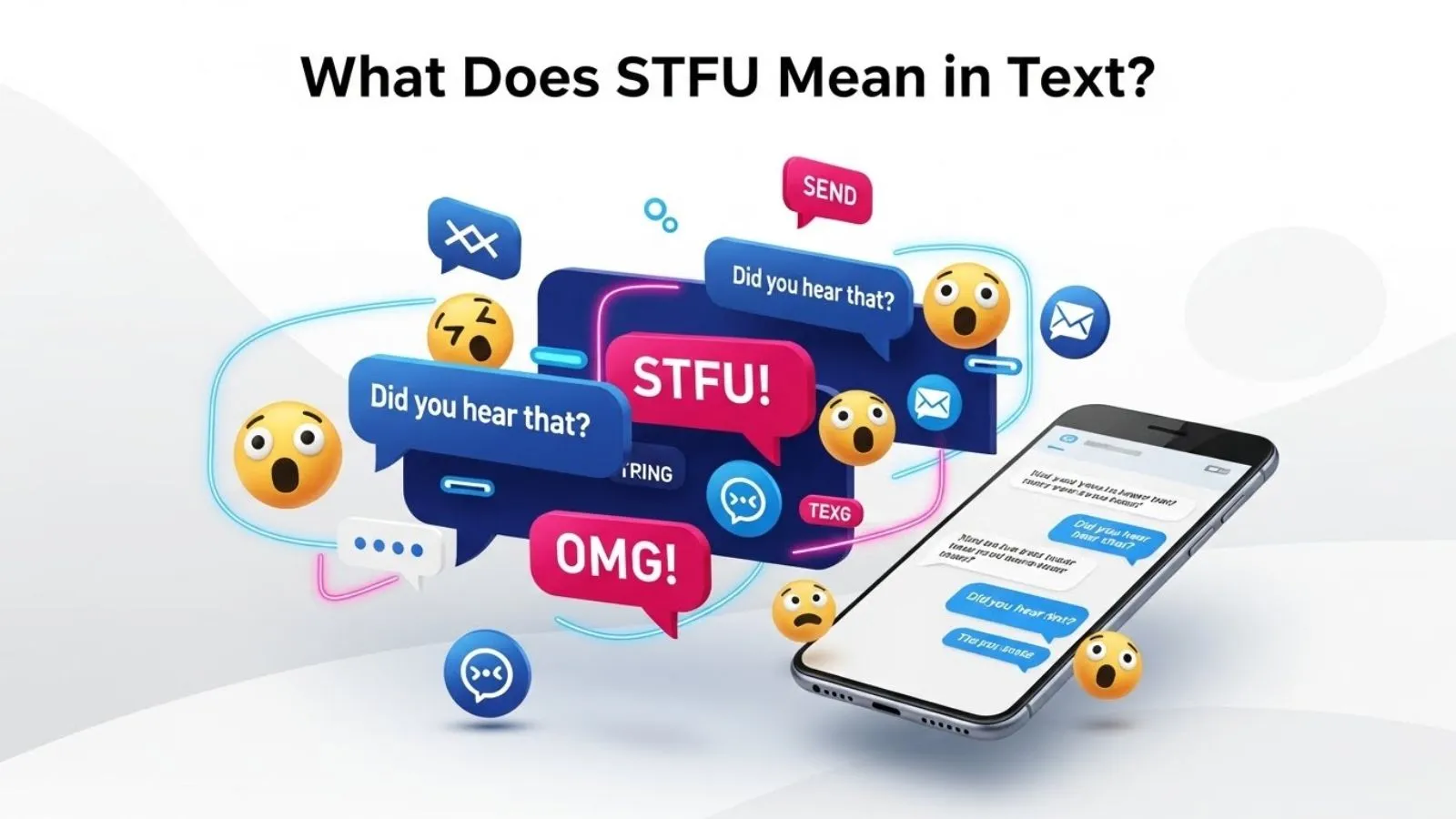
In everyday language, STFU is a widely used acronym that stands for "shut the f*** up." It serves as a blunt, often aggressive command for someone to stop speaking immediately. However, in modern digital communication, it is also frequ...
In everyday language, STFU is a widely used acronym that stands for "shut the f*** up." It serves as a blunt, often aggressive command for someone to stop speaking immediately. However, in modern digital communication, it is also frequently used to express extreme disbelief, shock, or amazement, similar to the phrase "no way."
Contents
As we navigate the communication landscape of 2026, the nuances of internet slang continue to evolve. What was once a strictly hostile remark has bifurcated into two distinct meanings depending entirely on the relationship between the speakers and the platform being used. Understanding the difference between these intents is crucial for avoiding social friction and navigating online spaces like Discord, TikTok, and various messaging apps.
The Literal Definition and Linguistic Origins
The acronym STFU is a direct abbreviation of the vulgar imperative "shut the f*** up." Its primary purpose is to silence another person. Linguistically, it belongs to a category of "hostile imperatives," which are designed to end a conversation or a specific line of questioning through intimidation or directness.
While the phrase itself has existed in spoken English for decades, the acronym gained prominence during the early days of the internet. It was a staple of Internet Relay Chat (IRC), early 1990s BBS systems, and competitive gaming environments where speed was essential. Typing four letters was significantly faster than typing four words during high-stakes gameplay. By the mid-2000s, STFU had entered the mainstream lexicon via text messaging (SMS) and social networking sites like MySpace and later Twitter.
In 2026, the acronym is considered "legacy slang"—it is so well-established that it is understood across multiple generations, from Gen X to Gen Alpha. However, the intensity of the "F-word" contained within the acronym remains significant. Unlike milder acronyms like "LOL" (laugh out loud) or "BRB" (be right back), STFU carries a weight of profanity that dictates where and when it can be used.
The Two Primary Meanings in Everyday Language
The most confusing aspect of STFU for non-native speakers or those new to digital culture is its dual nature. It can be a weapon or a compliment, depending on the "vibe" of the interaction.
1. The Aggressive Command (Literal)
This is the most common usage. In this context, STFU is used to silence someone who is being annoying, rude, or overly talkative. It is a conversational "stop sign."
- Intent: To dismiss the other person's opinion or presence.
- Tone: Hostile, frustrated, or impatient.
- Example: "You have no idea what you're talking about, STFU."
2. The Expression of Disbelief (Figurative)
In casual friendships or when reacting to shocking news, STFU functions as an intensifier for "Really?" or "No way!" This is often seen in response to gossip, a surprising statistic, or an unbelievable story.
- Intent: To show that the listener is overwhelmed by the information provided.
- Tone: Excited, shocked, or even humorous.
- Example:
- Person A: "I just won the lottery!"
- Person B: "STFU! Are you serious?"
Contextual Usage and Social Risk Levels
Because STFU is inherently vulgar, its use carries varying degrees of risk depending on the social setting. Using it in the wrong environment can lead to disciplinary action in a workplace or a permanent ban in moderated online communities.
| Context | Typical Meaning | Social Risk Level | Outcome of Misuse |
|---|---|---|---|
| Professional (Email/Slack) | Aggressive | Critical | Potential termination or HR reprimand. |
| Competitive Gaming | Aggressive/Trash Talk | Low to Moderate | Muting by other players or automated chat filters. |
| Close Friends (Text) | Disbelief/Joking | Minimal | Strengthens social bond through shared slang. |
| Public Social Media | Aggressive/Dismissive | Moderate | "Ratioing," blocking, or negative public perception. |
| Family Settings | Aggressive | High | Disrespectful perception, especially with elders. |
STFU in Digital Subcultures
In 2026, the way STFU is used differs significantly across various platforms. The "culture" of the app often dictates how the acronym is perceived.
Short-Form Video (TikTok/Reels)
On video-centric platforms, STFU is often used in the comments section to call out "gatekeepers" or people providing unsolicited advice. However, it is also a common reaction to high-skill "edits" or shocking transitions. If a creator performs an impossible stunt, a comment saying "STFU that was clean" is a high compliment.
Community Hubs (Discord)
In Discord servers, STFU is frequently used as a "micro-aggression" or a playful jab among community members. Because Discord is often centered around shared hobbies (gaming, coding, art), the term is used more loosely. However, server moderators often have "auto-mod" bots that flag the acronym if it is used repeatedly in a bullying context.
X (formerly Twitter) and Threads
On text-based social media, STFU is often used in political or social debates. It serves as a "terminal" response—a way to tell an opponent that their argument is so invalid that it doesn't deserve a reasoned rebuttal. This usage is common in "stan culture" (intense fandoms) to defend a celebrity or public figure.
The Importance of Tone and Punctuation
In text-based communication, the absence of voice inflection makes it difficult to distinguish between "I'm angry at you" and "I'm shocked by what you said." Users often use visual cues to clarify their meaning:
- STFU. (With a period): Usually indicates a cold, hard stop. This is the most aggressive form.
- STFU!!!! (With multiple exclamation points): Usually indicates excitement or extreme disbelief.
- stfu (Lower case): Often used in a "deadpan" or sarcastic way between friends. It is less intense than the uppercase version.
- "stfu lol": The addition of "lol" is a common "safety net" used to ensure the recipient knows the sender is joking and not actually angry.
Alternatives and Euphemisms
For those who want to convey the same message without the use of profanity, several alternatives have emerged. These are particularly useful in semi-professional or "all-ages" environments.
- "Hush" or "Be Quiet": The standard, polite versions.
- "Zip it": A casual, slightly more assertive way to tell someone to stop talking.
- "Stop it" / "No way": The clean equivalents of the "disbelief" meaning of STFU.
- STHO: A rarer variation meaning "Shut the heck up."
- The "Shushing" Emoji (🤫): In 2026, this emoji is the universal digital shorthand for STFU. It can be used playfully or aggressively, but it bypasses most profanity filters and carries less "sting" than the written acronym.
When You Should Never Use STFU
Even in 2026’s more relaxed digital environment, there are hard boundaries for this acronym. You should avoid STFU in the following scenarios:
- During a Conflict with a Superior: Regardless of how right you are, using STFU toward a boss or teacher is viewed as a total breakdown of professional conduct.
- With People You Don't Know Well: Until a "slang baseline" is established in a relationship, the literal (aggressive) meaning is the default assumption.
- In Formal Writing: Even in essays or articles about internet culture, the acronym should be handled with "quotation marks" to indicate its status as a slang term rather than part of the author’s natural voice.
- Customer Service Interactions: Using this toward a representative (or as a representative toward a customer) is an immediate grounds for service termination or a formal complaint.
Frequently Asked Questions
Is STFU considered a swear word?
Yes. Because it contains the "F-word," it is classified as profanity. While the acronym format hides the full word, the intent and meaning remain vulgar. Most automated filters in schools and offices will flag it.
What is the difference between "Shut up" and "STFU"?
"Shut up" is a general command that can be used by children and adults alike. "STFU" is the "R-rated" version. Using "STFU" implies a much higher level of intensity, anger, or extreme shock that a simple "shut up" cannot capture.
Can STFU be used in a positive way?
Yes. As noted earlier, in response to a surprising or amazing fact, it acts as an intensifier for disbelief. If a friend tells you they just got a massive promotion, saying "STFU, that’s amazing!" is a positive, supportive reaction in a casual context.
How do I respond if someone tells me to STFU?
If the context is aggressive, the best response is usually to disengage. Responding with further aggression often escalates the conflict. If the context is friendly/shocked, no defensive response is needed; simply confirm the facts of the story you were telling.
Is STFU still popular in 2026?
Yes, it remains one of the most resilient acronyms from the early internet era. While other slang terms like "ROFL" or "pwned" have faded into obscurity, STFU has remained a core part of digital English due to its utility in expressing strong emotion.
Final Recommendation
When using STFU in your daily communication, always read the room. If there is any doubt about how the recipient will perceive the acronym, opt for a milder alternative like "No way!" or simply "Stop." The "disbelief" usage is common among Gen Z and Millennials, but older generations or those in professional circles will almost always interpret it as a literal and offensive command to be quiet. Reserve the acronym for close friends or casual digital spaces where the established social norms permit high-intensity slang.
Image Gallery