Tractor Supply Utility Trailer Guide: Models, Specs, Pricing, and Ownership (2026)
Tractor Supply Company offers a comprehensive lineup of open utility trailers manufactured primarily by Carry-On Trailer, ranging from compact 4x6-foot steel mesh haulers to heavy-duty 7x14-foot tandem-axle models. Prices typically ran...
Tractor Supply Company offers a comprehensive lineup of open utility trailers manufactured primarily by Carry-On Trailer, ranging from compact 4x6-foot steel mesh haulers to heavy-duty 7x14-foot tandem-axle models. Prices typically range from $850 to upwards of $3,500, offering payload capacities between 1,300 and 5,000 pounds suited for ATVs, landscaping gear, and farm equipment.
Contents
Tractor Supply Utility Trailer Lineup and Core Specifications
Tractor Supply serves as the exclusive retail partner for Carry-On Trailer across most of the United States. Whether clearing timber, transporting zero-turn commercial mowers, or hauling building supplies from the lumber yard, selecting the correct trailer requires a precise understanding of dimensions, axle types, Gross Vehicle Weight Ratings (GVWR), and curb weights.
Payload capacity equals the trailer's GVWR minus its empty curb weight. Overestimating payload by ignoring the trailer's structural tare weight creates severe safety and legal hazards.
Compact Single-Axle Trailers (4x6 to 5x8 Feet)
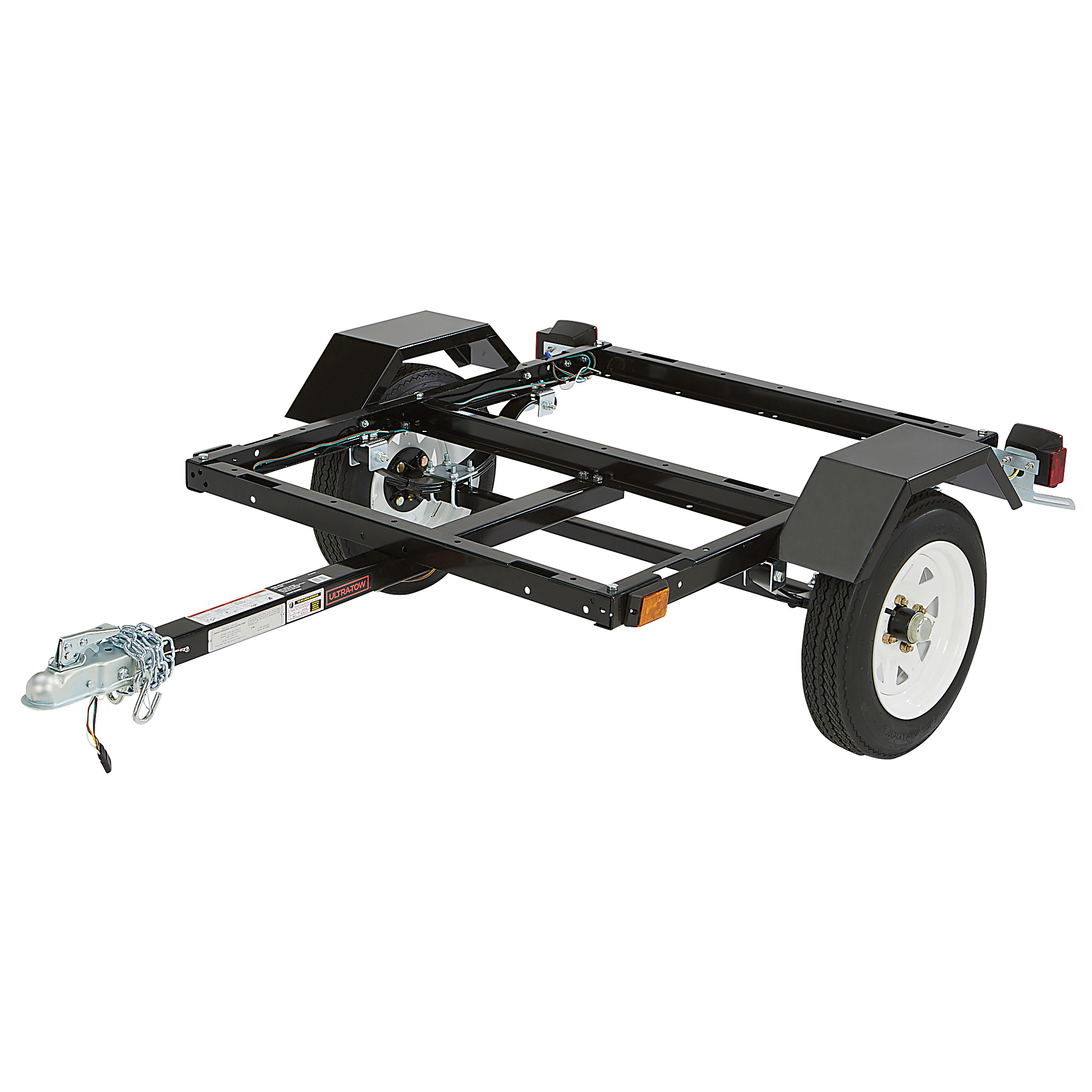
These models are built for homeowners handling residential yard debris, light power tools, or standard riding mowers. Equipped with 2,000-pound to 3,500-pound rated Dexter or Lippert idler axles (non-braking), they feature stamped steel A-frames, standard 2-inch ball couplers, and wire-mesh flooring.
- 4x6 Mesh Deck Trailer: Engineered with an empty weight of roughly 350 lbs and a 2,000 lb GVWR, leaving an effective payload capacity of approximately 1,650 lbs. It uses 12-inch bias-ply tires and is easily maneuvered by hand into a residential garage.
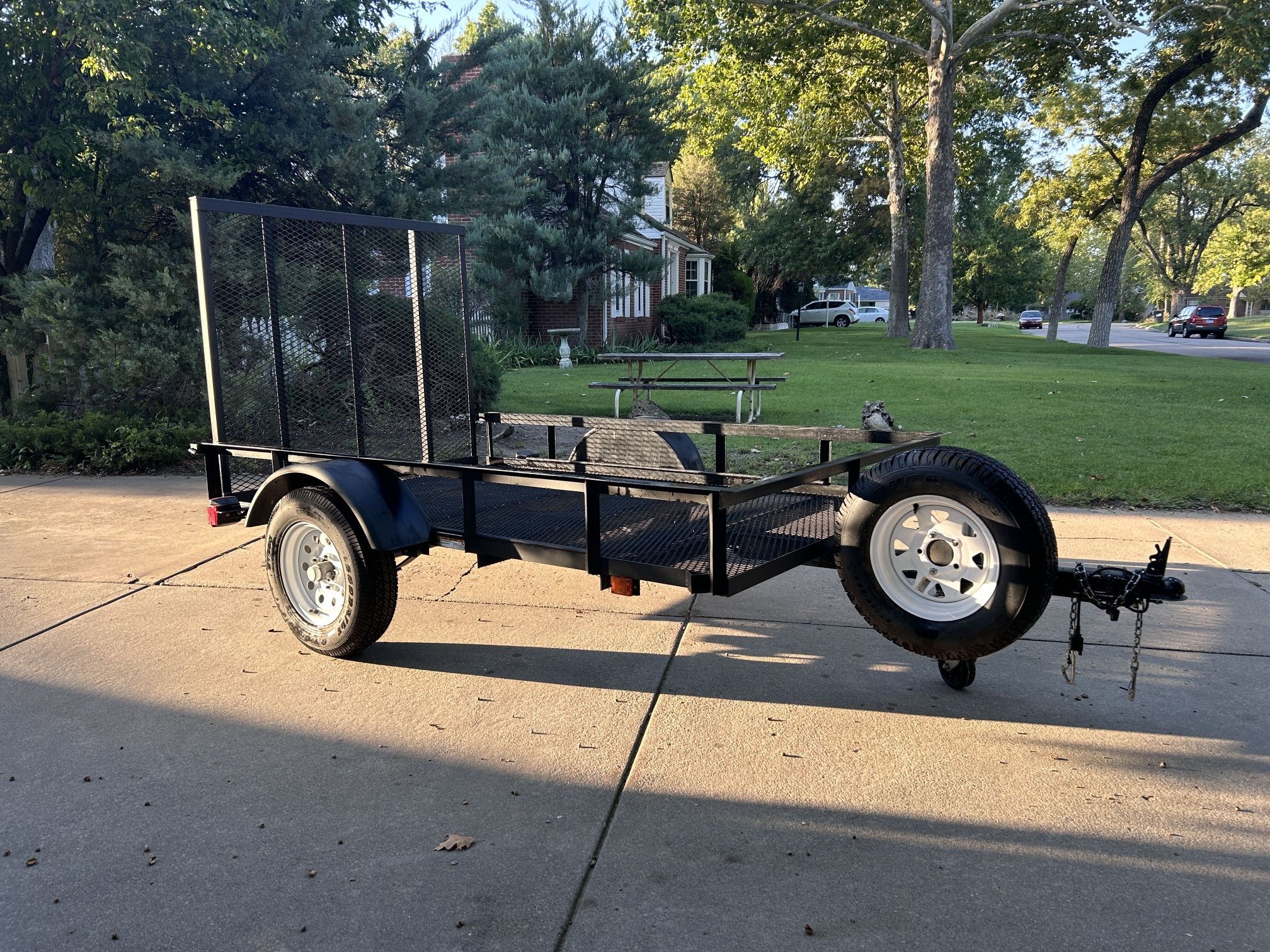
- 5x8 Wire Mesh Utility Trailer: The most popular entry-level utility footprint. Configured with a 2,000 lb or 2,990 lb GVWR, it provides roughly 1,900 to 2,150 lbs of usable payload. The 5-foot internal width comfortably clears standard 42-inch and 48-inch residential mower decks.
Mid-Sized Workhorse Trailers (5x10 to 6x12 Feet)
Mid-sized trailers transition into commercial landscaping, utility terrain vehicle (UTV) hauling, and substantial farm maintenance. These configurations typically utilize a 3,500 lb rated cambered leaf-spring axle paired with ST205/75R15 radial tires, offering highway stability.
- 5x10 Wood Floor Trailer: Featuring treated 2x8 southern yellow pine planking instead of wire mesh, this model resists point-impact puncture from concentrated loads like tractor implements. Rated at 2,990 lb GVWR with roughly 1,950 lbs of usable capacity.
- 6x12 Steel High-Side Trailer: Features solid 24-inch or 12-inch corrugated steel sidewalls rather than open angle-iron rails. It secures loose topsoil, gravel, mulch, or fire logs without loose debris blowing onto the roadway.
Heavy-Duty Tandem-Axle Utility Trailers (6x14 to 7x14 Feet)
Designed for small tractors with front-end loaders, mini-excavator attachments, multiple commercial zero-turn mowers, or palletized materials.
- Tandem-Axle 7x14 Wood Floor: Built on dual 3,500 lb axles (7,000 lb combined axle rating), generally de-rated to 6,000 or 7,000 lb GVWR depending on state trailer-brake triggers. Empty weights range from 1,700 to 1,950 lbs, providing 4,000 to 5,000 lbs of payload capacity.
- Electric Brake Integration: Under United States Federal Motor Carrier Safety Administration (FMCSA) and state transportation codes, tandem utility trailers sold at Tractor Supply typically feature electric drum brakes on at least one axle (and increasingly on both axles to ensure nationwide regulatory compliance).
Utility Trailer Comparison Matrix
The table below outlines real-world specifications across common utility trailer models available at Tractor Supply store locations.
| Trailer Model / Footprint | Flooring Type | Gross Vehicle Weight Rating (GVWR) | Estimated Curb Weight | Maximum Usable Payload | Tire Size / Wheel Configuration | Primary Target Application |
|---|---|---|---|---|---|---|
| 4x6 Single Axle (Carry-On) | Expanded Metal Mesh | 2,000 lbs | 340 lbs | 1,660 lbs | 4.80 x 12 Bias | Push mowers, dirt bikes, camping gear, light garden cleanup |
| 5x8 Single Axle (Carry-On) | Expanded Metal Mesh | 2,000 lbs | 420 lbs | 1,580 lbs | 4.80 x 12 Bias | Riding mowers (under 48-inch deck), trash hauling, small ATVs |
| 5x8 Heavy Duty Single | Expanded Metal Mesh | 2,990 lbs | 650 lbs | 2,340 lbs | ST205/75R15 Radial | Large ATVs, small UTVs, heavy fire timber, appliances |
| 5x10 Treated Wood Deck | Treated Pine Wood Planks | 2,990 lbs | 820 lbs | 2,170 lbs | ST205/75R15 Radial | Commercial zero-turn mowers, mulch, palletized landscape pavers |
| 6x12 Solid Steel High-Side | Solid Corrugated Steel | 2,990 lbs | 1,020 lbs | 1,970 lbs | ST205/75R15 Radial | Bulk material, loose manure, dirt, construction scrap, leaf cleanup |
| 6.4x12 Open Utility | Treated Pine Wood Planks | 2,990 lbs | 980 lbs | 2,010 lbs | ST205/75R15 Radial | 60-inch zero-turn mowers, wide-stance side-by-sides (UTVs) |
| 7x14 Tandem Axle Utility | Treated Pine Wood Planks | 7,000 lbs | 1,850 lbs | 5,150 lbs | ST205/75R15 Radial (Dual) | Sub-compact tractors with implements, multiple ATVs, commercial framing lumber |
Construction and Engineering: Mesh vs. Wood Floors
Choosing between expanded metal mesh flooring and treated lumber decks fundamentally alters the trailer's utility, lifespan, and maintenance regimen.
Expanded Metal Wire Mesh
Expanded steel mesh provides a lightweight frame, maximizing payload on sub-3,000 lb GVWR trailers.
- Advantages: Unmatched structural ventilation prevents rainwater pooling, reducing floor rot risks. The open mesh allows endless bungee or ratchet-strap tie-down positions without aftermarket anchor rings.
- Limitations: Heavy point loads (such as the narrow caster wheels of commercial mowers or machine outriggers) can stretch, dent, or rupture the welds holding the mesh to the angle-iron crossmembers. Mesh also leaves items exposed to road kick-up such as salt, slush, and gravel.
Treated Southern Yellow Pine Planking
Wood floors provide high structural rigidity, dampening road vibration and absorbing harsh point-load pressures across wide surface areas.
- Advantages: Wood handles concentrated cargo weight without permanent deflection. Dropping a split log or engine block onto a treated wood floor will scuff the surface rather than tearing the deck. Individual damaged planks can be unscrewed and replaced for minimal cost.
- Limitations: Increased empty weight reduces the trailer's net payload by 200 to 450 lbs compared to mesh. Requires periodic sealing with boiled linseed oil or exterior deck protectant to prevent warping, cupping, and dry rot.
Critical Towing Prerequisites and Rigging Safety
Safely towing a utility trailer bought from a Tractor Supply yard demands verified vehicle alignment, hitch integration, and structural balancing.
1. Tongue Weight and Weight Distribution Rules
The structural integrity of your tow rig depends upon the 10-to-15 percent tongue weight rule. For any total gross trailer weight (trailer weight plus load weight), exactly 10% to 15% of that weight must rest downward upon the tow vehicle hitch ball.
Incorrect Tongue Weight Dangers: Loading too much weight behind the trailer axle creates negative tongue weight. This unloads the tow vehicle's rear axle, inducing violent trailer sway (fishtailing) at highway speeds, which often results in rollovers. Conversely, placing excessive weight forward overloads the vehicle's rear suspension, blinding oncoming traffic with elevated headlights while severely reducing front-wheel braking friction and steering authority.
2. Coupler Compatibility and Safety Chains
- Hitch Ball Diameter: Check the stamped steel housing on the coupler. Most single-axle Tractor Supply trailers use a 2-inch ball; lighter 4x6 utility units may use a 1-7/8-inch ball, while select commercial tandem units demand a 2-5/16-inch ball. Coupling a 2-inch receiver to a 1-7/8-inch ball will cause catastrophic decoupling under deceleration.
- Chain Rigging: Safety chains must always cross in an "X" pattern beneath the trailer tongue before securing to the vehicle hitch receiver frame. This crossing creates an emergency cradle that catches the coupler if it disconnects from the ball, preventing the tongue from digging directly into the asphalt.
3. Electrical Harness Integrations
Trailers utilize standard four-way flat wiring connectors powering tail lights, brake markers, and directional turn signals. Tandem-axle configurations requiring integrated brake modules utilize standard 7-way round RV-style blade pin connectors, transferring modulated 12V electrical current directly to the trailer's drum magnets.
The Tractor Supply In-Store Buying and Registration Process
Purchasing a trailer from a Tractor Supply store differs significantly from standard retail merchandise transactions due to motor vehicle titling laws.
- Lot Inspection Prior to Checkout: Before executing payment at the register, perform a complete physical audit in the yard. Inspect the wiring harness for pinches along the tongue. Check the wheel hub caps for leaking grease. Verify the tire sidewall date codes (DOT stamping) to ensure they have not degraded under outdoor exposure. Ensure the rear ramp gate opens and latches cleanly.
- The Purchase Transaction: The retail clerk will register your purchase within their corporate point-of-sale system, generating your sales tax receipt and the trailer bill of sale.
- The Manufacturer’s Certificate of Origin (MCO): The MCO serves as the equivalent of a vehicle title from Carry-On Trailer Corporation. A store manager must physically sign and notarize (or legally execute based on state statutes) the MCO document. Inspect the 17-digit Vehicle Identification Number (VIN) printed on the MCO to guarantee it matches character-for-character with the stamped aluminum tag on the trailer frame.
- State DMV/BMV Processing: Take the MCO, purchase receipt, and identification to your local Department of Motor Vehicles or County Tag Office. You will pay state titling fees, property registration taxes, and receive your permanent metal license plate.
- Temporary Transit Rules: Most states allow a limited window (typically 3 to 15 days) to transport an unregistered trailer home directly from the point of purchase using the sales bill of sale. Check your individual state DMV provisions regarding trip permits or temporary trailer transit placards before driving.
Maintenance Schedules, Hub Care, and Ramp Gate Troubleshooting
A utility trailer lacks shock absorbers, active transmission systems, and cabin indicators. Preventative mechanical maintenance is essential to avoid highway breakdowns.
Utility Trailer Pre-Trip Inspection Workflow:
- Check cold tire PSI to match frame placard (typically 50-80 PSI)
- Inspect lug nuts with calibrated torque wrench (85-95 ft-lbs standard)
- Test 4-pin/7-pin electrical continuity: tail, brake, turn, hazards
- Verify spring pins and locking latches across the rear ramp gate
- Confirm coupler latch pin/padlock is locked and chains are crossed
Wheel Bearing Service and Repacking
Carry-On trailers purchased at Tractor Supply generally utilize standard Dexter-pattern axles. Many modern axles include "Super Lube" or "EZ-Lube" rubber spindle plugs located on the center hub cap.
- EZ-Lube Clarification: While convenient, pumping grease through the zerk fitting using an automatic grease gun risks blowing out the rear inner double-lip grease seal. When that seal bursts, grease coats the interior drum surface, causing electric trailer brakes to fail or catching fire under friction.
- Manual Repacking Frequency: Remove, clean, and hand-pack the inner and outer tapered roller bearings with high-temperature marine-grade lithium-complex grease every 12 months or 5,000 towing miles. Replace the rear cotter pin and rear rubber-encased double-lip grease seals every time the hub assembly is dismantled.
Ramp Gate Deflection and Hinge Remediation
The integrated fold-flat mesh ramp gate is rated for rolling cargo rather than static deadweight. Loading high-horsepower commercial diesel zero-turns can bow the mesh deck or shear the factory hinge pins over time.
- Support Solutions: When driving heavy machinery into the trailer bed, place wooden blocking or low jack stands beneath the rear frame corners to eliminate frame drop and remove hinge shear stress.
- Spring-Pin Lubrication: Salt and winter road brine corrode the zinc-plated spring retention pins. Spray them quarterly with penetrating fluid or white lithium grease to prevent gate binding.
Real-World Limitations and Common Failure Modes
Understanding the weak points of store-bought utility trailers will keep your cargo secure and preserve your investment:
- Factory Bias-Ply Tires: Base-level 4x6 and 5x8 trailers frequently ship with small 12-inch bias-ply tires. Bias-ply tires run hotter than radials and track road ruts aggressively. If you plan extensive highway driving at 70 mph, replace them with balanced ST-rated radial tires to reduce blowout risks.
- Thin Frame Finish: Factory high-gloss black enamel coats applied over mild angle iron offer minimal defense against heavy road salts. Scratched, unpainted frame sections should be prepped and treated with rust-inhibiting zinc primers and durable automotive undercoatings.
- Exceeding Ramp Weight Ratings: While a trailer might feature a 2,990 lb total payload rating, the rear loading ramp gate is often rated for a single concentrated vehicle axle limit of only 1,000 to 1,500 lbs. Always review the gate weight capacity tag before driving heavy machinery across it.
Frequently Asked Questions
Can I pull a 5x8 Tractor Supply utility trailer with a standard passenger car?
Yes, provided your passenger car features an approved Class I or Class II frame hitch and a towing capacity exceeding 1,500 pounds. An empty 5x8 mesh utility trailer weighs around 420 to 650 pounds, giving compact crossover SUVs and passenger sedans ample capability for light loads. Always reference your vehicle owner's manual for towing restrictions.
Does Tractor Supply register the trailer or provide permanent license plates on site?
No. Tractor Supply acts strictly as the retail dealer. They will furnish the notarized Manufacturer's Certificate of Origin (MCO) and the validated bill of sale at checkout. The purchaser must present these papers at their local DMV, BMV, or County Tag Office to register the vehicle, pay state sales taxes, and purchase plates.
What causes utility trailer tires to wear out unevenly on the inside edges?
Inside edge tread wear typically indicates that the trailer has been overloaded past its stated Gross Axle Weight Rating (GAWR), causing the solid steel cambered axle tube to flatten or reverse its natural upward curve. Other common causes include bent spindles from striking curbs, damaged wheel bearings, or incorrect factory axle alignment.
Why does my trailer light harness blow fuses when the tow vehicle is in reverse?
This problem is almost always caused by a bare copper wire contacting the steel frame, creating a direct ground short. Inspect the wiring run near the frame tongue pivot, along the spring hangers, and where the harness splits into the tail lamp brackets. Use plastic grommets and protective heat-shrink loom to prevent sharp frame metal from slicing wire insulation.
How tight should the wheel lug nuts be on a Tractor Supply utility trailer?
Standard 1/2-inch wheel studs fitted with zinc cone nuts require a torque range between 85 and 95 foot-pounds (ft-lbs). Re-check this torque with a calibrated manual torque wrench after the first 50 miles of towing, and after every wheel service thereafter, as lug nuts naturally seat and loosen on newly installed rims.
Maximizing Equipment Longevity and Utility Value
Investing in a Tractor Supply utility trailer provides reliable, versatile hauling capacity for farm chores, landscaping, and logistics. Protecting that investment requires treating the trailer like an active motor vehicle: properly securing loads within legal payload limits, inspecting wheel bearings annually, using high-visibility ratchet straps anchored directly to frame crossmembers, and routinely balancing tongue weight to ensure stable, predictable highway towing.
Image Gallery