Comprehensive Guide to What Oral Surgery Cypress TX Offers in 2026
Oral surgery in Cypress, TX, encompasses a broad spectrum of specialized dental services, including wisdom tooth extractions, dental implant placement, bone grafting, and corrective jaw surgery. Local clinics utilize advanced 3D imagin...
Oral surgery in Cypress, TX, encompasses a broad spectrum of specialized dental services, including wisdom tooth extractions, dental implant placement, bone grafting, and corrective jaw surgery. Local clinics utilize advanced 3D imaging and sedation techniques to treat complex issues involving the teeth, jaws, and facial structures, ensuring both functional restoration and aesthetic improvement for patients.
Contents
The dental landscape in Cypress, Texas, has evolved significantly as of 2026. As one of the fastest-growing suburbs in the Greater Houston area, Cypress now hosts a dense concentration of board-certified oral and maxillofacial surgeons. These specialists bridge the gap between dentistry and medicine, handling cases that go beyond the scope of general dentistry. Whether you are a resident of Bridgeland, Towne Lake, or the Fairfield area, understanding the specific surgical interventions available locally can help you make informed decisions about your oral health.
The Scope of Oral and Maxillofacial Surgery in Cypress
Oral and maxillofacial surgery is a recognized dental specialty that requires up to six additional years of hospital-based surgical and anesthesia training after dental school. In Cypress, the oral surgery offerings are designed to address everything from routine outpatient procedures to complex reconstructive surgeries.
Unlike general dentists who may perform simple extractions, oral surgeons in Cypress are equipped to manage complications, handle medically compromised patients, and perform surgeries involving the soft and hard tissues of the face. The 2026 standard of care in Cypress clinics emphasizes a "patient-first" approach, integrating digital workflows to minimize recovery times and improve surgical precision.
Primary Oral Surgery Procedures Available Locally
Wisdom Tooth Extraction and Management
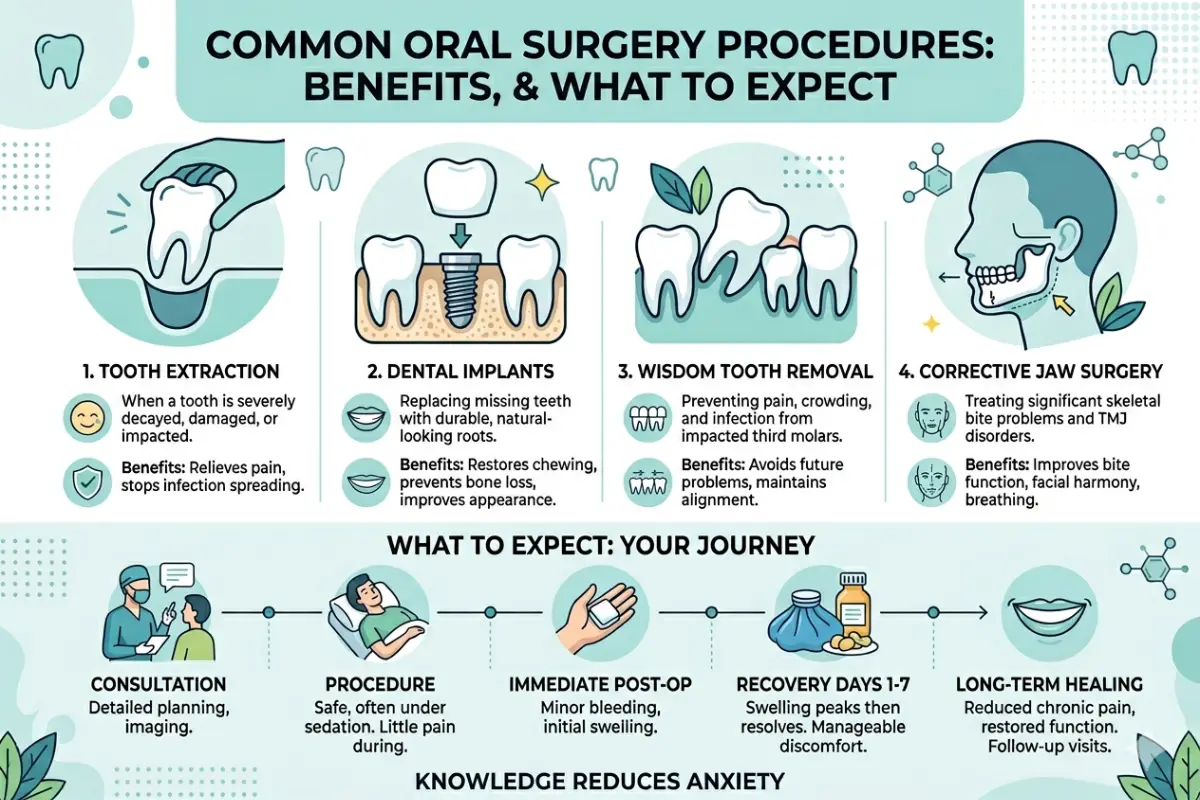
One of the most common reasons patients seek oral surgery in Cypress is the removal of third molars, commonly known as wisdom teeth. By 2026, many local practices have transitioned to using low-radiation Cone Beam Computed Tomography (CBCT) to map the exact location of the dental nerves before surgery.
Wisdom teeth often become "impacted," meaning they lack the space to erupt properly. This can lead to:
- Pericoronitis: Infection of the gum tissue surrounding the partially erupted tooth.
- Cyst Formation: Fluid-filled sacs that can damage the jawbone and adjacent roots.
- Crowding: Pressure on the second molars, potentially undoing years of orthodontic work.
Cypress surgeons typically offer IV sedation or general anesthesia for these procedures, ensuring the patient remains comfortable and unaware during the extraction.
Dental Implants and Full-Arch Reconstruction
Dental implants have become the gold standard for tooth replacement in 2026. Cypress oral surgery centers offer various implant solutions, ranging from single-tooth replacements to full-arch restorations like the "All-on-4" technique.
The process involves placing a biocompatible titanium or zirconia post into the jawbone, which acts as a prosthetic root. Over several months, a process called osseointegration occurs, where the bone fuses with the implant. In 2026, many Cypress offices utilize "Immediate Load" protocols, where temporary crowns are placed on the same day as the surgery, provided the patient’s bone density meets specific criteria.
Bone Grafting and Sinus Augmentation
For patients who have suffered bone loss due to periodontal disease or long-term tooth loss, bone grafting is often a prerequisite for dental implants. Cypress surgeons perform several types of grafts:
- Socket Preservation: Placing graft material immediately after an extraction to prevent bone resorption.
- Ridge Augmentation: Increasing the width or height of the jawbone.
- Sinus Lift: Elevating the sinus membrane to create space for bone grafts in the upper jaw.
Materials used in 2026 include autogenous bone (from the patient), allografts (human donor), and synthetic bioactive glasses that stimulate natural bone growth.
Specialized Corrective and Reconstructive Treatments
Orthognathic (Jaw) Surgery
Corrective jaw surgery is performed to fix skeletal irregularities that affect the ability to chew, speak, and breathe. These procedures are often done in coordination with local Cypress orthodontists. Patients with severe underbites, overbites, or crossbites that cannot be fixed with braces alone often find relief through orthognathic surgery. By 2026, virtual surgical planning (VSP) allows surgeons to simulate the entire procedure on a computer before the first incision is made, significantly increasing accuracy.
Oral Pathology and Biopsy Services
Oral surgeons are the primary line of defense against oral cancer and benign tumors of the mouth. If a patient or general dentist notices a persistent red or white patch, a non-healing sore, or an unexplained lump, a Cypress oral surgeon will perform a biopsy. These samples are sent to specialized labs, and the surgeon manages the subsequent treatment or excision of the lesion.
TMJ Disorder Treatment
Temporomandibular Joint (TMJ) disorders can cause chronic jaw pain, headaches, and "locking" of the jaw. While many cases are managed conservatively, Cypress oral surgeons offer surgical interventions for severe cases, such as arthrocentesis (joint flushing) or, in rare instances, total joint replacement.
Advanced Surgical Technology and Sedation Standards
The quality of oral surgery in Cypress is defined by the technology integrated into daily practice. In 2026, the following technologies are standard in top-tier Cypress clinics:
- Intraoral Scanners: Replacing messy traditional impressions with high-speed digital 3D images.
- Platelet-Rich Fibrin (PRF): Using the patient’s own blood to create a healing "plug" that accelerates tissue regeneration and reduces post-operative pain.
- Dynamic Navigation: GPS-like systems that guide the surgeon’s hand during implant placement in real-time.
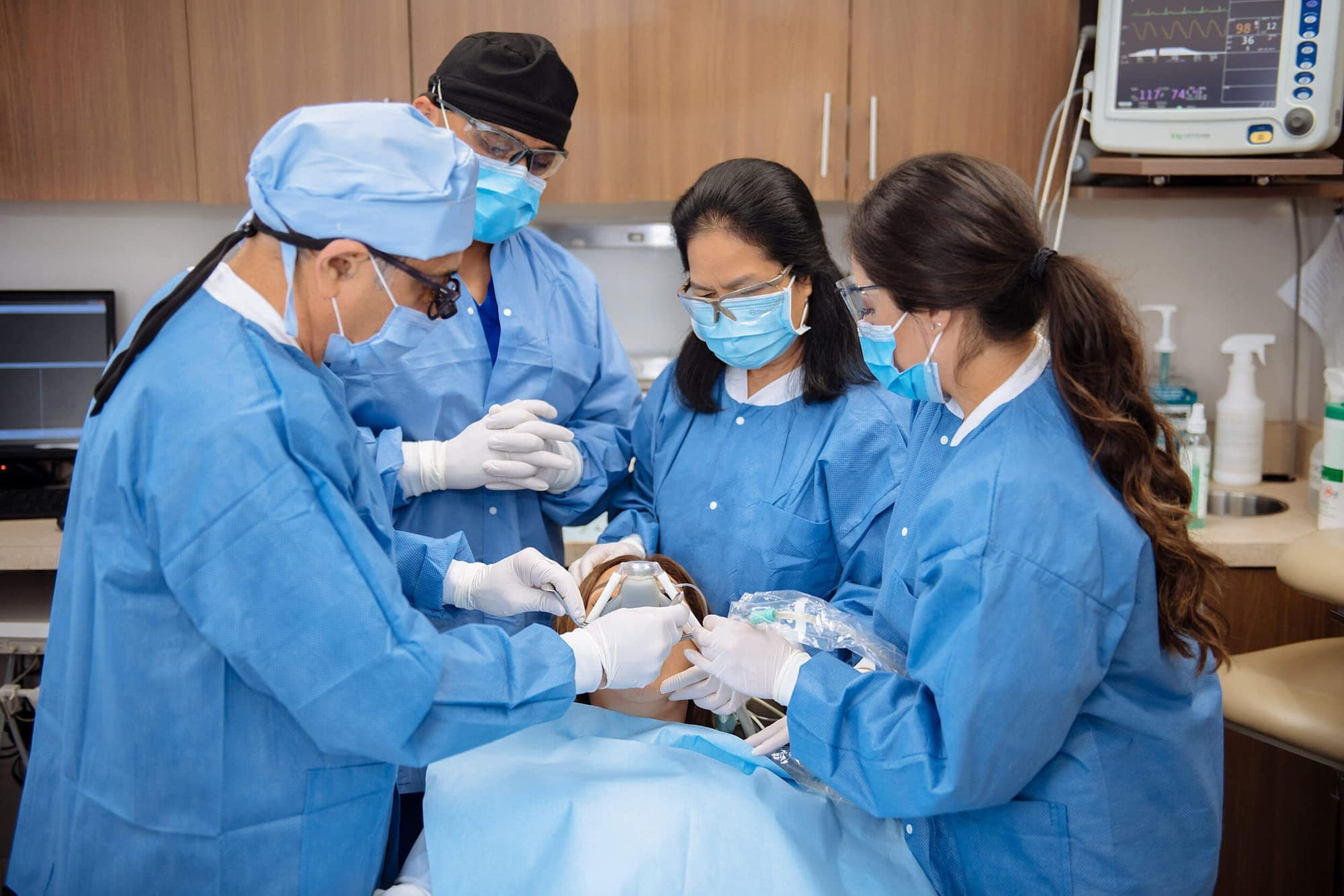
Safety is paramount, and Cypress surgeons adhere to strict anesthesia protocols regulated by the Texas State Board of Dental Examiners. Offices are equipped with hospital-grade monitoring equipment to track heart rate, blood pressure, and oxygen saturation throughout every surgical procedure.
Comparison of Common Oral Surgery Interventions
| Procedure | Typical Duration | Sedation Level | Primary Goal | Recovery Time |
|---|---|---|---|---|
| Simple Extraction | 20–40 mins | Local or Nitrous | Remove damaged tooth | 1–3 days |
| Wisdom Teeth | 45–90 mins | IV Sedation | Prevent crowding/infection | 5–7 days |
| Single Implant | 30–60 mins | Local or IV | Replace missing root | 2–4 days |
| Bone Grafting | 45–60 mins | IV Sedation | Build bone volume | 3–5 days |
| Jaw Surgery | 2–4 hours | General | Correct bite/aesthetics | 2–6 weeks |
Understanding the Cost of Oral Surgery in the Cy-Fair Area
Costs for oral surgery in Cypress, TX, vary based on the complexity of the case and the type of anesthesia required. In 2026, most oral surgery practices are "in-network" with major PPO insurance providers, and many offer third-party financing through services like CareCredit or Proceed Finance.
- Wisdom Teeth: Removal of four impacted teeth typically ranges from $1,500 to $3,000, including sedation.
- Dental Implants: A single implant (excluding the crown) generally costs between $2,000 and $4,500.
- Consultation Fees: Most Cypress specialists charge between $150 and $300 for an initial exam and 3D X-ray, though some may apply this toward the treatment cost.
It is important to note that many oral surgery procedures may be covered under medical insurance rather than dental insurance, particularly if the surgery is related to trauma, pathology, or obstructive sleep apnea.
Frequently Asked Questions
Do I need a referral to see an oral surgeon in Cypress?
While many patients are referred by their general dentist, most oral surgery offices in Cypress allow for self-referral, especially for consultations regarding dental implants or wisdom teeth. However, having a referral can help the surgeon understand your previous dental history and coordinate your long-term care plan.
What is the difference between a dentist and an oral surgeon?
A general dentist focuses on preventative care, fillings, and crowns. An oral surgeon is a specialist who has completed years of additional surgical residency. If a procedure involves deep impactions, bone reconstruction, or the need for IV sedation, an oral surgeon is the appropriate provider.
Is oral surgery painful?
With modern anesthesia and sedation, you should feel no pain during the procedure itself. Cypress surgeons also utilize long-acting local anesthetics that keep the area numb for several hours post-surgery. In 2026, the use of PRF and minimally invasive techniques has significantly reduced post-operative discomfort.
How long does it take to recover from oral surgery?
Recovery depends on the procedure. Simple extractions usually require a weekend of rest, while more involved surgeries like bone grafting or wisdom tooth removal may require 5 to 7 days before you can return to strenuous activity. Your surgeon will provide specific "post-op" instructions regarding diet and activity.
Can oral surgery help with Sleep Apnea?
Yes. Cypress oral surgeons often perform procedures such as Genioglossus Advancement or Maxillomandibular Advancement (MMA) to open the airway for patients who cannot tolerate CPAP machines. These surgeries are highly effective for moderate to severe Obstructive Sleep Apnea.
Practical Recommendation
If you are experiencing jaw pain, have missing teeth, or have been told your wisdom teeth are coming in, the first step is to schedule a consultation with a board-certified oral and maxillofacial surgeon in the Cypress area. Look for providers who are members of the American Association of Oral and Maxillofacial Surgeons (AAOMS) to ensure they meet the highest standards of surgical education and safety.
Disclaimer: This information is for educational purposes and does not constitute medical advice. Always consult with a qualified healthcare professional regarding surgical procedures and anesthesia.
Image Gallery