Tesla Model X vs. Model Y Size Comparison: Exterior, Interior, and Cargo Dimensions
Choosing between the Tesla Model X and Tesla Model Y frequently comes down to physical scale, interior cabin space, and overall practical utility. While both vehicles share Tesla’s design language and electric powertrain efficiency, th...
Choosing between the Tesla Model X and Tesla Model Y frequently comes down to physical scale, interior cabin space, and overall practical utility. While both vehicles share Tesla’s design language and electric powertrain efficiency, the Model X is a full-size flagship luxury SUV, whereas the Model Y is a mid-size crossover built on the smaller Model 3 platform.
Contents
Key Takeaways: Model X vs. Model Y Physical Differences
- Exterior Length: The Model X is 198.3 inches long, making it roughly 11.3 inches longer than the 187.0-inch Model Y.
- Exterior Width: Measuring 78.7 inches wide (without mirrors), the Model X is more than 3 inches wider than the Model Y (75.6 inches), requiring more lateral room in tight parking spaces.
- Seating Configurations: The Model X offers dedicated 5-, 6-, and 7-seat configurations with adult-usable third-row seating, whereas the Model Y offers a 5-seat standard layout and a compact optional 7-seat layout best reserved for small children.
- Maximum Cargo Volume: The Model X provides up to 92 cubic feet of maximum interior storage space, compared to the Model Y's 76.2 cubic feet.
- Door Clearance: The Model X utilizes Falcon Wing rear doors that require at least 12 inches of lateral clearance and around 7 feet of ceiling height to fully extend, while the Model Y relies on standard front-hinged side doors.
Exterior Dimensions: Length, Width, Height, and Wheelbase
Understanding the exterior dimensions of the Tesla Model X and Tesla Model Y is critical for assessing garage fit, street parking feasibility, and driving dynamics.
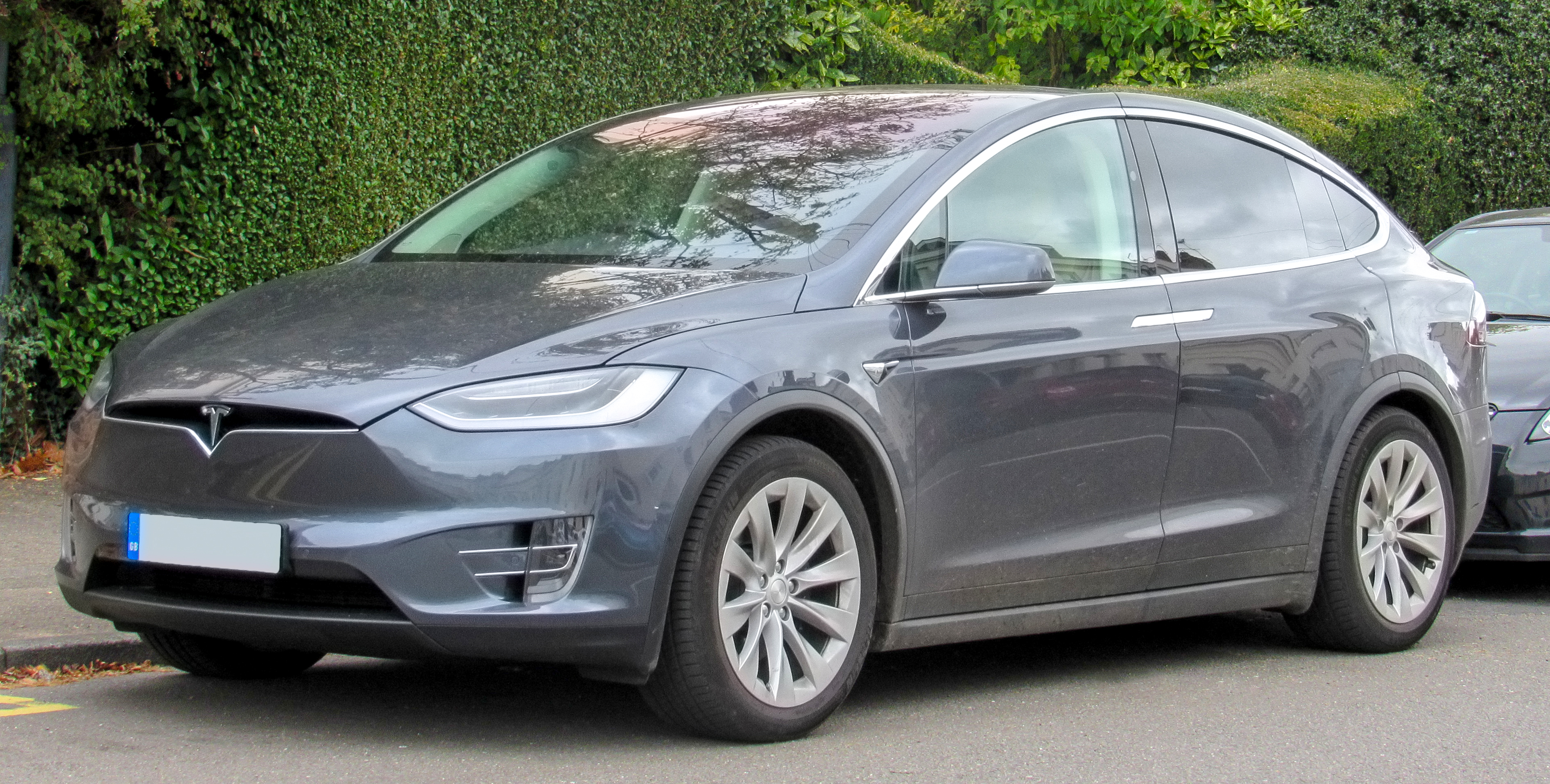
The Model X occupies a noticeably larger footprint on the road. Its 116.7-inch wheelbase translates to expanded stability during high-speed highway cruising and provides the foundation for its larger cabin. By contrast, the Model Y features a 113.8-inch wheelbase. Although smaller, this shorter wheelbase gives the Model Y a tighter turning radius, making it easier to maneuver through crowded city streets, narrow multi-story parking structures, and standard residential spaces.
The table below outlines the precise factory exterior specifications for both vehicles:
| Dimension Metric | Tesla Model X | Tesla Model Y | Difference (Model X vs. Model Y) |
|---|---|---|---|
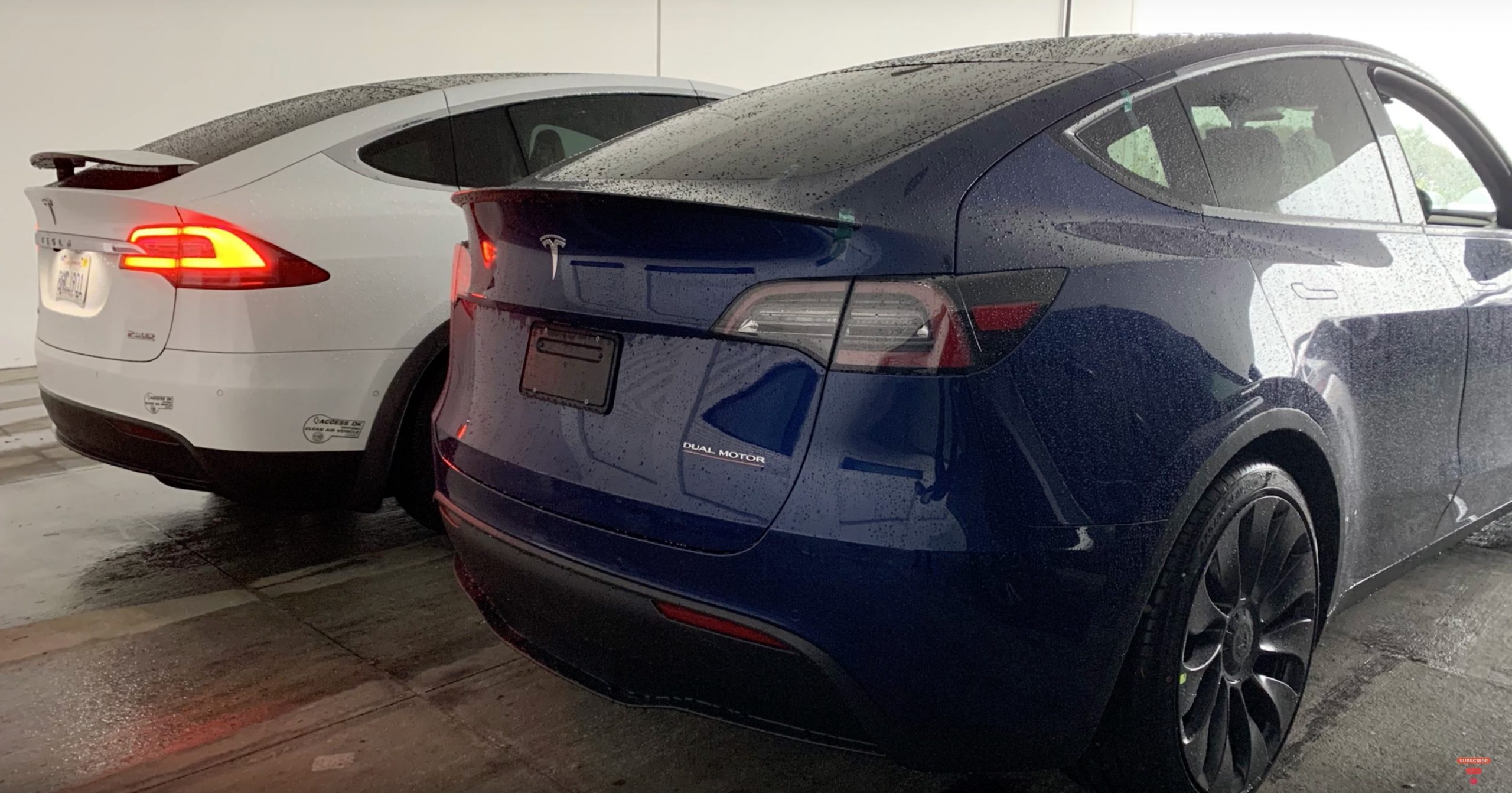
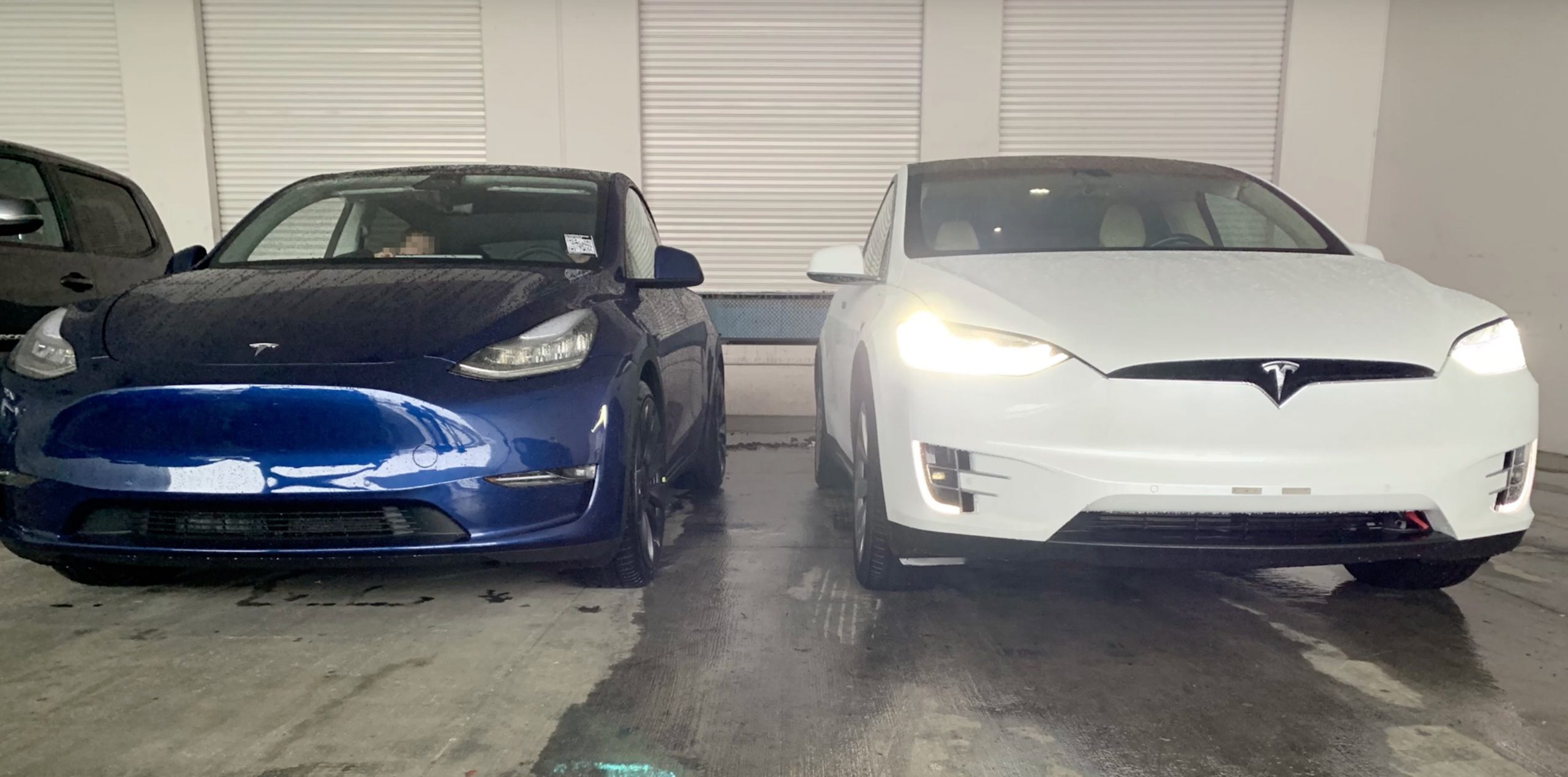
| Overall Length | 198.3 in (5,057 mm) | 187.0 in (4,750 mm) | Model X +11.3 in (+287 mm) |
| Width (Mirrors Folded) | 78.7 in (1,999 mm) | 75.6 in (1,921 mm) | Model X +3.1 in (+78 mm) |
| Width (Mirrors Unfolded) | 89.4 in (2,271 mm) | 83.8 in (2,129 mm) | Model X +5.6 in (+142 mm) |
| Overall Height | 66.1 in (1,680 mm) | 64.0 in (1,624 mm) | Model X +2.1 in (+56 mm) |
| Wheelbase | 116.7 in (2,965 mm) | 113.8 in (2,890 mm) | Model X +2.9 in (+75 mm) |
| Ground Clearance | 5.7 – 8.9 in (Air Susp.) | 6.6 in (Fixed) | Model X adjustable suspension |
| Curb Weight | ~5,148 – 5,390 lbs | ~4,154 – 4,398 lbs | Model X +950 – 1,000 lbs |
The Model X includes adaptive air suspension as standard equipment, allowing drivers to adjust ride height electronically. This enables lower high-speed drag or increased ground clearance (up to nearly 9 inches) for steep driveways or unpaved tracks. The Model Y uses a fixed steel coil spring suspension setup, maintaining a uniform 6.6 inches of ground clearance across standard conditions.
Falcon Wing Doors vs. Standard Rear Doors: Clearance Requirements
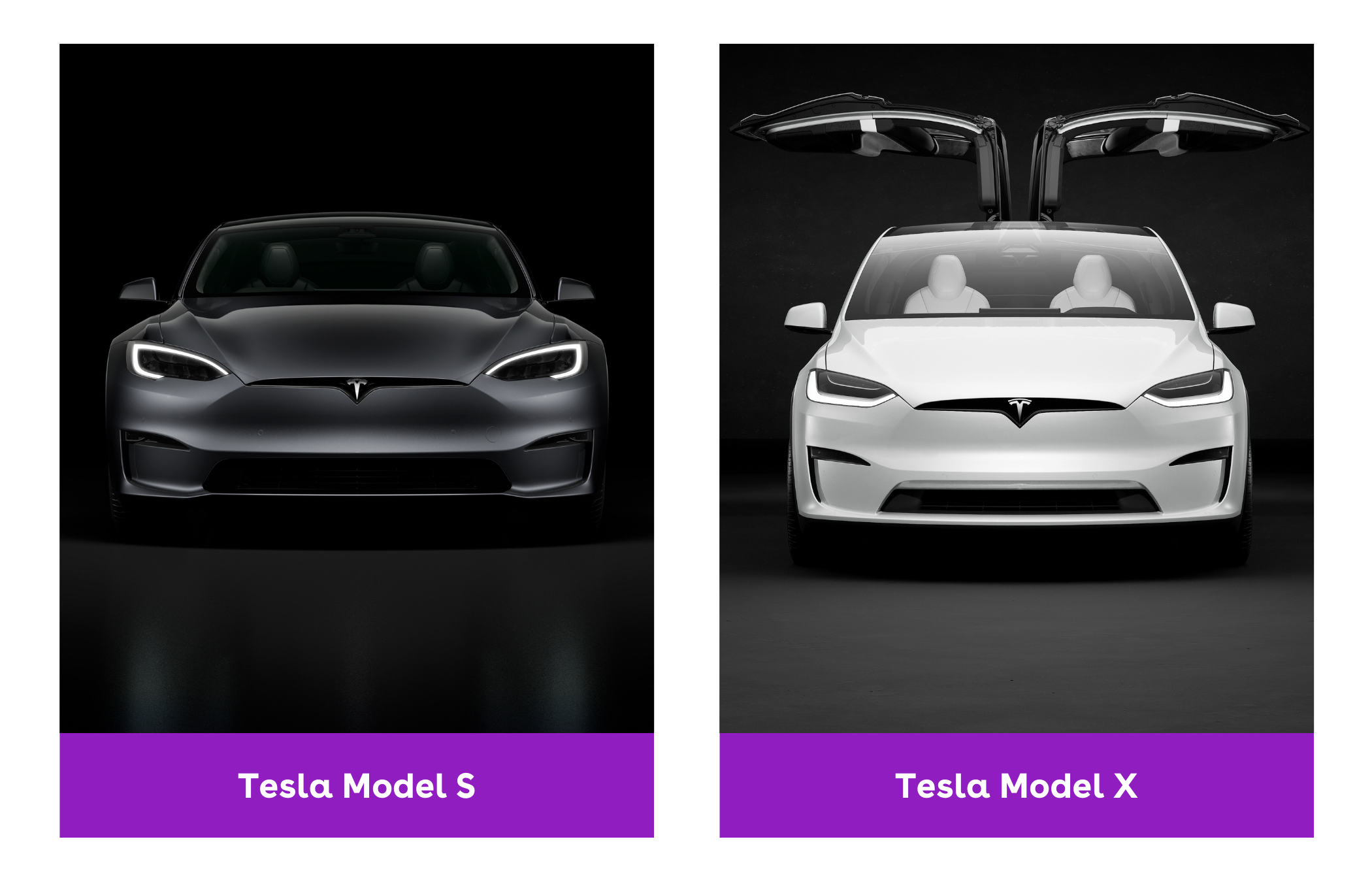
One of the most defining physical distinctions between the Model X and Model Y is the door mechanism. The Model X features dual-hinged rear Falcon Wing doors, whereas the Model Y utilizes traditional side-swinging passenger doors.
Model X Falcon Wing Operating Requirements
The Falcon Wing doors lift vertically before extending outward, operating on ultrasonic sensors designed to detect nearby vehicles, garage walls, and low-hanging ceilings.
- Side Clearance: Falcon Wing doors require approximately 12 inches (30 cm) of lateral space to open outward and clear adjacent vehicles.
- Vertical Clearance: The doors require approximately 84 inches (7 feet / 2.13 meters) of overhead clearance to open completely without stopping short.
- Practical Considerations: In low-ceiling residential garages, the doors will automatically stop at a lower height setting to avoid collision, which can occasionally make entry or exit into the rear seats tighter for tall adults.
Model Y Standard Door Advantages
The Model Y relies on simple, traditional door handles and hinges. While opening wide doors in tight parking spots can occasionally be tricky, the low-tech operation eliminates overhead clearance worries and reduces mechanical complexity.
Interior Cabin Dimensions: Headroom, Legroom, and Shoulder Room
Despite the exterior size differences, both vehicles offer spacious, airy cabins thanks to expansive panoramic glass roofs. However, the Model X offers wider interior hip and shoulder dimensions across both the front and second rows.
Front-Row Cabin Dimensions
In the front row, both vehicles offer ample legroom for driver and passenger, but the Model X feels substantially wider:
- Front Headroom: Model X provides 41.7 inches, compared to 41.0 inches in the Model Y.
- Front Legroom: Model X offers 41.1 inches, matching the 41.8 inches found in the Model Y.
- Front Shoulder Room: Model X expands to 60.7 inches, whereas the Model Y measures 56.4 inches—giving front occupants in the Model X over 4 inches of extra lateral elbow room.
Second-Row Space and Comfort
In the second row, the Model X delivers superior width and shoulder clearance, making it far more practical for seating three adults side by side:
- Second-Row Legroom: Model X offers approximately 38.4 inches, while the Model Y offers 40.5 inches. (Note: Model Y second-row legroom is surprisingly generous due to efficient battery tray packaging).
- Second-Row Shoulder Room: Model X delivers 56.8 inches versus 54.0 inches in the Model Y.
Seating Layouts: 5-, 6-, and 7-Passenger Configurations
The seating capability of each vehicle heavily depends on the chosen interior layout.
Model X Seating Layouts: [5-Seat] Row 1 (2) | Row 2 (3 Bench) [6-Seat] Row 1 (2) | Row 2 (2 Captain's Chairs) | Row 3 (2 Bench) [7-Seat] Row 1 (2) | Row 2 (3 Bench) | Row 3 (2 Bench) Model Y Seating Layouts: [5-Seat] Row 1 (2) | Row 2 (3 Bench) [7-Seat] Row 1 (2) | Row 2 (3 Bench on Sliders) | Row 3 (2 Compact)
Model X Seating Options
- 5-Seat Configuration: Features a standard 60/40 folding second-row bench and a massive rear cargo trunk area.
- 6-Seat Configuration: Replaces the second-row bench with two individual captain's chairs separated by a center aisle. This configuration provides the easiest physical access to the third row and is widely considered the most luxurious passenger layout.
- 7-Seat Configuration: Employs a folding three-person second-row bench alongside a folding two-person third row, balancing maximum passenger transport with rear cargo versatility.
The third row in the Model X accommodates teenagers and average-sized adults reasonably well on short-to-medium length trips, benefiting from the vehicle's longer body length and roofline.
Model Y Seating Options
- 5-Seat Configuration: The standard layout with comfortable space for five adults and extensive sub-floor storage in the trunk.
- 7-Seat Configuration (Optional): Adds a small, two-person third row equipped with sliding second-row seats to adjust legroom distribution.
Important Note on Model Y's 3rd Row: The optional third row in the Model Y is limited in both head and leg space due to the sloping rear glass roof line. It is intended primarily for young children or emergency short-distance transport rather than regular adult travel.
Cargo Capacity: Rear Trunk, Sub-Floor, and Front Trunk (Frunk)
Cargo utility is a key area where the physical volume of the Model X outpaces the Model Y. Both vehicles offer a front trunk ("frunk") and hidden sub-floor rear storage compartments, but absolute storage space favors the larger Model X platform.
Total Storage Breakdown
Tesla Model X Cargo Capacity:
- Maximum Cargo Space (Seats Folded Flat): Up to 92.0 cubic feet
- Front Trunk (Frunk) Volume: 6.6 cubic feet
- Rear Cargo Behind 2nd Row (5-Seat Layout): 37.1 cubic feet
Tesla Model Y Cargo Capacity:
- Maximum Cargo Space (Seats Folded Flat): 76.2 cubic feet
- Front Trunk (Frunk) Volume: 4.1 cubic feet
- Rear Cargo Behind 2nd Row (5-Seat Layout): 30.2 cubic feet
Frunk and Deep Trunk Storage
The Model X frunk is roughly 2.5 cubic feet larger than the Model Y frunk, allowing it to easily hold a standard carry-on suitcase or several large grocery bags.
In the rear, both vehicles feature deep sub-floor storage cavities located under the main trunk liner. The Model Y excels at deep vertical trunk depth for its segment, but the overall floor length and total width of the Model X cargo floor permit larger items—such as full-size bicycles, oversized luggage sets, or golf bags—to lie flat without diagonal angling.
Garage Fit, Parking, and Towing Dimensions
Before purchasing either vehicle, measuring your parking garage space and assessing everyday utility requirements is vital.
Residential Garage Compatibility
- Standard Single Car Garage Dimensions: Standard U.S. single-car garage doors are typically 8 to 9 feet wide (96 to 108 inches) and 7 feet tall (84 inches).
- Model X Garage Considerations: With mirrors extended, the Model X is 89.4 inches wide, leaving under 4 inches of clearance on either side of an 8-foot garage door frame. Retracting mirrors automatically via GPS settings is recommended when pulling into narrow bays. Additionally, low garage door openers or storage racks can restrict full extension of the Falcon Wing doors.
- Model Y Garage Considerations: With a overall width of 83.8 inches (mirrors extended) and conventional side doors, the Model Y fits comfortably into nearly all standard single and double garages with straightforward access.
Towing Specs and Chassis Weight
Vehicle size and curb weight also affect towing capabilities:
- Tesla Model X Towing Capacity: Up to 5,000 lbs (2,268 kg) when equipped with the factory tow package and standard 20-inch wheels.
- Tesla Model Y Towing Capacity: Up to 3,500 lbs (1,587 kg) when equipped with the factory tow package.
The heavier curb weight of the Model X (over 5,100 lbs) provides a sturdier towing platform for heavier trailers, travel campers, or boat transports.
Which Size Is Right for You?
Selecting between the Tesla Model X and Tesla Model Y depends on how you plan to use the space and your daily parking setup.
Choose the Tesla Model X if:
- You regularly transport more than 5 passengers, including adults or older teens in the third row.
- You need maximum cargo space (up to 92 cu ft) and higher towing capabilities (up to 5,000 lbs).
- You prefer executive-style 6-seat captain's chair seating arrangements.
- You have a spacious garage or dedicated parking area that easily accommodates a 198-inch vehicle length and vertical Falcon Wing door clearance.
Choose the Tesla Model Y if:
- You want a compact/mid-size footprint that is easy to park, maneuver, and maneuver through dense urban areas.
- You primarily carry 1 to 5 passengers and only occasionally need secondary cargo or child-seating capability.
- You park in tight multi-story garages or residential spaces with low overhead ceilings.
- You want high cargo versatility (over 76 cu ft) without the added width and mass of a full-size SUV.
Frequently Asked Questions
Is the Tesla Model X significantly bigger than the Model Y?
Yes. The Model X is 11.3 inches longer, over 3 inches wider, and 2.1 inches taller than the Model Y. It also offers around 15.8 cubic feet of additional total maximum cargo volume.
Can adults fit comfortably in the 3rd row of a Model Y?
No, the optional 3rd row in the Model Y is designed primarily for young children. Adult passengers will find legroom and headroom severely limited due to the sloping rear roofline. Adult passengers requiring regular 3rd-row seating should consider the Model X.
Will the Model X Falcon Wing doors hit my garage ceiling?
The Falcon Wing doors use dual sensors to detect ceilings and low obstacles, automatically adjusting their opening height to prevent contact. In low-ceiling garages, the doors will open partially to avoid striking the ceiling, though this reduces the entry clearance height for passengers.
How much larger is the Model X frunk compared to the Model Y frunk?
The Model X front trunk offers approximately 6.6 cubic feet of space, compared to 4.1 cubic feet in the Model Y frunk. The Model X frunk easily accommodates full-size carry-on bags or several backpacks.
Which model is easier to park in tight city spots?
The Model Y is easier to park. Its 187-inch length and 75.6-inch width (mirrors folded) make it significantly easier to maneuver into standard street parking spots and narrow garage structures compared to the 198.3-inch-long Model X.
Summary and Next Steps
When evaluating the Tesla Model X versus Model Y size, the decision ultimately comes down to full-size utility versus mid-size agility. The Model X provides maximum interior space, true 6- or 7-passenger utility, and higher towing limits at the expense of a larger footprint and overhead door clearance requirements. The Model Y offers exceptional space efficiency, easier parking, and plenty of cargo volume for a standard household.
Before ordering, measure your garage depth, entry height, and door frame width to ensure a smooth parking fit, and test-drive both vehicles with your family to confirm seating comfort across all rows.
Image Gallery