Solar PV Solar Panel Installation in Woking: Key Considerations
Installing a solar photovoltaic (PV) system in Woking requires balancing local planning rules, roof structural limits, electrical grid compliance, and financial returns. Homeowners must verify Permitted Development Rights, secure Distr...
Installing a solar photovoltaic (PV) system in Woking requires balancing local planning rules, roof structural limits, electrical grid compliance, and financial returns. Homeowners must verify Permitted Development Rights, secure Distribution Network Operator (DNO) approval from UK Power Networks, choose Microgeneration Certification Scheme (MCS) accredited installers, and size their arrays correctly to maximize self-consumption and export revenues.
Contents
Navigating Woking Planning Permission and Permitted Development
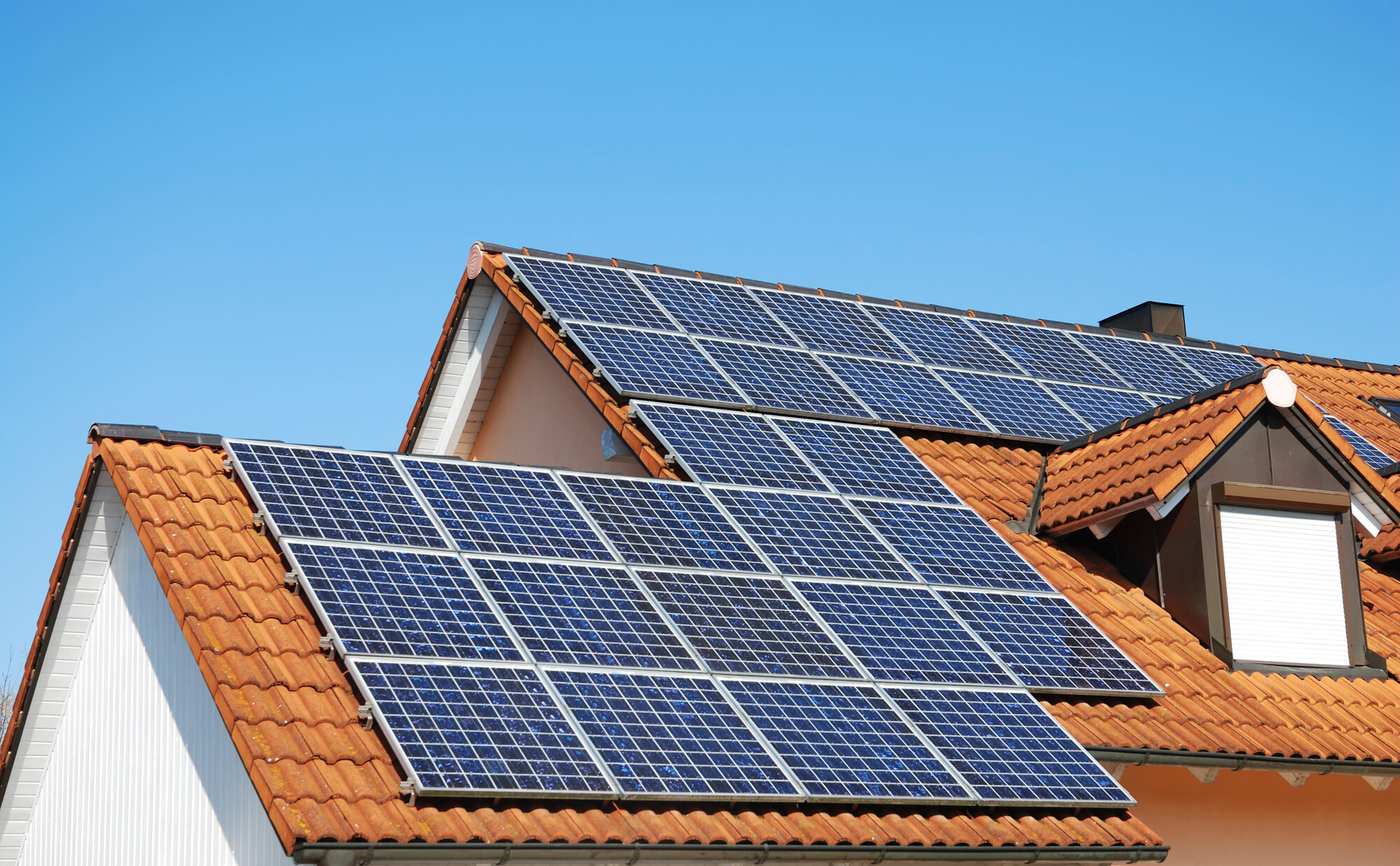
For most residential properties in Woking, solar panel installations fall under Permitted Development Rights (PDR), which allows property owners to make structural alterations without submitting a full planning application. These rights are granted under Class A, Part 14 of the Town and Country Planning (General Permitted Development) (England) Order 2015. However, strict criteria must be satisfied for an installation to remain within permitted limits.
To qualify as Permitted Development, roof-mounted solar PV systems must comply with specific spatial constraints:
- Protrusion Limits: Panels must not extend more than 200 millimetres (20 cm) beyond the existing roof plane or wall surface.
- Height Restrictions: Panels cannot be installed higher than the highest point of the existing roof, excluding any chimney stack.
- Visual Impact Provisions: Systems must be designed, so far as practicable, to minimize their effect on the external appearance of the building and the amenity of the local area.
- Permitted Development Limits:
- Highest Roof Point / Ridge Line: Panel cannot exceed this point.
- Roof Plane: Max 200mm protrusion from plane.
Planning Exceptions in Woking Borough
Woking Borough Council enforces specific regulations in designated areas where Permitted Development Rights are restricted or removed entirely:
- Conservation Areas: Woking contains several designated conservation areas, including parts of Horsell, Pyrford, St John’s, Mount Hermon, and the Woking Town Centre area. If your property is within a conservation area, solar panels installed on a wall or roof slope that fronts a highway are not permitted development. They require full planning permission. Installations on rear or side roof slopes hidden from public highways may still qualify, but written confirmation from the planning authority is strongly advised.
- Listed Buildings: If your building is Grade I, Grade II*, or Grade II listed, Permitted Development Rights for solar arrays do not apply. Installing panels on a listed building—or within its curtilage—requires Listed Building Consent, along with standard planning permission.
- Article 4 Directions: Specific streets or housing developments in Surrey may be subject to Article 4 directions that strip away standard planning exemptions to preserve architectural uniformity.
Property owners uncertain about their site constraints should submit a Lawful Development Certificate (LDC) application to Woking Borough Council. An LDC provides formal legal proof that the proposed solar PV installation does not require planning permission.
Roof Structural Integrity, Orientation, and Solar Yield in Surrey
Surrey benefits from favorable solar irradiance levels compared to the UK average. Woking receives approximately 1,000 to 1,050 kWh of solar radiation per square metre annually. To translate this solar resource into usable AC electricity, the physical attributes of the building must be evaluated.
- Solar Yield by Roof Orientation:
- South: 100% Yield
- South-East (SE): 95% Yield
- East / West: 80-85% Yield
- North / North-West / North-East / South-West
Roof Pitch and Orientation
- South-Facing Roofs: Optimal orientation in Woking is due south with a roof pitch between 30 degrees and 40 degrees. This configuration maximizes total annual kilowatt-hour (kWh) generation.
- East/West Split Systems: East- and west-facing roofs generate approximately 80% to 85% of an equivalent south-facing array. However, an east/west split spreads electricity generation across the morning and late afternoon, matching peak domestic consumption patterns and reducing reliance on grid imports.
- North-Facing Roofs: Generally unviable for standard pitched installations due to yield losses exceeding 40% to 50%.
Structural Loading and Rafter Assessment
Solar panels add dead load and wind uplift forces to the roof framing. Standard crystalline silicon panels weigh between 18 kg and 23 kg each, adding roughly 12 to 16 kg per square metre including mounting rails and ballasts.
Before installation, an accredited structural engineer or qualified solar installer must assess:
- Rafter Condition: Checking for timber rot, sagging, or historic woodworm infestation.
- Roof Covering Type: Slate roofs require specialized flashing hooks and careful tile cutting to prevent moisture ingress. Concrete pan tiles and clay tiles require specialized roof hooks attached directly to the rafters.
- Wind Uplift Calculations: Surrey experiences seasonal high winds. Mounting systems must be anchored into primary timber rafters using structural timber screws, rather than securing directly to roof battens.
Shading Mitigation
Trees, neighboring gables, chimneys, and dormer windows cast shadows that reduce solar panel output. Standard string inverters operate in series, meaning shading on a single panel degrades the output of the entire string. Where partial shading exists, installers should specify microinverters (such as Enphase) or DC power optimizers (such as SolarEdge). These devices allow each panel to operate independently at its individual Maximum Power Point (MPPT).
Grid Connection Requirements: UK Power Networks (G98 vs. G99)
Every grid-tied solar PV installation in Woking must be registered with the Distribution Network Operator (DNO). The DNO responsible for the electricity distribution grid in Woking and the surrounding Surrey region is UK Power Networks (UKPN).
Grid connection rules depend on the total AC output capacity of the system's inverter, as governed by Energy Networks Association (ENA) engineering standards:
| System Size (AC Inverter Rating) | Procedure & Timeline |
|---|---|
| G98: Up to 3.68kW (Single-Phase)Up to 11.04kW (Three-Phase) | "Fit and Inform" - Commission system, notify UK Power Networks within 28 days post-install. |
| G99: Over 3.68kW (Single-Phase)Over 11.04kW (Three-Phase) | "Apply and Wait" - Submit formal application; await UKPN prior approval before installation. |
Engineering Standard G98 ("Fit and Inform")
- Capacity Limit: Applies to systems with a total inverter export capacity of 3.68 kW or less per phase (equivalent to 16 Amps at 230V single-phase).
- Process: The installer commissions the system and notifies UK Power Networks within 28 days post-installation. No prior permission is required from the grid operator before switching the system on, provided the equipment is pre-approved on the ENA Type Test Register.
Engineering Standard G99 ("Prior Approval Required")
- Capacity Limit: Applies to any system with an inverter output exceeding 3.68 kW single-phase (or 11.04 kW three-phase).
- Process: The installer must submit a formal G99 application to UK Power Networks before physical installation begins. UKPN assesses local transformer capacity and network headroom. UKPN may approve the connection outright, approve it subject to an export limitation device (e.g., capping export at 3.68 kW while allowing a 5 kW inverter for battery charging), or mandate grid reinforcement fees if the local network is congested.
Financial Incentives, 0% VAT, and Export Tariffs
The economics of installing residential solar panels in Woking depend on upfront capital costs, direct self-consumption savings, zero-rated VAT legislation, and export remuneration.
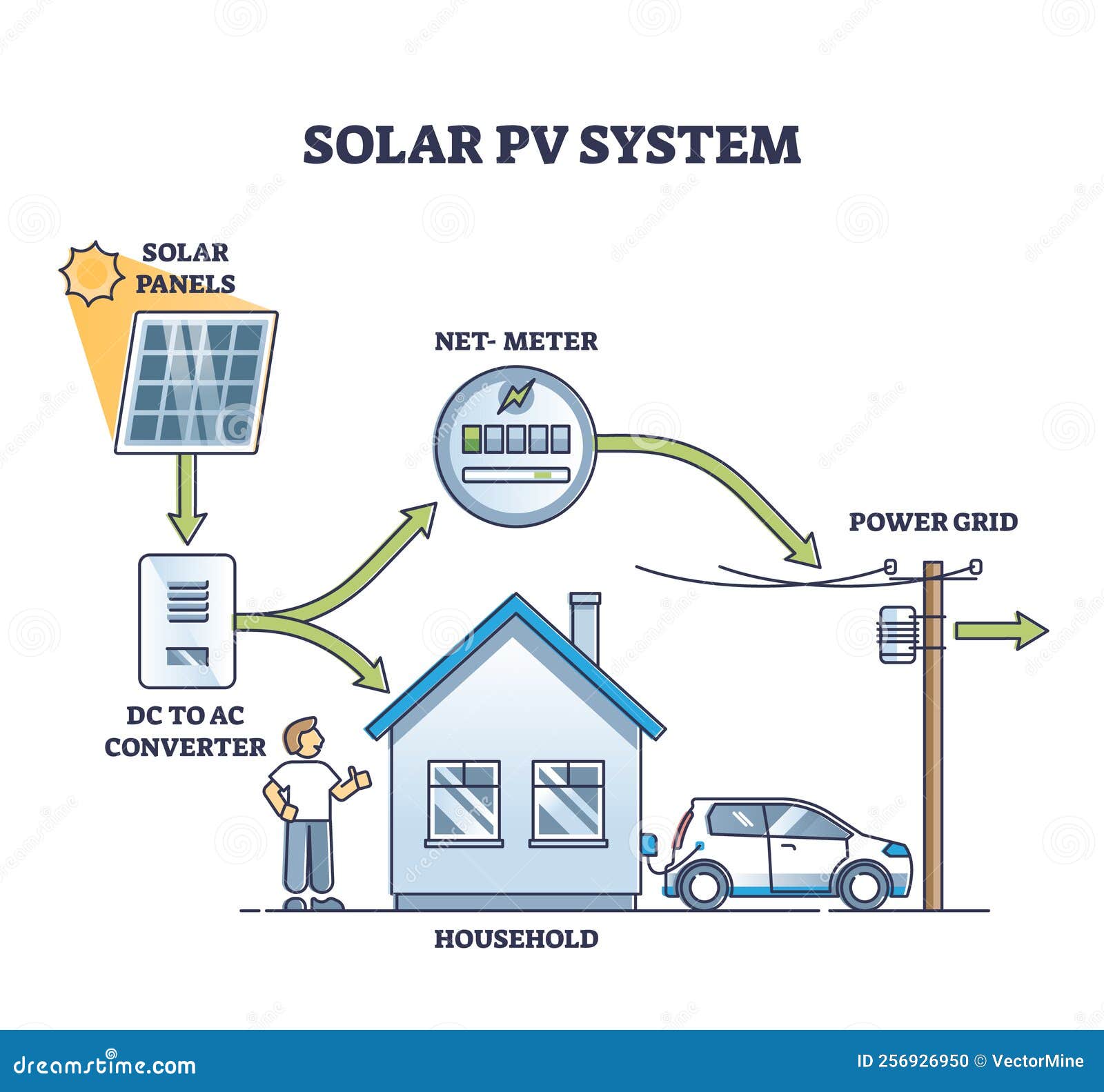
- Financial Flow Architecture:
- Solar Array
- Inverter / Battery
- Home Appliances (Direct Savings)
- Smart Meter
- UKPN Grid
- Export Tariff Payments (Smart Export Guarantee)
- UKPN Grid
- Inverter / Battery
- Solar Array
Zero-Rated VAT Scheme
Under current UK tax legislation administered by HM Revenue & Customs (HMRC Guidance on Energy-Saving Materials), residential installations of solar panels and thermal insulation benefit from a 0% VAT rate. This tax relief applies to both the supply and installation of equipment and extends to stand-alone and co-located domestic energy storage batteries. This temporary zero-rate provision runs through 31 March 2027, after which standard reduced rates (5%) are scheduled to resume unless extended by Parliament.
Smart Export Guarantee (SEG)
The Smart Export Guarantee (SEG) requires licensed electricity suppliers to pay domestic generators for excess renewable electricity exported back to the grid.
To qualify for SEG payments, system owners in Woking must satisfy three core conditions:
- MCS Certification: The solar array and inverter must be installed by a installer holding certification under the Microgeneration Certification Scheme (MCS).
- Smart Metering: The property must have an operational smart meter (SMETS1 or SMETS2) capable of recording half-hourly export readings.
- DNO Confirmation: A formal notification response or approval letter from UK Power Networks (G98 or G99 confirmation) must be submitted to the energy supplier.
Export tariffs vary by energy supplier, with fixed rates generally offering 12p to 15p per kWh exported, and dynamic tariffs fluctuating based on wholesale market demand.
System Sizing and Technical Comparison Matrix
Selecting the appropriate system capacity depends on available roof space, household electricity demand, budget, and storage preferences. The following table provides typical baseline metrics for residential solar PV installations in Surrey:
| Parameter / Feature | Compact System (3.0 kWp) | Standard System (4.5 kWp) | Large System (6.5 kWp) | Commercial/Large Array (10.0 kWp) |
|---|---|---|---|---|
| Typical Panel Count (420W panels) | 7–8 panels | 10–11 panels | 15–16 panels | 23–24 panels |
| Required Roof Area | Approx. 14–16 m² | Approx. 20–23 m² | Approx. 30–33 m² | Approx. 46–50 m² |
| Est. Annual Yield (Woking) | ~2,850–3,050 kWh | ~4,250–4,600 kWh | ~6,150–6,600 kWh | ~9,500–10,200 kWh |
| DNO Application Route | G98 (Fit & Inform) | G99 (Prior Approval) | G99 (Prior Approval) | G99 (Prior Approval) |
| Recommended Battery Storage | 3.5 kWh – 5.0 kWh | 5.0 kWh – 10.0 kWh | 9.5 kWh – 13.5 kWh | 10.0 kWh – 20.0 kWh |
| Est. Installation Duration | 1 Day | 1–2 Days | 2 Days | 2–3 Days |
| Primary Target Household | 1-2 Bed Flat/Terrace | 3 Bed Semi-Detached | 4-5 Bed Detached | Large Estate / Heat Pump Home |
Installer Accreditation, Compliance, and Building Control
Solar PV systems are complex electrical generation units subject to stringent safety standards. Homeowners must ensure their selected contractor fulfills key regulatory requirements.
Microgeneration Certification Scheme (MCS)
MCS accreditation verifies that the installation contractor adheres to strict technical standards (MIS 3002 for solar PV). Without an MCS certificate:
- Energy suppliers will reject Smart Export Guarantee (SEG) applications.
- Property buyers during future real estate transactions may face difficulties with mortgage lenders requiring proof of compliant installation.
Building Regulations and Self-Certification
Solar panel installations must comply with the Building Regulations 2010 for England:
- Part A (Structural Safety): Ensuring roof timbers are not overloaded and mounting frames resist wind shear.
- Part P (Electrical Safety): Ensuring all AC and DC wiring, isolation switches, and consumer units meet BS 7671 (IET Wiring Regulations) standards.
Installers who belong to a Competent Person Scheme (such as NAPIT or NICEIC) can self-certify their work under Building Regulations. They issue a Building Regulations Compliance Certificate directly to Woking Borough Council, avoiding the need to pay separate municipal building control inspection fees.
Consumer Protection Membership
Reputable installers operating in Surrey maintain membership in recognized consumer codes such as the Renewable Energy Consumer Code (RECC) or the Home Insulation & Energy Systems Contractors Scheme (HIES). These consumer bodies enforce deposit protection, fair sales practices, and insurance-backed guarantees.
Step-by-Step Installation Process in Woking
Installing a residential solar PV array involves a clear, sequential path from initial survey to final grid connection:
- Installation Timeline & Workflow:
- Desktop & Physical Survey: Assess roof angle, structural timbers, shading
- DNO Submission: Apply for G98 notification or G99 prior clearance
- Planning Verification: Check Woking Conservation Area & Listed status
- Mechanical Installation: Erect scaffolding, attach roof hooks, mount panels
- Electrical Integration: Wire DC strings, install inverter & battery
- Commissioning & Sign-Off: Issue MCS Certificate, Part P, & notify UKPN
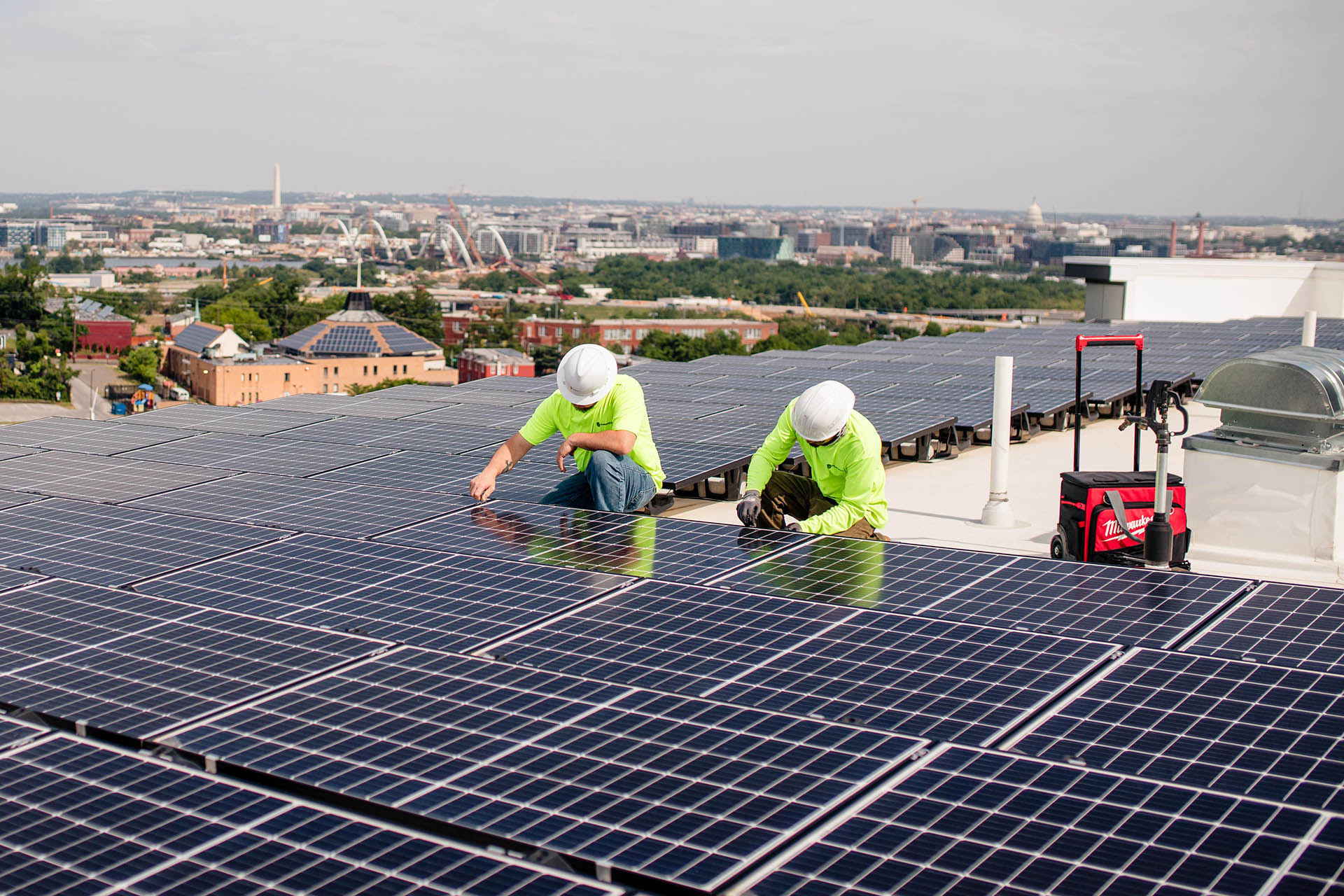
- Site Assessment and System Design: The installer inspects the consumer unit (fuse box), assesses roof integrity, measures pitch and orientation, and performs a shading simulation.
- DNO Application Submission: For systems exceeding 3.68 kW AC, the installer submits a G99 application to UK Power Networks prior to placing equipment orders.
- Planning & Conservation Check: The homeowner or installer verifies whether the site sits within a Woking Borough Council conservation area or is subject to an Article 4 Direction.
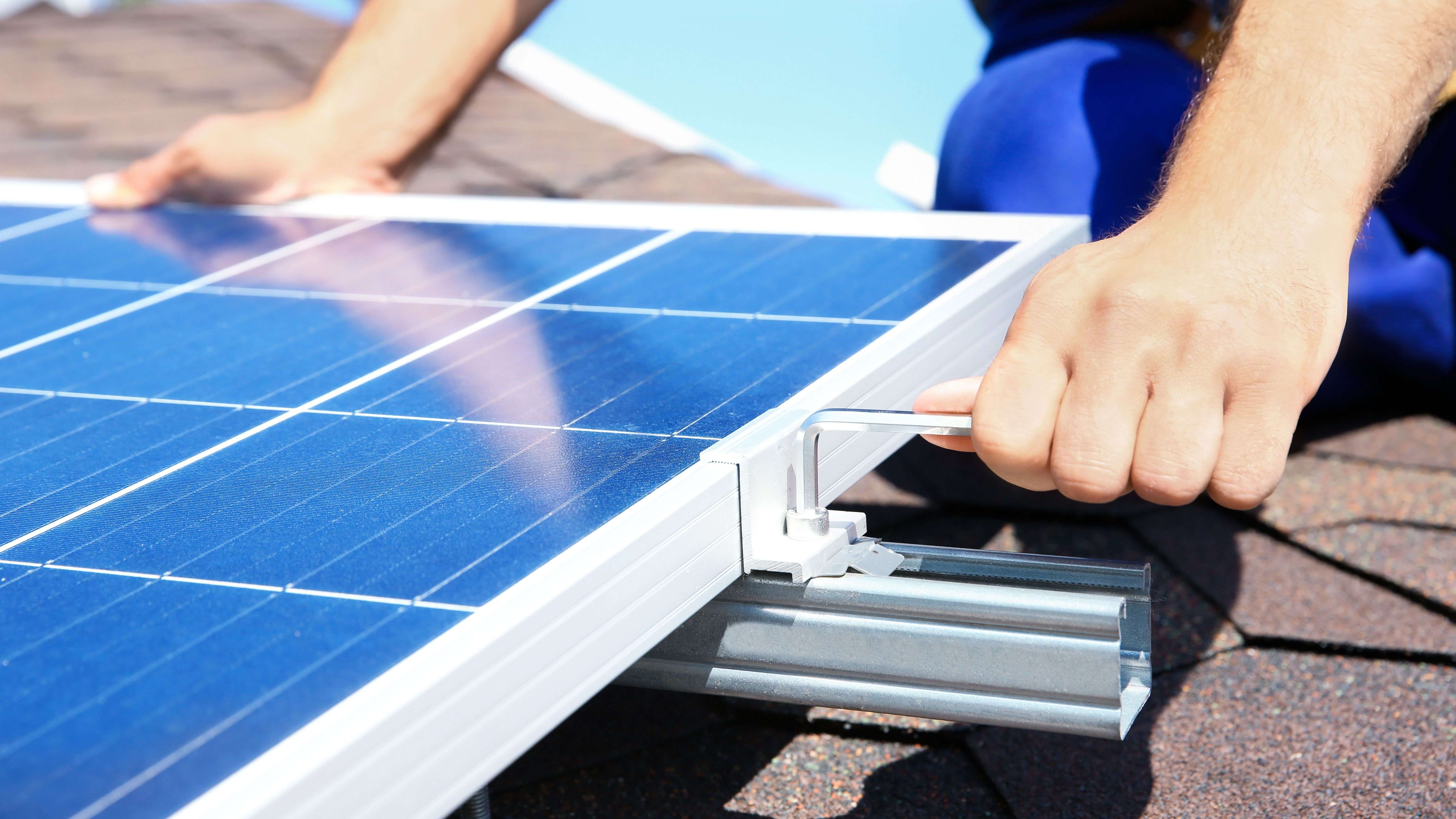
- Scaffolding and Roof Preparation: Scaffolding is erected around the eaves. Roof tiles are lifted carefully to fix stainless steel roof hooks directly into the rafters using timber drive screws.
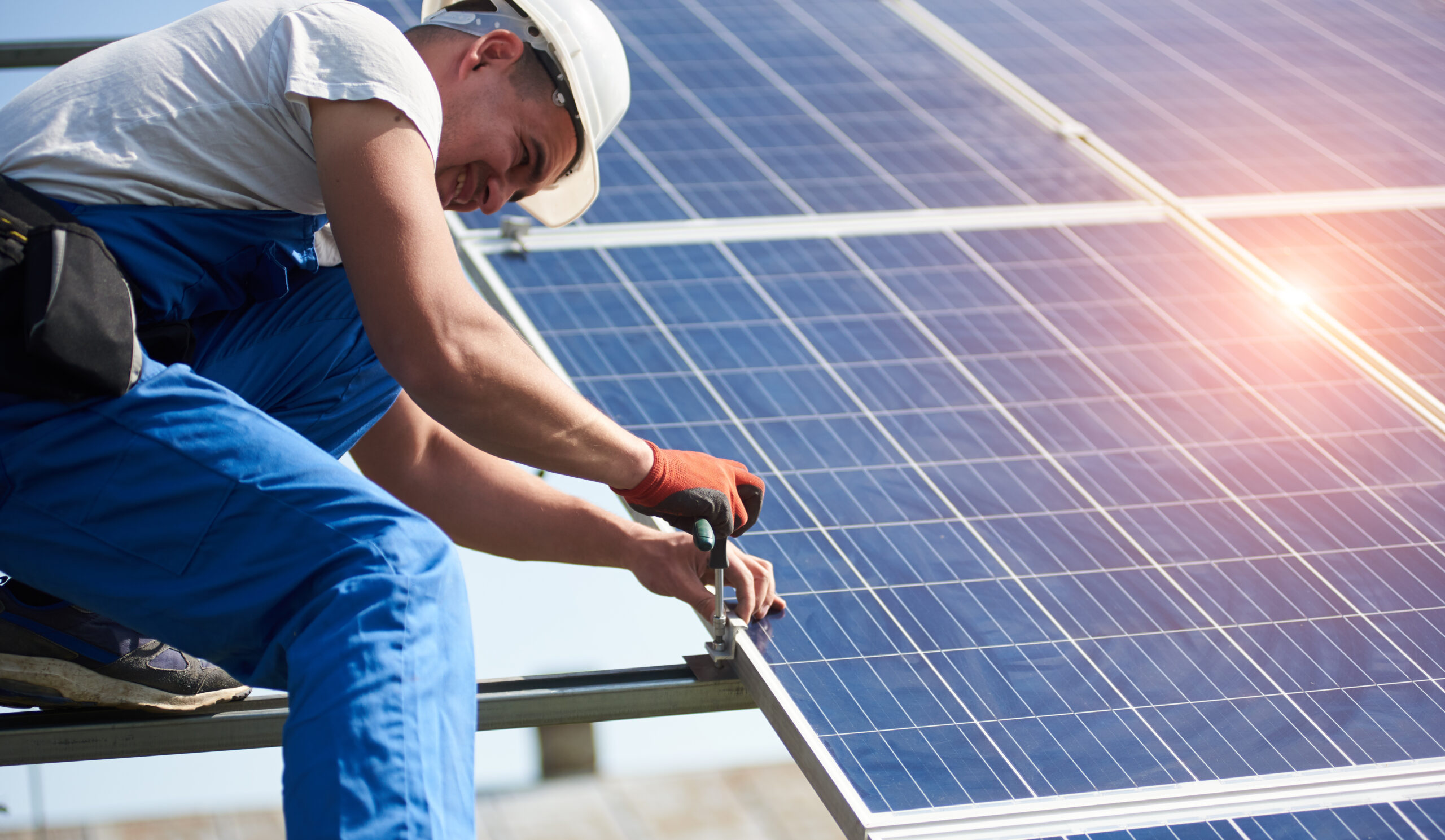
- Mounting Frame and DC Cabling: Aluminum rails are bolted to the hooks. Solar panels are secured to the rails using panel clamps. DC cables are routed under the tiles through weather-proof flashing caps into the loft space.
- Inverter and Storage Setup: The inverter, battery storage, DC isolator switch, and AC isolator switch are mounted on a fire-rated board. Wiring is run to the main distribution board via a dedicated Miniature Circuit Breaker (MCB) or Residual Current Breaker with Overcurrent protection (RCBO).
- System Commissioning: The system is tested, powered on, and calibrated. The installer submits operational data to the MCS database and issues the client an MCS certificate, Building Control Certificate, and EIC (Electrical Installation Certificate).
Frequently Asked Questions
Do I need planning permission for solar panels in Woking if I live in a conservation area?
If your property is in a Woking conservation area (such as Horsell or Pyrford), you do not need planning permission provided the panels are installed on a roof slope or wall that does not front a public highway. If the panels will be visible from the main road or installed on a wall facing the highway, you must submit a full planning application to Woking Borough Council.
How long does UK Power Networks take to approve a G99 application?
UK Power Networks typically processes standard G99 applications for domestic installations within 15 to 30 working days. If network congestion exists in your specific area of Surrey, UKPN may take longer to conduct detailed engineering studies or propose export limitations.
Will solar panels increase my property’s Energy Performance Certificate (EPC) rating?
Yes. Installing a typical 4 kWp solar PV system can raise a property's EPC rating by one to two full bands (for example, moving a property from Band D to Band C or B). This increase reflects reduced primary energy consumption and lower carbon emissions.
Can I install battery storage without solar panels under the 0% VAT scheme?
Yes. Standalone residential battery storage installations qualify for the 0% VAT rate through 31 March 2027. You do not need to install solar panels simultaneously to receive the tax exemption on the battery equipment and labor.
What happens to my solar installation during a power cut?
Standard grid-tied inverters automatically shut down during a power outage to prevent back-feeding electricity into the grid, which protects utility workers repairing network lines (anti-islanding protection). If you want your system to supply power during a blackout, you must install an inverter with an Emergency Power Supply (EPS) switch and a dedicated islanding relay paired with a battery storage system.
Next Steps and Actionable Recommendations
To ensure your solar PV installation in Woking delivers optimal performance, safety, and regulatory compliance:
- Verify Your Conservation Status: Check Woking Borough Council's interactive planning maps to confirm whether your property lies within a Conservation Area or is a Listed Building.
- Gather Historical Consumption Data: Locate your last 12 months of electricity bills to establish your annual kilowatt-hour usage, enabling accurate array and battery sizing.
- Obtain Three Quotes from MCS-Accredited Contractors: Ensure all bidding installers hold active MCS certification, belong to RECC or HIES, and use competent person schemes for Part P electrical certification.
- Confirm DNO Approval Pathway: Clarify whether your proposed installer plans to file a post-installation G98 notification or must secure pre-approval via a G99 application with UK Power Networks.
- Secure Post-Installation Documentation: Upon project completion, collect your MCS Certificate, Building Regulations Compliance Certificate, Electrical Installation Certificate (EIC), and UKPN confirmation before applying for Smart Export Guarantee (SEG) tariffs.
Image Gallery