Jupiter Tides: Gravitational Mechanics, Tidal Heating, and Planetary Dynamics
Jupiter tides refer to the immense gravitational tidal forces generated within the Jovian system, driven by the gravitational interaction between Jupiter and its orbiting moons, as well as the solar tidal force acting on the gas giant....
Jupiter tides refer to the immense gravitational tidal forces generated within the Jovian system, driven by the gravitational interaction between Jupiter and its orbiting moons, as well as the solar tidal force acting on the gas giant. These tidal stresses induce severe mechanical flexure, driving hyper-active volcanism on Io, maintaining a global subsurface liquid water ocean beneath Europa's icy shell, and generating internal heating within Ganymede and Callisto.
Contents
Disambiguation Note: This guide covers planetary physics, tidal flexure, and orbital mechanics within the Jovian system. If you are searching for marine coastal tide tables and nautical navigation charts for Jupiter Inlet, Florida, please refer to localized hydrographic marine weather reports.
Gravitational Physics Behind Jovian Tidal Forces
Tidal forces arise from variations in gravitational pull across an extended object. Because Jupiter possesses a mass roughly 318 times that of Earth ($1.898 \times 10^{27} \text{ kg}$), its gravitational potential field is the most powerful in the solar system outside of the Sun. When a body orbits Jupiter, the side facing the planet experiences a significantly stronger gravitational force than the far side. This differential pull creates a tidal stress tensor that stretches the satellite along its orbital radius line, forming a tidal bulge.
If a satellite revolved around Jupiter in a perfectly circular orbit with zero inclination and synchronous rotation, the tidal bulge would remain static relative to the moon's surface. Under these hypothetical conditions, the moon would reach a mechanical equilibrium, and no continuous internal friction would occur after initial tidal locking.
However, the inner Galilean moons do not follow perfectly circular paths. Instead, continuous gravitational perturbations between the moons preserve non-zero orbital eccentricities. As a moon moves along its elliptical orbit, two dynamic phenomena disrupt equilibrium:
- Radial Tidal Distance Variation: The magnitude of the gravitational pull varies inversely with the cube of the distance ($F_{\text{tidal}} \propto 1/r^3$). At periapsis (closest approach), the satellite is strongly pulled and elongated; at apoapsis (farthest point), the gravitational gradient relaxes, allowing the body to contract.
- Libration in Longitude: Because the satellite's orbital velocity varies along its elliptical path while its rotational speed remains virtually constant, the tidal bulge shifts back and forth across the moon's surface.
This continuous spatial and amplitude modulation causes relentless mechanical flexing within the satellite's core and mantle. The resulting strain energy is converted into heat via viscous dissipation, a process known as tidal heating.
Tidal Dissipation Rate Formula Context: E_dot ∝ (G * M_J^2 * R^5 * e^2) / (Q * a^6)
Where $M_J$ is Jupiter's mass, $R$ is the moon's radius, $e$ is orbital eccentricity, $a$ is semi-major axis, and $Q$ is the mechanical dissipation factor (a measure of internal inelasticity). Because dissipation scales inversely with the sixth power of orbital distance ($a^6$), the magnitude of Jupiter tides decreases rapidly as distance from the planet increases.
The Role of Laplace Orbital Resonance
The continuous tidal heating of Jupiter's moons would naturally collapse orbital eccentricity over cosmic timeframes as tidal friction converts orbital energy into thermal energy. Without an active excitation mechanism, orbits would circularize, tidal flexing would cease, and internal heat generation would halt.
The long-term persistence of Jupiter tides is sustained by the Laplace resonance, a orbital resonance existing between Io, Europa, and Ganymede:
$$\Phi_{\text{Laplace}} = \lambda_{\text{Io}} - 3\lambda_{\text{Europa}} + 2\lambda_{\text{Ganymede}} = 180^\circ$$
For every single orbit completed by Ganymede (roughly 7.15 days), Europa completes exactly two orbits (~3.55 days), and Io completes four orbits (~1.77 days).
Orbital Resonance Ratios: 4 Io orbits : 2 Europa orbits : 1 Ganymede orbit
This orbital configuration ensures that the inner satellites pass each other at periodic, recurring points along their paths. The gravitational tugs delivered during these planetary conjunctions force the moons to maintain non-zero orbital eccentricities, preventing their orbits from circularizing. This ongoing resonant pump forces the moons into a steady state where orbital energy pulled from Jupiter's rotation is continuously supplied to the satellites, driving tidal heating across geological timescales.
Tidal Flexure and Thermal Effects Across the Galilean Moons
The impact of Jupiter's gravitational tidal forces varies across the four primary moons based on distance, structural composition, and participation in the Laplace resonance.
1. Io: Hyper-Volcanism and Thermal Runaway
Io sits nearest to Jupiter among the Galilean satellites, at an average distance of approximately 421,700 kilometers. Subjected to Jupiter's immense tidal gradient, Io experiences continuous interior flexing. Its rocky mantle deforms by up to 100 meters (330 feet) vertically during every 42.5-hour orbit.
- Energy Output: Tidal friction generates an estimated 100 to 130 trillion watts ($10^{14} \text{ W}$) of internal heat power across Io.
- Surface Manifestations: This thermal energy fuels over 400 active volcanic centers, including major active features like Loki Patera and Pele. High thermal flux causes extensive silicate volcanism with surface temperatures exceeding 1,300 °C (1,570 K).
- Volatile Loss: Volcanic activity driven by tidal heat continuously outgasses sulfur dioxide ($SO_2$), stripping Io of volatile surface water and creating a thin, volatile atmosphere that interacts directly with Jupiter's magnetosphere.
2. Europa: Ocean Maintenance and Astrobiological Potential
Europa orbits second outward from Jupiter at roughly 670,900 kilometers. Its surface layer consists of a global water ice shell estimated to be 15 to 25 kilometers thick, overlying a liquid water ocean that may stretch 60 to 150 kilometers deep.
- Tidal Strain: The ice shell experiences vertical movement of roughly 30 meters over its 3.55-day orbital period.
- Liquid Ocean Stabilization: Tidal heating inside Europa's silicate mantle and basal ice boundary provides the heat flux necessary to maintain a liquid ocean beneath the sub-zero ice crust, far outside the Sun's traditional circumstellar habitable zone.
- Tectonic Shear: Cyclical tidal stress drives lineament fractures, termed cycloids, across Europa's surface. As Europa travels along its eccentric path, changing orientation of the tidal strain tensor fractures the ice crust in distinct curvilinear patterns. Research indexed by the NASA Jet Propulsion Laboratory highlights these tidal flexure cycles as key drivers of chemical exchange between surface ice and sub-surface ocean layers.
3. Ganymede: Deep Oceans and Structural Differentiation
As the largest moon in the Solar System, Ganymede orbits Jupiter at a distance of about 1,070,400 kilometers. Participating as the outer anchor of the 1:2:4 Laplace resonance, Ganymede retains a modest orbital eccentricity ($e \approx 0.0013$).
- Layered Interior: Tidal heating, combined with radioactive decay during early accretion, allowed Ganymede to undergo internal differentiation. It possesses a metallic iron-nickel core, a silicate mantle, and a thick, high-pressure ice-water shell.
- Subsurface Water Reserves: Tidal flexing heats Ganymede's deep icy mantle, sustaining liquid water layers sandwiched between phases of high-pressure ice (such as Ice V and VI) and an outer Ice I crust.
- Intrinsic Magnetosphere: Differential tidal heating in its early evolutionary phase helped drive thermal convection within Ganymede's liquid iron core, generating a native intrinsic magnetic field—the only known moon to possess one.
4. Callisto: The Un-Resonant Outer Outlier
Callisto orbits at approximately 1,883,000 kilometers from Jupiter, placing it outside the Laplace orbital resonance.
- Minimal Tidal Stress: Lacking forced orbital eccentricity from adjacent moons, Callisto’s eccentricity remains low ($e \approx 0.0074$), driven primarily by weak solar perturbations.
- Incomplete Differentiation: Because tidal heating rates drop off sharply with distance ($1/a^6$), Callisto lacks the internal heat generation seen on Io or Europa. As a result, its interior remains only partially differentiated—a mixed matrix of rock, ice, and volatile compounds covered by an ancient, heavily cratered crust.
Comparative Data: Jupiter Tides Across the Inner Satellites
The operational metrics below detail the orbital, structural, and tidal characteristics governing Jupiter's primary moons. Data is based on planetary science standards published by institutions like the European Space Agency.
| Metric / Parameter | Io | Europa | Ganymede | Callisto |
|---|---|---|---|---|
| Semi-Major Axis ($a$) | ~421,700 km | ~670,900 km | ~1,070,400 km | ~1,883,000 km |
| Orbital Period | 1.769 days | 3.551 days | 7.155 days | 16.689 days |
| Laplace Resonance State | 4:1 (Participating) | 2:1 (Participating) | 1:1 (Participating) | None (Non-resonant) |
| Orbital Eccentricity ($e$) | ~0.0041 | ~0.0090 | ~0.0013 | ~0.0074 |
| Tidal Bulge Amplitude | ~100 meters | ~30 meters | ~3 meters | < 1 meter |
| Surface Thermal Flux | $> 2,000 \text{ mW/m}^2$ | $\sim 50\text{--}100 \text{ mW/m}^2$ | $\sim 5\text{--}20 \text{ mW/m}^2$ | $< 2 \text{ mW/m}^2$ |
| Primary Internal State | Partial molten silicate mantle | Global liquid ocean under ice | Layered ice-water mantle | Partially differentiated ice/rock |
Tides Within Jupiter's Atmosphere and Interior
While Jupiter's gravitational field imposes strong tidal deformation on its satellites, the moons also exert reciprocal tidal forces on Jupiter itself. Furthermore, solar tidal forces act directly upon the massive, gaseous outer envelope of the planet.
Fluid Body Response and Atmospheric Tides
Jupiter is an ultra-dense, fast-rotating fluid planet composed primarily of hydrogen and helium, completing one full rotation on its axis in under 10 hours (~9.92 hours). Because Jupiter lacks a rigid solid boundary, its response to external gravitational tides differs significantly from terrestrial planets:
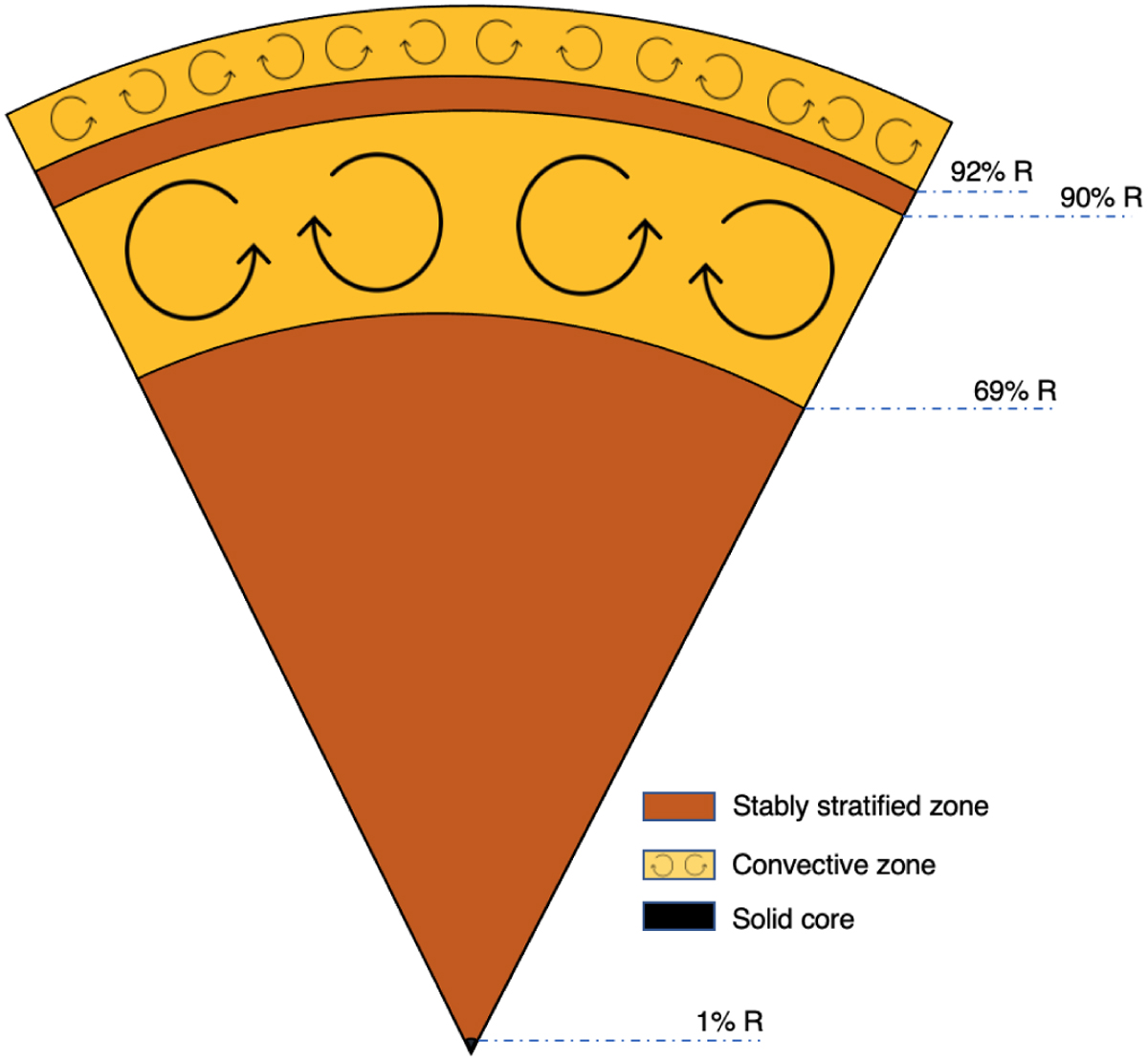
- Dynamical Tides in the Fluid Envelope: The gravitational attraction of Io and the Sun induces dynamical tides inside Jupiter's outer gaseous layers and underlying metallic hydrogen fluid mantle. These tides excite internal gravity waves (buoyancy-driven modes) and inertial waves (Coriolis-driven modes).
- Dissipation in the Gas Giant: The efficiency of tidal dissipation inside Jupiter, expressed by its global quality factor ($Q_J \approx 10^5 \text{ to } 10^6$), determines the expansion rate of its moons' orbits. Energy lost by Jupiter's rotation via tidal torque is transferred into orbital angular momentum, causing Io, Europa, and Ganymede to gradually migrate outward over geologic epochs.
- Thermal Atmospheric Tides: Solar radiation heating Jupiter's upper stratosphere generates atmospheric thermal tides. These localized pressure variations drive high-altitude jet fluctuations and interact with the planetary-scale cloud bands (belts and zones).
Astrobiological Implications of Jovian Tidal Heating
The study of Jupiter tides has redefined classical concepts of planetary habitability. In traditional astrobiology, the circumstellar "Habitable Zone" (Goldilocks Zone) is defined strictly by a planet's distance from its host star, where stellar insolation allows liquid surface water to persist.
Classic Habitable Zone vs Tidal Habitable Zone: Stellar Insolation Zone --> Dependent on solar radiation (Distance to Star) Tidal Habitable Zone --> Dependent on mechanical flexing (Orbital Mechanics & Mass)
Jupiter tides demonstrate that gravitational energy can act as an alternative long-term energy source capable of sustaining habitable liquid environments:
- Chemosynthetic Ecosystem Support: Tidal flexing provides heat to maintain liquid water and drives hydrothermal systems at the seafloor of Europa's subsurface ocean. Hydrothermal vents on Earth host chemosynthetic life independent of sunlight; similar systems may exist on tidally heated icy moons.
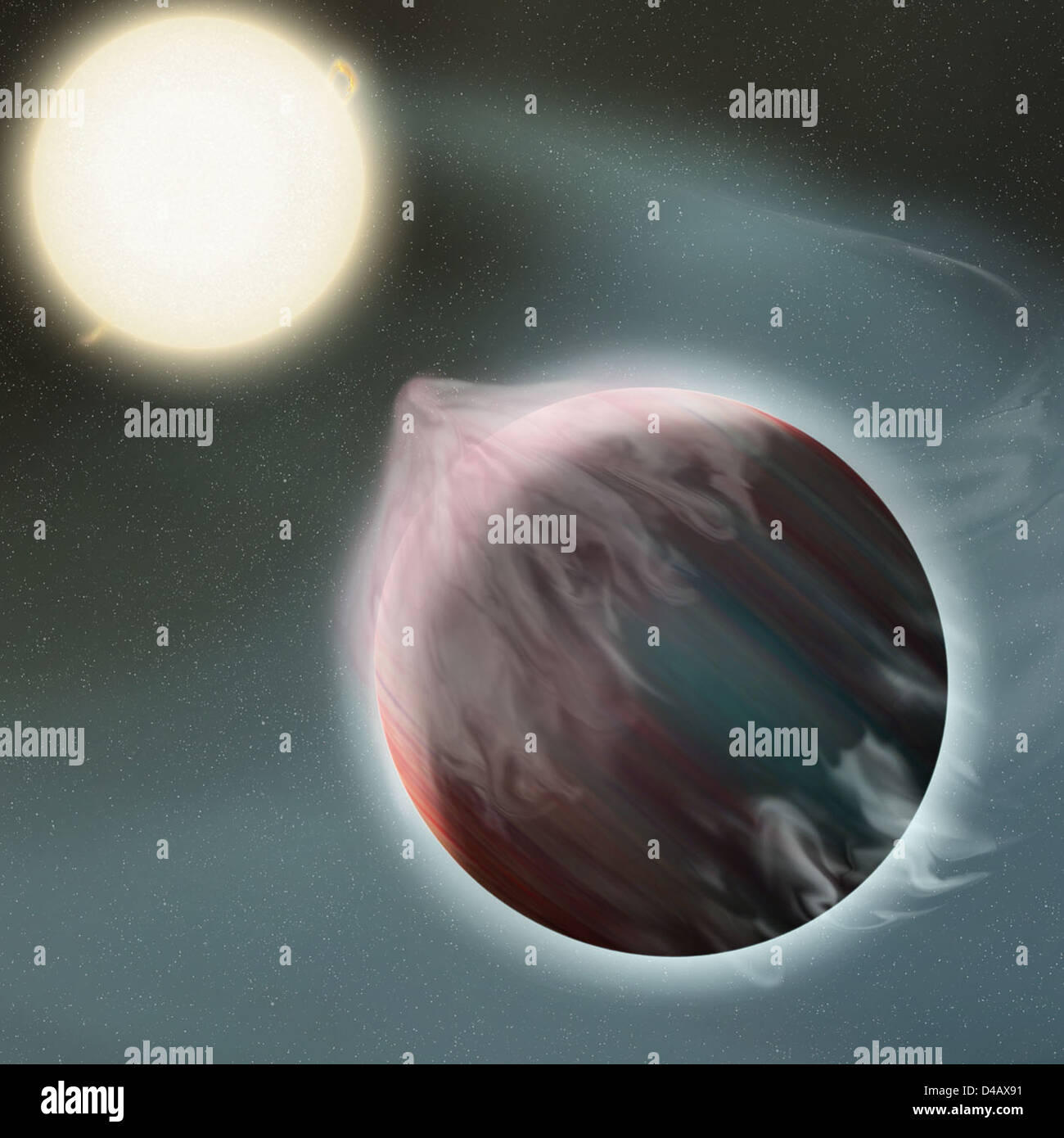
- Exoplanetary Systems: Discoveries of giant gas planets in eccentric orbits around distant stars suggest that tidal heating may maintain ocean worlds throughout the galaxy, significantly expanding the boundary conditions for life in the universe.
Modern Space Missions Investigating Jovian Tides
Understanding tidal dissipation within the Jovian system remains a core priority for space exploration agencies. Advanced robotic missions carry instruments engineered to measure tidal deformations directly.
1. NASA's Europa Clipper Mission
Launched in late 2024 and currently en route during its interplanetary cruise phase in 2026, NASA Science designed the Europa Clipper spacecraft to perform dozens of low-altitude flybys of Europa.
- Payload Capabilities: Equipped with Ice Penetrating Radar (REASON), high-precision laser altimetry, and radar sounding systems, Europa Clipper will measure the exact amplitude of Europa’s tidal bulge flexing.
- Scientific Goal: By measuring how much the ice shell bends during periapsis versus apoapsis, scientists can calculate the exact thickness of the outer ice shell and determine the salinity, depth, and dynamics of the underlying ocean.
2. ESA's JUICE (Jupiter Icy Moons Explorer)
The European Space Agency's JUICE mission, also actively traveling toward the Jovian system in 2026, focuses heavily on characterising Ganymede, Europa, and Callisto.
- Geodetic Radar Measurements: JUICE utilizes precision radio science experiments to measure the gravitational anomalies generated by tidal flexing across Ganymede.
- Orbital Insertion: JUICE is scheduled to become the first spacecraft ever to enter orbit around an outer moon (Ganymede), enabling high-resolution mapping of tidal deformation modes within Ganymede's layered interior.
Frequently Asked Questions About Jupiter Tides
What causes Jupiter tides?
Jupiter tides are caused by differential gravitational forces between Jupiter, its orbiting moons, and the Sun. As moons follow elliptical paths around Jupiter, fluctuating gravitational forces flex their interiors, generating mechanical strain and intense heat through internal friction.
Why is Io more volcanically active than Europa or Ganymede?
Io is located closer to Jupiter than Europa or Ganymede, exposing it to a much steeper gravitational gradient. Because tidal dissipation strength decreases rapidly with orbital distance ($1/a^6$), Io experiences far higher mechanical strain, driving continuous volcanic eruptions.
How do tidal forces keep Europa's ocean from freezing solid?
As Europa orbits Jupiter along an eccentric path, Jupiter’s gravitational pull constantly flexes its rocky core and outer ice shell. This continuous flexing generates friction heat that warms the interior from the inside out, keeping its subsurface liquid ocean from freezing despite sub-zero surface temperatures.
Do the moons cause tides on Jupiter?
Yes, the Galilean moons exert reciprocal gravitational tides on Jupiter. Because Jupiter is composed of fluid hydrogen and helium, these satellite tides create internal fluid waves and dynamic gravitational torques that gradually slow Jupiter's rotation while pushing the moons outward over cosmic timescales.
What is the role of orbital resonance in Jupiter tides?
The 1:2:4 Laplace orbital resonance between Io, Europa, and Ganymede forces their orbits to remain eccentric. Without this constant gravitational interaction between the moons, their orbits would become circular, tidal flexing would end, and internal tidal heating would stop.
Summary and Astrobiological Outlook
Jupiter tides illustrate how gravitational mechanics can fundamentally alter planetary evolution. Through the combined effects of Laplace resonance, orbital eccentricity, and immense differential gravity, Jupiter transforms mechanical strain into thermal heat across its satellite system. This process powers Io’s massive volcanoes, destabilizes surface ice across Europa, drives subsurface ocean currents, and alters internal structures across the Galilean moons. As exploratory missions advance through 2026 toward their encounters with the Jovian system, data from these icy worlds will further clarify how gravitational forces shape habitability across outer solar systems.
Image Gallery