Top Things to Do in Jasper National Park: Complete Visitor Guide
Jasper National Park offers unmatched alpine landscapes in the Canadian Rockies, featuring glacial lakes, dramatic limestone canyons, towering peaks, and extensive wildlife habitats. Key activities include taking a boat cruise to Spiri...
Jasper National Park offers unmatched alpine landscapes in the Canadian Rockies, featuring glacial lakes, dramatic limestone canyons, towering peaks, and extensive wildlife habitats. Key activities include taking a boat cruise to Spirit Island on Maligne Lake, driving the iconic Icefields Parkway, trekking through Maligne Canyon, riding the Jasper SkyTram, and stargazing inside a designated dark sky preserve.
Contents
Essential Highlights and Natural Wonders
As Canada’s largest national park in the Rocky Mountains, spanning over 11,000 square kilometers, Jasper provides wide-ranging opportunities for wilderness exploration and outdoor recreation.
Jasper National Park Core Activity Hubs:
- Maligne Valley
- Spirit Island
- Maligne Canyon
- Medicine Lake
- Icefields Parkway
- Athabasca Glacier
- Sunwapta Falls
- Athabasca Falls
- Jasper Townsite
- Jasper SkyTram
- Pyramid Lake
- Whistlers Trail
Exploring Maligne Lake and Spirit Island
Maligne Lake is the largest natural lake in the Canadian Rockies, famous for its deep azure waters framed by snow-capped peaks. Located 44 kilometers southeast of the Jasper townsite, this glacier-fed lake stretches roughly 22 kilometers in length.
Maligne Lake Boat Cruise Route:
- Maligne Lake Day Lodge / Boat Launch
- 14 km Scenic Cruise / Guided Narrative
- Spirit Island Viewpoint Dock
- 20–30 min Boardwalk & Photo Loop
- Return Trip to Main Lodge
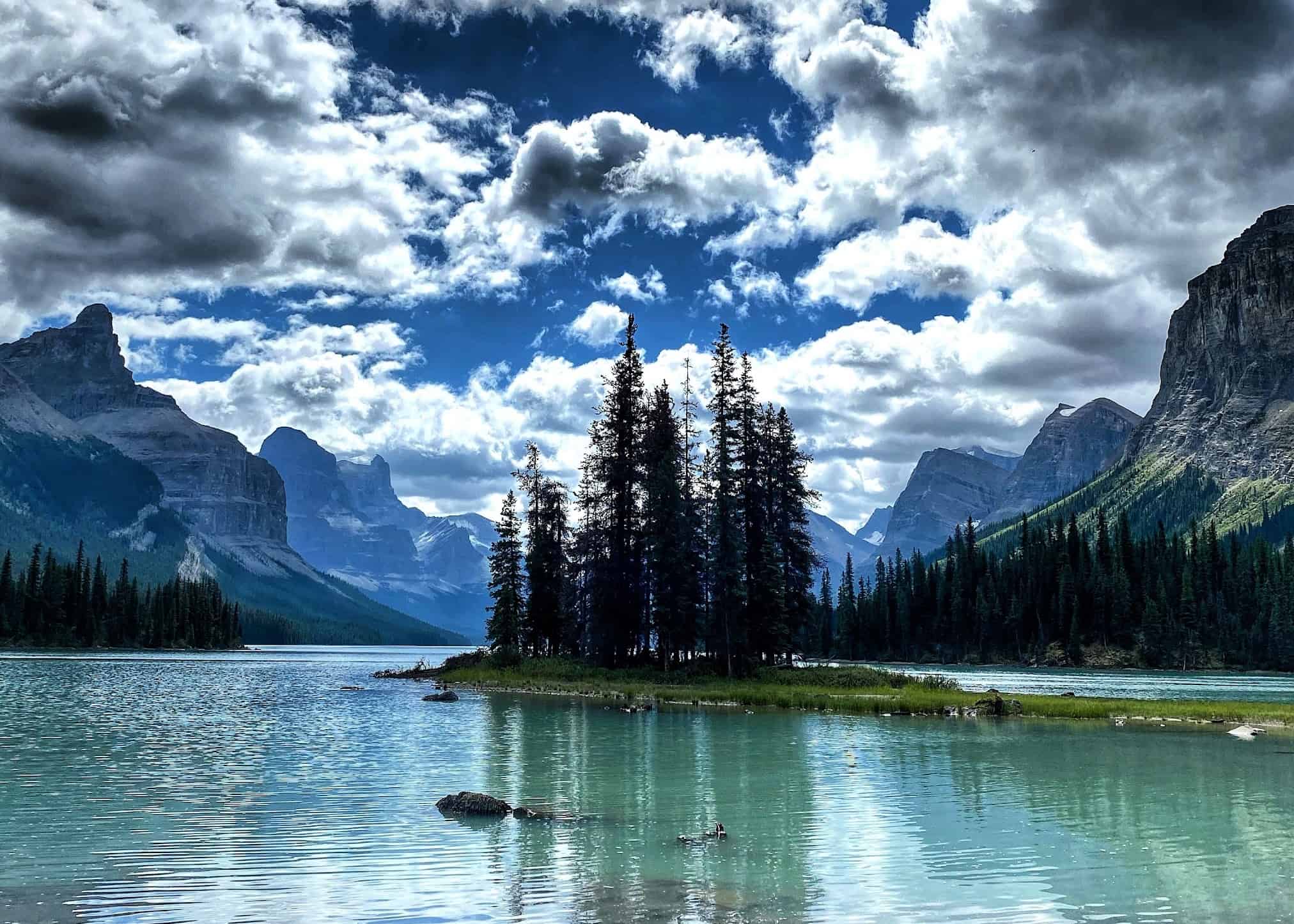
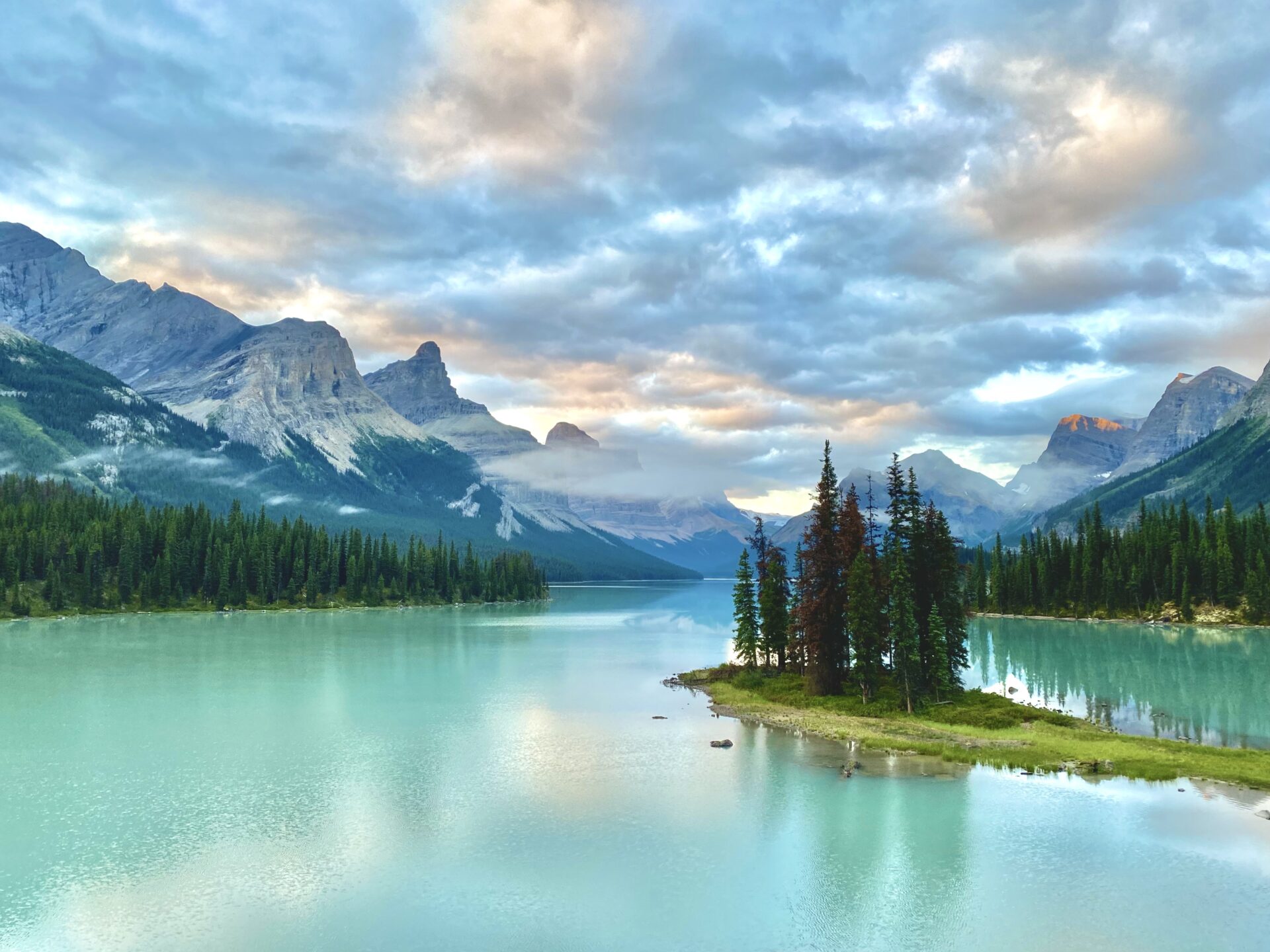
The primary destination on the lake is Spirit Island, a sacred site for Indigenous communities and one of the most photographed locations in Canada. Because motorized vehicles are restricted, visitors reach Spirit Island via powered commercial tour boats, electric motorboats, canoes, or kayaks.
- Boat Cruises: Open-deck and glass-enclosed tour boats operate from late May through October, depending on ice conditions. Guides provide detailed historical, geological, and ecological context during the 90-minute round-trip journey.
- Paddling: Experienced kayakers and canoeists can paddle to Spirit Island. The 28-kilometer round-trip trek requires advanced preparation, cold-water safety gear, and often an overnight wilderness camping reservation at campsites like Hidden Cove or Fisherman’s Bay via Parks Canada.
- Shoreline Trails: For non-paddlers remaining at the main lodge area, the Mary Schäffer Loop (3.2 km round-trip) provides gentle walking paths along the lake edge with views of Mt. Paul and Mt. Charlton.
Driving the Icefields Parkway (Highway 93)
Connecting Jasper to Banff National Park, the Icefields Parkway (Highway 93) covers 232 kilometers of high-altitude alpine terrain. Recognized globally as one of the world's most scenic mountain drives, the highway parallels the Continental Divide.
| Stop / Attraction | Highlight Feature | Recommended Time |
|---|---|---|
| Columbia Icefield | Athabasca Glacier & Skywalk | 2 to 3 hours |
| Sunwapta Falls | Class 5 whitewater canyon drop | 45 minutes |
| Athabasca Falls | Powerful river gorge carving | 1 hour |
| Wilcox Pass Trailhead | Bighorn sheep & glacier vistas | 3 to 4 hours |
- Columbia Icefield Glacier Discovery Centre: Located near the Jasper-Banff boundary, this site serves as the gateway to the Athabasca Glacier. Visitors can join guided tours on specialized terrain vehicles (Ice Explorers) to walk directly on the glacial ice, or walk along the Columbia Icefield Skywalk—a glass-floored observation cliff edge suspended 280 meters above the Sunwapta Valley.
- Wilcox Pass Trail: Starting near the Icefield Centre, this 8-kilometer round-trip hike leads above the treeline to sweeping views of the Athabasca Glacier, frequently offering sightings of native bighorn sheep.
- Road Conditions and Safety: The parkway reaches elevations above 2,000 meters at Bow Summit and Sunwapta Pass. Winter tires or snow chains are legally mandated between November 1 and April 30. Cell service is nonexistent along most of the highway, making off-grid navigation maps and physical safety gear essential.
Trekking Through Maligne Canyon
Maligne Canyon is a 55-meter-deep limestone gorge carved by the erosion of the Maligne River over thousands of years. Located 10 minutes east of the Jasper townsite, it features self-guided footpaths across six distinct bridges traversing the canyon walls.
Maligne Canyon Trail System:
- Bridge 1 (Top Parking / Main Lodge)
- Bridge 2 (Steepest drop, waterfall views)
- Bridge 3 (Deepest gorge view - 55 meters)
- Bridge 4 (Water outlets & springs)
- Bridges 5 & 6 (Lower Valley Floor / River access - Alternative Lower Parking)
- Summer Walking: The trail system allows visitors to select variable loop lengths. Bridges 1 through 3 offer the dramatic views of the narrow, sheer canyon walls and plunging waterfalls, while Bridges 4 through 6 showcase underground spring outlets where water re-emerges from Medicine Lake’s karst drainage system.
- Winter Icewalks: In deep winter (typically December through March), the river freezes sufficiently to allow guided icewalk tours inside the gorge floor. Hikers wear microspikes and helmets to explore frozen waterfalls, ice caves, and frost formations directly on the canyon bed. Independent exploration on the ice floor is discouraged due to unstable ice hazards over subterranean water currents.
Riding the Jasper SkyTram to Whistlers Mountain
The Jasper SkyTram is the longest and highest guided aerial tramway in Canada. Ascending from a base station at 1,304 meters to an upper terminal at 2,263 meters on Whistlers Mountain, the tram ride takes roughly seven minutes.
Jasper SkyTram Ascent:
- Base Station: 1,304m
- 7-min Tram Ride
- Upper Station: 2,263m
- 1.4 km Trail / +200m Gain
- Summit Peak: 2,463m
- Summit Trail: From the upper flight deck, visitors can hike the Whistlers Summit Trail, a 1.4-kilometer alpine footpath gaining an additional 200 meters in elevation to reach the true peak (2,463 meters). The top yields 360-degree views of the Athabasca Valley, the Jasper townsite, and on clear days, the distant peak of Mount Robson (the highest mountain in the Canadian Rockies).
- Operational Season: The SkyTram generally operates from late March or early April through late October. Temperatures at the summit can be 10°C colder than in the townsite, with high wind exposure, requiring visitors to carry insulated layers and windproof outerwear even during peak summer.
Waterfalls, Lakes, and Day Hikes
Jasper’s hydrological network of glacial rivers, high-altitude alpine lakes, and natural drainages offers accessible day hikes and scenic stops across the valley floors.
Waterfalls & Lakes Overview:
- Waterfalls
- Athabasca Falls
- Sunwapta Falls
- Tangle Creek Falls
- Lakes
- Pyramid Lake
- Patricia Lake
- Lake Edith/Annette
- Loop Trails
- Valley of the Five Lakes
- Sulphur Skyline
Visiting Athabasca Falls and Sunwapta Falls
Both Athabasca Falls and Sunwapta Falls showcase the tremendous hydraulic force of glacial meltwater carving through rock formations along the Icefields Parkway corridor.
- Athabasca Falls: Located 30 kilometers south of Jasper, this 23-meter waterfall drops water into a narrow gorge. Paved, accessible walkways and concrete viewing platforms cross the gorge, giving visitors safe views of pothole rock erosion, ancient stream channels, and dramatic river rapids.
- Sunwapta Falls: Situated 55 kilometers south of Jasper, Sunwapta (a Stoney Nakoda term meaning "turbulent water") is fed by the Athabasca Glacier. Upper Sunwapta Falls is instantly visible from the parking area, featuring a small island upstream that splits the rushing river right before it plunges 18 meters into a canyon. A 3.2-kilometer round-trip trail leads down to Lower Sunwapta Falls for visitors seeking to avoid crowds.
Paddling and Relaxing at Pyramid Lake and Patricia Lake
Positioned at the base of Pyramid Mountain, just 5 kilometers north of the townsite, Pyramid Lake and neighboring Patricia Lake serve as primary recreation hubs for water activities and photography.
Pyramid Lake Recreation Access:
Pyramid Island
- Wooden Bridge Access
- Picnic Areas & Boardwalk
- Reflections of Pyramid Mountain
Water Rental Dock
- Canoes, Kayaks, Stand-Up Paddleboards
- Motorized Rentals (Electric)
Pyramid Island: A historic wooden footbridge connects the shore of Pyramid Lake to a small island containing boardwalks, shelter buildings, and unobstructed panoramic views of Pyramid Mountain’s reddish-orange iron-stone face.
Water Rentals and Activities: During summer, local vendors provide rentals for canoes, kayaks, stand-up paddleboards, and electric motorboats. In winter, the frozen surface of Pyramid Lake is cleared to create outdoor ice-skating rinks and loop trails for snowshoeing and fat-biking.
Hiking the Valley of the Five Lakes
The Valley of the Five Lakes loop is one of the park’s most popular moderate day hikes, located 9 kilometers south of Jasper along Highway 93.
- Trail Profile: The standard loop trail is 4.5 kilometers with roughly 86 meters of elevation gain, making it manageable for families and casual hikers.
- Distinctive Features: The trail passes five small, distinct lakes that display varied shades of blue, green, and turquoise. The color variations stem from glacial rock flour (fine silt suspension) and varying water depths. Parks Canada has installed signature red Adirondack chairs between Lakes 3 and 4, providing a prime resting location facing the water.
Seasonal Activities and Year-Round Experiences
Visiting Jasper National Park requires matching your itinerary to seasonal weather variations, equipment requirements, and light availability.
Seasonal Highlights:
- SPRING / SUMMER: Jun - Aug: Hiking, Boating, Camping, Wildlife Viewing
- AUTUMN: Sep - Oct: Fall Colors, Elk Rut, Dark Sky Festival
- WINTER: Nov - Apr: Skiing (Marmot Basin), Icewalks, Northern Lights
Summer Wildlife Viewing and Trail Safety
Jasper hosts large populations of large mammals, including elk, bighorn sheep, mountain goats, moose, wolves, black bears, and grizzly bears.
Wildlife Viewing & Distance Guidelines:
Black Bears & Grizzly Bears: Maintain 100 meters minimum
Elk, Moose & Bighorn Sheep: Maintain 30 meters minimum
Carry EPA-Approved Bear Spray at all times
Prime Viewing Locations: Elk are commonly seen near the Jasper townsite, golf courses, and river valleys. Bighorn sheep frequently gather along the rock slopes of Maligne Canyon, Mount Edith Cavell road, and Old Fort Point. Bears are most active in spring and early summer along roadside ditches feeding on dandelions and berries.
Safety Regulations: Under Canada National Parks Act rules, visitors must remain at least 100 meters away from bears, wolves, and cougars, and at least 30 meters away from elk, deer, moose, and bighorn sheep. Feeding, baiting, or approaching wildlife is strictly illegal and subject to heavy fines.
Bear Safety: Carrying bear spray in an accessible holster—and knowing how to use it—is advised for all hikers year-round. Group travel and making continuous noise on trails reduces the risk of surprise encounters.
Stargazing in the Jasper Dark Sky Preserve
In 2011, the Royal Astronomical Society of Canada designated Jasper National Park as a Dark Sky Preserve. Spanning thousands of square kilometers with minimal light pollution from the small townsite, it ranks among the largest dark sky reserves in the world.
- Jasper Dark Sky Festival: Held annually every October, this event features guest astronomers, interactive workshops, outdoor night-sky photography sessions, and musical performances under the stars.
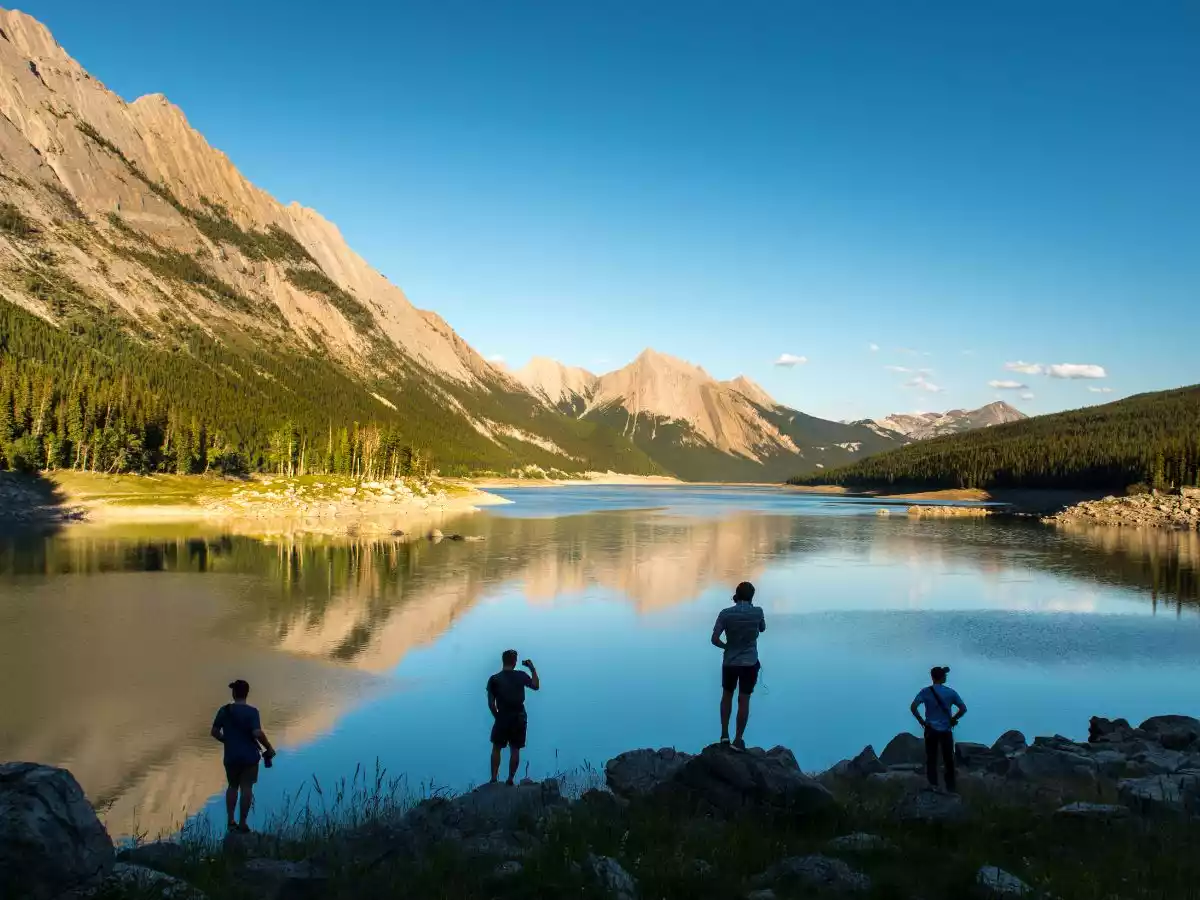
- Year-Round Stargazing Sites: Excellent stargazing locations accessible by vehicle include Lake Annette, Medicine Lake, Maligne Lake, and the summit areas near Mount Edith Cavell. On clear nights from autumn through early spring, visitors can often observe the Aurora Borealis (Northern Lights).
Winter Sports at Marmot Basin and Outdoor Recreation
Winter transforms Jasper into a cold-weather sports destination, with lower tourist density than summer peak months.
Winter Activity Options:
Marmot Basin Ski
- 91 Ski Runs
- 3,000 ft Vertical
- 7 Chairlifts
Maligne Icewalk
- Guided tours inside frozen limestone gorges w/ crampons
Cross-Country Ski
- Pyramid, Whirlpool, & Athabasca Falls groomed trails
Marmot Basin Ski Resort: Located 20 minutes from town, Marmot Basin offers 1,720 acres of skiable terrain, 91 named runs, and a vertical drop of 914 meters (3,000 feet). Its high base elevation ensures reliable alpine snow cover from mid-November through early May.
Cross-Country Skiing and Snowshoeing: Tracked Nordic skiing trails are maintained at Pyramid Lake, Whirlpool Winter Hub, and near the Athabasca Falls area. Equipment rentals for cross-country skis, ice skates, and snowshoes are available in town.
Parks Canada Rules, Park Passes, and Logistics
Operating safely and legally inside Jasper National Park requires understanding park entry fees, environmental protection policies, and regional travel logistics.
Jasper National Park Entry & Planning:
- Entry Pass Required
- Daily Pass: Per person/day
- Discovery Pass: Annual family/single
- Valid across ALL Canadian National Parks
- Safety & Protection
- Check Parks Canada Trail Reports
- Bear Spray mandatory on trails
- Wildfire Recovery Awareness
National Park Entry Passes
All visitors entering Jasper National Park must purchase a Parks Canada entry pass. Pass revenue directly supports trail maintenance, wildlife preservation, public facilities, and visitor services.
- Daily Pass: Best for visitors staying 1 to 6 days. Charged per adult, senior, or family/group per day.
- Parks Canada Discovery Pass: Best for stays of 7 days or longer, or for travelers visiting multiple parks (such as Banff, Yoho, or Kootenay) within a 12-month period. The pass grants unlimited access to over 80 Parks Canada locations for one full year from purchase date.
- Where to Purchase: Passes can be bought online via Parks Canada, at park gate entry kiosks along Highway 16 and Highway 93, or at the Jasper Information Centre in town.
Operational Updates and Wildfire Recovery
Following significant wildfire activity in recent years—including the major Jasper Wildfire Complex of 2024—Parks Canada and the Municipality of Jasper maintain active infrastructure restoration efforts. While key highways, main townsite services, and flagship locations like Maligne Lake, the Jasper SkyTram, and Athabasca Falls remain open, select trails, backcountry campsites, and specific forest zones undergo ongoing ecosystem recovery or seasonal closures.
- Trail Verification: Always check the official Parks Canada Jasper National Park Important Bulletins prior to setting out to verify open trails, hazard warnings, and area closures.
- Leave No Trace: Respect fire bans, stay on designated paths to protect fragile alpine moss and soil layers, pack out all garbage, and dispose of human waste in designated facilities.
Comparing Top Jasper National Park Activities
To help structure your itinerary, the following table compares key attractions across difficulty, time commitments, seasonal access, and entry requirements.
| Activity / Sight | Primary Location | Difficulty Level | Typical Duration | Best Season | Entry / Permit Notes |
|---|---|---|---|---|---|
| Maligne Lake Boat Cruise | Maligne Valley (Hwy 16 to Maligne Rd) | Easy / Accessible | 1.5 to 2 hours | Late May – Oct | Commercial ticket required; advance booking recommended. |
| Icefields Parkway Drive | Hwy 93 (Jasper to Lake Louise) | Easy (Driving) | Half-day to Full-day | Year-round | National Park Pass required; winter tires mandatory Nov 1–Apr 30. |
| Maligne Canyon Walk | 10 km East of Jasper Town | Easy to Moderate | 1 to 2 hours | Year-round | Free access with Park Pass; microspikes needed in winter. |
| Jasper SkyTram | Whistlers Road (6 km from town) | Moderate (if hiking summit) | 2 to 3 hours | April – October | Tram ticket required; dress for cold alpine winds. |
| Valley of the Five Lakes | Hwy 93 (9 km South of town) | Moderate | 2 to 2.5 hours | May – October | Free access with Park Pass; high bear activity area. |
| Marmot Basin Skiing | Marmot Basin Road | Moderate to Advanced | Half-day to Full-day | Nov – May | Lift ticket required; rentals available on site. |
| Pyramid Lake & Island | Pyramid Lake Road | Easy / Accessible | 1 to 3 hours | Year-round | Free access with Park Pass; canoe/ice-skate rentals available. |
| Stargazing (Dark Sky) | Lake Annette / Medicine Lake | Easy | 1 to 3 hours (Night) | Sept – April | Free access with Park Pass; clear winter nights yield best viewing. |
Frequently Asked Questions
How many days should I spend in Jasper National Park?
A minimum of 3 full days is recommended to visit Jasper's key highlights, including Maligne Lake, Maligne Canyon, the Jasper SkyTram, Athabasca Falls, and Pyramid Lake. If you plan to drive the entire Icefields Parkway to Banff, participate in multi-day backcountry hikes, or ski at Marmot Basin, plan for a 5-to-7-day trip.
What is the best month to visit Jasper National Park?
The best month depends on your target activities. For warm weather, clear hiking trails, and boat tours, July and August offer peak conditions (though with higher tourist volume). For lower crowds, active wildlife, and lower accommodation rates, September and early October are ideal. For winter sports, snowshoeing, and stargazing, January and February offer deep snowpack and optimal dark skies.
Do I need a car to get around Jasper?
Having your own vehicle or a rental car is strongly recommended. While the Jasper townsite is walkable and local shuttle services operate to selective destinations like the Jasper SkyTram or Marmot Basin during peak seasons, major sights such as Maligne Lake, the Columbia Icefield, and Athabasca Falls are spread out over long distances without comprehensive public transit.
How does Jasper compare to Banff National Park?
Jasper is significantly larger geographically than Banff and generally experiences lower overall crowd density. While Banff townsite is more developed with upscale shopping and dining, Jasper retains a more relaxed, wilderness-focused community feel. Both parks feature spectacular mountain scenery, but Jasper is known for its uncrowded trails, extensive Dark Sky Preserve, and expansive river valleys.
Are bears dangerous to encounter while hiking in Jasper?
Bears present a real hazard if approached, surprised, or enticed by food. However, negative encounters are rare when hikers follow standard wilderness safety guidelines. Travel in groups, make noise on the trail (talking or clapping), keep dogs on a leash at all times, store food in bear-proof containers, and carry EPA-approved bear spray in an easily accessible location.
Recommended Next Actions for Your Trip
- Determine Trip Timing and Duration: Book your accommodation, campsites, or lodge stays 4 to 6 months in advance if traveling during peak summer (July–August) or the Jasper Dark Sky Festival (October).
- Purchase Your Parks Canada Pass: Calculate whether daily passes or an annual Parks Canada Discovery Pass will be most cost-effective for your group based on total days spent in Canadian National Parks.
- Check Live Trail & Road Bulletins: Before setting out each day, review official trail conditions, wildfire recovery updates, and road warnings on the Parks Canada Jasper Official Site.
- Assemble Essential Gear: Pack layered clothing for variable mountain weather, sturdy hiking footwear, UV sunglasses, and bear spray in an accessible holster before hitting any trail.
Image Gallery