Understanding the Saudi Moon Sighting Process: Rules, Observatories, and Judicial Rulings
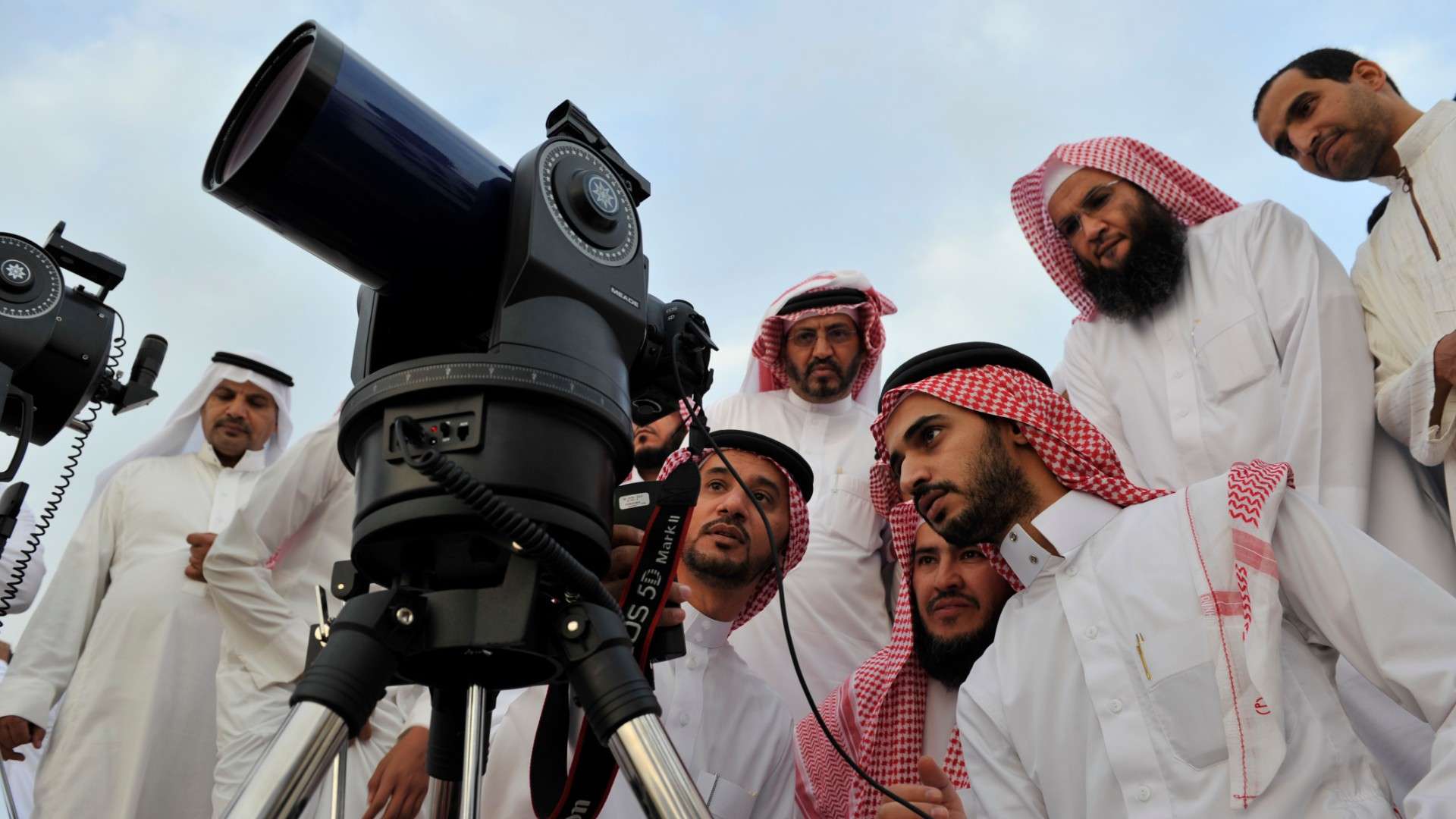
The Saudi moon sighting process relies on a dual framework combining optical observation—using both the naked eye and astronomical equipment—with scientific cross-examination. Governed by the Supreme Court of Saudi Arabia and supported...
The Saudi moon sighting process relies on a dual framework combining optical observation—using both the naked eye and astronomical equipment—with scientific cross-examination. Governed by the Supreme Court of Saudi Arabia and supported by regional observation committees and major observatories, this judicial system determines the official start of Islamic lunar months, including Ramadan, Eid al-Fitr, and Dhul Hijjah.
Contents
The Religious and Legal Framework of Lunar Sighting in Saudi Arabia
The determination of the Islamic (Hijri) lunar calendar in Saudi Arabia is both a religious duty and a standardized legal procedure. The foundation of this system rests on classical Islamic jurisprudence (Fiqh), specifically following the traditions (Sunnah) attributed to the Prophet Muhammad. These traditions instruct Muslims to begin and end lunar months—most notably Ramadan—upon physically observing the new crescent moon (Hilal).
If clouds or atmospheric hazes obstruct the sky on the 29th day of the current lunar month, the Islamic legal principle dictates that the ongoing month must complete its full 30-day duration. Consequently, the new month begins automatically on the following day without requiring a confirmed sighting.
In the Kingdom of Saudi Arabia, the observation protocol serves as an official state procedure executed under judicial oversight. The Supreme Court of Saudi Arabia maintains primary jurisdiction over declaring the commencement of key lunar months:
- Ramadan (the month of fasting)
- Shawwal (marked by Eid al-Fitr)
- Dhul Hijjah (the month of the annual Hajj pilgrimage and Eid al-Adha)
For standard administrative operations, Saudi Arabia utilizes the official Um al-Qura calendar, an astronomical calendar designed for civil scheduling. However, for major religious observances, the legal framework explicitly requires physical sighting or formal judicial verification confirming that a sighting could realistically occur under known astronomical conditions.
Key Institutions Governing the Moon Sighting Protocol
The official Saudi moon sighting mechanism is managed by state judicial bodies, scientific institutes, and localized astronomical observatories.
- Supreme Court of Saudi Arabia
- Inter-agency Verification & Judicial Deliberation
- Local Field Committees (Judges, KACST, Civil Defense)
- Astronomical Observatories (Sudair, Tumair, Makkah Clock Tower)
1. The Supreme Court of Saudi Arabia
The Supreme Court serves as the ultimate authority for moon sighting declarations. Days before the expected end of a lunar month, the Court issues an official public decree inviting all Muslims across the country to participate in looking for the crescent moon on the evening of the 29th day.
Once testimonies are collected nationwide, the justices assemble to evaluate witness statements alongside scientific data before issuing a final royal or judicial declaration.
2. King Abdulaziz City for Science and Technology (KACST)
King Abdulaziz City for Science and Technology provides the scientific foundation for the sighting framework. KACST astronomers calculate exact moonset and sunset times, geocentric astronomical conjunction (the moment when the Earth, Moon, and Sun align in celestial longitude), and the moon's angular elevation above the horizon. This data helps judicial authorities determine whether a physical sighting is astronomically feasible on any given evening.
3. Regional Observation Committees
Distributed across strategic geographic zones throughout Saudi Arabia, regional committees coordinate official search efforts. Each committee typically includes:
- A certified judge (Qadi) or official representative from the Ministry of Justice
- Astronomers and technical staff from local universities or research facilities
- Volunteers and veteran visual observers (Raa'i)
- Representatives from civil defense and local government units
Strategic Observatories across Saudi Arabia
While individual citizens may report sightings from anywhere in the country, the majority of verified reports originate from specialized astronomical observatories built in locations chosen for high altitude, low light pollution, and clear atmospheric conditions.
The Sudair Observatory
Located in the town of Hautat Sudair (north of Riyadh), the Astronomical Observatory of Majmaah University in Sudair is widely recognized as Saudi Arabia’s primary sighting station. Situated on an elevated desert plateau far from industrial haze, Sudair features advanced electronic telescopes, CCD tracking cameras, and optical imaging tools. Its team consists of senior astronomers working alongside traditional observers.
The Tumair Observatory
Situated nearby in the central region, the Tumair sighting station boasts high terrain and optimal atmospheric visibility. Tumair has historically yielded some of the earliest visual detections of the Hilal, making its reports a critical component of the national evaluation process.
The Makkah Clock Tower Observatory
Positioned atop the Abraj Al-Bait complex overlooking the Grand Mosque in Mecca, the Lunar Sightings Observatory in Makkah provides real-time celestial imaging. Operating at high elevation, this observatory uses sophisticated, automated tracking technology to record solar-lunar positions directly above the holy city.
Step-by-Step Breakdown of the Sighting Procedure
The formal moon sighting workflow follows a strict, multi-tier protocol designed to eliminate human error, optical illusions, and false reporting.
- PUBLIC & COMMITTEE CALL: Supreme Court issues public invitation to observe the moon on the 29th day.
- FIELD & OBSERVATORY OPERATIONS: Committees deploy to sites (Sudair, Tumair) with optical devices & telescopes.
- JUDICIAL TESTIMONY & VERIFICATION: Witness gives sworn testimony at regional court; checked against astronomical data.
- SUPREME COURT DELIBERATION & ANNOUNCEMENT: Justices review testimony validity; issue nationwide decree via Saudi Press Agency
Phase 1: Public Call and Deployment
Two days before the 29th day of Sha'ban, Ramadan, or Dhul Qi'dah, the Supreme Court publishes a notice encouraging citizens to look for the moon. Field committees prepare their mobile and stationary optical gear, aligning automated telescopes with the calculated celestial coordinates of the moon.
Phase 2: Field Observation
At sunset on the 29th day, observers track the western horizon immediately after the sun drops below the line of sight. The window for visual detection is brief—often lasting between 10 and 50 minutes—depending on the moon's altitude and the lag time between sunset and moonset. Observers search for the crescent using three primary techniques:
- Naked Eye Observation: Direct visual identification without optical aid.
- Binoculars and Optical Telescopes: Manual optical enhancement to locate faint crescents.
- CCD and Infrared Imaging: Digital sensors capable of detecting lunar contrast in twilight conditions before the crescent becomes visible to the human eye.
Phase 3: Judicial Testimony and Verification
When an observer spots the crescent moon, they must present themselves to the nearest regional court or committee judge to deliver formal legal testimony (Shahadah). The judge evaluates the report against rigorous legal and scientific criteria:
- Character and Reliability: Confirming the observer’s integrity and visual capability.
- Direction and Characteristics: Interrogating the witness regarding the exact angle, horn orientation, height, and illumination time of the observed moon.
- Scientific Plausibility: Comparing the witness's claim against real-time astronomical data provided by KACST. If calculated planetary positions show that the moon set before the sun, or that conjunction had not yet occurred, the physical sighting is ruled scientifically impossible, and the testimony is rejected.
Phase 4: Deliberation and Official Announcement
The Supreme Court reviews verified testimonies submitted by regional courts across Saudi Arabia. If at least one credible sighting passes both judicial cross-examination and scientific plausibility checks, the Court confirms the arrival of the new month. If no valid sightings are reported, the Court rules that the current month will complete 30 days. The decision is announced via the official Saudi Press Agency.
Astronomical Calculation vs. Visual Sighting: The Um al-Qura Standard
A common source of confusion regarding the Saudi process is the distinction between astronomical calculation and visual sighting. The Kingdom uses both systems for different operational needs.
The Civil Um al-Qura Calendar
The Um al-Qura calendar is calculated in advance for administrative, commercial, and governmental operations. Its current scientific criteria state that a new month begins on the evening of the 29th day if two conditions are met:
- The geocentric conjunction of the Sun and Moon occurs before sunset at the coordinates of Mecca.
- The Moon sets after the Sun at the coordinates of Mecca.
If these conditions are met, the next day is designated as the first day of the new month in official schedules.
The Religious Sighting Override
For religious observances, the Um al-Qura calendar serves as a reference, but physical observation remains mandatory. Even if the Um al-Qura criteria indicate the moon should be present, the Supreme Court will not officially declare Ramadan or Eid unless a physical sighting is verified or 30 days of the preceding month have elapsed.
| Dimension | Civil Um al-Qura Calendar | Official Religious Sighting Process |
|---|---|---|
| Primary Objective | Civil, administrative, and economic scheduling | Determining religious observances (Ramadan, Eid, Hajj) |
| Governing Authority | KACST & Ministry of Interior | Supreme Court of Saudi Arabia |
| Methodology | Pure astronomical calculation | Hybrid: Optical sighting cross-examined by astronomy |
| Key Astronomical Metric | Conjunction and post-sunset moonset in Makkah | Visible crescent contrast, altitude, lag time, and elongation |
| Requirement for Sight | Not required (pre-calculated) | Mandatory (physical testimony or completion of 30 days) |
| Public Execution | Published years in advance | Decided on the 29th evening of each lunar month |
Overview of Saudi Arabia's Sighting Infrastructure
The following table summarizes the roles, tools, and legal weights associated with the major components of the Saudi moon sighting system.
| Facility / Body | Location / Scope | Equipment & Technology Used | Primary Function | Legal Weight in Final Ruling |
|---|---|---|---|---|
| Supreme Court of Saudi Arabia | National (Riyadh) | Integrated database, astronomical reporting feeds | Final judicial deliberation and decree issuance | Binding Legal Authority |
| Majmaah Univ. Observatory (Sudair) | Hautat Sudair | High-aperture telescopes, CCD sensors, optical trackers | Field sighting and technical verification | High Evidentiary Value |
| Tumair Observatory | Tumair | Optical binoculars, visual monitoring rigs | Field sighting and visual detection | High Evidentiary Value |
| Makkah Clock Tower Observatory | Mecca | Automated astronomical telescopes, thermal imaging | Real-time solar/lunar position tracking | Supporting Technical Evidence |
| KACST Astronomy Division | Riyadh | Conjunction models, solar system ephemerides | Providing baseline astronomical feasibility | Cross-Examination Standard |
| Regional Field Committees | Multi-province | Mobile optical gear, standard visual optics | Collecting regional witness testimony | Field Verification |
International Impact of Saudi Moon Sighting Rulings
Saudi Arabia's moon sighting announcements carry significant weight beyond its national borders. This widespread influence stems from two primary factors:
1. The Direct Link to the Hajj Pilgrimage
The annual Hajj pilgrimage takes place in and around Mecca, culminating on the 9th day of Dhul Hijjah (the Day of Arafah). Because the physical rites of Hajj occur exclusively within Saudi Arabian territory, Islamic scholars worldwide agree that the timing of Hajj and its associated holiday, Eid al-Adha, must follow the judicial declarations of the Supreme Court of Saudi Arabia.
2. Global Alignment vs. Local Sighting (Matla')
For the beginning of Ramadan and Eid al-Fitr, international Muslim communities approach the Saudi announcement differently:
- Global Alignment: Many nations and diaspora communities follow Saudi Arabia's official declaration to maintain unity across the global Muslim community (Ummah).
- *Local Horizon Sighting (Ikhtilaf al-Matali'):* Other countries—such as Morocco, Pakistan, Oman, and Indonesia—rely entirely on local observation committees within their own geographical borders, which can result in different start dates for the lunar month.
Frequently Asked Questions
Does Saudi Arabia rely strictly on the naked eye to confirm the moon?
No. While naked-eye testimony remains accepted in traditional jurisprudence, official Saudi field committees utilize advanced optical equipment, including high-powered binoculars, astronomical telescopes, and electronic CCD tracking systems to assist in locating the crescent.
Can an astronomical calculation override a visual witness testimony?
Yes. If astronomical data proves conclusively that the moon set before the sun or that astronomical conjunction had not taken place, the Supreme Court will reject witness reports of a sighting on the grounds that visual identification was physically impossible under known orbital mechanics.
What happens if the weather is cloudy across all observatories on the 29th day?
If heavy cloud cover, sandstorms, or atmospheric distortion obscure the sky across all observational sites, the Supreme Court invokes standard legal precedent: the ongoing month is declared to have 30 days, and the new month automatically begins on the day immediately following.
Why does the start date for Ramadan sometimes differ between Saudi Arabia and neighboring countries?
Discrepancies occur due to varying observational criteria, differences in geographic horizons (matla'), and distinct legal standards. Some countries rely exclusively on local visual sightings within their borders, while others apply pure astronomical calculations without requiring physical sighting.
How does the Um al-Qura calendar differ from the religious moon sighting announcement?
The Um al-Qura calendar is a pre-calculated astronomical calendar designed for administrative and governmental planning. The religious moon sighting process relies on active physical observation on the 29th night of the month and requires formal legal verification by the Supreme Court before declaring major religious occasions.
Recommended Practices for Tracking Official Announcements
To avoid false reports and rumors regarding the start of lunar months:
- Rely on Official State Outlets: Monitor direct releases from the Saudi Press Agency (SPA) or official notifications from the Ministry of Justice and the Supreme Court of Saudi Arabia.
- Verify via Astronomical Centers: Cross-reference public speculation against scientific reports published by established bodies such as KACST or the International Astronomical Center (IAC).
- Distinguish Civil Calendars from Decrees: Do not rely on printed calendars for religious obligations; wait for the formal judicial statement issued on the evening of the 29th day.
Image Gallery