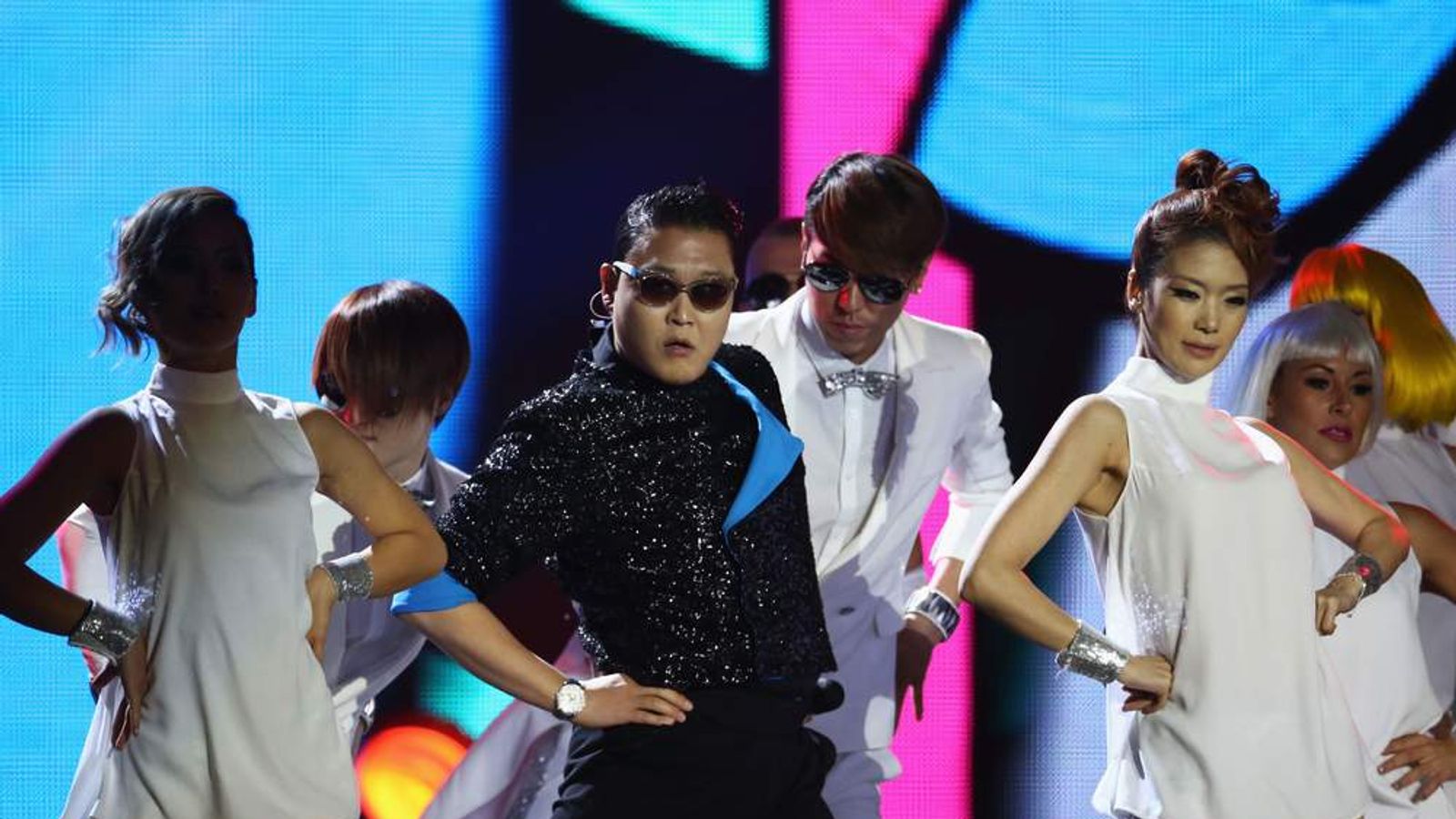
Gangnam Style Release Date: When the World First Met PSY
The global phenomenon "Gangnam Style" by South Korean artist PSY was officially released on July 15, 2012. It served as the lead single for his sixth studio album, PSY 6 (Six Rules), Part 1. Within months, the track evolved from a dome...
The global phenomenon "Gangnam Style" by South Korean artist PSY was officially released on July 15, 2012. It served as the lead single for his sixth studio album, PSY 6 (Six Rules), Part 1. Within months, the track evolved from a domestic K-pop hit into a worldwide cultural revolution, eventually becoming the first video to reach one billion views on YouTube.
Contents
The Official Launch: July 15, 2012
When "Gangnam Style" debuted in mid-July 2012, the music industry was in the midst of a transition toward digital streaming and social media dominance. PSY (Park Jae-sang), already an established and somewhat eccentric figure in the South Korean music scene, released the track under YG Entertainment. While the song was initially intended for the South Korean market, its infectious beat and humorous music video possessed an unintentional universal appeal.
The release was accompanied by the music video on YouTube, which would eventually become the primary engine for the song's success. At the time of its debut, few could have predicted that a Korean-language track satirizing the lifestyle of Seoul's affluent Gangnam District would become the defining anthem of the year. The song’s production featured a heavy electronic dance music (EDM) influence, characterized by a driving synthesizer riff that made it perfect for clubs and radio airplay across various cultures.
The Timeline of a Viral Explosion
The journey from a local Korean release to a global chart-topper was remarkably swift. By tracking the timeline of its ascent, we can see how the "viral" nature of the song took hold during the summer of 2012.
July 2012: Domestic Dominance
Following its July 15 release, "Gangnam Style" immediately topped the Gaon Chart in South Korea. It stayed at the number one spot for five consecutive weeks. During this period, the song was a regional success, primarily contained within the K-pop ecosystem.
August 2012: The Turning Point
The international breakthrough began in early August 2012. Several high-profile Western celebrities, including T-Pain, Katy Perry, and Tom Cruise, shared the video on Twitter (now X). This celebrity endorsement acted as a catalyst, pushing the video to a wider Western audience. By the end of August, "Gangnam Style" had topped the iTunes Music Video Chart, surpassing hits by mainstream American artists.
September 2012: Global Chart Success
By mid-September, the song had officially entered the Billboard Hot 100. It eventually peaked at number two, a historic achievement for a South Korean artist at that time. On September 20, 2012, Guinness World Records recognized "Gangnam Style" as the most "liked" video in the history of YouTube (at the time).
Breaking the Internet: The Billion-View Milestone
One of the most significant moments in the history of "Gangnam Style" occurred on December 21, 2012. On this day, the music video became the first piece of digital content in history to surpass one billion views on YouTube.
This milestone was not just a vanity metric; it represented a fundamental shift in how global popularity was measured. Before "Gangnam Style," the music industry relied heavily on radio play and physical sales. PSY’s success proved that a non-English language song could achieve total global saturation through purely digital means.
Furthermore, the video’s popularity famously "broke" the YouTube view counter. At the time, YouTube used a 32-bit integer to store view counts, which had a maximum value of 2,147,483,647. In late 2014, "Gangnam Style" exceeded this number, forcing YouTube to upgrade its systems to a 64-bit integer, which allows for over nine quintillion views.
The Significance of the "Horse Dance"
A major factor in the song's 2012 success was the "horse dance." The choreography—mimicking the riding of a horse—was simple enough for fans to replicate but distinct enough to be immediately recognizable. This led to thousands of "Gangnam Style" parodies and flash mobs across the globe, from the United States to Europe and Southeast Asia.
The dance was a deliberate creation by PSY and his team. During the production phase, PSY reportedly spent weeks testing different animal-inspired movements before settling on the horse-gallop. This focus on "visual comedy" allowed the song to transcend language barriers. Even if listeners did not understand the satirical lyrics about the Gangnam District's "new money" culture, they could participate in the visual experience.
Comparing Viral Music Milestones
To understand the magnitude of the "Gangnam Style" release, it is helpful to compare its trajectory with other major viral hits of the early digital era.
| Song Title | Release Date | Date it Hit 1 Billion Views | Primary Platform |
|---|---|---|---|
| Gangnam Style | July 15, 2012 | December 21, 2012 | YouTube |
| Baby (Justin Bieber) | January 18, 2010 | February 24, 2014 | YouTube/Vevo |
| Despacito | January 12, 2017 | August 4, 2017 | YouTube |
| See You Again | March 10, 2015 | October 7, 2015 | YouTube |
| Hello (Adele) | October 23, 2015 | January 18, 2016 | YouTube/Vevo |
Impact on the K-Pop Industry
The release of "Gangnam Style" in 2012 is often cited as the "Big Bang" moment for the modern K-pop era. While groups like Girls' Generation and Wonder Girls had attempted to break into the U.S. market previously, PSY's success provided the "proof of concept" that Korean artists could compete at the highest levels of the global music industry.
Because of the massive interest generated by PSY, Western record labels began looking more seriously at South Korean talent. This paved the way for the future global dominance of groups like BTS and Blackpink. It also led to a change in how the Billboard charts were calculated; Billboard eventually adjusted its formulas to give more weight to YouTube views, recognizing that digital video consumption was a primary indicator of a song's popularity.
The Cultural Context of Gangnam
For those outside of Korea, "Gangnam Style" was often viewed as a "silly" or "catchy" song. However, within South Korea, the song’s release carried significant satirical weight. The Gangnam District is an area of Seoul known for immense wealth, high-end fashion, and status-seeking.
By claiming he had "Gangnam Style," PSY was actually poking fun at people who try too hard to appear wealthy and sophisticated. The music video features him in seemingly "luxurious" settings—such as a beach, a stable, or a sauna—only for the camera to reveal he is actually at a playground, a cramped bus, or a public bathhouse. This layer of social commentary added depth to the song for its domestic audience, while the infectious beat carried it across international borders.
Technical Details and Production
The song was composed by PSY and Yoo Gun-hyung, a frequent collaborator. Yoo Gun-hyung is a respected producer in South Korea who specialized in blending K-pop sensibilities with Western house and dance music.
The technical production of "Gangnam Style" involved:
- A 132 BPM Tempo: This is a standard "sweet spot" for dance-pop music, providing high energy without being too fast for radio play.
- The Ne-Yo Inspired Synthesizers: The heavy use of the "braam" synth sound was a hallmark of 2012 production styles.
- K-Pop Vocal Dynamics: PSY utilized a rhythmic, almost spoken-word delivery in the verses, contrasted with a high-energy melodic chorus.
Where is PSY Now? (2026 Perspective)
Writing from the vantage point of 2026, "Gangnam Style" is viewed as a foundational classic of the digital age. PSY has since transitioned from a global "viral star" into a powerful music executive. In 2019, he founded P Nation, an entertainment agency that has signed several major Korean artists.
While he continues to release music, such as his 2022 hit "That That" (featuring Suga of BTS), "Gangnam Style" remains his most significant contribution to music history. It is no longer just a song; it is a historical marker that divided the music industry into "before" and "after" the viral video era.
Frequently Asked Questions
Did Gangnam Style win a Grammy?
No, "Gangnam Style" did not win a Grammy Award. Despite its massive global success, the song was released during a period when the Recording Academy was still adapting to the influence of international viral hits and digital-only releases. However, it won numerous other awards, including Best Video at the MTV Europe Music Awards.
How many views does Gangnam Style have today?
As of 2026, "Gangnam Style" has surpassed 5.2 billion views on YouTube. While it is no longer the most-viewed video on the platform—having been surpassed by "Baby Shark Dance" and "Despacito"—it remains one of the most consistent performers in terms of daily views for a legacy track.
Who is the girl in the Gangnam Style music video?
The "main" girl featured in the music video is Hyuna, a former member of the K-pop groups Wonder Girls and 4Minute. She later released a companion version of the song titled "Oppa Is Just My Style," which provided a female perspective on the track.
Is PSY still making music in 2026?
Yes, PSY remains active in the music industry. While his focus has shifted toward managing his agency, P Nation, he still performs at massive "Summer Swag" concerts in South Korea and occasionally releases singles that showcase his signature comedic and energetic style.
Why was "Gangnam Style" so popular?
The song’s success was a "perfect storm" of a catchy EDM beat, a visually hilarious and easily replicable dance, and the burgeoning power of social media platforms like YouTube and Twitter. It appealed to children, adults, and non-Korean speakers simultaneously.
Final Recommendation
For those interested in the history of viral media, "Gangnam Style" remains the primary case study. If you haven't revisited the video since its 2012 heyday, watching it today provides a fascinating look at the early 2010s aesthetic. Additionally, exploring PSY’s later work under his label P Nation offers insight into how he leveraged his viral success to build a lasting legacy in the entertainment industry.
Image Gallery