Understanding Debt Issuance: What It Means for Corporations and Governments
To issue debt means that an entity—typically a corporation or a government—borrows capital by creating a legal obligation to repay a specified sum of money at a future date, usually with periodic interest payments known as coupons. By...
To issue debt means that an entity—typically a corporation or a government—borrows capital by creating a legal obligation to repay a specified sum of money at a future date, usually with periodic interest payments known as coupons. By issuing debt, an organization gains immediate access to liquid assets for operational expansion, infrastructure development, or debt refinancing without diluting equity ownership.
Contents
The Mechanics of Debt Issuance
At its core, issuing debt is a structured financial transaction. When a company or government identifies a need for capital, it initiates the issuance process by creating "securities," most commonly bonds or debentures. These securities act as formal IOUs issued to investors.
The entity (the issuer) agrees to pay the bondholder (the investor) a fixed or floating rate of interest over a set period. Once the maturity date is reached, the issuer returns the principal amount to the investor. Unlike equity financing, where a company sells a portion of its ownership, debt issuance allows the issuer to retain full control while leveraging external capital.
Why Entities Choose to Issue Debt
Organizations prioritize debt issuance over other forms of financing for several strategic reasons:
- Lower Cost of Capital: In many economic environments, the interest paid on debt is tax-deductible for corporations, making it often cheaper than the cost of issuing new shares, which requires sharing future profits with new shareholders.
- Avoiding Ownership Dilution: Issuing shares of stock dilutes the control of current owners. Debt issuance allows founders and current stakeholders to maintain their percentage of ownership while still acquiring the necessary funds for growth.
- Predictable Cash Flow Management: Because debt obligations are fixed, CFOs can forecast interest expenses with precision, allowing for better long-term budgetary planning compared to the variable nature of dividend payouts.
- Access to Liquidity: Governments often issue debt (e.g., Treasury bonds) to fund public infrastructure projects or to cover short-term deficits without immediately increasing taxes.
The Lifecycle of a Debt Issuance
The process of issuing debt is highly regulated and typically involves several intermediary steps to ensure compliance and market viability.
- Underwriting: The issuer works with an investment bank or a syndicate of banks. These underwriters assess the creditworthiness of the issuer, determine the interest rate (yield), and help market the debt to institutional investors.
- Credit Rating: Before issuing public debt, a company or government usually seeks a credit rating from agencies such as Moody’s, S&P, or Fitch. This rating indicates the likelihood of default, which directly influences the interest rate the issuer must offer to attract investors.
- Offering and Pricing: The issuer publishes a prospectus—a legal document outlining the risks, the purpose of the funds, and the terms of the debt. The pricing is finalized based on prevailing market interest rates and the issuer’s credit strength.
- Issuance and Trading: Once the debt is "issued," it may trade on secondary markets, allowing original investors to sell their bonds to other investors before the maturity date.
Comparison: Debt vs. Equity Financing
Choosing between debt and equity is one of the most critical decisions an organization makes. The following table highlights the primary differences:
| Feature | Debt Issuance | Equity Issuance |
|---|---|---|
| Ownership | No ownership change | New shares dilute existing owners |
| Repayment | Required (Principal + Interest) | Not required (Dividends are optional) |
| Tax Treatment | Interest is tax-deductible | Dividends are not tax-deductible |
| Risk of Default | High (can lead to bankruptcy) | Low (no fixed obligations) |
| Investor Status | Creditors with legal priority | Shareholders with voting rights |
Risks and Operational Limitations
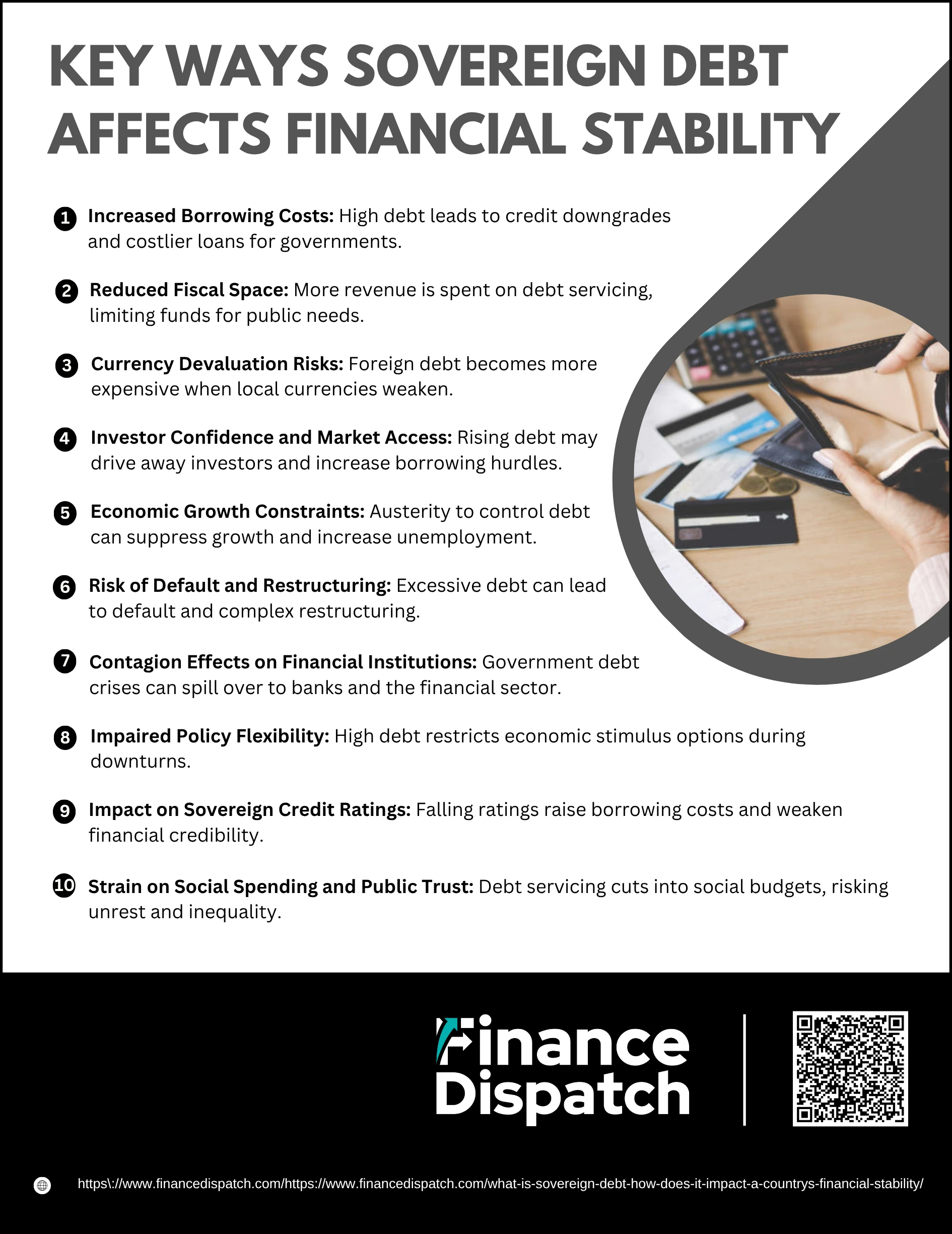
While debt issuance is a powerful tool, it carries inherent risks. The most significant is the solvency risk. If an organization struggles to generate enough revenue to meet its interest payments, it can face default. Default often leads to credit rating downgrades, making it significantly more expensive or even impossible to borrow money in the future.
Furthermore, "restrictive covenants" are common in debt agreements. These are legal clauses that may limit the issuer's ability to take on more debt, pay dividends, or undergo significant structural changes until the original debt is retired. Management must carefully balance the influx of cash with these operational constraints.
The Role of Market Conditions
The decision to issue debt is heavily influenced by the interest rate environment. When central banks maintain low interest rates, it is "cheap" to borrow, leading to higher levels of corporate and government debt issuance. Conversely, in a high-interest-rate environment, the cost of servicing new debt increases, causing organizations to be more conservative. By 2026, many organizations are carefully monitoring yield curves and inflation expectations to determine the optimal timing for refinancing existing debt or issuing new bonds.
Frequently Asked Questions
What happens if a company cannot repay the debt it issued? If a company fails to make interest or principal payments, it is in default. The debt holders (creditors) then have the right to seek legal remedies, which may include forcing the company into bankruptcy proceedings. In these cases, bondholders are usually paid out before equity shareholders during the liquidation of assets.
How is the interest rate on issued debt determined? The interest rate (the coupon) is determined primarily by the issuer's credit risk and current market interest rates. The lower the perceived risk of default, the lower the interest rate the issuer needs to offer. The rate is also influenced by the term length; longer-term debt typically commands higher interest rates to compensate for the uncertainty of the future.
Can an individual "issue debt"? Technically, individuals "take on debt" (e.g., through mortgages or personal loans), but they do not "issue debt" in the corporate sense. Issuing debt implies the creation of a tradable security that can be bought and sold by various investors, a process reserved for corporations, municipalities, and sovereign governments.
What is the difference between a bond and a debenture? Both are forms of debt issuance. A bond is generally secured by specific assets (collateral), whereas a debenture is an unsecured debt instrument backed only by the general creditworthiness and reputation of the issuer.
Does issuing debt always mean the company is in trouble? No. Healthy companies often issue debt to fund profitable growth, such as building a new factory, acquiring another company, or upgrading technology. Debt is a standard tool for capital structure management, not necessarily a sign of financial distress.
Next Actions for Organizations
If you are evaluating whether to issue debt for your organization, your first step should be a thorough assessment of your debt-to-equity ratio and your capacity to service additional interest payments. Consult with corporate financial advisors and legal counsel to draft a clear prospectus and ensure compliance with regulatory requirements in your jurisdiction. Ensure that the use of funds is clearly defined, as investors are more likely to participate in an offering that has a documented, value-accretive purpose.
Image Gallery