Why Jackie Stewart Formula 1 Legacy Matters
Sir Jackie Stewart’s impact on Formula 1 extends far beyond his three Drivers' World Championships won in 1969, 1971, and 1973. While his 27 Grand Prix victories and exceptional racecraft cemented his status as one of the sport's great...
Sir Jackie Stewart’s impact on Formula 1 extends far beyond his three Drivers' World Championships won in 1969, 1971, and 1973. While his 27 Grand Prix victories and exceptional racecraft cemented his status as one of the sport's greatest drivers, his enduring legacy is rooted in his relentless, life-saving campaign for driver safety and his transformation of the sport's professional and commercial landscape.
Contents
The Human Toll: Formula 1 in the 1960s and 1970s
To understand why Jackie Stewart’s legacy matters, one must examine the perilous reality of motorsport during the 1960s and 1970s. Formula 1 was an era defined by extreme velocity, fragile machinery, and virtually nonexistent safety infrastructure. Circuits like the Nürburgring Nordschleife, Spa-Francorchamps, and Monza featured unyielding barriers, massive drops, telephone poles, and straw bales.
Drivers operated under the constant shadow of fatal accidents. Cockpits offered minimal protection, fuel tanks were poorly shielded, and fire hazards were severe. In 1966, a severe crash at the Belgian Grand Prix at Spa trapped Stewart upside down in his BRM for nearly half an hour while fuel leaked around him. Lacking adequate marshals, proper extraction tools, and immediate medical attention, fellow drivers had to borrow a spectator’s wrench to free him.
This harrowing experience catalyzed Stewart’s lifelong crusade. Rather than accepting death as an inevitable cost of racing—a callous industry attitude summarized by the phrase "racing is dangerous"—Stewart demanded systemic change.
The Crusader for Safety and Medical Reform
Stewart’s safety advocacy transformed Formula 1 from a blood sport into a managed, professional discipline. He used his platform as a front-running driver to challenge race organizers, governing bodies, and track owners who prioritized spectacle over human life.
Key Safety Reforms Championed by Stewart
- Mandatory Full-Face Helmets: Replacing open-faced helmets with advanced, full-face designs to protect the head and face from impact and fire.
- Fitted Seatbelts and Harnesses: Ensuring drivers were securely fastened into cockpits rather than being violently ejected during high-speed crashes.
- Medical Intervention and Track Safety: Insisting on dedicated, qualified trackside medical personnel, functional fire-fighting equipment, and rapid-response vehicles at every Grand Prix.
- Circuit Boycotts: Leading driver boycotts of notoriously lethal venues, most notably the 1970 and 1976 boycotts of the Nürburgring, which ultimately led to the venue's removal from the championship calendar.
His uncompromising stance initially alienated him from circuit owners and traditionalists who viewed him as a disruptor. However, his persistence saved countless lives, drastically reducing the fatality rate in top-tier motorsport over the subsequent decades.
Professionalizing the Commercial Side of Motorsport
Beyond safety, Stewart revolutionized the business of Formula 1. Before Stewart, drivers were treated largely as disposable gladiators who accepted meager pay while promoters reaped the financial rewards. Stewart recognized the commercial value of the sport and understood that drivers deserved fair compensation, professional representation, and control over their image rights.
He introduced the concept of professional brand association, bringing corporate sponsorship into Formula 1 in a structured, sophisticated manner. By aligning himself with major global brands like Rolex, Ford, and Heineken, Stewart proved that racing drivers could transcend sports to become high-earning corporate ambassadors. This commercial blueprint paved the way for modern athlete endorsements and set the stage for Bernie Ecclestone’s transformation of Formula 1 into a multi-billion-dollar global television spectacle.
| Metric / Aspect | 1960s Era Formula 1 | The Stewart Transformation |
|---|---|---|
| Driver Safety | Open-face helmets, lap belts, minimal medical staff | Full-face helmets, harnesses, specialized medical cars |
| Circuit Standards | Unforgiving barriers, trees, ditches, uneven tarmac | Armco barriers, run-off areas, gravel traps |
| Commercial Model | Low compensation, informal or absent sponsorships | Corporate branding, personal management, endorsements |
| Public Perception | Blood sport accepting high driver mortality | Professional, safety-conscious global entertainment |
Analytical Approach to Racecraft and Longevity
On the track, Stewart was an intellectual driver long before telemetry and advanced data analysis existed. Nicknamed the "Flying Scot," he drove with remarkable smoothness, precision, and economy of movement. He famously argued that a racing car should be handled with delicate inputs rather than brute force, noting that if a driver was working excessively hard behind the wheel, either the car was poorly set up or the driver was making mistakes.
His analytical mindset allowed him to preserve equipment, manage tires, and maintain consistent pace over long-distance races. He retired from driving at the end of the 1973 season while at the peak of his powers, fulfilling a promise made to his wife, Helen, following the death of his teammate François Cevert at Watkins Glen. Retiring voluntarily at age 34 preserved his life and allowed him to transition successfully into team ownership, media broadcasting, and ambassadorial roles.
Stewart Grand Prix and Team Ownership
Stewart’s legacy extends to team management. In 1997, alongside his son Paul, he founded Stewart Grand Prix. Operating with backing from Ford, the team defied the odds of new-entrant survival. Johnny Herbert secured the team's historic maiden victory at the 1999 European Grand Prix at the Nürburgring.
Ford subsequently bought out the operation, rebranding it as Jaguar Racing before it eventually transitioned into Red Bull Racing—the dominant championship-winning outfit of later decades. Thus, the engineering and structural foundation laid by Stewart directly contributed to one of the most successful modern dynasties in Formula 1.
Contemporary Relevance and Ongoing Philanthropy
In the modern era, Stewart remains an active, influential figure in the paddock and a vocal advocate for medical research. Through his charity, Race Against Dementia, founded following his wife Helen's diagnosis with Alzheimer's disease, he applies the high-performance, rapid-problem-solving ethos of Formula 1 to accelerate scientific breakthroughs in dementia research. This initiative reflects the core of his legacy: applying elite motorsport principles to solve critical human challenges.
Frequently Asked Questions
How many Formula 1 World Championships did Jackie Stewart win?
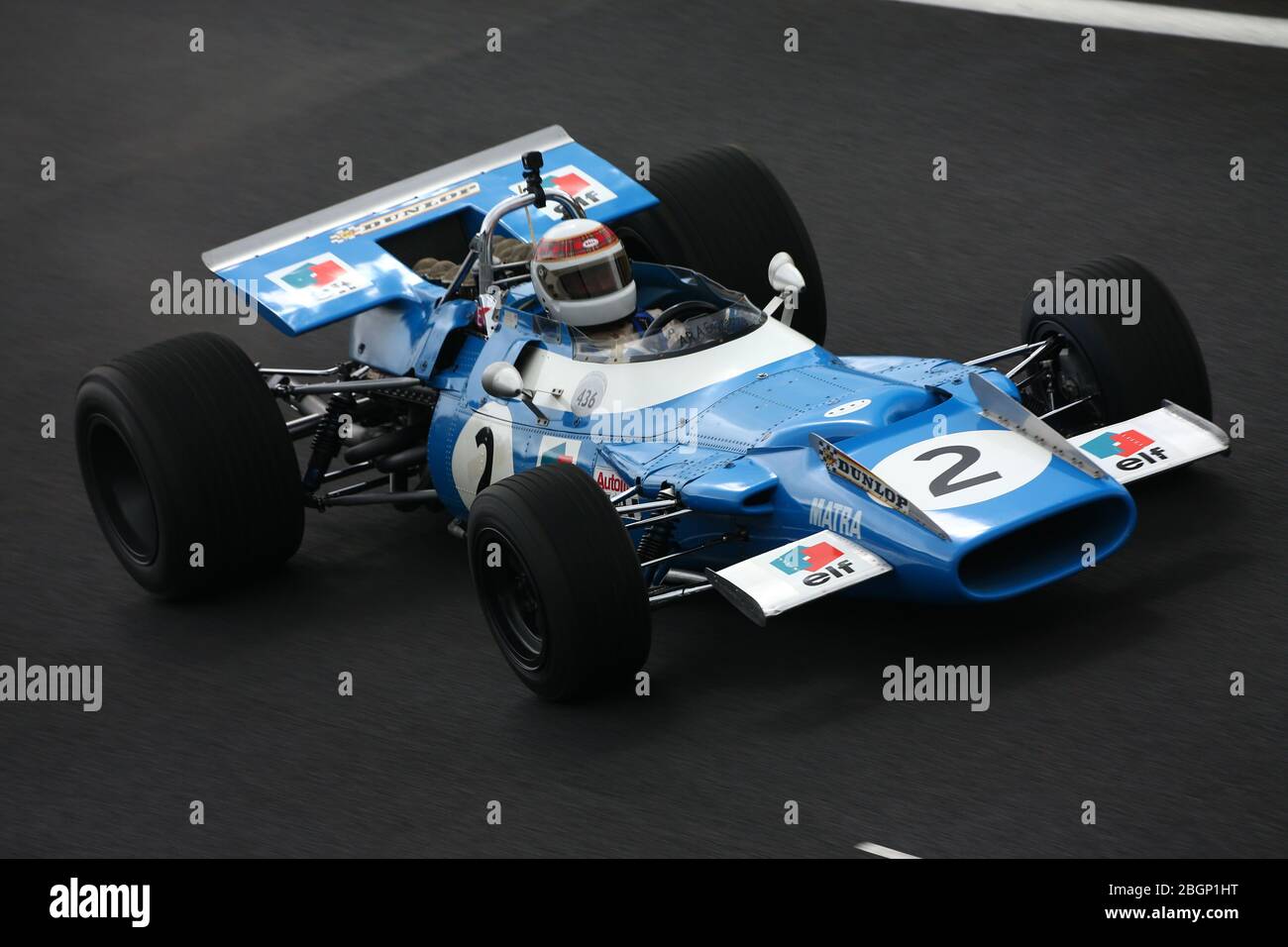
Jackie Stewart won three Drivers' World Championships during his career, taking the titles in 1969, 1971, and 1973, all driving for Matra and Tyrrell.
What was Jackie Stewart's most significant contribution to Formula 1?
His most significant contribution was spearheading the driver safety movement, which drastically reduced fatalities by introducing mandatory safety equipment, medical cars, and improved circuit barriers.
Did Jackie Stewart own a Formula 1 team?
Yes, he founded Stewart Grand Prix with his son Paul in 1997. The team competed until it was sold to Ford at the end of 1999 and later evolved into Red Bull Racing.
Why did Jackie Stewart retire early from racing?
Stewart retired at the end of 1973, having already secured his third championship and having privately planned to stop racing at that point to protect his safety and honor a promise to his family.
What is the Race Against Dementia charity?
Founded by Sir Jackie Stewart, Race Against Dementia is a global charity that funds pioneering scientific research into finding a prevention or cure for dementia, inspired by his wife’s diagnosis.
Next Actions and Further Exploration
For enthusiasts and analysts looking to deepen their understanding of motorsport history, examining archival race footage of Stewart’s fluid driving style offers masterclasses in racecraft. Furthermore, reviewing historical documents from the Grand Prix Drivers' Association (GPDA) era illustrates how collective driver bargaining achieved monumental safety standards. Recognizing Stewart's multifaceted contributions provides essential context for how modern Formula 1 balances extreme performance with rigorous driver protection.
Image Gallery