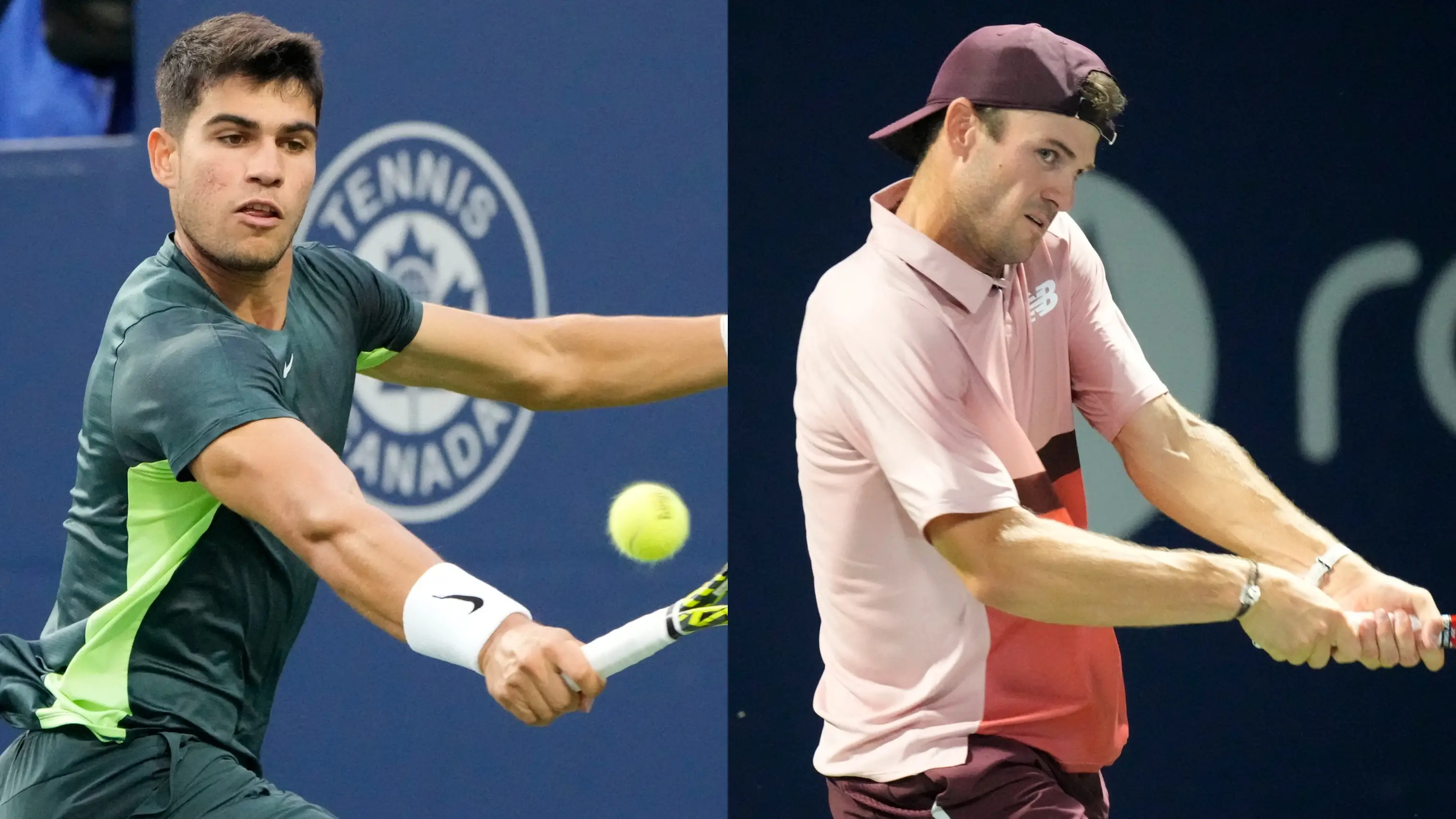
Tommy Paul versus Carlos Alcaraz Match Analysis
Analyses of matchups between Tommy Paul and Carlos Alcaraz reveal a fascinating clash of styles characterized by Alcaraz’s explosive variety and Paul’s elite lateral movement. While Alcaraz often dictates play with heavy topspin and dr...
Analyses of matchups between Tommy Paul and Carlos Alcaraz reveal a fascinating clash of styles characterized by Alcaraz’s explosive variety and Paul’s elite lateral movement. While Alcaraz often dictates play with heavy topspin and drop shots, Paul’s ability to take the ball early and redirect pace makes him one of the few players capable of consistently disrupting the Spaniard’s rhythm.
Contents
Historical Context and Head-to-Head Evolution
The rivalry between Tommy Paul and Carlos Alcaraz has developed into one of the most compelling narratives on the ATP Tour. Unlike many matchups where Alcaraz exerts immediate dominance, Paul has historically presented a unique tactical puzzle for the multi-Slam champion. As of the 2026 season, their encounters are frequently cited by analysts as a benchmark for high-speed, modern hard-court tennis.
The rivalry gained significant traction in 2022 and 2023. At the National Bank Open in Montreal (2022), Paul secured a landmark victory, demonstrating that Alcaraz’s aggression could be neutralized by consistent depth and exceptional defensive-to-offensive transitions. Paul repeated this feat in Toronto in 2023, solidifying his reputation as a "giant killer" who thrives against Alcaraz’s specific brand of pressure.
However, as the rivalry matured into 2024 and 2025, Alcaraz began to adjust his return positioning and shot selection. Their quarterfinal clash at Wimbledon 2024 and their high-stakes encounter at the Paris 2024 Olympics showcased Alcaraz’s improved ability to manage Paul’s flat, penetrating groundstrokes. By 2026, the head-to-head reflects a dynamic where Alcaraz holds the edge in best-of-five formats, while Paul remains a lethal threat in best-of-three scenarios, particularly on North American hard courts.
Technical Style Comparison: The Explosive vs. The Athletic
To understand why this matchup is so closely contested, one must look at the technical mechanics of both players. They represent two different philosophies of the modern baseline game.
Carlos Alcaraz: The All-Court Aggressor
Alcaraz’s game is built on extreme racket head speed. His forehand is a multi-dimensional weapon, capable of producing over 3,000 RPMs of topspin while maintaining a high average velocity. This spin allows him to create sharp angles that pull opponents off the court. Furthermore, Alcaraz utilizes a "lasso" finish on his forehand, which gives him the flexibility to change directions at the last millisecond, a trait that often leaves even fast movers like Paul guessing.
Another hallmark of Alcaraz’s technical kit is his use of the drop shot. He often disguises it behind a deep, heavy baseline exchange, forcing opponents to respect his power before exploiting their deep court positioning. According to ATP Tour statistics, Alcaraz’s ability to win points at the net—often following a drop shot or a heavy approach—is a decisive factor in his wins over Paul.
Tommy Paul: The Counter-Punching Strategist
Tommy Paul is widely regarded as one of the best athletes on tour. His movement is not just fast; it is efficient. Paul utilizes a very low center of gravity, which allows him to dig out Alcaraz’s heavy topspin shots and return them with a flatter trajectory. This is crucial because a flatter ball gives Alcaraz less time to set up his explosive strokes.
Paul’s backhand is arguably more stable than Alcaraz’s in long rallies. While Alcaraz might look for a flamboyant winner, Paul is content to drive the backhand cross-court with consistent depth, waiting for a short ball. Paul’s transition game has also improved under the guidance of coach Brad Stine, making him much more comfortable finishing points at the net than he was earlier in his career.
Tactical Breakdown: How Paul Neutralizes the Alcaraz Storm
The tactical battle between these two often centers on court positioning. In their most competitive matches, Paul refuses to be pushed five meters behind the baseline. By standing his ground and taking the ball on the rise, he robs Alcaraz of the time required to "wind up" his big shots.
- The Return of Serve: Paul focuses on hitting deep returns down the middle. This limits Alcaraz’s ability to hit an angled second-shot winner. By neutralizing the start of the point, Paul forces Alcaraz into a physical baseline battle.
- Attacking the Second Serve: When Alcaraz’s first-serve percentage dips, Paul is aggressive. He often steps inside the baseline to punish the Alcaraz kick serve, redirecting it into the corners.
- Managing the Drop Shot: Paul’s speed is his best defense against Alcaraz’s variety. Because Paul covers the court so well, Alcaraz is often forced to hit his drop shots closer to the net or with more risk, leading to more unforced errors.
Conversely, Alcaraz’s tactic to beat Paul involves changing the height of the ball. By mixing low slices with high, heavy topspin, Alcaraz disrupts Paul’s preferred hitting zone (waist-high). When Paul is forced to hit above his shoulders or below his knees, his error rate tends to increase.
The Role of Surface and Environmental Conditions
The outcome of a Paul-Alcaraz match is heavily influenced by the playing surface and local conditions. As of 2026, their performance profiles on different courts are well-documented.
| Feature | Carlos Alcaraz | Tommy Paul |
|---|---|---|
| Best Surface | Clay / Slow Hard Court | Fast Hard Court |
| Signature Shot | Inside-out Forehand | Cross-court Backhand |
| Serve Characteristic | High Kick / Variety | Precision / Flat |
| Net Proficiency | Elite (Touch/Volleys) | High (Improved Transition) |
| Defensive Style | Slide / Elasticity | Linear Speed / Footwork |
| Typical Win Condition | Dominating with Power | Outlasting / Counter-punching |
Hard Courts (Outdoor)
This is where the rivalry is most balanced. In the heat of the North American summer, the ball jumps higher, which aids Alcaraz’s kick serve but also sits up perfectly for Paul’s aggressive returns. Paul’s victories in Montreal and Toronto occurred on these surfaces, where the speed of the court rewards his flat ball-striking.
Clay Courts
On clay, the advantage shifts significantly to Alcaraz. The slower surface gives him more time to track down Paul’s shots and allows his topspin to become more disruptive. Alcaraz’s ability to slide into shots and maintain balance gives him a defensive edge that Paul struggles to penetrate over five sets.
Grass Courts
The low bounce of grass theoretically favors Paul’s flatter shots. However, Alcaraz’s rapid adaptation to grass—culminating in multiple titles at Wimbledon—shows that his variety is equally effective here. His ability to use the slice and the serve-and-volley makes him a formidable opponent for Paul on the lawn.
Key Performance Indicators (KPIs) in Their Matchups
When analyzing a match between these two in 2026, several statistics serve as indicators of who is likely to emerge victorious:
- First Serve Percentage: If Alcaraz stays above 65%, he is difficult to break. If he drops below 55%, Paul’s aggressive returning becomes the deciding factor.
- Unforced Errors from the Forehand: Alcaraz often "red-lines" his game. If Paul can induce 15+ unforced errors from the Alcaraz forehand wing in a set, he usually wins that set.
- Net Points Won: Paul must win at least 70% of his points when he ventures to the net to prevent Alcaraz from turning the match into a pure baseline grind.
- Break Point Conversion: In their head-to-head, Alcaraz often creates more chances, but Paul is known for his "clutch" serving on break points.
Mental Fortitude and In-Match Adjustments
The psychological aspect of this matchup cannot be overstated. Carlos Alcaraz plays with an emotional intensity that can intimidate opponents. However, Tommy Paul is noted for his calm demeanor. He does not get rattled by Alcaraz’s spectacular "hot shots."
In matches where Alcaraz is leading, he tends to play with even more freedom, which can be dangerous. Paul’s goal is often to keep the score close, putting pressure on Alcaraz to maintain that high level of risk. In 2025 and early 2026, we have seen Paul use more frequent "chip and charge" tactics to force Alcaraz to come up with passing shots under pressure, a strategy that tests the Spaniard's composure.
Future Outlook: The Rivalry in 2026 and Beyond
As we progress through the 2026 season, Carlos Alcaraz remains the favorite in most betting markets due to his higher ceiling and major tournament pedigree. However, Tommy Paul has cemented himself as the "tactical blueprint" for how to play against Alcaraz. Younger players on the tour often study Paul’s footage to learn how to absorb Alcaraz’s pace without giving up court position.
For Paul to tip the lifetime head-to-head in his favor, he will need to continue refining his first-serve placement. For Alcaraz, the challenge remains consistency; avoiding the "lapses" that Paul is so adept at exploiting. Their matches remain "must-watch" television because they represent the pinnacle of athletic movement in professional sports.
Frequently Asked Questions
Who has won more matches between Tommy Paul and Carlos Alcaraz? As of the 2026 season, Carlos Alcaraz holds a slight lead in the overall head-to-head. While Paul won several of their early meetings on North American hard courts, Alcaraz has been more dominant in Grand Slam encounters and on clay. You can track live updates and historical data via the ATP Tour Head-to-Head.
What is Tommy Paul's best strategy to beat Carlos Alcaraz? Paul’s most successful strategy involves taking the ball early to take away Alcaraz’s time. By hitting deep, flat shots and approaching the net frequently, Paul prevents Alcaraz from setting up his heavy topspin forehand and his trademark drop shots.
How does the surface affect the Paul vs. Alcaraz matchup? Alcaraz has a clear advantage on clay due to his movement and spin. Paul is most competitive on fast hard courts, where his flat strokes and linear speed are maximized. On grass, Alcaraz’s variety gives him a slight edge, though Paul’s game is well-suited for the surface.
Why is Tommy Paul considered a difficult opponent for Alcaraz? Paul is one of the few players who can match Alcaraz’s speed. Because Paul doesn't get "blown off the court" by Alcaraz's power, he can stay in long rallies and wait for the Spaniard to commit an unforced error while attempting a high-risk shot.
Has Carlos Alcaraz changed his game to face Tommy Paul? Yes. In more recent matches leading into 2026, Alcaraz has utilized more slice and height variation. By moving Paul out of his rhythm and forcing him to generate his own pace from awkward positions, Alcaraz has found more success than he did in their 2022-2023 meetings.
Final Recommendation for Analysts and Fans
When watching or analyzing a Tommy Paul versus Carlos Alcaraz match, focus on baseline proximity. The player who successfully maintains their position closest to the baseline usually dictates the outcome. If Paul is being pushed back, Alcaraz will likely dominate with variety. If Paul is stepping in, expect a close, high-intensity battle that could go either way. For those tracking performance trends, pay close attention to the second-serve win percentage, as this is where the tactical battle is most often won or lost.
Image Gallery