Trump Gallup Approval in Recent Polls: A Comprehensive Analysis
Donald Trump’s Gallup approval ratings remain a cornerstone of American political data, characterized by unprecedented partisan polarization and a unique lack of volatility. During his presidency, his Gallup approval averaged 41.1%, wi...
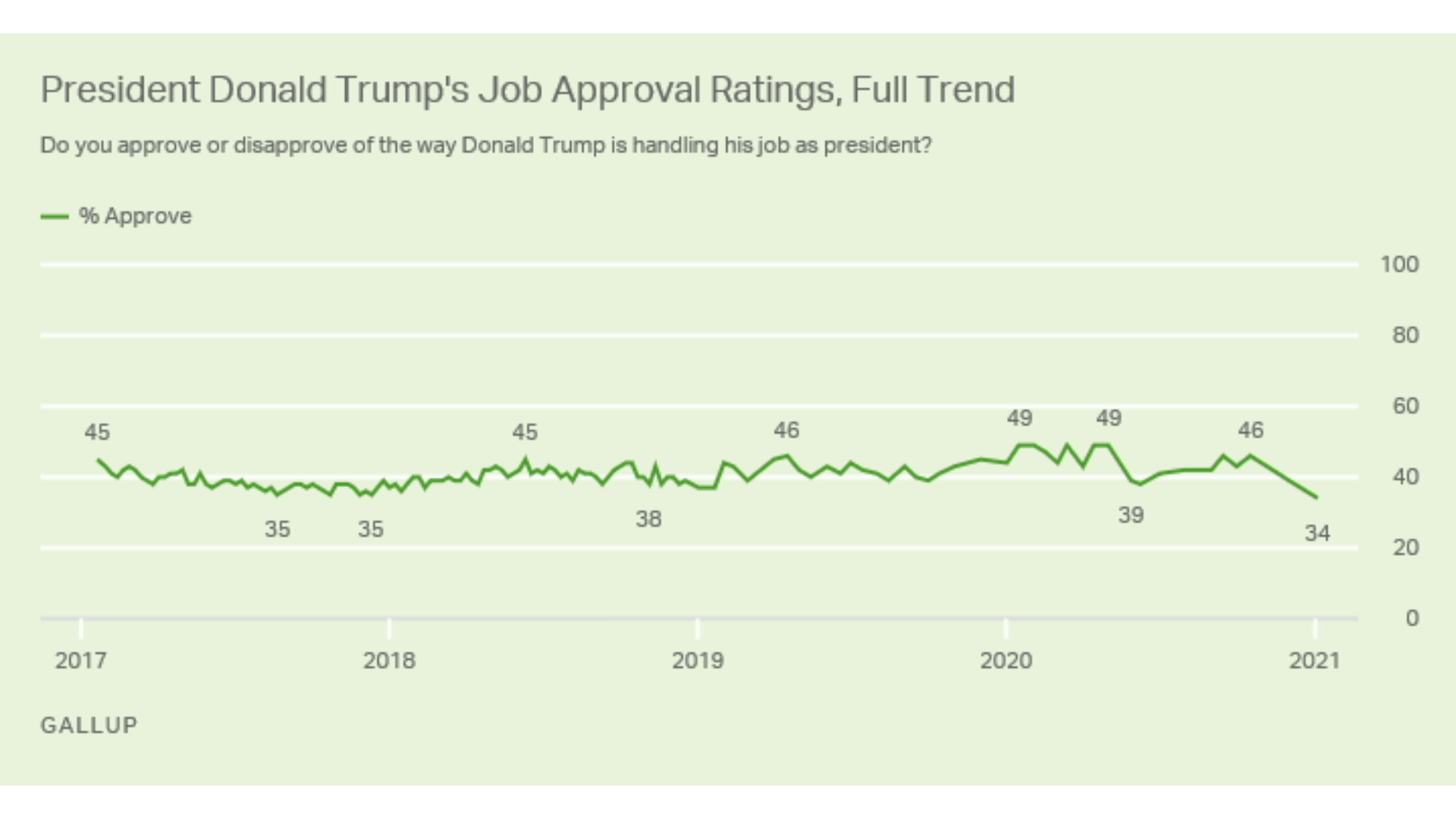
Donald Trump’s Gallup approval ratings remain a cornerstone of American political data, characterized by unprecedented partisan polarization and a unique lack of volatility. During his presidency, his Gallup approval averaged 41.1%, with a terminal rating of 34% in January 2021. Recent retrospective Gallup polls continue to show a deeply divided public perception.
Contents
Understanding the Gallup Approval Methodology
To interpret Donald Trump’s standing in Gallup polls, one must first understand the rigor behind the data. Gallup utilizes a "gold standard" polling methodology, which primarily involves live-interview telephone surveys using random-digit dialing. This approach targets both landline and cellular phones across all 50 U.S. states and the District of Columbia. Unlike many online-only polls that rely on opt-in panels, Gallup’s probability-based sampling is designed to provide a more representative snapshot of the entire adult population.
During the Trump administration, Gallup transitioned from daily tracking to weekly and eventually monthly reporting. This shift was intended to provide more robust sample sizes for sub-demographic analysis. When reviewing "recent" Gallup data from the perspective of 2026, it is important to distinguish between Job Approval (which measures performance while in office) and Favorability or Retrospective Approval (which measures current sentiment toward the former president).
Gallup’s approval question is standardized: "Do you approve or disapprove of the way Donald Trump is handling/handled his job as president?" This consistency allows for direct comparisons between Trump and every president since Harry S. Truman. In the context of 2026, these metrics are vital for historians and political strategists attempting to gauge the lasting impact of his "America First" platform on the American electorate.
Historical Trajectory: The Highs and Lows of the Trump Presidency
Donald Trump’s tenure was marked by a distinct lack of the "honeymoon period" typically enjoyed by incoming presidents. He began his term in 2017 with an approval rating of 45%, which was lower than any of his modern predecessors at the start of their first terms. Over the next four years, his numbers moved within a relatively narrow 15-point band, demonstrating a "hard floor" of support that rarely wavered regardless of external events.
The Peak: 49% Approval
Trump reached his personal Gallup high of 49% on several occasions, most notably in early 2020. This period coincided with the conclusion of his first Senate impeachment trial—where he was acquitted—and preceded the full-scale onset of the COVID-19 pandemic in the United States. During this window, economic indicators were strong, and Republican enthusiasm was at a fever pitch. This 49% mark remains significant because it represents the only time a modern president failed to reach a 50% approval rating at any point during their first term in the Gallup record.
The Floor: 34% Approval
The low point of Trump’s Gallup approval occurred in January 2021, following the events of January 6th at the U.S. Capitol. His rating dropped to 34%, a sharp decline from the mid-40s seen just before the 2020 election. This drop was largely attributed to a loss of support among self-identified Independents and a small but measurable segment of moderate Republicans. Despite this low, his average for the final year of his presidency remained higher than the lows seen by presidents like George W. Bush or Richard Nixon during their most troubled periods.
The Polarization Phenomenon
The most defining characteristic of Trump’s Gallup data is the extreme polarization between Republican and Democratic respondents. While all modern presidencies have seen growing gaps between party approval, the Trump era shattered previous records.
On average, the gap between Republican and Democratic approval of Trump was roughly 81 percentage points. For perspective, Republicans typically gave him approval ratings between 85% and 95%, while Democratic approval frequently languished in the single digits (3% to 10%). This polarization created a "ceiling" that prevented his overall approval from rising significantly, even during periods of economic growth, as Democratic opposition remained virtually absolute.
From the vantage point of 2026, this data serves as a blueprint for the current political landscape. It illustrates that the American electorate has moved away from "performance-based" evaluation—where a president's numbers fluctuate based on policy success—toward "identity-based" evaluation, where party affiliation dictates approval regardless of specific outcomes.
Comparing Trump to His Predecessors
To understand the "recent" standing of Donald Trump, it is helpful to place his 41.1% average in historical context. Gallup has tracked presidential approval for nearly a century, providing a benchmark for what constitutes "high" or "low" public support.
| President | Gallup Term Average | High Point | Low Point | Partisan Gap (Avg) |
|---|---|---|---|---|
| Donald Trump | 41.1% | 49% | 34% | 81% |
| Barack Obama | 47.9% | 69% | 38% | 70% |
| George W. Bush | 49.4% | 90% | 25% | 61% |
| Bill Clinton | 55.1% | 73% | 37% | 55% |
| Ronald Reagan | 52.8% | 71% | 35% | 52% |
| Dwight Eisenhower | 65.0% | 79% | 48% | 36% |
As the table demonstrates, Trump’s average is the lowest of the modern era, but his "low point" (34%) is actually higher than those of George W. Bush (25%), Jimmy Carter (28%), or Harry Truman (22%). This suggests that while Trump struggled to win over the opposition, he maintained a more resilient base of support than many previous leaders who faced economic or military crises.
Recent Gallup Trends: Retrospective Approval
As we look at Gallup data in 2026, "Retrospective Approval" has become a key metric. This occurs when Gallup asks Americans to look back at a former president's term and rate it with the benefit of hindsight. Historically, most presidents see their approval ratings rise after leaving office—a phenomenon sometimes called the "nostalgia effect."
In Gallup’s 2023 and 2024 retrospective surveys, Donald Trump’s approval saw a modest increase compared to his final 34% rating in 2021. Many voters, when surveyed post-presidency, cited the pre-pandemic economy as a primary reason for their improved view. However, his retrospective numbers remain more polarized than those of Barack Obama or George W. Bush. For a significant portion of the electorate, the events surrounding the 2020 election and the transition of power remain the primary lenses through which his Gallup record is viewed.
Why Gallup Data Remains Relevant in 2026
For those tracking Trump's influence in 2026, Gallup serves as the most reliable archive of public sentiment. While "recent" polls from other organizations might show volatility based on current news cycles, Gallup’s long-term trend lines provide the structural data needed to understand the current alignment of the American voter.
- The Independent Factor: Gallup’s breakdown of Independent voters was often the "canary in the coal mine" for Trump’s overall standing. Whenever his approval among Independents dipped below 35%, his overall numbers became precarious.
- Economic Correlation: Gallup’s "Economic Confidence Index" often mirrored Trump’s approval more closely than other social metrics, indicating that his support was heavily tied to perceived financial well-being.
- Institutional Trust: In 2026, the trust in polling itself is often debated. Gallup’s transparent methodology remains a baseline that other pollsters are measured against.
FAQs About Trump Gallup Approval
What was Donald Trump's average Gallup approval rating?
Donald Trump's average job approval rating over his four-year term was 41.1%. This is the lowest average for any president since Gallup began tracking the metric in 1938. However, his rating was remarkably stable, staying within a narrow range for much of his presidency.
Did Donald Trump ever reach a 50% approval rating in Gallup?
No. Donald Trump is the only president in Gallup's polling history to never reach a 50% approval rating at any point during his term. His highest recorded rating was 49%, reached in early 2020 and again in mid-2020.
How did the January 6th events impact his Gallup numbers?
Following the events at the U.S. Capitol on January 6, 2021, Trump’s Gallup approval dropped to 34%. This represented a 12-point decline from his pre-election high of 46% in October 2020 and was the lowest point of his entire presidency.
How does Trump's polarization compare to other presidents?
Trump’s presidency saw the highest levels of partisan polarization in Gallup’s history. There was an average 81-point gap between Republican (89%) and Democratic (8%) approval ratings. This surpassed the previous record of 70 points held by Barack Obama.
Does Gallup poll Donald Trump now that he is out of office?
Yes. Gallup periodically conducts retrospective approval polls and "favorability" ratings for major political figures, including former presidents. These polls help track how public perception of a leader's legacy evolves over time.
Recommended Next Actions for Data Analysis
For researchers or interested citizens looking to utilize Gallup data in 2026, the following steps are recommended:
- Access the Gallup Presidential Primary Archive: Review the raw data tables provided by Gallup to see the demographic breakdowns, specifically focusing on age and education level, which were major drivers of Trump's approval shifts.
- Compare with "Right Track/Wrong Track" Data: To get a fuller picture, overlay Gallup approval ratings with the "Satisfied with the way things are going in the U.S." metric from the same period.
- Monitor Retrospective Shifts: Pay close attention to Gallup’s biennial "Retrospective Approval of Former Presidents" reports. These are typically released every few years and provide the most accurate measure of how "recent" sentiment is shifting as his presidency moves further into history.
Image Gallery