The 20 to 30 States Driving U.S. Agricultural Workforce Trends in 2026
The 20 to 30 states dominating U.S. agriculture represent the core of the nation’s food security, characterized by a heavy reliance on seasonal labor and H-2A visa programs. As of 2026, these states face critical labor shortages, drivi...
The 20 to 30 states dominating U.S. agriculture represent the core of the nation’s food security, characterized by a heavy reliance on seasonal labor and H-2A visa programs. As of 2026, these states face critical labor shortages, driving rapid adoption of automation and necessitating legislative reforms to stabilize the specialized workforce essential for high-value crop production and livestock management.
Contents
The Geographic Concentration of the U.S. Agricultural Workforce
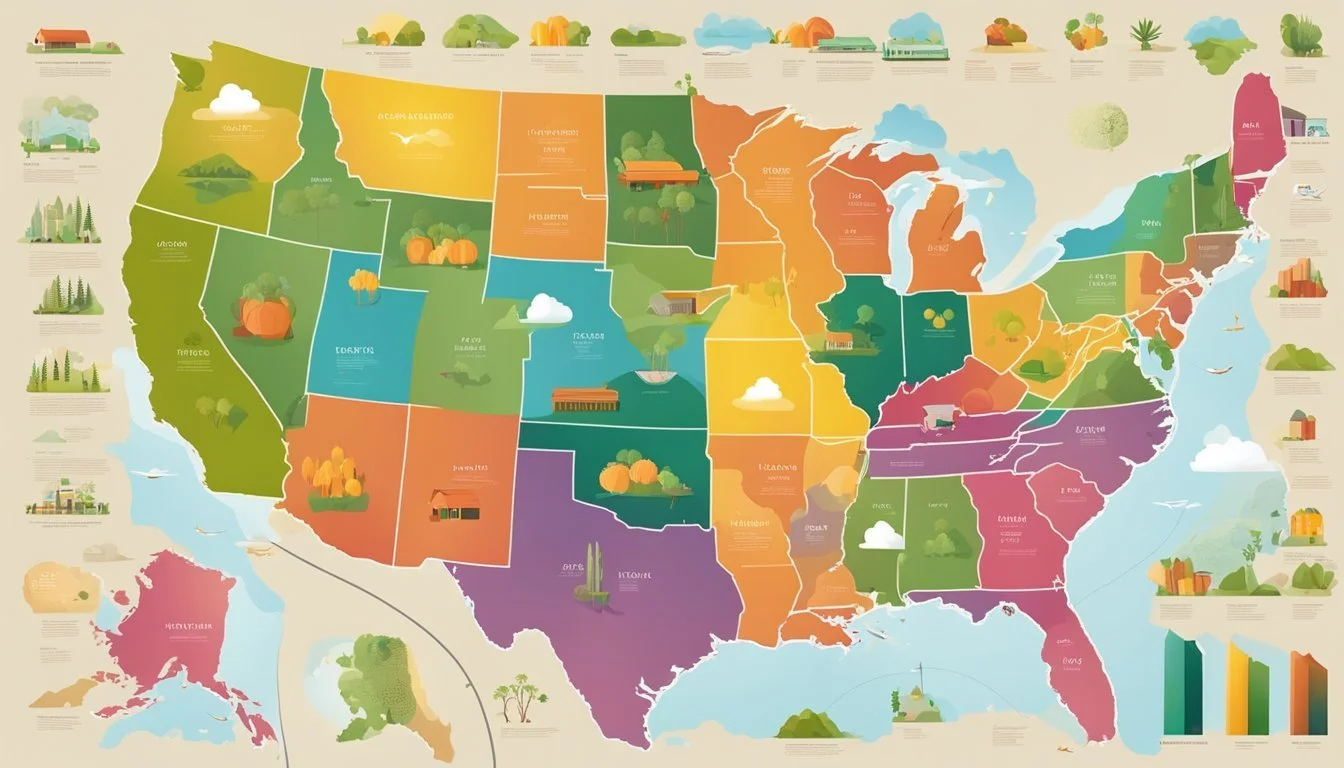
The landscape of American agricultural labor is not uniform across all 50 states. Instead, a specific cluster of 20 to 30 states accounts for over 85% of the total agricultural output and nearly 90% of the seasonal labor demand. These states, primarily located in the Sun Belt, the Pacific Northwest, and the Great Lakes region, manage the highest volume of labor-intensive crops such as berries, citrus, stone fruits, and leafy greens.
The workforce in these regions is categorized into two main groups: domestic year-round employees and seasonal workers, the latter of which is increasingly comprised of H-2A visa holders. In 2026, the reliance on foreign labor has reached a historic peak as domestic labor participation in manual harvesting continues to decline despite rising wages.
Defining the High-Intensity Labor States
The "Top 30" list is led by California, Florida, Washington, Georgia, and North Carolina. These five states alone command a massive share of the workforce due to their year-round growing seasons and the high-touch nature of their specialty crops. Following them are states like Michigan, New York, Texas, and Arizona, which have seen significant workforce shifts due to changing climate patterns and regional water restrictions affecting crop choices.
Economic Realities of the 2026 Adverse Effect Wage Rate (AEWR)
For the 20 to 30 states most dependent on agricultural labor, the Adverse Effect Wage Rate (AEWR) remains the most significant variable in operational costs. In 2026, the Department of Labor (DOL) has implemented a more granular wage structure, moving away from broad regional averages to more localized, occupation-specific rates.
This shift was designed to prevent the employment of foreign workers from depressing the wages of similarly employed U.S. workers. However, for producers in these 20 to 30 key states, the 2026 AEWR increases have outpaced commodity price growth, leading to a tightening of margins.
Impact of Wage Inflation on State Specialization
Labor-Intensive Crop Migration High AEWRs in states like Washington and California are pushing some fruit production toward states with slightly lower labor costs or toward international competitors. This migration is forcing a restructuring of the local workforce toward technical roles in logistics and processing.
Increased H-2A Utilization Despite higher costs, the volume of H-2A certifications in these 30 states has grown by 12% year-over-year in 2026. Employers are prioritizing labor certainty over cost, as the risk of a "no-show" domestic workforce during peak harvest is a greater financial threat than the rising wage floor.
Comparative Analysis of Workforce Dynamics by State (2026 Projections)
The following table highlights the labor metrics for the top-tier states within the 20-30 state agricultural workforce block. These figures reflect 2026 market data regarding H-2A dependency, average hourly AEWR, and the primary labor-utilizing sector.
| State | 2026 H-2A Position | Avg. AEWR (Hourly) | Primary Labor Sector | Workforce Stability Index |
|---|---|---|---|---|
| California | 1st | $20.45 | Specialty Crops / Vineyards | Low (High Turnover) |
| Florida | 2nd | $16.90 | Citrus / Tropical Fruits | Moderate |
| Washington | 3rd | $19.85 | Apples / Stone Fruit | Moderate |
| Georgia | 4th | $16.55 | Onions / Blueberries | High (Recurring Crews) |
| North Carolina | 5th | $16.40 | Tobacco / Sweet Potatoes | High |
| Michigan | 6th | $18.90 | Asparagus / Cherries | Low (Short Season) |
| Texas | 7th | $15.95 | Livestock / Cotton | Moderate |
| New York | 8th | $18.75 | Dairy / Apples | Moderate |
| Arizona | 9th | $17.10 | Leafy Greens / Melons | Low (Extreme Heat Risk) |
| Oregon | 10th | $19.50 | Nursery / Berries | Moderate |
Regulatory Compliance and Worker Safety Standards in 2026
The workforce in these 20 to 30 states is subject to rigorous federal and state oversight. In 2026, the Occupational Safety and Health Administration (OSHA) has finalized the "Heat Injury and Illness Prevention Standard," which specifically impacts states with high-heat indexes such as Arizona, Texas, and Florida.
Heat Stress and Productivity
The 2026 standards mandate specific rest-to-work ratios once temperatures exceed 80°F. While essential for worker safety, these regulations have altered the traditional "piece-rate" pay structures common in the top 30 agricultural states. Employers are now required to provide shaded rest areas and monitored hydration stations, adding to the overhead of the seasonal workforce.
Housing and Transportation Mandates
For states utilizing the H-2A program, the 2026 "Farmworker Protection Rule" has introduced stricter requirements for employer-provided housing. This includes:
- Enhanced Square Footage: Minimum living space per worker has increased to mitigate respiratory health risks.
- Connectivity Requirements: Mandatory high-speed internet access in worker housing to allow for communication with families and access to legal resources.
- Vehicle Safety: All transport vehicles used for field deployment must now meet updated 2026 safety ratings, including mandatory air conditioning for any transit exceeding 30 minutes.
The Role of Automation in Stabilizing the 30-State Workforce
As labor costs rise and the domestic workforce ages, the 20 to 30 states at the forefront of agriculture are turning to "Labor-Augmenting Technologies." This is not a total replacement of human labor but a shift in the technical depth required of the workforce.
Robotic Harvesting and AI
In states like Washington and California, robotic apple pickers and autonomous strawberry harvesters are now common sights. These machines handle the "brute force" aspects of harvest, while the human workforce has transitioned into "Robotics Technicians" and "Quality Control Supervisors." This shift requires a higher level of technical training, which many land-grant universities in these states are now providing through specialized certificate programs.
Precision Agriculture and Labor Efficiency
The use of drones for chemical application and AI for crop scouting has reduced the man-hours required for field maintenance in states like Iowa and Illinois. By automating the monitoring process, the remaining workforce can be deployed more effectively, focusing only on areas that require manual intervention.
Challenges Facing Small and Mid-Sized Farms
While the top 20 to 30 states benefit from a robust agricultural infrastructure, the rising costs of maintaining a legal workforce are disproportionately affecting small to mid-sized operations. These farms often lack the capital to invest in the 2026-era automation technologies that their larger competitors use to offset wage increases.
- Credit Access: Many smaller farms are struggling to secure seasonal operating loans due to the high volatility of labor costs.
- Consolidation: We are seeing a trend in states like Michigan and Pennsylvania where smaller orchards are being consolidated into larger corporate entities that can better absorb H-2A administrative costs.
- Succession Planning: The lack of a younger domestic workforce is leading to more "farm exits" in the mid-tier states, as owners reach retirement age without a clear path for operational continuity.
Strategic Recommendations for Workforce Management in 2026
To maintain competitiveness in the current 2026 landscape, producers within these critical states must adopt a multi-faceted approach to labor management.
- Invest in Worker Retention: The cost of recruiting a new H-2A crew is significantly higher than retaining a returning one. Offering "Return Bonuses" and improved amenities can secure a reliable workforce year-over-year.
- Diversify Labor Sources: While H-2A is the primary vehicle, exploring local vocational partnerships can help build a "technical layer" of domestic employees who manage the automated systems.
- Audit Compliance Early: With OSHA and DOL inspections increasing in 2026, proactive self-audits of housing, payroll, and safety protocols are essential to avoid the steep fines that can ruin a season's profitability.
- Adopt Modular Automation: Rather than full-scale robotic overhauls, farms should look for modular tech—such as autonomous platforms that assist human pickers—to bridge the gap between manual labor and full automation.
Frequently Asked Questions
Which state has the largest agricultural workforce in 2026?
California remains the state with the largest agricultural workforce, driven by its massive production of fruits, nuts, and vegetables. In 2026, California's workforce is increasingly bifurcated between high-tech agricultural engineers and a large, seasonal migrant labor force.
How has the H-2A visa program changed for these states in 2026?
The 2026 H-2A program includes more rigorous housing standards, occupation-specific AEWR wage tiers, and enhanced digital filing requirements. These changes aim to protect workers while providing more specialized labor for specific tasks like greenhouse management or precision irrigation.
What is the average wage for farmworkers in the top 30 agricultural states?
The average wage varies by state but generally ranges between $16.00 and $21.00 per hour in 2026. This range is dictated by the AEWR, which is adjusted annually based on USDA Farm Labor Survey data and DOL market analysis.
Are there enough domestic workers to fill agricultural roles in 2026?
No, there is a significant shortage of domestic workers willing to take on manual agricultural roles. This is why the 20 to 30 states with the highest production are almost entirely dependent on the H-2A program for seasonal harvest and specialized livestock care.
How does the 2026 Heat Standard affect agricultural productivity?
The 2026 OSHA Heat Standard requires mandatory breaks and cooling periods, which can reduce total picking hours during extreme heat waves. However, these standards are credited with reducing workplace injuries and improving long-term worker retention by ensuring a safer environment.
Summary of the 2026 Agricultural Labor Landscape
The agricultural workforce within the 20 to 30 most productive states is undergoing a period of profound transition. The combination of record-high AEWRs, strict 2026 regulatory updates, and the rapid integration of robotic technology has created a market where only the most efficient and compliant operations thrive. As we look toward the 2027 season, the focus remains on balancing the high costs of human labor with the capital intensive but stabilizing promise of automation. Producers must stay informed of state-specific wage shifts and federal safety mandates to navigate the complexities of the modern American food supply chain.
Image Gallery