Low-Cost Auto Insurance for Teens in Chicago: Rates, Discounts, and Coverage Guide
Finding low-cost auto insurance for teens in Chicago requires adding the young driver to an existing family policy, leveraging student and safe-driver discounts, and utilizing telematics monitoring. While Chicago teen premiums average...
Finding low-cost auto insurance for teens in Chicago requires adding the young driver to an existing family policy, leveraging student and safe-driver discounts, and utilizing telematics monitoring. While Chicago teen premiums average significantly higher than Illinois state medians due to urban traffic density, comparing regional carriers like Country Financial alongside national insurers yields substantial savings.
Contents
The Cost Reality of Insuring a Teenage Driver in Chicago
Adding a 16-to-19-year-old driver to an auto insurance policy represents one of the largest single cost increases a vehicle owner can experience. Nationally, teenage drivers face the highest auto insurance rates of any age group due to their statistical likelihood of involvement in motor vehicle accidents. In a densely populated urban environment like Chicago, these risk factors are amplified by heavy traffic congestion, harsh winter driving conditions along Lake Michigan, and elevated rates of property theft and vandalism.
In Illinois, the average annual cost to insure a teenage driver on an independent policy often exceeds $4,500 to $6,000 per year, whereas adding a teen driver to an established parent or guardian policy generally costs between $2,000 and $3,500 annually. Chicago residents frequently see premiums on the higher end of this spectrum due to municipal risk metrics.
Insurance underwriters calculate risk based on historical actuarial data. The National Highway Traffic Safety Administration (NHTSA) notes that fatal crash rates per mile driven for 16-to-19-year-olds are nearly triple those of drivers aged 20 and older. Because teen drivers lack real-world experience handling sudden hazards—such as navigating Chicago's expressways (Kennedy, Dan Ryan, and Eisenhower) or managing slick conditions during winter storms—insurers price policies conservatively to offset potential claims payouts.
Illinois Mandatory Insurance Requirements and GDL Laws
Before evaluating policy pricing, parents and young drivers in Chicago must understand the baseline coverage mandated by Illinois law, as well as state licensing restrictions that directly influence insurance conditions.
Minimum Required Coverage in Illinois
To legally operate a motor vehicle in Chicago and across the State of Illinois, drivers must maintain minimum liability insurance limits. According to the Illinois Department of Insurance, mandatory minimum auto coverage limits include:
- $25,000 for bodily injury or death of one person in an accident.
- $50,000 total for bodily injury or death of two or more people in a single accident.
- $20,000 for damage to the property of another person.
- $25,000 / $50,000 in Uninsured Motorist Bodily Injury (UMBI) coverage.
While opting for state-minimum liability limits yields the absolute lowest initial policy quote, it leaves families vulnerable to significant personal financial liability. In a major city like Chicago, where multi-vehicle accidents and interactions with high-value vehicles are common, a $20,000 property damage limit can easily be exhausted in a single collision. Raising liability limits to 100/300/100 ($100,000 per person bodily injury, $300,000 per accident bodily injury, and $100,000 property damage) typically adds a modest monthly charge while offering far greater asset protection.
The Illinois Graduated Driver Licensing (GDL) System
Illinois enforces a strict Graduated Driver Licensing (GDL) system managed by the Illinois Secretary of State. The program structures driving privileges into three distinct phases to build driving skills safely:
- Permit Phase (Age 15): Requires a minimum of 50 hours of practice driving (including 10 hours at night) supervised by a parent or legal guardian. Teenagers driving on an instruction permit are typically covered under their parents' auto insurance policy at no extra charge, though parents must notify their carrier.
- Initial Licensing Phase (Ages 16–17): Imposes nighttime driving restrictions (Sunday–Thursday 10 p.m. to 6 a.m.; Friday–Saturday 11 p.m. to 6 a.m.) and limits the number of minor passengers (no more than one passenger under age 20 for the first 12 months, unless immediate family).
- Full Licensing Phase (Ages 18–20): Removes night and passenger restrictions once the driver maintains a clean driving record.
Insurance carriers closely monitor GDL compliance. Moving violations recorded during the Initial Licensing Phase can trigger rate spikes and delay progression to a full, unrestricted license.
Most Effective Ways to Reduce Teen Auto Insurance Costs in Chicago
Achieving affordable auto insurance rates for a young driver in Chicago relies on using strategic cost-reduction methods. Combining multiple discount opportunities produces the most substantial savings.
- Key Strategies for Lowering Teen Insurance Rates
- Policy Structure
- Add teen to parent policy
- Bundle auto and homeowners
- Vehicle & Tech
- Assign safe, older vehicle
- Telematics / usage-based apps
- Academic & Driving
- Good student discount (3.0+ GPA)
- Driver education completion
- Policy Structure
Staying on the Family Policy vs. Purchasing an Individual Plan
The single most impactful financial decision a family can make is placing the teenage driver on an existing parent or guardian policy rather than purchasing a standalone policy. Independent policies for 16- and 17-year-olds are prohibitively expensive because the minor lacks an established credit history and driving track record.
By adding a teen to a multi-vehicle family policy, the teen benefits from the parents' established insurance score, multi-policy discounts (such as bundled home and auto), and longevity discounts. While the overall household premium will rise, the total combined expenditure is almost always 40% to 60% lower than paying for two separate policies.
High School and College Academic Discounts
Most major insurance providers operating in Illinois offer a Good Student Discount for young drivers enrolled full-time in high school or college.
- Eligibility Criteria: The student must maintain a "B" grade average (3.0 GPA out of 4.0) or rank in the top 20% of their graduating class.
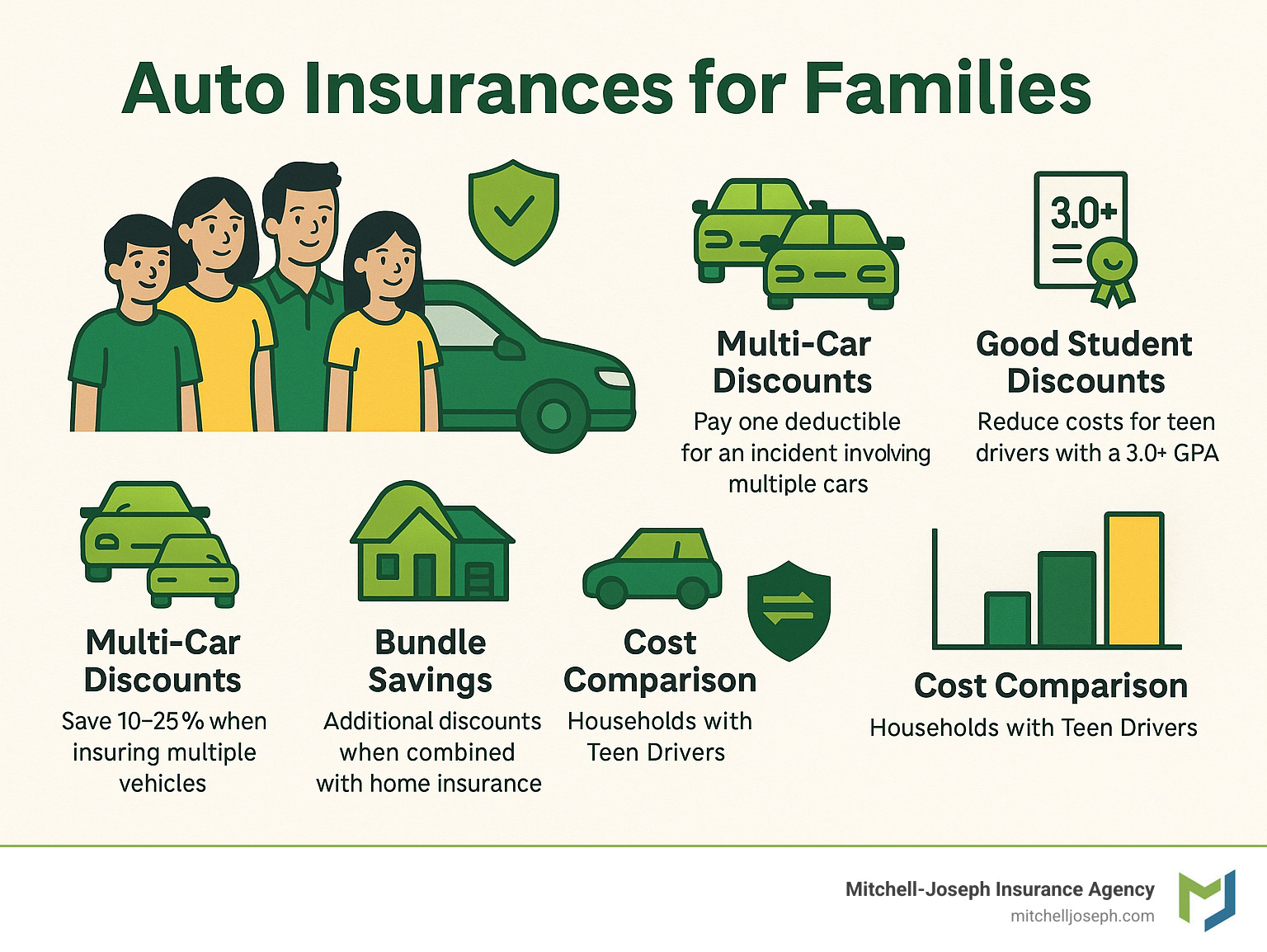
- Average Savings: Discount amounts range between 10% and 25% off the driver's portion of the liability and collision premium.
- Verification: Carriers typically require a transcript or official report card signed by a school administrator at each renewal period.
For college students who move more than 100 miles away from their Chicago residence to attend school without a car on campus, insurers offer a Student Away at School Discount. This maintains the student's active status on the family policy for when they visit home, while dropping their premium rate considerably during the academic year.
Telematics and Usage-Based Insurance (UBI) Programs
Telematics programs track real-time driving habits using a smartphone app or a plug-in OBD-II device. In a urban area like Chicago, telematics allow safe young drivers to demonstrate low-risk behavior directly to the insurance carrier.
Carriers monitor metrics such as:
- Braking force (avoiding hard stops on busy streets like Michigan Avenue).
- Cornering speeds and acceleration rates.
- Time of day (avoiding late-night driving after curfew).
- Total mileage and phone interaction while driving.
Enrolling a teen in a telematics program generally provides an immediate 5% to 10% sign-up discount, with potential renewal discounts reaching up to 30% for consistently safe performance. However, families should verify whether a carrier increases rates for poor driving performance logged by the app.
Selecting Insurance-Friendly Vehicles
The vehicle assigned to a teenage driver significantly dictates the comprehensive and collision portions of the premium. Assigning a teen to a brand-new vehicle, high-performance sedan, or sports car results in elevated premiums due to high repair costs and increased collision risk.
Ideal vehicles for Chicago teens possess:
- High safety ratings from the Insurance Institute for Highway Safety (IIHS).
- Standard Advanced Driver Assistance Systems (ADAS), such as automatic emergency braking and lane departure warnings.
- Moderate engine power (four-cylinder engines rather than V6 or V8 variants).
- Low theft occurrence rates.
Assigning the teen driver primary operator status on the least expensive, safest vehicle on the household policy minimizes total insurance output.
Comparing Top Auto Insurance Providers for Chicago Teens
Selecting the right insurance carrier involves balancing competitive pricing with reliable local claims service. In Illinois, both regional and national carriers offer specialized discount packages for young drivers.
| Carrier | Typical Teen Discounts Available | Telematics Program Name | Best Suited For | Regional Strength |
|---|---|---|---|---|
| State Farm | Good Student, Steer Clear®, Driver Training | Drive Safe & Save™ | Families seeking strong local agent networks and stacked teen discounts | Largest market share in Illinois |
| Country Financial | Good Student, SimplyDrive®, College Student Away | DriverIQ | Illinois drivers seeking competitive regional pricing and personalized service | Strong presence across Illinois |
| GEICO | Good Student, Defensive Driver, Family Combination | DriveEasy | Budget-focused households looking for digital management and direct rates | High national brand presence |
| Progressive | Good Student, Distant Student, Teen Driver | Snapshot® | Drivers with mixed driving records or households with multiple vehicles | Strong online platform and pricing tools |
| Allstate | Smart Student, drivewise® savings, Training Completion | Drivewise® | Chicago families interested in mobile telematics and policy bundling | Headquartered in suburban Illinois |
Detailed Overview of Top Chicago Carriers
1. State Farm
State Farm is frequently the most cost-effective option for Illinois families adding a teenage driver. The company offers two distinct educational programs:
- Steer Clear®: A mobile app-based learning module for drivers under 25 that rewards safe driving habits and module completion with lower premiums.
- Driver Training Discount: Applied when a young driver completes an accredited driver education course.
Combined with a Good Student Discount, State Farm allows families to stack multiple savings categories on a single policy.
2. Country Financial
Headquartered in Bloomington, Illinois, Country Financial maintains a substantial presence in the Chicago metropolitan area. It routinely ranks high for customer satisfaction in Illinois customer surveys. Country Financial offers competitive base rates for teens added to family policies, particularly when bundled with home or renters coverage.
3. GEICO
GEICO offers lower initial baseline rates for many Chicago ZIP codes, making it an attractive direct-to-consumer option. While its educational program discounts are slightly fewer than State Farm's, its direct management app and competitive base pricing work well for families who prefer digital policy administration without a local physical agency relationship.
4. Progressive
Progressive excels at offering flexible policy options through its Name Your Price® tool and policy customization. For households where a teen has an existing minor violation, Progressive often maintains more competitive rates than strict non-standard carriers. Its Snapshot® telematics system provides clear feedback on urban driving habits.
How Zip Code and Urban Factors Impact Chicago Premium Rates
Insurance pricing in Chicago varies not only by city, but by specific neighborhood ZIP codes. Insurers evaluate hyper-local data when setting comprehensive and collision rates.
- Key Urban Risk Metrics Influencing Chicago Rates
- Population Density
- Congested arterial streets
- Street parking damage risks
- Claim Frequencies
- High intersection collision rates
- Uninsured driver exposure
- Theft & Vandalism
- Vehicle theft metrics by ZIP
- Catalytic converter theft risk
- Population Density
Neighborhood Density and Street Parking
Neighborhoods with high population density and heavy street parking—such as Lakeview, Lincoln Park, Logan Square, and West Loop—frequently display higher comprehensive rates than outer neighborhoods or suburban Cook County. Street parking increases the probability of minor collisions, sideswipe damage, mirror losses, and vandalism.
If a household has a garage or dedicated off-street parking, reporting this detail to the insurance agent can result in lower comprehensive coverage costs.
Uninsured and Underinsured Drivers
Despite mandatory insurance laws, a notable percentage of vehicles operating on Chicago streets lack adequate coverage. Because of this risk, Uninsured Motorist (UM) and Underinsured Motorist (UIM) coverages are critical protections for Chicago families. When a teen driver is involved in an hit-and-run incident or a collision caused by an uninsured motorist, UM coverage covers medical expenses, mitigating out-of-pocket costs.
Step-by-Step Plan to Lock In the Lowest Premium
To secure the lowest available auto insurance rates for a teenage driver in Chicago, families should follow this sequential workflow:
- Step 1: Complete Driver Education & Verify Academic Status (GPA 3.0+)
- Step 2: Assign Teen to the Household's Safest, Lowest-Value Car
- Step 3: Collect Quotes from National & Illinois Regional Insurers
- Step 4: Enroll Teen in Carrier Telematics / Safe-Driver Programs
- Step 5: Adjust Deductibles & Audit Coverage Limits Annually
Step 1: Complete Driver Education Early
Ensure the teen completes a State-approved Driver Education course (minimum 30 hours of classroom instruction and 6 hours of behind-the-wheel training). Retain the certificate of completion, as insurers require proof to apply the driver training discount.
Step 2: Evaluate Household Vehicle Assignments
Before requesting quotes, decide which vehicle the teen will primarily drive. If the family owns three cars—for instance, a luxury SUV, a sports sedan, and an older compact sedan—designate the teen as the primary driver of the compact sedan. Avoid listing the teen as a unassigned secondary driver on higher-value vehicles if the carrier permits specific vehicle assignment.
Step 3: Request Quotes Across Multiple Carrier Types
Obtain quotes from at least three different carriers:
- A large national carrier (e.g., State Farm or GEICO).
- An Illinois regional carrier (e.g., Country Financial).
- An independent insurance broker who can query multiple mid-market insurance companies.
Ensure all quotes reflect identical coverage limits (e.g., 100/300/100 liability limits with $500 or $1,000 deductibles) to compare options accurately.
Step 4: Opt Into Telematics and Academic Discounts
Submit official high school or college transcripts immediately upon policy issuance to lock in the Good Student Discount. Enroll the young driver in the carrier’s telematics app during the initial onboarding process to capture immediate sign-up savings.
Step 5: Optimize Deductibles
For older vehicles driven by teens where the total cash value of the vehicle is relatively low (e.g., under $4,000), evaluate whether maintaining comprehensive and collision coverage is cost-effective. If maintaining physical damage coverage is necessary, raising collision deductibles from $250 or $500 to $1,000 significantly lowers overall monthly premiums.
Frequently Asked Questions
Is it legal to not inform our auto insurer that a teen has gotten their driver's license?
No. Insurance contracts require policyholders to disclose all licensed household members. Omitting a newly licensed teenage driver living in your home is considered material misrepresentation. If the unlisted teen is involved in an accident, the insurance carrier can deny the claim entirely, cancel the policy, and leave the family personally responsible for all damages.
Does a teen driver need full coverage insurance in Chicago?
Illinois law only requires minimum liability insurance and uninsured motorist coverage. Full coverage (which includes collision and comprehensive) is optional unless the vehicle is financed or leased, in which case the lender will mandate it. If a teen is driving an inexpensive, fully paid-off vehicle, dropping collision and comprehensive coverage can save hundreds of dollars annually, provided the family can afford to replace the vehicle out of pocket if damaged.
At what age do insurance rates finally start to decrease for young drivers in Illinois?
Auto insurance rates typically undergo their first notable decrease when a driver turns 20, provided they have maintained a clean driving record free of moving violations and at-fault accidents. Rates drop more significantly at age 25, which marks the transition out of the highest-risk actuarial age bracket.
What happens to our insurance rates if a teen driver receives a speeding ticket in Chicago?
A single moving violation (such as a speeding ticket or running a red light) will usually result in a rate increase at policy renewal, typically ranging from 15% to 35% depending on the severity of the offense. In Illinois, young drivers may be eligible to request Court Supervision for a first minor traffic offense. Successfully completing court supervision and traffic safety school prevents the conviction from appearing on the public driving record, protecting insurance rates from immediate surcharges.
Are male teen drivers in Chicago more expensive to insure than female teen drivers?
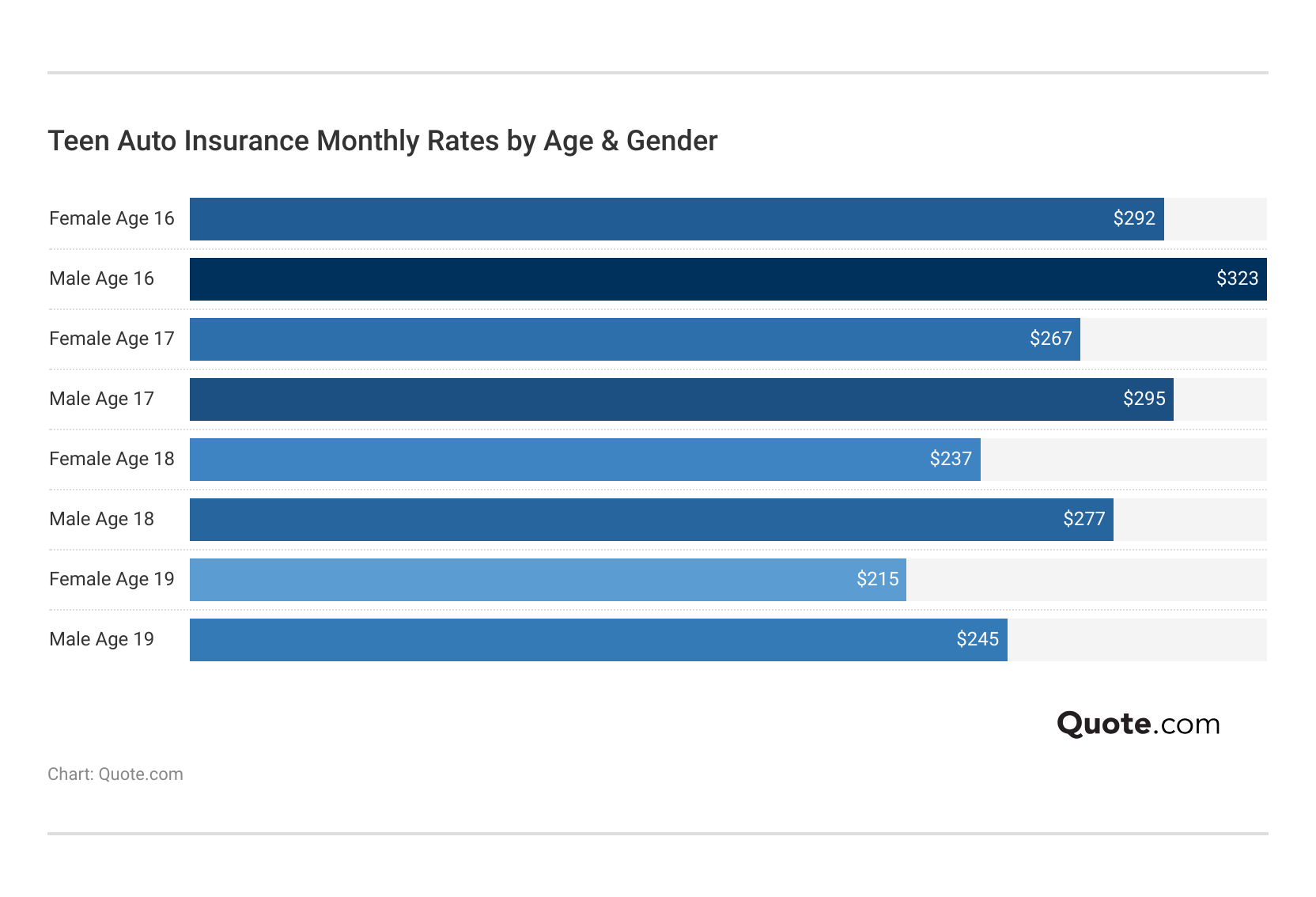
Yes. Statistically, young male drivers are involved in more frequent and severe accidents than young female drivers. Consequently, auto insurance premiums for teenage males average 15% to 25% higher than those for teenage females across most Chicago ZIP codes.
Actionable Next Steps for Chicago Families
To effectively reduce auto insurance expenses when introducing a teenage driver to the road in Chicago:
- Gather Documentation: Secure an official school transcript showing a 3.0+ GPA and the official driver education completion certificate.
- Audit Current Coverage: Review your household's existing policy limits to ensure liability thresholds adequately protect your family assets before adding a high-risk driver.
- Request Comparative Quotes: Contact your current carrier for an updated declaration page showing the projected rate increase, then obtain comparison quotes from at least two alternative Illinois carriers.
- Enroll in Safety Programs: Sign up for carrier-specific mobile telematics apps and safe-driver training modules prior to the policy start date.
Disclaimer: Auto insurance regulations, mandatory minimum limits, and carrier underwriting practices vary. Consult with a licensed Illinois insurance agent or broker to review specific policy terms, coverage options, and financial liability limits suitable for your individual circumstances.
Image Gallery