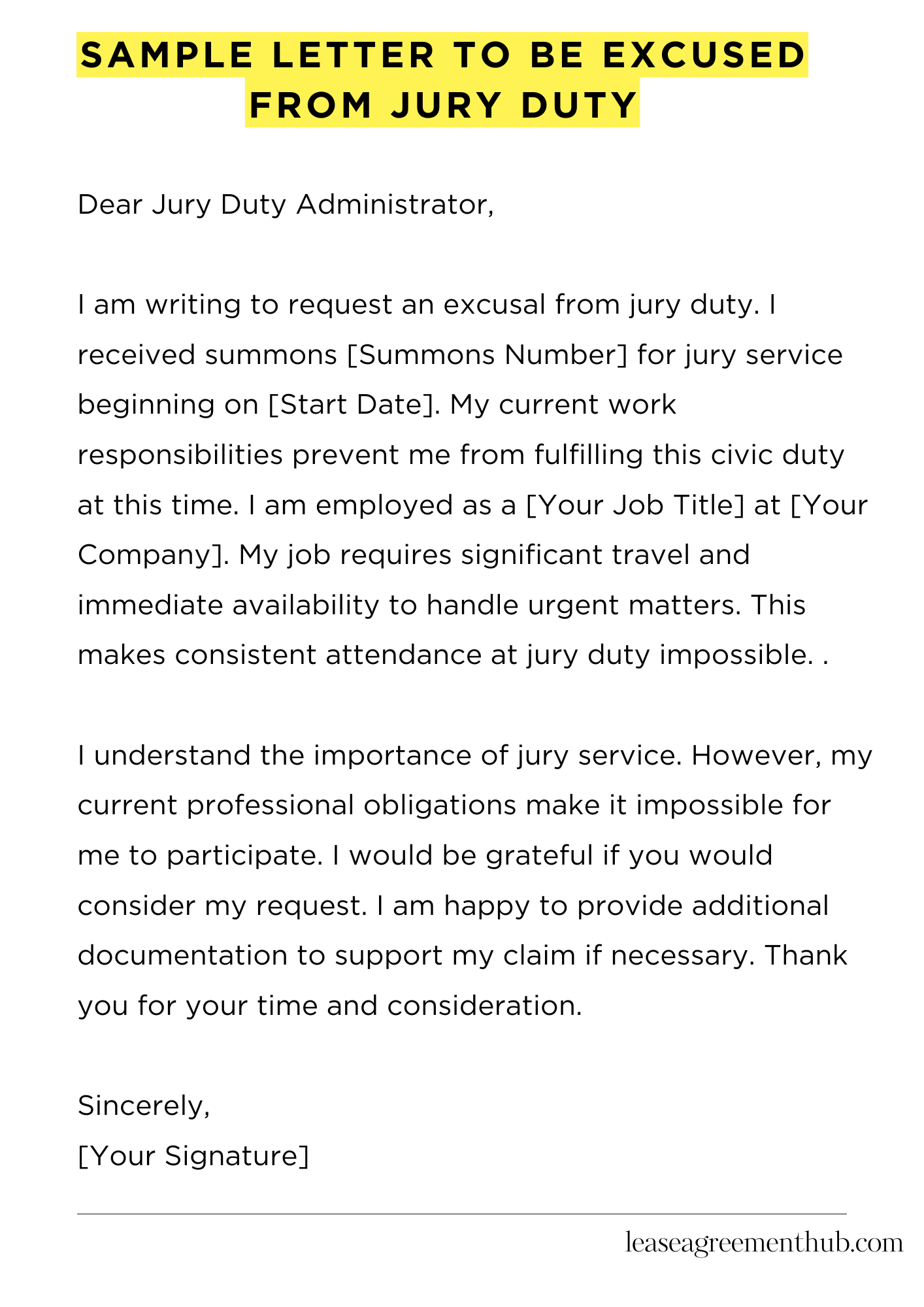
Navigating Excused Jury Service: Legal Requirements, Exemption Criteria, and the 2026 Process
Being summoned for jury duty is a fundamental civic obligation, but valid legal, medical, and personal circumstances often qualify individuals to be excused from jury service. Understanding local court guidelines, statutory disqualific...
Being summoned for jury duty is a fundamental civic obligation, but valid legal, medical, and personal circumstances often qualify individuals to be excused from jury service. Understanding local court guidelines, statutory disqualifications, and the required documentation ensures you navigate the formal postponement or exemption process correctly and avoid legal penalties.
Contents
Understanding Jury Service Summons and Your Legal Obligations
When a prospective juror receives a summons from a local, state, or federal court, the document initiates a legal obligation. Ignoring this notice is never a viable option, as failing to respond or failing to appear can result in contempt of court citations, fines, or even warrants depending on the jurisdiction. However, the legal system recognizes that rigid enforcement would create severe hardships for many citizens. Consequently, every jurisdiction establishes statutory guidelines that allow specific individuals to be permanently excused, temporarily postponed, or disqualified.
The distinction between being disqualified, excused, or receiving a postponement is critical for proper navigation of the court system:
- Disqualification: Permanent or temporary ineligibility based on core legal criteria, such as citizenship status, felony convictions without restored rights, or lack of English proficiency.
- Exemption: Being released from service based on occupation, age, or specific personal hardships like full-time caregiving responsibilities.
- Postponement: Delaying service to a more convenient future date within the active court term, usually granted for pre-planned travel, medical treatments, or temporary professional crunch periods.
Statutory Grounds and Common Reasons for Being Excused
Courts evaluate requests for excused jury service against strict statutory criteria. While rules vary significantly between federal courts and individual state municipal or superior courts, standard exemptions generally fall into specific categories recognized across the judicial system.
Medical exemptions require documentation from a licensed physician stating that service would aggravate a physical or mental condition or compromise personal health. Occupational exemptions, once common for various professions, have narrowed considerably in modern practice; however, active-duty military personnel, elected officials, and certain sworn law enforcement officers often retain automatic or near-automatic exemptions. Financial hardship arguments must demonstrate that service would result in extreme economic distress, typically defined as the loss of wages without employer-paid jury leave, threatening basic self-sufficiency or the operation of a small business where the individual is the sole proprietor.
Crucial Documentation Standard: Courts strictly reject vague exemption requests. Simply stating that work is busy or that jury duty is inconvenient will result in an immediate denial. Every application for an excused status must be backed by concrete, verifiable proof, such as physician letters, employer policy statements, or proof of overlapping caregiving duties.
Comparison of Jury Service Status Options
To determine the correct path for your specific circumstances, evaluate the functional differences between seeking a complete legal exemption versus requesting a temporary deferral or handling a disqualification notice.
| Status Type | Primary Purpose | Documentation Required | Impact on Future Service |
|---|---|---|---|
| Disqualification | Removes individuals who do not meet baseline legal qualifications to serve. | Government-issued ID, proof of citizenship, or legal records. | Permanently or temporarily removed until status changes. |
| Exemption | Excuses qualified jurors due to severe, chronic, or statutory hardship. | Physician notes, military orders, or sworn hardship affidavits. | Excused for the current term; may be resummoned in future cycles. |
| Postponement | Reschedules service to a manageable date within the designated calendar year. | Travel itineraries, medical procedure schedules, or academic calendars. | Service is deferred; mandatory appearance required on the new date. |
Step-by-Step Guide to Requesting an Excusal or Postponement
Submitting a request to be excused from jury service requires strict adherence to procedural timelines. Missing the response deadline printed on your summons can forfeit your right to claim an exemption, requiring you to appear in person on your scheduled date.
- Examine the Summons Thoroughly: Locate the response deadline, your unique juror identification number, and the designated court portal website or mailing address.
- Gather Supporting Evidence: Compile all necessary verification documents, including medical certificates, military deployment papers, or formal employer letters detailing company leave policies.
- Submit via the Official Court Portal: Access the official state or federal court website associated with your summons. Complete the online questionnaire, selecting the specific statutory reason for your request.
- Upload or Mail Documentation: Attach digital copies of your supporting documents directly through the secure court portal, or mail certified copies if electronic submission is unavailable.
- Confirm Receipt and Status: Monitor your email or re-login to the court portal to verify whether your request has been granted, denied, or if the court requires additional information.
- Attend If Not Excused: If your request is denied or only converted to a postponement, you must report for service on the designated date and time to avoid legal penalties.
Operational Challenges, Pitfalls, and Common Mistakes
Navigating the administrative mechanics of court systems frequently exposes prospective jurors to avoidable errors that lead to denied requests. Understanding these operational pitfalls protects you from unnecessary stress.
Relying on informal communication represents the most frequent error. Calling a general court clerk line and discussing your situation verbally does not substitute for submitting the formal written affidavit or online exemption form. Clerks cannot officially excuse jurors over the phone without a documented record. Another common mistake is assuming that an employer's refusal to pay for jury service constitutes an automatic legal excuse. While some jurisdictions provide statutory relief for small business owners, standard corporate employees must rely on state laws requiring employers to grant unpaid leave, coupled with the state's nominal juror pay structure. Finally, ignoring the summons while waiting for an approval decision on a submitted postponement request can result in a failure-to-appear notice. Always maintain written confirmation of any status change before missing a reporting date.
Frequently Asked Questions
Can I be excused from jury service simply because I have a demanding job?
No, having a busy career or demanding professional schedule is not a legally sufficient reason to be excused from jury service. Courts expect employers to comply with laws protecting employee jury service, and personal inconvenience does not meet the statutory hardship threshold.
What happens if my request to be excused is denied by the court?
If your request is denied, you are legally required to report for jury service on the date and time specified in your summons or subsequent communication. Failing to appear after a denial can result in a contempt of court hearing and potential financial penalties.
Do I need a doctor's note to be excused for medical reasons?
Yes, courts universally require a signed statement or official medical certificate from a licensed healthcare provider detailing the specific condition that prevents you from serving safely. General claims of illness without professional documentation are routinely rejected.
Can jury service be postponed multiple times if my schedule remains volatile?
Most jurisdictions allow at least one routine postponement to a later date within the same calendar year with minimal questioning. However, requesting multiple deferrals requires increasingly rigorous proof of ongoing, extraordinary circumstances.
How does jury service apply if I am self-employed or run a small business?
Self-employed individuals may request an excusal or postponement if service would cause extreme financial ruin to a business where they are the sole operator and primary revenue generator. This typically requires submitting financial statements and a formal hardship affidavit.
Conclusion and Next Steps
Successfully managing an excused jury service request hinges on proactive communication, strict adherence to court deadlines, and undeniable documentary proof of statutory hardship or disqualification. Review your summons immediately, utilize official court web portals for secure submissions, and maintain copies of all correspondence to ensure compliance with judicial standards.
Image Gallery