What the DUI Rules Mean for Southwest DC: A 2026 Comprehensive Guide
Driving Under the Influence (DUI) rules in Southwest DC mandate a legal Blood Alcohol Concentration (BAC) limit of 0.08% for adults and a zero-tolerance policy for minors. In 2026, enforcement is particularly rigorous in high-traffic c...
Driving Under the Influence (DUI) rules in Southwest DC mandate a legal Blood Alcohol Concentration (BAC) limit of 0.08% for adults and a zero-tolerance policy for minors. In 2026, enforcement is particularly rigorous in high-traffic corridors like The Wharf and near Audi Field, carrying penalties that include mandatory ignition interlock participation, significant fines, and potential incarceration.
Contents
Navigating the legal landscape of Southwest Washington, D.C. requires an understanding of both District-wide statutes and the unique jurisdictional overlap found in this specific quadrant. As Southwest DC continues its evolution into a premiere entertainment and residential hub, the Metropolitan Police Department (MPD) and federal authorities have synchronized efforts to curb impaired driving. Whether you are a resident of Bellevue or a visitor to the waterfront, the implications of a DUI charge in 2026 are more consequential than ever due to recent legislative shifts aimed at urban safety.
The Legal Framework: DUI, DWI, and OWI in the District
In the District of Columbia, "drunk driving" is categorized into three distinct charges. Understanding the nuance between these is critical for anyone operating a vehicle in Southwest DC.
Driving Under the Influence (DUI)
A DUI is the most common charge and is typically triggered when a driver’s BAC is 0.08% or higher. However, in 2026, you can still be charged with a DUI even if your BAC is below 0.08% if the arresting officer can demonstrate through field sobriety tests or driving behavior that you were "under the influence" of alcohol or drugs to a degree that rendered you unsafe to drive.
Driving While Intoxicated (DWI)
While often used interchangeably with DUI in other states, DC law uses DWI to specifically penalize drivers with a BAC of 0.08% or higher based solely on the chemical test results. This is often referred to as a "per se" offense. If the breathalyzer at the First District Station (which serves much of Southwest) reads 0.08%, the prosecution does not necessarily need to prove you were driving poorly; the number itself is the evidence of the crime.
Operating While Impaired (OWI)
OWI is a lesser but still serious charge. It applies when a driver’s BAC is between 0.01% and 0.07%. If an officer observes erratic driving or if the driver fails a field sobriety test, they can be charged with OWI. While the penalties are slightly less severe than a full DUI, an OWI still results in points on your license and high insurance premiums.
Why Southwest DC is a High-Enforcement Zone
Southwest DC presents a unique environment for DUI enforcement. The combination of dense nightlife, professional sports venues, and federal land creates a complex "trap" for the uninformed driver.
The Wharf and Entertainment Districts
The expansion of The Wharf has brought an influx of restaurants and bars to the Southwest waterfront. Consequently, MPD has increased "saturation patrols" along Maine Avenue SW and M Street SW. In 2026, these patrols are frequently coordinated with the "Vision Zero" initiative, focusing on areas with high pedestrian traffic.
Jurisdictional Overlap: MPD vs. US Park Police
A significant portion of Southwest DC, including East Potomac Park and areas near the National Mall, falls under federal jurisdiction. If you are pulled over by the United States Park Police (USPP) on federal land, you are subject to the Code of Federal Regulations (CFR). Federal DUI charges are handled in the U.S. District Court for the District of Columbia, rather than the DC Superior Court. Federal penalties can differ significantly and often do not allow for the same diversion programs available in local DC courts.
Proximity to Stadiums
With Audi Field located in the heart of Southwest and Nationals Park immediately adjacent in the Southeast/Southwest border area, game days see a massive spike in checkpoints. Officers look for "indicators of impairment" during the heavy post-game congestion on South Capitol Street and the Frederick Douglass Memorial Bridge.
Penalties and Mandatory Requirements in 2026
The District has moved toward a "compliance-based" penalty system. As of 2026, the focus is not just on punishment, but on ensuring the offender cannot repeat the behavior through technological intervention.
Criminal Penalties for First-Time Offenders
For a first-time DUI offense in DC, the maximum jail time is 180 days, though this is frequently suspended for non-aggravated cases. However, if your BAC is 0.20% or higher, there is a mandatory minimum jail sentence that the judge cannot waive.
- BAC 0.20% - 0.25%: 10 days mandatory jail.
- BAC 0.26% - 0.30%: 15 days mandatory jail.
- BAC 0.31% or higher: 20 days mandatory jail.
The Ignition Interlock Program (IIP)
A major shift in 2026 is the expanded use of the Ignition Interlock Device (IID). To regain driving privileges after a DUI suspension, DC DMV now requires almost all offenders to install a breathalyzer in their vehicle. This device prevents the car from starting if it detects any alcohol on the driver's breath and requires periodic "rolling retests" while the vehicle is in motion.
Financial Consequences
The "cost" of a DUI in Southwest DC extends far beyond the initial fine. Between legal fees, court costs, increased insurance rates, and DMV reinstatement fees, a first-time offender can expect to pay between $10,000 and $15,000 over a three-year period.
| Penalty Type | First Offense | Second Offense (within 15 years) | Third Offense (within 15 years) |
|---|---|---|---|
| Fine Range | $1,000 – $2,500 | $2,500 – $5,000 | $5,000 – $10,000 |
| Mandatory Jail | 0 - 10 days (BAC dependent) | 10 days minimum | 15 days minimum |
| License Revocation | 6 months | 1 year | 2 years |
| IID Requirement | Mandatory for reinstatement | Mandatory (minimum 1 year) | Mandatory (minimum 2 years) |
| Points Added | 12 points (Revocation) | 12 points (Revocation) | 12 points (Revocation) |
The Administrative Process: DC DMV vs. DC Superior Court
A DUI in Southwest DC triggers two separate legal battles: the criminal case and the administrative case.
The Criminal Case (DC Superior Court)
Located at 500 Indiana Ave NW, the Superior Court handles the criminal aspect. This determines your guilt or innocence, your fines, and your potential jail time. In 2026, many first-time offenders may be eligible for a "Deferred Sentencing Agreement" (DSA) if they meet specific criteria, such as having a low BAC and no prior record. Completing a DSA can lead to the charges being dismissed, though the arrest record remains unless sealed.
The Administrative Case (DC DMV)
The DC DMV handles your "privilege" to drive. When you are arrested for a DUI in Southwest DC, the officer will likely seize your plastic license and issue a Notice of Proposed Revocation. You have only 10 to 15 days (depending on residency) to schedule a hearing with the DMV Office of Adjudication. If you fail to schedule this hearing, your license is automatically revoked.
Evidence and Defense Strategies
Defending a DUI in the District requires a technical analysis of the evidence collected during the stop in Southwest DC.
Breathalyzer Accuracy
The District primarily uses the Intoximeter EC/IR II for evidential breath testing. These machines must be calibrated and maintained according to strict Metropolitan Police Department protocols. Defense attorneys in 2026 frequently challenge the "margin of error" or the certification status of the officer who administered the test.
Standardized Field Sobriety Tests (SFSTs)
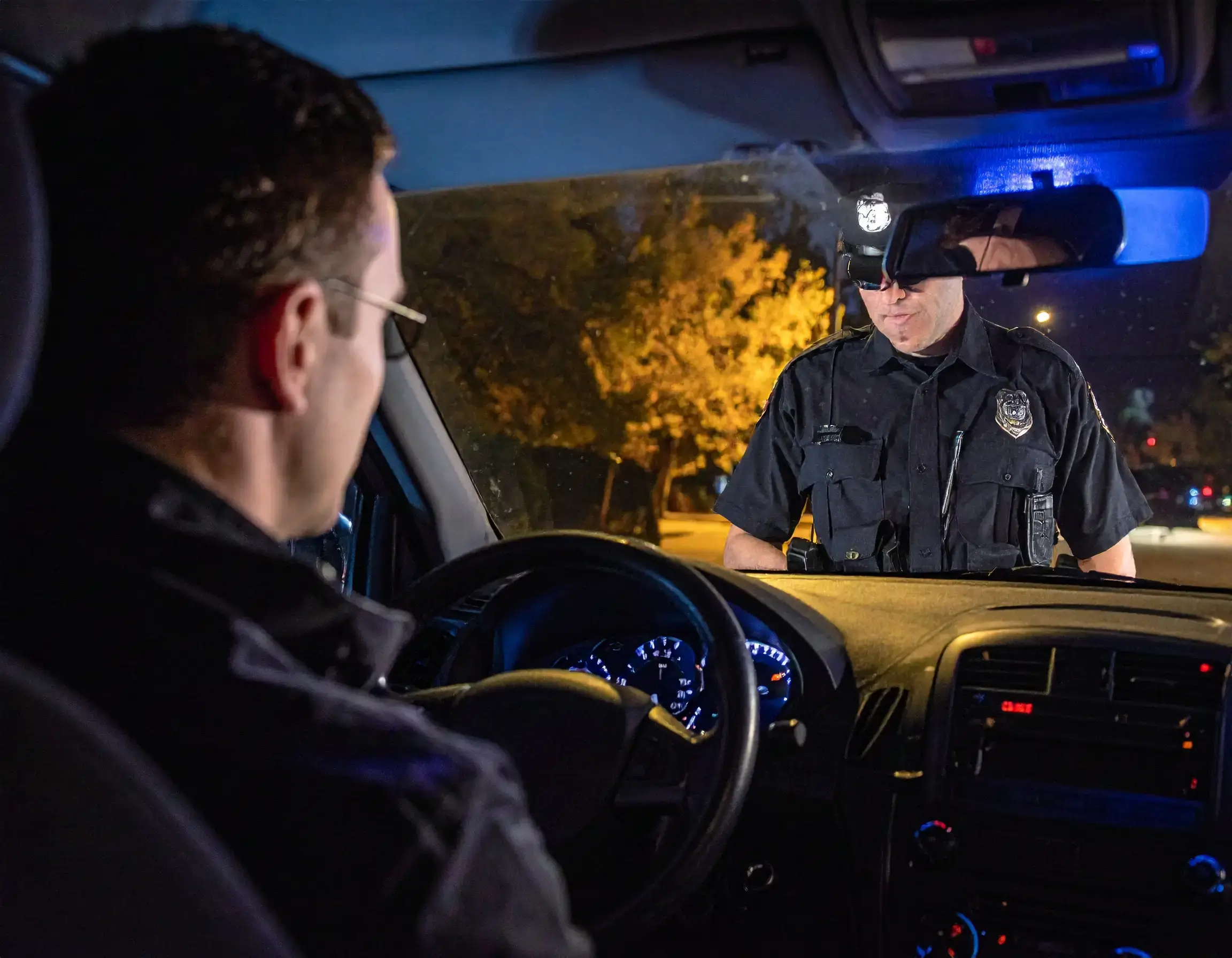
The three "validated" tests—the Horizontal Gaze Nystagmus (HGN), the Walk and Turn, and the One-Leg Stand—are often filmed on Body-Worn Cameras (BWC). In the hilly or uneven terrain found in parts of Southwest DC, or in high-wind conditions near the Potomac waterfront, these tests can be physically difficult for even a sober person to perform perfectly. Analyzing the BWC footage is a primary defense tactic to show that the officer's interpretation of "failure" was subjective or incorrect.
Probable Cause for the Stop
An officer cannot pull you over in Southwest DC simply because you are leaving a bar at The Wharf. They must have reasonable suspicion of a traffic violation or criminal activity. If the initial stop was illegal, all subsequent evidence—including the breathalyzer result—may be suppressed and the case dismissed.
Impact on Out-of-State Drivers
Southwest DC is a transient hub, with many drivers holding licenses from Virginia or Maryland.
- The Driver License Compact: DC is a member of this interstate agreement. If your license is revoked in DC, that information is sent to your home state. Virginia and Maryland will typically mirror the suspension, meaning you cannot simply "hide" a DC DUI from your home DMV.
- Non-Resident Driving Privilege: Even if DC cannot physically take your out-of-state plastic license, they can revoke your "privilege to operate" a vehicle within the District's borders. If you are caught driving in Southwest DC after this privilege is revoked, you can be arrested for Operating After Revocation (OAR), which carries its own jail time.
Frequently Asked Questions
Can I refuse a breathalyzer test in Southwest DC?
Yes, but DC has an Implied Consent law. If you refuse the chemical test at the station, the DC DMV will automatically revoke your license for one year. Furthermore, the prosecution can use your refusal as evidence of "consciousness of guilt" in your criminal trial. In 2026, refusal also makes you ineligible for certain diversion programs.
What happens if I am caught with a medical marijuana card?
Having a medical marijuana card does not grant immunity from DUI laws. In DC, you can be charged with a DUI for being "under the influence" of any drug, including legal ones. Because there is no "per se" limit for THC like there is for alcohol (0.08%), the prosecution relies on officer observations and Blood/Urine tests to prove impairment.
Are DUI checkpoints legal in Southwest DC?
Yes, the Supreme Court has ruled that sobriety checkpoints are constitutional as long as they follow specific guidelines. In Southwest DC, checkpoints are usually announced in advance by MPD on social media or official websites, though the exact location (e.g., "near the intersection of 4th and M St SW") may be generalized.
Does a DUI conviction stay on my record forever?
In the District of Columbia, a DUI conviction remains on your permanent criminal record. However, if the case was dismissed or you were found not guilty, you may be eligible to file a Motion to Seal after a certain waiting period (usually 2 to 4 years, depending on the circumstances).
How does a DUI affect my security clearance?
Since many residents in Southwest DC work for the federal government or defense contractors, this is a major concern. A DUI arrest must be reported to your Facility Security Officer (FSO) or through the proper reporting channels. While a single DUI is rarely enough to revoke a clearance on its own, a failure to report it—or a pattern of substance abuse—certainly can.
Practical Recommendations
If you find yourself facing a DUI charge in Southwest DC, immediate action is required to preserve your rights and your ability to drive.
- Request a DMV Hearing Immediately: You have a very narrow window (10–15 days) to contest the administrative suspension. Do not wait for your first court date to do this.
- Preserve Evidence: Document the conditions of the road where you were stopped. Was it poorly lit? Was there construction near the Waterfront that caused erratic driving?
- Check Jurisdictional Details: Verify if you were arrested by MPD or US Park Police. This determines which court you will attend and which set of laws applies.
- Consult Local Counsel: DUI laws in DC are idiosyncratic. Ensure you work with a professional who is familiar with the 2026 updates to the DC Code and the specific tendencies of the judges in the DC Superior Court.
Disclaimer: This article provides general information and does not constitute legal advice. DUI laws are subject to legislative change and judicial interpretation. Consult with a qualified attorney regarding your specific case.
Image Gallery