Why 99942 Apophis Cannot Destroy Earth: The Science of Impact Risk
Asteroid 99942 Apophis cannot destroy Earth because its trajectory has been definitively calculated to miss our planet for at least the next 100 years. Advanced radar observations and orbital modeling conducted in 2021 officially remov...
Asteroid 99942 Apophis cannot destroy Earth because its trajectory has been definitively calculated to miss our planet for at least the next 100 years. Advanced radar observations and orbital modeling conducted in 2021 officially removed Apophis from the Sentry Impact Risk Table, confirming a zero percent chance of impact during its 2029, 2036, and 2068 flybys.
Contents
The History of the Apophis Threat: From 2004 to Now
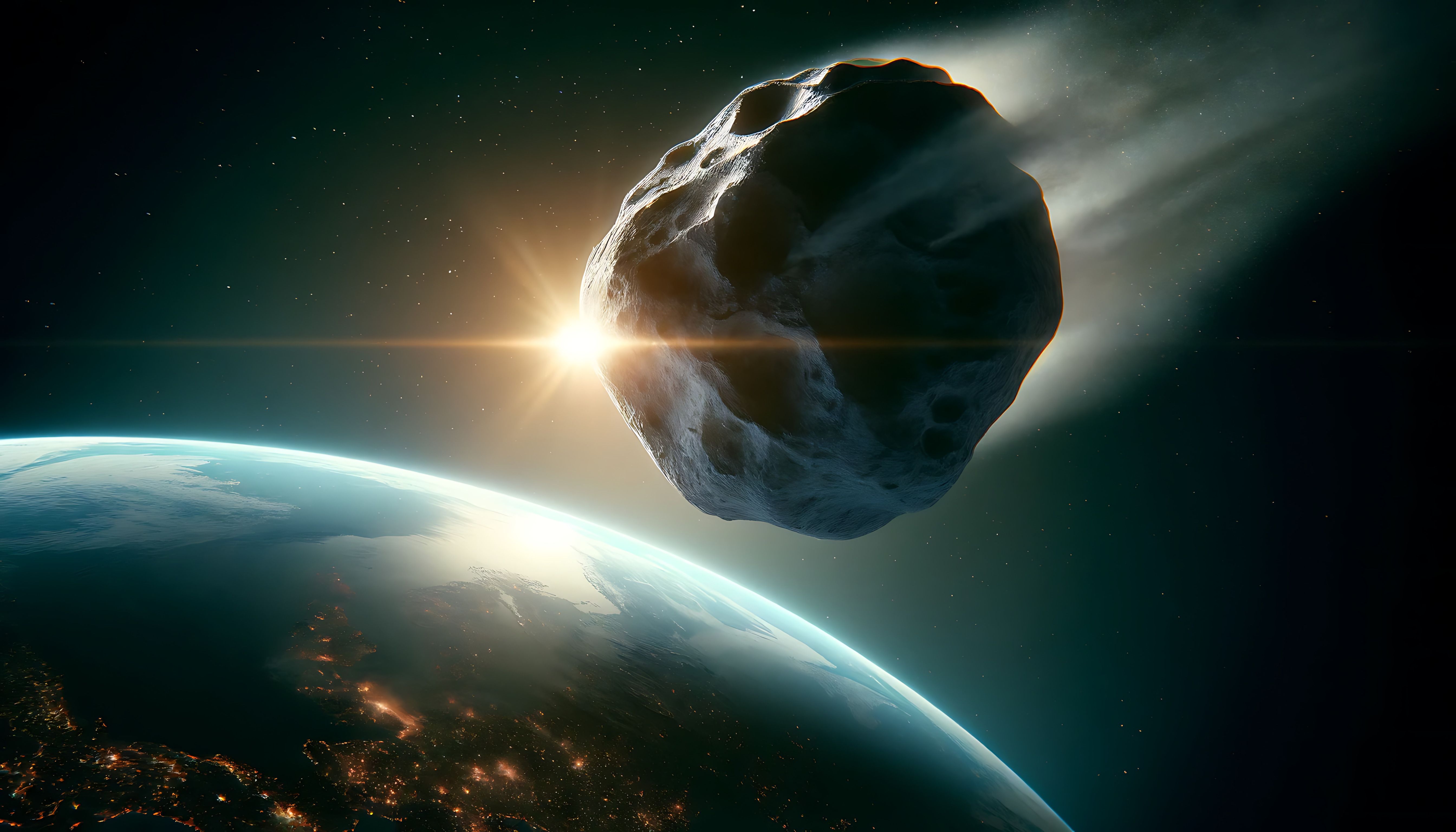
When astronomers at the Kitt Peak National Observatory first discovered asteroid 99942 Apophis in June 2004, the initial data caused a significant stir in the scientific community and the public. Early orbital projections suggested a 2.7% chance that the asteroid would impact Earth on April 13, 2029. This was a historically high probability for a Near-Earth Object (NEO) of its size—approximately 340 to 370 meters (1,100 to 1,200 feet) in diameter.
On the Torino Scale, a tool used to communicate the danger of NEOs to the public, Apophis reached a Level 4. This level indicates a close encounter that merits concern and careful tracking by astronomers. However, as is common with asteroid discoveries, the "threat" was a product of limited data rather than a confirmed collision course. As more observations were logged, the "uncertainty ellipse"—the mathematical area where the asteroid might realistically be located—shrank.
By late 2004 and into 2005, the possibility of a 2029 impact was ruled out. However, a new concern emerged: the "gravitational keyhole." Scientists worried that if Apophis passed through a specific, narrow region of space during its 2029 flyby, Earth's gravity would alter its orbit just enough to cause a guaranteed impact seven years later, in 2036. Subsequent radar data collected through the years eventually eliminated the 2036 threat, and a final, highly precise radar campaign in 2021 officially cleared the 2068 window as well.
The Science of the "All Clear": Radar and Orbital Mechanics
The primary reason scientists can state with absolute certainty in 2026 that Apophis cannot destroy Earth is the precision of modern radar astrometry. While optical telescopes can see where an asteroid is in the sky, radar allows us to measure its distance and velocity with incredible accuracy.
The 2021 Radar Campaign
In March 2021, Apophis made a distant pass by Earth, providing an opportunity for the Deep Space Network’s Goldstone complex in California and the Green Bank Telescope in West Virginia to bounce radio waves off its surface. These observations refined the asteroid’s orbit to within a few kilometers. This precision was enough to rule out any impact for the next century. Prior to this, the uncertainty in the asteroid's position in 2068 was several hundred kilometers; after the 2021 campaign, that uncertainty was reduced to just a few kilometers.
Accounting for the Yarkovsky Effect
To predict an asteroid's path decades into the future, scientists must account for the Yarkovsky effect. This is a tiny but persistent force acting on a rotating body in space. As the sun heats one side of the asteroid, that heat is later radiated away as the asteroid rotates. This thermal radiation acts like a miniature thruster, slightly nudging the asteroid out of its purely gravitational orbit.
For a long time, the Yarkovsky effect was the "wild card" in Apophis’s trajectory. However, by 2021, the Goldstone radar data allowed scientists to measure the Yarkovsky acceleration acting on Apophis with high precision. This confirmed that the "nudge" would not push Apophis into a collision course with Earth for any of its upcoming close approaches.
Why Apophis Is Not a "Planet Killer"
Even in a hypothetical (and now debunked) scenario where Apophis did strike Earth, it is important to distinguish between a "regional disaster" and a "global extinction event." Apophis is often colloquially referred to as a "planet killer" in sensationalist media, but scientifically, it does not fit that description.
Size Comparison and Impact Energy
Apophis is roughly 340 meters in diameter. For comparison, the asteroid that caused the extinction of the dinosaurs—the Chicxulub impactor—was approximately 10 to 15 kilometers (6 to 9 miles) wide. The energy released by a Chicxulub-scale event is millions of times greater than what Apophis would produce.
If Apophis were to hit Earth, it would release approximately 1,200 megatons of kinetic energy. While this is significantly more powerful than any nuclear weapon ever detonated (the Tsar Bomba, the largest, was about 50 megatons), it is not enough to cause a global "nuclear winter" or mass extinction.
Predicted Damage Profiles
An impact from an object the size of Apophis would be devastating on a regional scale. If it hit land, it would create a crater several kilometers wide and cause catastrophic damage to a state-sized or small-country-sized area. If it hit the ocean, it could trigger significant tsunamis impacting coastal regions. However, the atmosphere and the global climate would remain largely intact. In 2026, our focus has shifted from fearing this destruction to studying the asteroid as a unique scientific specimen.
| Feature | 99942 Apophis | Chicxulub Impactor | Tunguska Event (1908) |
|---|---|---|---|
| Diameter | ~340 Meters | ~10-15 Kilometers | ~50-100 Meters |
| Estimated Energy | ~1,200 Megatons | ~100,000,000 Megatons | ~10-15 Megatons |
| Potential Impact | Regional Devastation | Global Mass Extinction | Localized Forest Leveling |
| Risk Status (2026) | 0% (Next 100 Years) | Historical Event | Historical Event |
| Last/Next Close Pass | April 13, 2029 | N/A | N/A |
The 2029 Flyby: A Scientific Opportunity
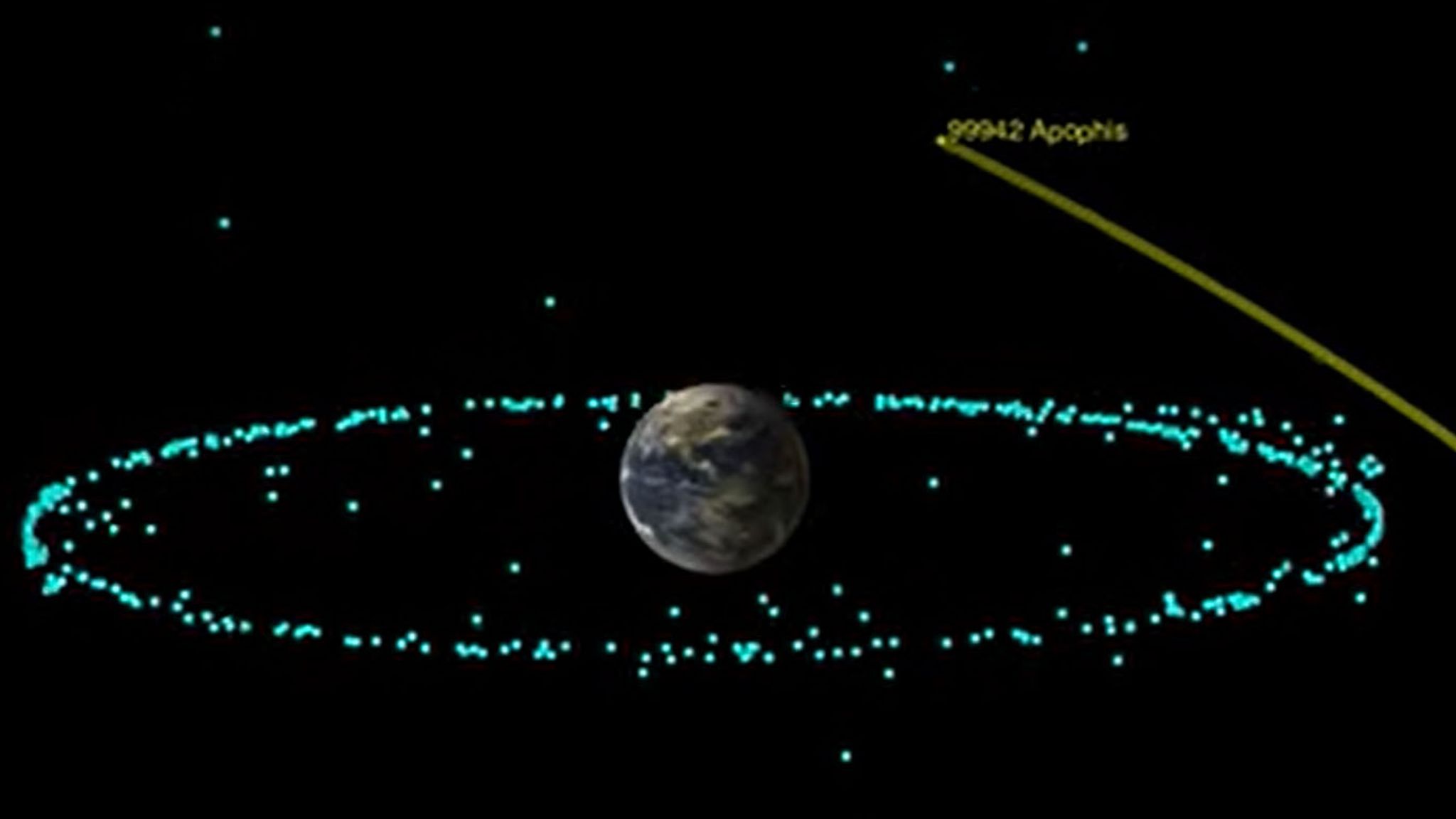
As we approach the much-anticipated flyby on April 13, 2029, the scientific community is no longer preparing for a disaster but for a once-in-a-millennium observation event. Apophis will pass within 32,000 kilometers (20,000 miles) of the Earth's surface. This is closer than the geostationary satellites that provide our television and weather data.
Naked Eye Visibility
Apophis will be so close that it will be visible to the naked eye for observers in Europe, Africa, and parts of Asia. It will look like a point of light moving across the sky, similar to a satellite but much faster. This is extremely rare for an asteroid of this size; usually, objects this large only come this close once every few thousand years.
Scientific Objectives
NASA and other international space agencies are using this flyby to study how Earth's gravity affects an asteroid's physical structure. It is possible that the tidal forces exerted by Earth will cause "asteroid-quakes" on Apophis, shifting the regolith (surface dust) and potentially changing its rotation rate.
In 2026, the OSIRIS-APEX mission (formerly OSIRIS-REx) is currently in transit to intercept Apophis. After successfully returning samples from asteroid Bennu in 2023, the spacecraft was redirected. It will arrive at Apophis shortly after the 2029 flyby to study the changes Earth's gravity caused on the asteroid's surface.
Global Planetary Defense in 2026
The case of Apophis has been a catalyst for the development of global planetary defense strategies. Since the initial discovery of Apophis, the international community has significantly improved its ability to detect, track, and potentially deflect hazardous objects.
- DART Mission Success: In 2022, NASA's Double Asteroid Redirection Test (DART) successfully altered the orbit of a moonlet orbiting the asteroid Didymos. This proved that we have the technology to "nudge" an asteroid if we have enough warning time.
- NEO Surveyor: As of 2026, the NEO Surveyor space telescope is a critical part of our defense infrastructure. Designed to find and characterize the vast majority of potentially hazardous asteroids, it ensures that we are unlikely to be surprised by an object like Apophis in the future.
- International Cooperation: The International Asteroid Warning Network (IAWN) and the Space Mission Planning Advisory Group (SMPAG) now provide a structured, UN-endorsed framework for how nations would respond to a verified impact threat.
These advancements mean that even if a new threat were discovered today, our capability to intervene is exponentially higher than it was when Apophis was first identified in 2004.
Frequently Asked Questions
Is there any chance Apophis will hit Earth in 2068?
No. While early models in the 2010s suggested a very small possibility of impact in 2068, high-precision radar observations in 2021 completely ruled this out. Scientists now have enough data to confirm that Apophis will pass a safe distance from Earth during that window.
Could an external force, like a collision with another asteroid, push Apophis toward Earth?
While technically possible, the vacuum of space is vast, and collisions between large asteroids are incredibly rare events. Astronomers continue to monitor Apophis and other NEOs; any significant change in its orbit would be detected almost immediately by the worldwide network of telescopes.
What would happen if Apophis passed through a "keyhole" in 2029?
The "keyhole" theory was a major concern in the mid-2000s. It suggested that passing through a specific 600-meter-wide region of space would set up a future impact. However, the 2021 radar data confirmed that Apophis will not pass through any such keyholes during its 2029 encounter.
Will the 2029 flyby damage our satellites?
Apophis will pass through the region of space occupied by some satellites. However, space is three-dimensional and extremely large. The probability of Apophis physically colliding with a satellite is statistically near zero. Space agencies are already planning to track the asteroid's path relative to known satellite orbits to ensure there are no surprises.
How big is Apophis compared to something we know?
Apophis is approximately 340 meters wide, which is roughly the height of the Eiffel Tower or the length of three American football fields. While it is a massive object, it is small compared to the 10,000-meter asteroids that cause global extinctions.
Recommendations for Further Reading and Action
For those interested in tracking the current status of Apophis and other Near-Earth Objects as we approach the 2029 flyby, the following resources are highly recommended:
- NASA’s Center for Near-Earth Object Studies (CNEOS): This is the primary source for updated impact probabilities and orbital data.
- The Minor Planet Center (MPC): The global clearinghouse for all asteroid and comet observations.
- ESA Space Safety: The European Space Agency’s portal for planetary defense and NEO tracking.
As 2026 progresses, expect more detailed imagery and mission updates from the OSIRIS-APEX team. The transition of Apophis from a "threat" to a "scientific treasure" is one of the great success stories of modern astronomy, proving that through rigorous observation and mathematical verification, we can move from fear to understanding.
Image Gallery