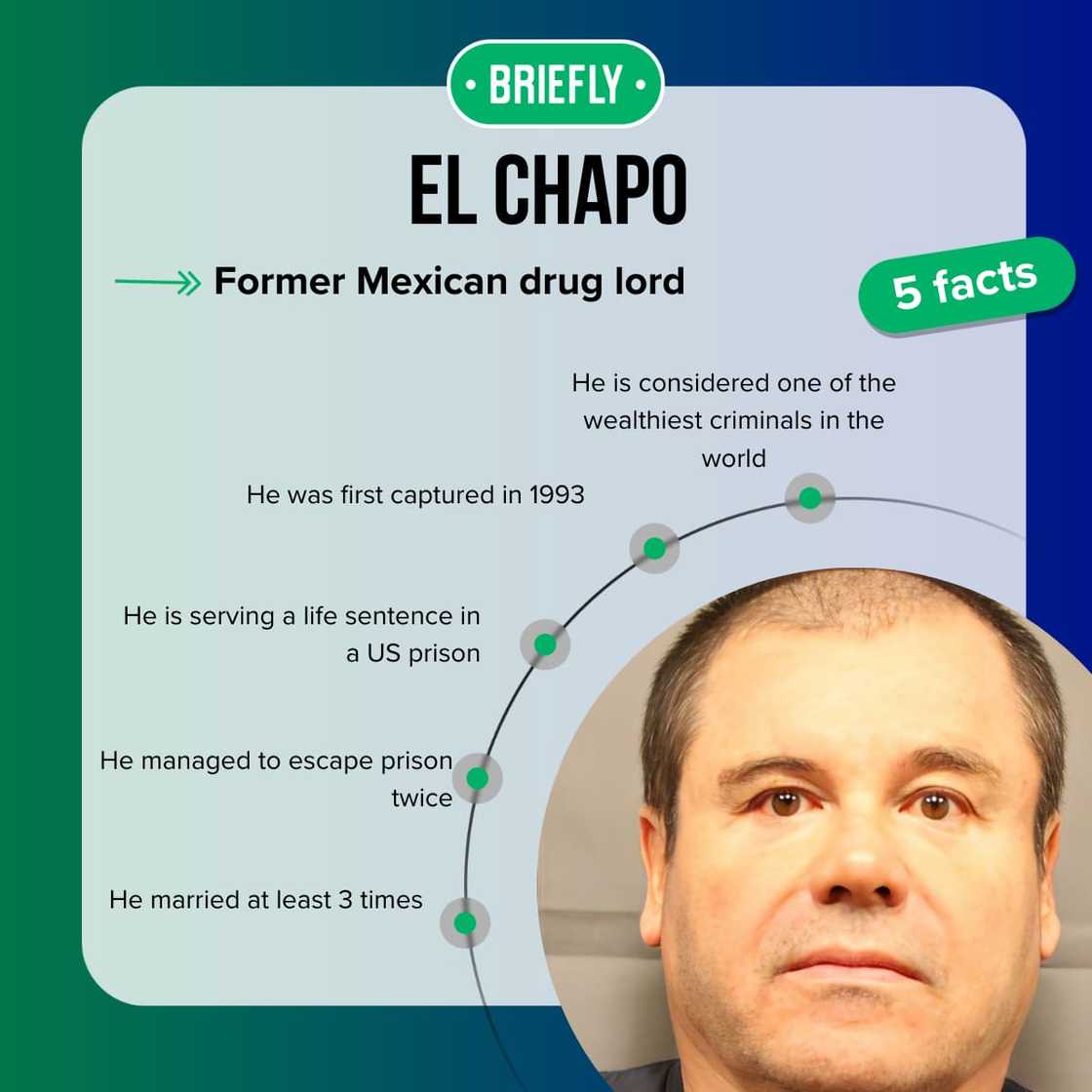
El Chapo Net Worth in Perspective: The Reality Behind the $12.6 Billion Figure
Joaquín "El Chapo" Guzmán’s net worth is officially estimated by the United States government at $12.6 billion, a figure derived from the gross revenue of his decades-long leadership of the Sinaloa Cartel. While Forbes previously estim...
Joaquín "El Chapo" Guzmán’s net worth is officially estimated by the United States government at $12.6 billion, a figure derived from the gross revenue of his decades-long leadership of the Sinaloa Cartel. While Forbes previously estimated his personal wealth at $1 billion, the true perspective lies in the distinction between liquid assets, operational revenue, and the massive forfeiture orders issued by federal courts that remain largely uncollected in 2026.
Contents
The Origin of the Wealth: The Sinaloa Cartel Business Model
To put El Chapo’s net worth into perspective, one must first understand that he did not possess a "net worth" in the traditional sense of stock portfolios or audited real estate holdings. Instead, his wealth was the byproduct of a global logistics empire. The Sinaloa Cartel, under Guzmán’s leadership, functioned as a diversified multinational corporation specializing in the production, transportation, and distribution of illicit substances.
The cartel’s revenue streams were primarily driven by the mass exportation of cocaine, heroin, methamphetamine, and marijuana into the United States. Unlike legitimate businesses, the cartel's "profit margins" were exceptionally high because they operated outside of tax jurisdictions and regulatory frameworks. However, their "operating costs" were also astronomical, including multi-million dollar bribes to officials, the maintenance of a private paramilitary force, and the construction of high-tech narco-tunnels under the U.S.-Mexico border.
The $12.6 billion figure frequently cited in 2026 is the result of a forfeiture order issued by U.S. District Judge Brian Cogan following Guzmán’s 2019 conviction. This number was not a reflection of his bank balance but a conservative calculation of the total drug volume he conspired to distribute over 30 years.
The Forbes Controversy: Why $1 Billion Was an Underestimate
In 2009, Forbes magazine caused international headlines by including Joaquín Guzmán on its "World's Billionaires" list with an estimated net worth of $1 billion. He remained on the list for four consecutive years. This inclusion was controversial, as many argued it glorified a criminal, while others pointed out that the $1 billion figure was likely a "floor" rather than a ceiling.
The Forbes valuation was based on the cartel’s estimated share of the total U.S. drug market, which at the time was valued at roughly $39 billion annually. Forbes analysts estimated that Guzmán and his partners controlled a significant portion of the wholesale market, netting them at least $1 billion in personal equity after expenses.
However, forensic accountants and law enforcement officials later argued that the Forbes estimate failed to account for the sheer scale of the Sinaloa Cartel’s reach. By 2026 standards, $1 billion represents a fraction of the liquidity required to move hundreds of tons of narcotics across continents. The disconnect between the Forbes "billionaire" status and the government's "multi-billionaire" forfeiture order highlights the difficulty of auditing a shadow economy.
Breaking Down the $12.6 Billion Forfeiture
The U.S. government’s $12.6 billion calculation is the most detailed "audit" of El Chapo's career ever conducted. During the "Trial of the Century," prosecutors presented evidence from cooperating witnesses, ledgers, and intercepted communications to quantify the volume of drugs trafficked.
The calculation was based on the following conservative market estimates:
- Cocaine: Over 500,000 kilograms distributed at average wholesale prices.
- Heroin: Hundreds of kilograms with high purity levels.
- Marijuana: Thousands of tons moved via tunnels and maritime vessels.
It is important to note that the $12.6 billion represents gross receipts. In the legal perspective of asset forfeiture, the government is entitled to the total amount of money generated by the criminal enterprise, regardless of how much was spent on bribes, logistics, or "business" expenses. This creates a psychological gap for the public: while El Chapo "earned" $12.6 billion, he never sat on a pile of cash of that size at any single moment. Much of it was reinvested into the cartel’s infrastructure or vanished into the complex web of global money laundering.
Putting the Wealth in Perspective: Comparisons
To understand the magnitude of El Chapo’s financial impact, it is helpful to compare his $12.6 billion figure to legitimate economic entities and historical figures.
| Entity | Estimated Value/Revenue | Context |
|---|---|---|
| El Chapo (Forfeiture Order) | $12.6 Billion | Total gross revenue over 30 years of trafficking. |
| Sinaloa Cartel (Annual) | $3 Billion - $5 Billion | Estimated yearly revenue during peak operations. |
| Pablo Escobar | $30 Billion (Adjusted) | The Medellín Cartel leader remains the wealthiest trafficker in history. |
| Netflix (2025 Revenue) | ~$40 Billion | El Chapo’s career earnings are about 30% of a major tech firm's annual revenue. |
| U.S. Border Patrol Budget | ~$5 Billion (Annual) | The cost to fight the cartel often exceeds the cartel's annual profit. |
When compared to the ultra-wealthy individuals of 2026, such as Elon Musk or Jeff Bezos, Guzmán’s $12.6 billion seems relatively small. However, the utility of that wealth was different. Legitimate billionaires hold their wealth in illiquid stock; El Chapo’s wealth was largely liquid or hidden in "dark" assets, giving him an unprecedented level of influence over regional governments and economies in a way that corporate wealth does not.
The Hunt for the Assets: Where is the Money Now?
As of 2026, the search for Joaquín Guzmán’s billions remains one of the most complex financial investigations in history. Despite the $12.6 billion judgment, the U.S. government has successfully seized only a fraction of that amount.
The money is not stored in a single vault. Instead, it was moved through a series of "smurfing" operations (breaking large sums into small deposits), shell companies in offshore tax havens, and investments in legitimate industries such as farming, mining, and real estate in Mexico and South America.
There is also a significant geopolitical dispute regarding any recovered funds. The Mexican government, under various administrations, has argued that any assets seized from Guzmán should be returned to Mexico to fund social programs and crime prevention. They contend that because the crimes were committed on Mexican soil and the resources were extracted from the Mexican economy, the U.S. should not be the sole beneficiary of the forfeiture.
The Logistics of Hiding a Fortune
El Chapo’s wealth was "in perspective" a logistical nightmare. Moving billions of dollars in physical cash—mostly in $20 and $100 bills—requires massive storage space and specialized transport.
- Bulk Cash Smuggling: Large portions of the cartel's profits remained in cash, hidden in "caletas" (safe houses with false walls or underground bunkers).
- Trade-Based Money Laundering: The cartel would purchase legitimate goods (like gold, textiles, or electronics) in the U.S. with drug money, ship them to Mexico, and sell them for pesos to "clean" the funds.
- The Banking System: Despite strict Anti-Money Laundering (AML) laws, various international banks have been fined over the years for failing to stop Sinaloa-linked transactions. In perspective, the global financial system's complexity was Guzmán's greatest ally.
Current Status and Legal Standing in 2026
Joaquín Guzmán remains incarcerated at ADX Florence, the most secure "supermax" prison in the United States. His legal team continues to file appeals, often citing the conditions of his confinement, but his conviction and the $12.6 billion forfeiture order remain legally binding.
The wealth he built has largely been fragmented. Following his extradition and conviction, the Sinaloa Cartel split into various factions, including those led by his sons (the "Los Chapitos") and his former partner Ismael "El Mayo" Zambada. While the "Guzmán" name still carries financial weight, the consolidated $12.6 billion empire has evolved into a more decentralized—and arguably more difficult to track—financial network.
Frequently Asked Questions
How much of the $12.6 billion has the U.S. actually seized?
As of 2026, the amount actually recovered is estimated to be in the low millions, not billions. While law enforcement has seized properties, planes, and some bank accounts, the vast majority of the $12.6 billion remains hidden in untraceable offshore accounts or remains in the hands of the cartel's current leadership.
Is El Chapo still the richest drug lord in history?
No. While El Chapo is the most famous, Pablo Escobar’s net worth was estimated to be significantly higher, reaching upwards of $30 billion in the early 1990s. Additionally, modern "shadow" financiers who manage the logistics for multiple cartels may possess similar levels of wealth with far less public visibility.
Did Forbes remove El Chapo from the billionaires list?
Yes, Forbes removed him in 2013. The magazine stated that while he likely still had the wealth, the difficulty of verifying his assets and the fact that he was a fugitive made it impossible to maintain an accurate valuation.
Can the U.S. government take his family's money?
Only if they can prove that the specific assets were derived from criminal activity. This process, known as civil asset forfeiture, requires a high burden of proof for assets held in the names of relatives who have not been convicted of crimes themselves.
How does El Chapo's wealth compare to the GDP of a country?
The $12.6 billion figure is larger than the annual Gross Domestic Product (GDP) of several small nations, including the Bahamas, Nicaragua, and Moldova. This illustrates how a single criminal organization can wield more financial power than entire sovereign states.
Final Recommendation for Researchers
When analyzing the net worth of figures like Joaquín "El Chapo" Guzmán, it is vital to distinguish between court-ordered forfeitures and actual liquid net worth. For those studying the economics of illicit trade, the $12.6 billion figure serves as a metric for the scale of the Sinaloa Cartel's operations rather than a reflection of personal savings. For a comprehensive understanding of how these figures are reached, one should consult the Department of Justice’s official statements and trial transcripts from the Eastern District of New York.
Image Gallery