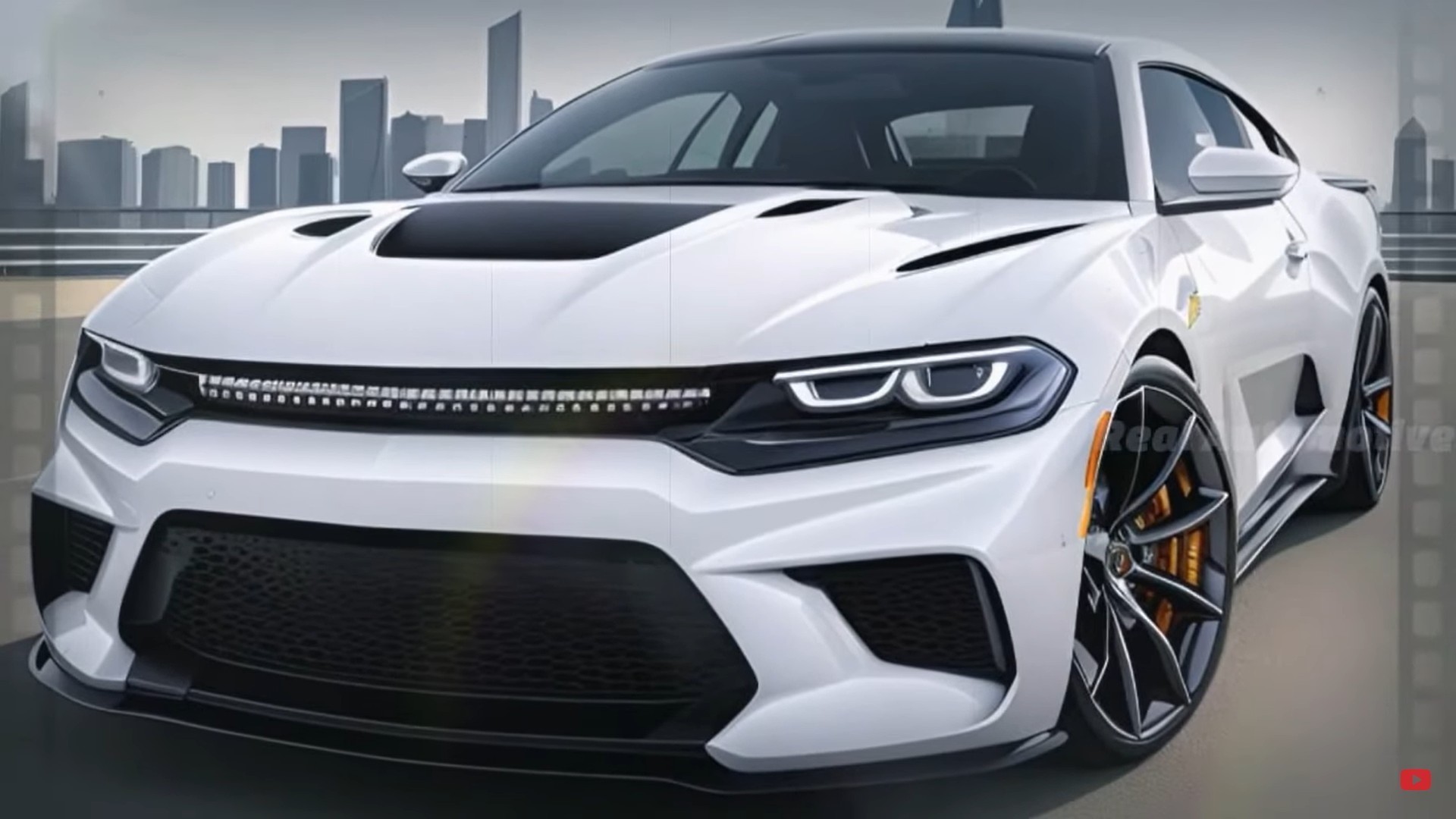
Understanding When the 2025 Dodge Charger Sixpack Arrives
The 2025 Dodge Charger Sixpack arrives at dealerships following Dodge's strategic rollout timeline, with production for the twin-turbocharged inline-six models scheduled to begin in the first quarter of 2025, bringing customer deliveri...
The 2025 Dodge Charger Sixpack arrives at dealerships following Dodge's strategic rollout timeline, with production for the twin-turbocharged inline-six models scheduled to begin in the first quarter of 2025, bringing customer deliveries closely behind in the spring and summer months.
Contents
The automotive landscape shifted dramatically when Dodge announced the retirement of its legendary Hemi V8 engines, clearing the path for an entirely new generation of muscle cars built on the STLA Large platform. Among the most anticipated variants within this fresh lineup is the Dodge Charger Sixpack. Utilizing the Hurricane twin-turbo inline-six engine, this model aims to bridge the gap between everyday practicality and the high-output performance expected by legacy muscle car enthusiasts.
Examining the release schedule, structural engineering, powertrain specifications, and market positioning provides a comprehensive look at what buyers can expect when these vehicles finally reach showroom floors. Understanding the timeline requires looking at production milestones, platform capabilities, and the broader context of Dodge's multi-energy vehicle strategy.
The Production Timeline and Arrival Milestones
When assessing when the 2025 Dodge Charger Sixpack arrives, industry watchers must examine the phased rollout strategy implemented by Stellantis for the Windsor Assembly Plant in Ontario, Canada. Production of the next-generation Charger began with the all-electric Daytona variants in late 2024. However, the internal combustion engine (ICE) variants—specifically marketed under the iconic "Sixpack" moniker—were slated to follow a slightly delayed production cadence.
Dodge officially communicated that the two-door coupe and four-door sedan variants powered by the Hurricane engine would enter full-scale assembly early in 2025. Consequently, initial dealer allocations and customer deliveries commenced toward the middle of the year. This staggered approach allowed manufacturing plants to stabilize supply chains for the new STLA Large modular architecture before introducing the complex plumbing, cooling, and drivetrain components required for forced-induction inline-six powertrains.
| Model Variant | Powertrain Type | Projected Production Start | Estimated Arrival at Dealerships |
|---|---|---|---|
| Charger Daytona Scat Pack | Battery Electric (BEV) | Late 2024 | Late 2024 / Early 2025 |
| Charger Daytona R/T | Battery Electric (BEV) | Late 2024 | Late 2024 / Early 2025 |
| Charger Sixpack Standard (H.O.) | 3.0L Twin-Turbo I6 | Early 2025 | Mid 2025 |
| Charger Sixpack Standard (S.O.) | 3.0L Twin-Turbo I6 | Early 2025 | Mid 2025 |
Powertrain Engineering: The Hurricane Inline-Six Engine
The core identity of the Charger Sixpack centers on the 3.0-liter Hurricane twin-turbocharged inline-six engine. Replacing the naturally aspirated Hemi V8s of the past, this engine family is designed to deliver superior thermal efficiency, lower emissions, and formidable horsepower figures without sacrificing traditional muscle car acceleration profiles.
The engine comes in two distinct output tiers for the Charger lineup, matching the performance expectations set by previous generations:
- Standard Output (S.O.) Version: Generates approximately 420 horsepower, serving as the spiritual successor to the 5.7-liter Hemi V8. It features a water-to-air charge air cooler, low-inertia turbochargers, and a high-pressure direct fuel injection system.
- High Output (H.O.) Version: Generates an estimated 550 horsepower, stepping into the performance territory previously occupied by the 6.4-liter 392 Hemi V8. It utilizes dual water-to-air charge air coolers, larger turbochargers, and optimized combustion chambers.
Both engine configurations are paired exclusively with all-wheel drive (AWD) systems as standard equipment, a notable departure from the rear-wheel-drive layout of older generations, though a mechanical limited-slip rear differential ensures handling characteristics remain tailored for spirited driving.
| Engine Specification | Hurricane 3.0L Twin-Turbo (S.O.) | Hurricane 3.0L Twin-Turbo (H.O.) |
|---|---|---|
| Displacement | 3.0 Liters (183 cu in) | 3.0 Liters (183 cu in) |
| Induction | Twin Turbochargers | Twin Turbochargers |
| Horsepower | ~420 hp | ~550 hp |
| Torque | ~469 lb-ft | ~531 lb-ft |
| Transmission | 8-Speed Automatic | 8-Speed Automatic |
| Drivetrain | Standard AWD | Standard AWD |
Platform Architecture and Design Evolution
The 2025 Dodge Charger is constructed on Stellantis’s STLA Large platform, a flexible, multi-energy vehicle architecture engineered to support battery-electric, hybrid, and internal combustion powertrains. This engineering choice dictated how the Sixpack models were developed. Rather than adapting an old platform to fit a new engine, engineers designed the chassis from the ground up to accommodate the massive physical footprint of the Hurricane inline-six alongside high-voltage battery packs.
Dimensionally, the new Charger is larger than its predecessor, boasting a longer wheelbase and an aggressive fastback roofline that nods to the classic 1968 second-generation Chargers. Despite the inclusion of heavy turbocharging hardware and an advanced all-wheel-drive system, weight distribution has been meticulously balanced. The body structure utilizes high-strength steel and aluminum crash-management structures to maintain torsional rigidity, which directly improves cornering stability and reduces body roll compared to older LX-platform vehicles.
Exterior styling cues for the Sixpack models retain the iconic "R-Wing" front pass-through aerodynamic feature originally showcased on the Daytona concepts, ensuring that the internal combustion versions look nearly identical to their electric stablemates. Inside, the cabin features driver-centric digital cockpits, including a standard 10.25-inch or optional 16-inch digital instrument cluster and a 12.3-inch central touchscreen running the Uconnect 5 software suite.
Market Positioning and Pricing Considerations
When evaluating when the 2025 Dodge Charger Sixpack arrives, prospective buyers must also consider where these vehicles sit within the broader sports car market. Dodge positioned the Sixpack models as direct competitors to high-performance offerings from Ford and Chevrolet, though the absence of a direct V8 competitor leaves the Charger in a unique niche.
Pricing for the Sixpack variants is structured to bridge the gap between the premium pricing of the high-output electric Daytonas and traditional mid-tier muscle cars. Because development costs for the STLA Large platform and the Hurricane engine are amortized across multiple Stellantis brands, pricing remains competitive, though the mandatory inclusion of standard all-wheel drive shifts the baseline cost upward compared to older rear-wheel-drive base models.
Shoppers should verify exact destination charges, regional dealer markups, and potential supply chain bottlenecks that could affect local availability upon arrival. Working closely with authorized Dodge dealers provides the most accurate tracking for individual custom orders and allocation waitlists.
Frequently Asked Questions
Will the 2025 Dodge Charger Sixpack be available in rear-wheel drive?
No. All variants of the 2025 Dodge Charger equipped with the Hurricane inline-six engine feature standard all-wheel drive (AWD). The platform utilizes an active transfer case with front-axle disconnect to optimize fuel efficiency when all-wheel traction is unnecessary.
How does the Hurricane inline-six compare to the old Hemi V8?
The Hurricane inline-six provides superior horsepower and torque figures compared to the base 5.7L and mid-tier 6.4L Hemi V8 engines, while offering improved fuel economy and lower tailpipe emissions. It achieves this through forced induction and advanced direct-injection technology.
Can I still buy a new Dodge Charger with a V8 engine?
No factory-backed V8 options are available for the new generation of the Dodge Charger. Stellantis officially ended production of the legendary Hemi V8 engines for the Charger and Challenger lines, transitioning entirely to the Hurricane inline-six and electric propulsion systems.
What transmission is used in the Dodge Charger Sixpack?
The Hurricane engine variants utilize a TorqueFlite eight-speed automatic transmission. This transmission is specifically calibrated to handle the high torque output of the twin-turbocharged inline-six while delivering smooth gear shifts and efficient highway cruising.
Are both two-door and four-door body styles available for the Sixpack?
Yes. Unlike previous generations where body styles were strictly segregated by trim, the new Charger lineup offers both two-door coupe and four-door sedan configurations for the Sixpack internal combustion models.
Conclusion and Next Actions
The arrival of the 2025 Dodge Charger Sixpack marks a monumental turning point for American muscle car engineering. By replacing legacy V8 engines with the advanced 3.0-liter twin-turbocharged Hurricane inline-six and implementing standard all-wheel-drive architecture, Dodge has successfully repositioned its flagship muscle car for the modern era. To secure an allocation, interested buyers should contact authorized local dealerships, review official ordering guides, and monitor regional manufacturing schedules to track delivery dates accurately.
Image Gallery