Why the Billy Graham Library Holds the True Legacy of the "Evangelist to the World"
The Billy Graham Library holds the true legacy of Billy Graham because it is designed as a living "crusade" rather than a stagnant museum. By integrating historical archives with an active evangelistic mission, the Library preserves hi...
The Billy Graham Library holds the true legacy of Billy Graham because it is designed as a living "crusade" rather than a stagnant museum. By integrating historical archives with an active evangelistic mission, the Library preserves his methodology of mass communication while continuing his core work of ministry in a modern, interactive format.
Contents
For decades, William Franklin "Billy" Graham Jr. was the most recognizable face of global evangelicalism. When he passed away in 2018, the question of how to preserve a legacy built on live, stadium-filling events became paramount. As of 2026, the Billy Graham Library in Charlotte, North Carolina, has solidified its position not merely as a repository for memorabilia, but as the primary engine for his enduring influence. It achieves this by balancing the "Journey of Faith" visitor experience with the high-tech preservation of the Billy Graham Archive and Research Center.
The Architectural Symbolism: Roots in the Soil
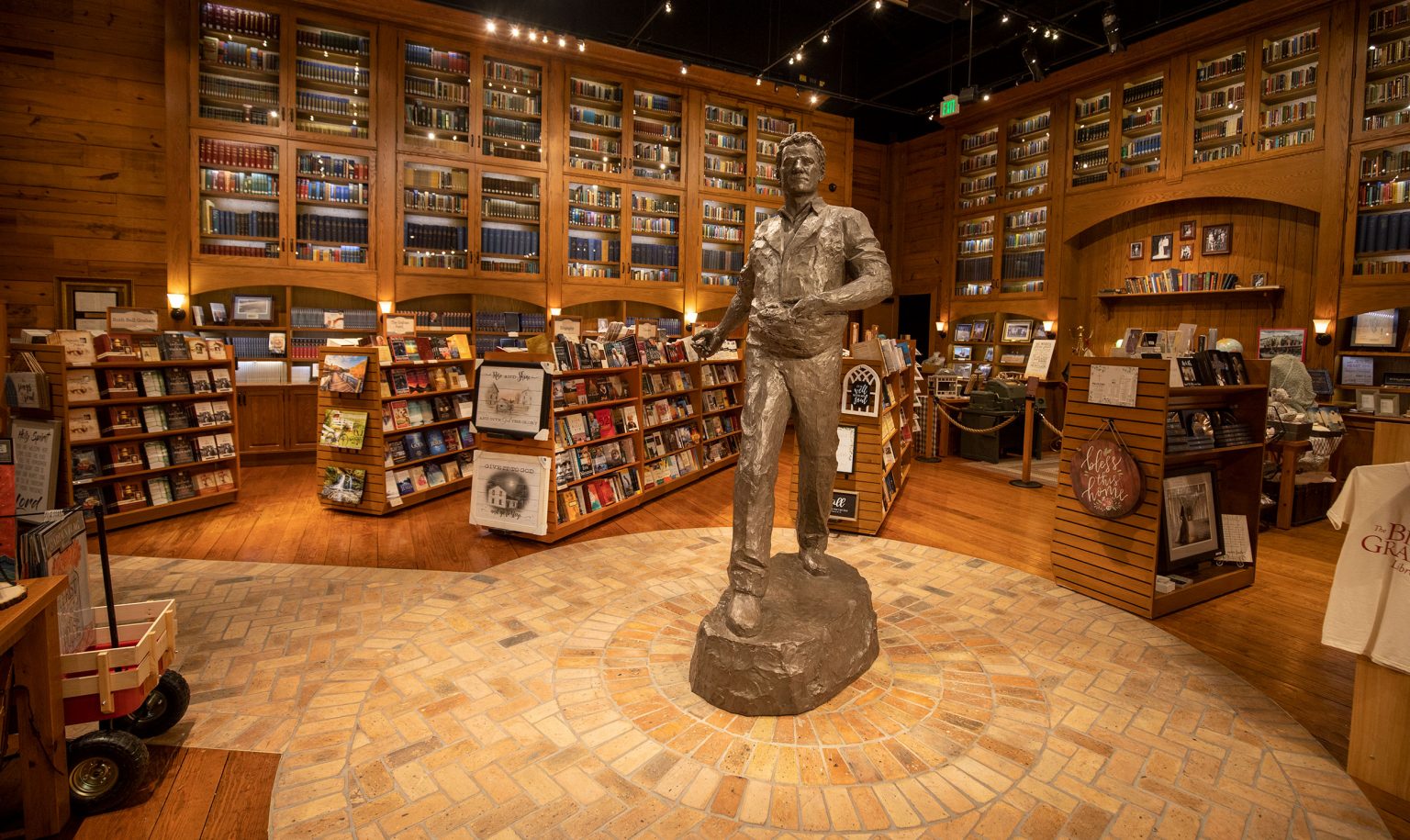
The physical structure of the Billy Graham Library is the first indicator that this site is intended to represent the "true" legacy of the man. Designed to resemble a dairy barn, the building is a direct homage to Graham’s upbringing on a farm in Charlotte. This architectural choice serves a specific purpose: it grounds the global icon in his humble beginnings.
The entrance is shaped like a cross, a design element that signals the site’s primary focus. For Graham, his legacy was never intended to be about himself, but about the message he preached. The library’s "barn" aesthetic reminds visitors that the "Evangelist to the World" began as a farm boy, emphasizing the theological theme of "grace" over personal achievement. This distinction is vital; unlike traditional presidential libraries that often focus on policy and power, the Graham Library focuses on a singular, unchanging message.
The Journey of Faith: A Living Crusade
The "Journey of Faith" is the centerpiece of the visitor experience. It is a scripted, multi-media tour that guides guests through the various stages of Graham’s ministry. In 2026, this tour remains a masterclass in narrative preservation. It does not just show artifacts; it recreates the atmosphere of the 1949 Los Angeles Crusade, the 1954 London Crusade at Harringay Arena, and the 1957 New York City Crusade.
Multimedia Integration and Preservation
The library uses high-definition projections and original audio to immerse visitors in the experience. This is where the "true legacy" is felt most acutely. The legacy of Billy Graham was his voice and his ability to utilize technology—radio, television, and film—to reach the masses. By using these same tools to tell his story, the Library maintains a technical continuity with his life's work.
Key highlights of the tour include:
- The Berlin Wall Segment: A piece of the actual wall serves as a backdrop to Graham’s ministry behind the Iron Curtain, illustrating the intersection of faith and 20th-century geopolitics.
- The Presidential Gallery: This section documents Graham’s role as a "Pastor to Presidents," showcasing his interactions with every U.S. President from Harry Truman to Donald Trump. It provides a nuanced look at his influence on the American executive branch.
- Bessie the Animatronic Cow: While it may seem whimsical, this feature in the childhood-themed section serves to engage younger generations, ensuring the legacy is accessible to children who were born after Graham’s peak years.
The Billy Graham Archive and Research Center
While the public-facing Library focuses on inspiration, the Billy Graham Archive and Research Center (opened in 2022 and fully matured by 2026) focuses on the scholarly preservation of his legacy. This 30,000-square-foot facility is the "brain" of the operation. It houses the vast majority of Graham's personal papers, sermon notes, and corporate records of the Billy Graham Evangelistic Association (BGEA).
The move of these archives from Wheaton College to Charlotte was a pivotal moment in consolidating his legacy. By bringing the academic resources to the same site as the memorial and library, the BGEA created a comprehensive hub for the study of 20th-century religion. Researchers in 2026 utilize this center to study not just Graham, but the broader history of evangelicalism, social change, and international relations.
Technical Specifications of the Archive
The facility employs state-of-the-art climate control and fire suppression systems to protect delicate paper documents and magnetic tape. Digital preservation is a massive undertaking here, as thousands of hours of crusade footage are digitized into 4K and 8K formats to prevent degradation. This technical rigor ensures that the "true legacy"—the actual words spoken by Graham—remains perfectly preserved for centuries.
The Sacred Grounds: The Prayer Garden and Memorials
A legacy is often anchored by a final resting place. The Billy Graham Library grounds include the Prayer Garden, which serves as the burial site for both Billy and his wife, Ruth Bell Graham.
The decision to be buried here, rather than a national cemetery or a high-profile cathedral, reinforces the idea of the Library as the definitive home of his spirit. Ruth’s grave, featuring a Chinese character for "righteousness" (a nod to her upbringing as the daughter of missionaries in China), and Billy’s simple grave, marked by a cross and the title "Preacher," speak to the humility they projected in life.
For many visitors, this is the most profound part of the legacy. It transforms the site from a historical museum into a place of pilgrimage. The quiet, manicured paths of the garden offer a stark contrast to the high-energy "crusade" atmosphere of the indoor exhibits, allowing for personal reflection on the impact of his ministry.
Comparative Analysis: Library vs. Traditional Museums
To understand why this specific location holds the "true" legacy, it is helpful to compare it to other institutions.
| Feature | Billy Graham Library | Standard Historical Museum |
|---|---|---|
| Primary Goal | Evangelism and spiritual impact | Historical education and preservation |
| Tone | Personal, devotional, and mission-driven | Objective, academic, and detached |
| Interactivity | Sensory "crusade" experiences | Static glass-case displays |
| Research Capacity | Centralized BGEA archives and papers | Varies; often decentralized or state-run |
| End-of-Life Focus | On-site burial and "Prayer Garden" | Usually no burial on premises |
| Admission | Free (generally) to maximize reach | Often requires ticket fees for funding |
Practical Guidance for Visitors in 2026
As the Library continues to draw hundreds of thousands of visitors annually, planning a visit requires an understanding of its operational structure.
- Admission and Booking: While admission to the Billy Graham Library has historically been free, it is highly recommended to reserve a "timed entry" pass online. In 2026, the popularity of the Archive and Research Center has increased traffic, and pre-booking ensures you can access the "Journey of Faith" tour without long wait times.
- Time Allocation: To truly experience the legacy, allow at least 3 to 4 hours. This includes 90 minutes for the main tour, 45 minutes for the Graham Family Homeplace (his restored childhood home), and time for the Prayer Garden and the Dairy Bar.
- Location: Located at 4330 Westmont Drive, Charlotte, NC, the library is near the Charlotte Douglas International Airport, making it highly accessible for international "pilgrims" or researchers.
- The Archive Center: If you are a student or historian, note that access to the Archive and Research Center usually requires a separate appointment and a demonstrated research intent. It is not a "walk-in" part of the public tour.
Frequently Asked Questions
Why is the library located in Charlotte instead of a major city like New York or D.C.?
Charlotte was Billy Graham’s birthplace and the long-time headquarters of the Billy Graham Evangelistic Association. Placing the library here emphasizes his "Southern Baptist" roots and his connection to the "Queen City." It keeps the legacy tied to his actual history rather than just his political influence.
Is the Billy Graham Library a church?
No, it is not a church in the sense of having a local congregation or weekly Sunday services. However, it is a ministry of the BGEA. There is a strong emphasis on prayer, and there are "volunteer counselors" available for visitors who wish to discuss spiritual matters or have a conversion experience after seeing the exhibits.
How does the 2022 expansion change the "legacy" of the site?
The addition of the Billy Graham Archive and Research Center shifted the site from being a "tribute" to being a "destination for study." It ensured that the primary sources of his life—his letters to world leaders, his sermon drafts, and his private logs—remains under the stewardship of the organization he founded, ensuring they are interpreted through the lens of his faith.
Is the childhood home on the site the original building?
Yes, the Graham Family Homeplace was meticulously moved from its original location on Park Road in Charlotte to the library grounds. It was restored using about 80% of the original materials, including the flooring and framing, to give visitors a genuine sense of his early environment.
Can I access the archives digitally?
While the BGEA has digitized a significant portion of the collection, many sensitive or copyright-protected materials require on-site access at the Research Center in Charlotte. The online portal provides finding aids and a selection of digitized sermons, but the "true legacy" of the raw data is housed physically in the high-security vault.
A Final Recommendation for Engaging with the Legacy
To fully understand "why the Billy Graham Library holds the true legacy," one must look past the artifacts and observe the visitors. The site is designed to trigger a personal response. If you are a historian, the Archive Center is your primary destination for an objective look at his impact on 20th-century society. If you are a person of faith, the "Journey of Faith" tour and the Prayer Garden provide a devotional experience.
The most effective way to engage with this legacy is to visit with a dual perspective: appreciate the technical brilliance of how the BGEA has preserved Graham's communication style, while also reflecting on the simple, singular message that he refused to change for over sixty years. The true legacy is not that Billy Graham was a great man, but that he believed he served a great God—and the Library is built entirely to support that specific claim.
Image Gallery