Maximizing Your Wealth with a Vanguard Roth IRA in 2026: The Definitive Investor Guide
A Vanguard Roth IRA is a premier tax-advantaged retirement vehicle allowing for after-tax contributions that grow tax-free, with qualified withdrawals also being tax-exempt. In 2026, it remains a top-tier choice for investors seeking l...
A Vanguard Roth IRA is a premier tax-advantaged retirement vehicle allowing for after-tax contributions that grow tax-free, with qualified withdrawals also being tax-exempt. In 2026, it remains a top-tier choice for investors seeking low-cost index funds, institutional-grade security, and a unique client-owned structure that prioritizes long-term capital preservation and growth.
Contents
This guide focuses exclusively on the Roth IRA offerings from The Vanguard Group, an investment management company headquartered in Malvern, Pennsylvania. While other entities may share the "Vanguard" name in different sectors, this analysis pertains strictly to the financial services and brokerage platform utilized for retirement planning.
Technical Framework of the Roth IRA in 2026
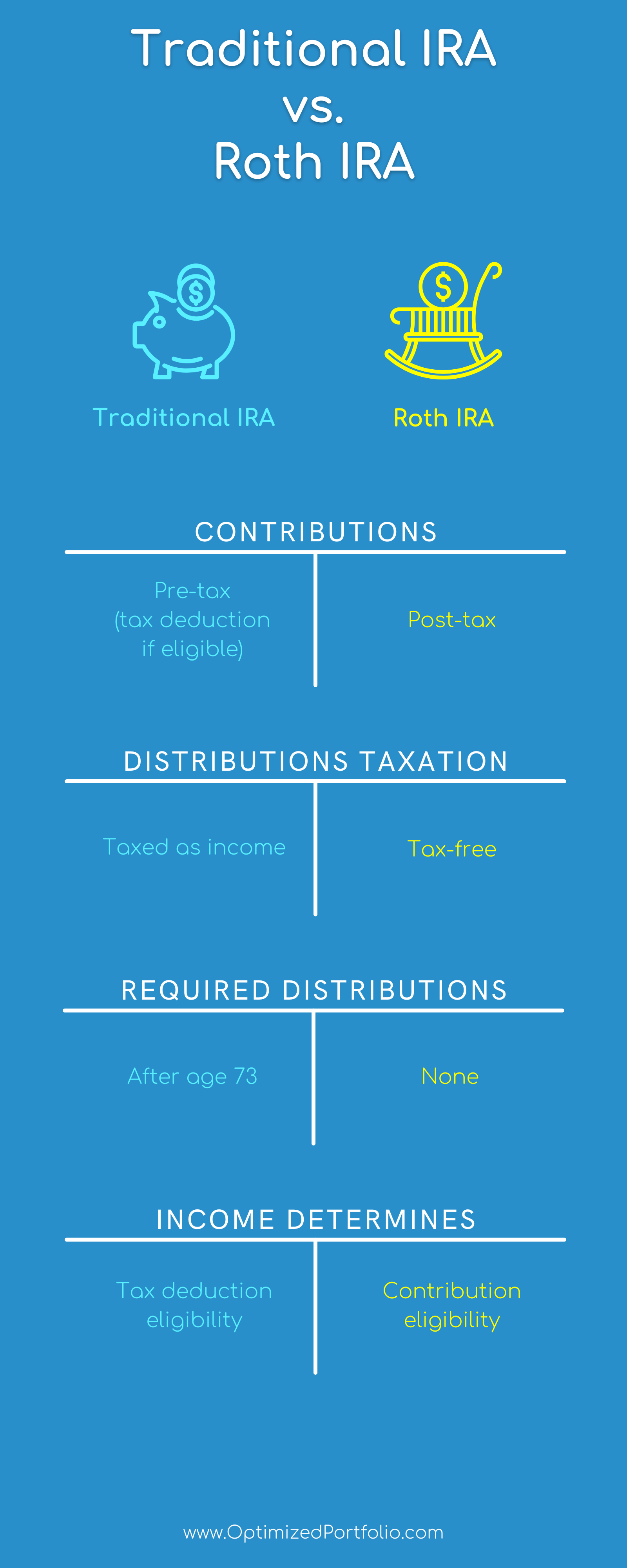
The Roth Individual Retirement Account (IRA) operates under Section 408A of the Internal Revenue Code. Unlike a Traditional IRA, where contributions may be tax-deductible, the Roth IRA is funded with "disposable" or after-tax income. The primary technical advantage is the elimination of tax liability on capital gains, dividends, and interest, provided specific distribution rules are met.
In 2026, the strategic importance of the Roth IRA has intensified as investors seek to hedge against future tax rate hikes. By paying taxes at today’s rates, you effectively "lock in" your current tax bracket for those assets, allowing them to compound for decades without a silent partner (the IRS) claiming a portion of the final balance.
2026 Contribution Limits and Phase-Out Ranges
The Internal Revenue Service (IRS) adjusts contribution limits and income eligibility annually based on inflation. For the 2026 tax year, the following limits apply to your Vanguard Roth IRA:
| Category | 2026 Statutory Limit / Detail |
|---|---|
| Annual Contribution (Under 50) | $7,000 |
| Annual Contribution (50 and Over) | $8,000 (Includes $1,000 Catch-up) |
| Single Income Phase-out Range | $153,000 – $168,000 (Modified AGI) |
| Married Filing Jointly Phase-out | $240,000 – $250,000 (Modified AGI) |
| Tax Treatment | After-tax contributions; Tax-free growth |
| Required Minimum Distributions | None during the original owner's lifetime |
Critical Eligibility Note To contribute to a Vanguard Roth IRA, you must have "earned income" (wages, salaries, or self-employment income) that does not exceed the upper limit of the phase-out range. If your Modified Adjusted Gross Income (MAGI) exceeds these thresholds, you are ineligible for direct contributions but may still utilize the "Backdoor Roth" strategy.
Why Vanguard Remains the Industry Standard in 2026
Vanguard’s dominance in the retirement space is not accidental. It is rooted in its corporate structure: Vanguard is owned by its funds, which are in turn owned by the investors. This eliminates the conflict of interest between outside shareholders and customers, allowing Vanguard to reduce expense ratios to the absolute minimum.
1. Zero-Commission Trading and Low Expense Ratios
Vanguard pioneered the low-cost index fund. In 2026, most Vanguard ETFs (Exchange Traded Funds) carry expense ratios as low as 0.03%. For an investor with a $100,000 balance, a 0.03% fee represents only $30 per year in management costs, compared to the industry average which can exceed 0.50% ($500 per year).
2. The Move to Admiral Shares
While many brokerage firms have simplified their share classes, Vanguard’s "Admiral Shares" remain the gold standard for mutual fund investors. These shares offer lower expense ratios than standard "Investor Shares." For most index funds at Vanguard, the minimum investment for Admiral Shares is $3,000, making them highly accessible for Roth IRA holders who have been contributing for a year or two.
3. Institutional-Grade Security
As of 2026, Vanguard has implemented multi-layered biometric authentication and hardware key support (such as YubiKey) for all brokerage accounts. This is vital for Roth IRAs, which often represent an individual’s largest pool of liquid wealth.
Strategic Investment Selection Within a Vanguard Roth IRA
Selecting the right assets within your Roth IRA is crucial because this is the optimal "location" for high-growth assets. Since the growth is tax-free, you want your most aggressive, high-yielding investments inside this account.
Vanguard Total Stock Market (VTSAX / VTI)
The core of many Vanguard portfolios, this fund provides exposure to the entire U.S. equity market, including small, mid, and large-cap companies.
- VTSAX (Mutual Fund): Best for those who want to automate their investments (e.g., $500 every payday).
- VTI (ETF): Best for those who prefer real-time trading and no investment minimums beyond the price of one share.
Vanguard Total International Stock (VTIAX / VXUS)
To ensure global diversification, this fund covers non-U.S. markets. In 2026, international diversification is often recommended to capture growth in emerging markets and developed European/Asian economies.
Vanguard Growth Index (VIGAX / VUG)
Because Roth IRAs are tax-free, "Growth" stocks—which typically don't pay high dividends but offer high capital appreciation—are perfectly suited for this account. This fund focuses on companies like Apple, Microsoft, and Amazon.
Step-by-Step: Opening and Funding Your Vanguard Roth IRA
The process of establishing a Vanguard Roth IRA in 2026 is streamlined for digital-first users. Following these steps ensures your account is compliant with IRS regulations and optimized for low fees.
- Identity Verification: Prepare your Social Security Number, employer information, and bank routing/account numbers.
- Account Type Selection: Select "Roth IRA" from the account opening menu. Do not confuse this with a Traditional IRA or a General Savings (Brokerage) account.
- Funding the Account: You can fund the account via an Electronic Fund Transfer (EFT) from your bank. You have until the tax filing deadline (typically April 15, 2027) to make contributions for the 2026 tax year.
- Selecting Your First Investment: Once the cash is in your "Federal Money Market Fund" (the default settlement fund), you must manually buy shares of a fund like VTSAX. Many investors make the mistake of leaving their money in the settlement fund, where it earns only a low interest rate instead of being invested in the market.
- Automate Your Contributions: Set up "Automatic Investment" to pull a specific amount from your bank account monthly. This utilizes "Dollar Cost Averaging," which reduces the impact of market volatility.
Advanced Strategies: The Backdoor Roth IRA
If your income in 2026 exceeds the $168,000 (Single) or $250,000 (Married) limits, you cannot contribute directly to a Roth IRA. However, the "Backdoor Roth" remains a legal and effective maneuver at Vanguard.
Process Flow for Backdoor Roth
- Open a Traditional IRA: Open a Vanguard Traditional IRA and fund it with "non-deductible" (after-tax) dollars.
- Maintain Cash Balance: Keep the funds in the settlement fund for 24–48 hours until they clear.
- Execute Conversion: Use the Vanguard "Convert to Roth" tool on the website to move the balance from the Traditional IRA to your Roth IRA.
- Tax Reporting: File IRS Form 8606 with your taxes to ensure the IRS knows you already paid taxes on that money and it should not be taxed again upon conversion.
Comparative Analysis: Vanguard vs. Major Competitors
While Vanguard is excellent for low-cost indexing, it is helpful to see how it stacks up against Fidelity and Charles Schwab in 2026.
| Feature | Vanguard | Fidelity | Charles Schwab |
|---|---|---|---|
| Minimum to Open | $0 | $0 | $0 |
| Avg. Index Fund Fee | 0.03% - 0.05% | 0.00% - 0.05% | 0.02% - 0.04% |
| Mutual Fund Minimums | $3,000 (Admiral) | $0 | $1 |
| Platform Ease of Use | Functional / Sparse | High Tech | Professional Grade |
| Owner Structure | Client-Owned | Private | Publicly Traded |
| 2026 Customer Service | High (Human Focus) | High (AI Integrated) | 24/7 Phone Support |
Vanguard is best for "Buy and Hold" investors who want to avoid the temptation of active trading. Fidelity and Schwab offer better interfaces for those who want to trade stocks or options frequently.
Common Pitfalls and Troubleshooting
Even with a straightforward provider like Vanguard, investors frequently encounter these technical hurdles:
- The 5-Year Rule: To withdraw earnings tax-free, the Roth IRA must have been open for at least five years, even if you are over age 59½. If you open your first Vanguard Roth IRA in 2026, you cannot withdraw earnings tax-free until 2031.
- Excess Contributions: If you accidentally contribute more than the $7,000/$8,000 limit, or if your income unexpectedly rises above the phase-out limit, you must perform a "Removal of Excess" or a "Recharacterization" before the tax deadline to avoid a 6% annual penalty from the IRS.
- Paper Statement Fees: As of 2026, Vanguard charges a $25 annual fee for accounts that receive paper statements. Ensure you opt into "E-delivery" for all prospectuses and statements to waive this fee.
- Settlement Fund Stagnation: New investors often forget to actually invest the money once it hits the account. Always check that your balance is in a specific ticker symbol (like VFIAX) rather than the "Vanguard Federal Money Market Fund (VMFXX)."
Frequently Asked Questions
Can I withdraw my money from a Vanguard Roth IRA before retirement?
You can withdraw your contributions (the original money you put in) at any time, for any reason, without taxes or penalties. However, you should avoid withdrawing earnings before age 59½ and before the 5-year rule is met, as this typically triggers a 10% penalty and income taxes.
What happens to my Vanguard Roth IRA if I change jobs?
A Roth IRA is an individual account, not tied to your employer. If you change jobs, your Vanguard Roth IRA remains exactly where it is. You can also "roll over" a Roth 401(k) from your former employer into your Vanguard Roth IRA to consolidate your accounts.
Is there a deadline for 2026 contributions?
Yes. You can contribute to your 2026 Roth IRA starting January 1, 2026, through the tax filing deadline, which is April 15, 2027. This 15.5-month window gives you flexibility in funding your account.
Can I have a Roth IRA at Vanguard and a 401(k) at work?
Yes. You can contribute to both simultaneously. In fact, many investors use their 401(k) to get their employer match and then use the Vanguard Roth IRA to access better investment options and lower fees for the remainder of their retirement savings.
Does Vanguard offer a "Robo-Advisor" for Roth IRAs?
Yes, Vanguard offers "Vanguard Digital Advisor," which automatically manages your Roth IRA portfolio for a small fee (approximately 0.15% to 0.20% annually). This is ideal for investors who do not want to choose their own funds.
Summary of 2026 Strategic Recommendations
For the 2026 tax year, the Vanguard Roth IRA remains the most mathematically sound choice for the average long-term investor. By leveraging the $7,000 contribution limit and focusing on "Admiral Shares" index funds, you minimize the "leakage" of your wealth to taxes and fees.
If you are just beginning, start with the Vanguard Target Retirement 2065 or 2070 Fund, which provides an instantly diversified portfolio that automatically becomes more conservative as you approach retirement. If you are an experienced investor, build a "Three-Fund Portfolio" consisting of Total US Stock, Total International Stock, and Total Bond Market funds.
Regardless of your strategy, the most important action is to start early and automate your contributions. The tax-free compounding power of a Vanguard Roth IRA is one of the most effective tools in the 2026 financial landscape for achieving true financial independence.
Image Gallery