How to Store Henna Cones: The Ultimate 2026 Preservation Guide
Storing henna cones properly is essential to maintaining the dye-release potency of fresh natural lawsonia inermis paste. To preserve peak staining power, store unused ready-made henna cones in the freezer for up to six months, and kee...
Storing henna cones properly is essential to maintaining the dye-release potency of fresh natural lawsonia inermis paste. To preserve peak staining power, store unused ready-made henna cones in the freezer for up to six months, and keep active cones currently in use in the refrigerator for a maximum of one week.
Contents
Achieving a rich, dark stain on the skin depends heavily on how well your henna cones are stored from the moment they are mixed to the moment they are applied. Natural henna paste is perishable because it relies on active botanical ingredients and essential oils that degrade when exposed to heat, light, and oxygen. Whether you are a professional body artist preparing for a busy wedding season or an enthusiast practicing intricate designs at home, mastering cold-chain storage principles ensures your paste never prematurely dies out or loses its staining capabilities.
Understanding the Chemistry of Fresh Henna Paste
Natural henna paste is a delicate biological mixture. Unlike commercial chemical dyes that rely on synthetic additives and shelf-stable preservatives, pure body art quality (BAQ) henna relies on lawsone molecules bonding with keratin in the human epidermis. This chemical reaction requires the paste to go through a precise dye-release phase, which is triggered by mixing finely sifted henna powder with an acidic liquid and essential oils rich in monoterpenes.
Once mixed, the oxidation process begins immediately. Heat and air accelerate this reaction, causing the paste to peak quickly and then rapidly exhaust its staining potential. Understanding this lifecycle is critical for proper storage management. If left at room temperature for more than 48 hours, the lawsone content breaks down completely, turning the paste into a weak, muddy brown stain producer rather than a rich mahogany or cherry-toned dark stain.
Storage Rule of Thumb Always freeze for long-term preservation. Heat destroys the lawsone molecule irreversibly, so active natural henna should never be left sitting out at room temperature once mixed and matured.
Essential Prerequisites for Optimal Henna Cone Storage
Before placing your cones into cold storage, several preparation steps must be followed to prevent freezer burn, moisture contamination, and premature dye degradation. Storing wet, poorly wrapped cones can lead to condensation buildup inside the cellophane, which dilutes the paste and compromises the fine tip.
- Seal the Tip Properly: Ensure the pin, stainless steel straight pin, or medical tape sealing the tip is completely airtight to prevent air pockets from oxidizing the paste at the nozzle.
- Wrap Individually: Wrap each rolled cellophane cone tightly in plastic wrap or place them inside vacuum-sealed bags to block out ambient freezer odors and frost.
- Control Moisture: Keep cones away from the auto-defrost zones of your refrigerator or freezer, as cyclic temperature fluctuations create condensation inside the packaging.
- Label with Dates: Always use a permanent marker to write the mixing date directly on the packaging or tape so you can track the exact age of the paste.
Step-by-Step Guide to Freezing and Refrigerating Henna Cones
Managing the temperature lifecycle of your henna cones requires a structured workflow. Follow this step-by-step process to transition your fresh paste from the mixing bowl to long-term cold storage safely.
- Mix and Mature: Mix your BAQ henna powder, lemon juice or water, essential oils, and sugar. Allow the paste to sit at room temperature for the recommended dye-release window (usually 12 to 24 hours depending on ambient temperature).
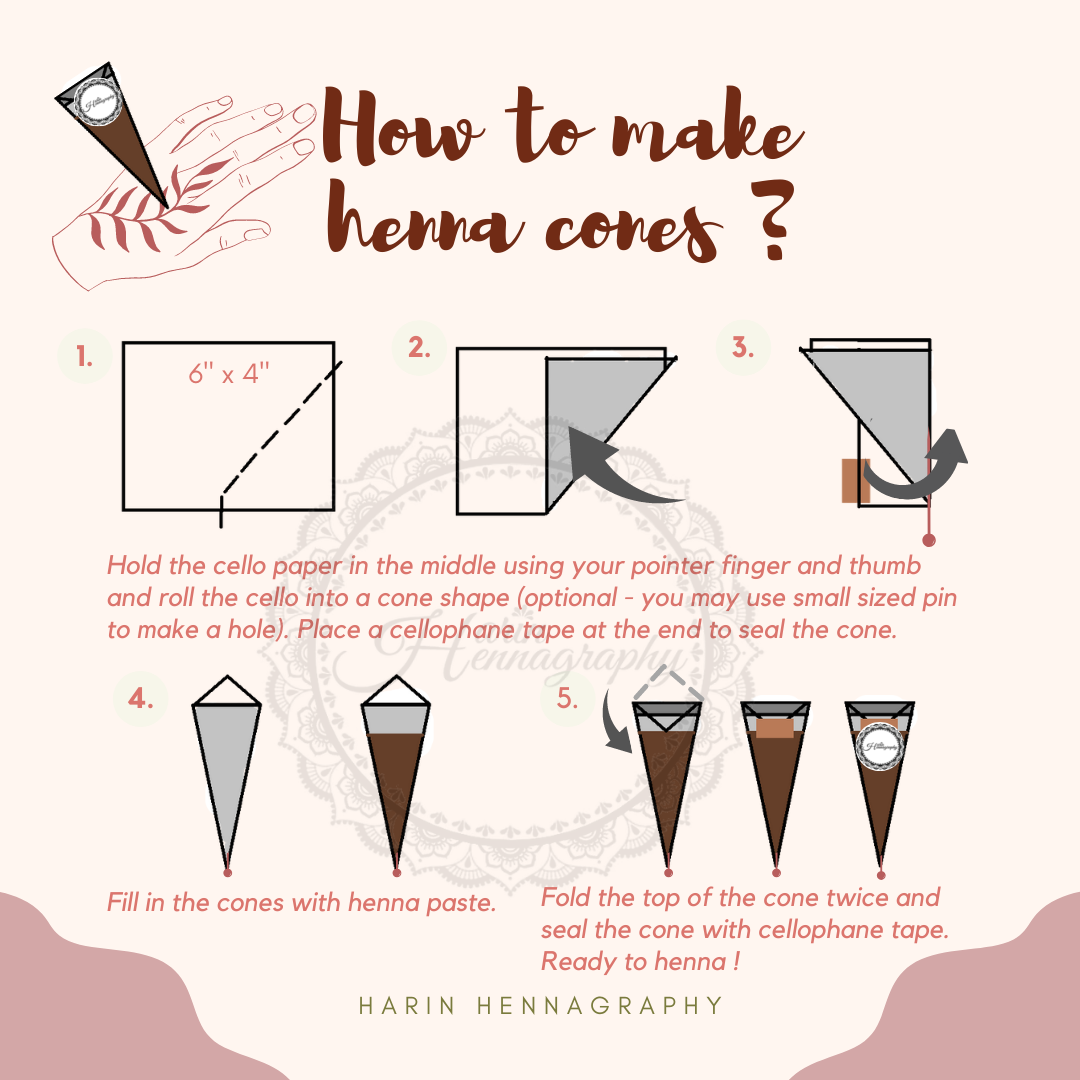
- Roll and Seal: Once dye release has peaked, transfer the paste into blank cellophane or carrot bags, roll them tightly into professional cone shapes, and secure them with waterproof tape. Seal the tip securely with a pin or tape.
- Perform Initial Chilling: Place the freshly rolled cones in the refrigerator for 2 to 3 hours to slow down the oxidation rate gradually before exposing them to sub-zero temperatures.
- Transfer to Freezer Storage: Move the chilled cones into airtight freezer bags or plastic storage containers. Layer them flat to prevent the tips from bending or crushing.
- Thaw for Use: When you are ready to use a frozen cone, remove it from the freezer and let it sit at room temperature for 15 to 20 minutes. Avoid using a microwave or hot water bath, as excessive heat ruins the lawsone dye.
Storage Method Comparison
Different storage durations require different thermal environments. Choosing the wrong environment results in either wasted paste or faded stains.
| Storage Environment | Maximum Duration | Staining Quality Impact | Best Used For |
|---|---|---|---|
| Room Temperature | 24 - 48 Hours | Rapid degradation; weak stain | Immediate application only |
| Refrigerator (2°C - 4°C) | 5 - 7 Days | Minimal degradation; strong stain | Active weekly work and client sessions |
| Freezer (-18°C or lower) | 4 - 6 Months | Preserved potency; excellent stain | Long-term stock and professional bulk prep |
Common Henna Storage Mistakes and How to Avoid Them
Even experienced artists occasionally make errors that ruin an entire batch of paste. Recognizing these pitfalls saves time, materials, and money.
- Refreezing Thawed Cones: Never refreeze a henna cone that has already been thawed to room temperature. The repeated freeze-thaw cycle breaks down the cellular structure of the paste, resulting in a watery consistency and a very faint, disappointing stain.
- Leaving Cones in Direct Sunlight: Exposure to UV rays and sunlight breaks down lawsone molecules rapidly. Even a few hours on a sunny windowsill will render the paste completely inactive.
- Using Non-Airtight Containers: Storing unwrapped cones in a standard kitchen freezer exposes them to frost and food odors, which alters the essential oil composition and ruins the smooth consistency required for fine-line detailing.
Troubleshooting Poor Stain Results from Stored Cones
If your stored henna cones are producing a lighter stain than expected, several diagnostic steps can help identify the root cause.
- Check the Age: If the cone has been in the freezer for over six months, the natural potency of the plant matter has likely expired.
- Evaluate Thawing Methods: If the cone was thawed using artificial heat, the lawsone molecules were likely denatured. Always allow natural countertop thawing.
- Inspect Paste Consistency: If the paste separates or feels gritty after thawing, moisture contamination occurred during storage, indicating a compromised outer wrap.
Frequently Asked Questions
How long do henna cones last in the freezer?
Natural henna cones can last between four to six months in a standard household freezer when stored in airtight packaging. Beyond six months, the dye-release capacity gradually diminishes, resulting in lighter stains.
Can I microwave a frozen henna cone to thaw it quickly?
No, microwaving a henna cone will destroy the lawsone dye molecules instantly due to uneven heating. Always thaw cones naturally at room temperature for 15 to 20 minutes before application.
How do I know if my stored henna cone has gone bad?
A spoiled or expired henna cone will often smell excessively sour, look unusually dark or black on the outer edges, and produce a very faint orange or pale yellow stain on the skin.
Should I store my henna cones with the pin removed?
No, keep the sealing pin or tape securely in place while storing cones in the refrigerator or freezer to prevent air from entering the nozzle and oxidizing the paste tip.
Do chemical or pre-made store-bought cones require freezing?
Synthetic commercial cones containing PPD and chemical dyes are shelf-stable and do not require freezing, but natural organic body art quality cones must always be kept frozen.
Professional Storage Recommendation
To maintain the highest professional standards in your body art practice, mix fresh batches in manageable quantities that match your upcoming workload, and immediately freeze any surplus cones within 24 hours of peak dye release.
Image Gallery