Point Break’s Final Scene: The Legend of Bells Beach and the 50-Year Storm
In the 1991 cult classic Point Break, the final scene is narratively set at Bells Beach in Victoria, Australia, during a fictional "50-Year Storm." While the film portrays this iconic confrontation as taking place on the Australian coa...
In the 1991 cult classic Point Break, the final scene is narratively set at Bells Beach in Victoria, Australia, during a fictional "50-Year Storm." While the film portrays this iconic confrontation as taking place on the Australian coast, the sequence was actually filmed at Indian Beach in Ecola State Park, Oregon, USA.
Contents
The Narrative Weight of the Bells Beach Finale
The conclusion of Point Break (1991), directed by Kathryn Bigelow, remains one of the most discussed endings in action cinema history. After a globe-spanning pursuit, FBI agent Johnny Utah (Keanu Reeves) tracks the charismatic bank robber and surf-mystic Bodhi (Patrick Swayze) to the shores of Victoria, Australia. The setting is specific: Bells Beach, a location revered in the surfing world for its powerful swells and competitive history.
In the film's timeline, nine months have passed since the disastrous raid in Los Angeles. Utah arrives at Bells Beach amidst the "50-Year Storm," a meteorological event Bodhi has obsessed over throughout the movie. The confrontation serves as the emotional resolution of their complex relationship—a blend of mutual respect, betrayal, and ideological conflict.
The choice of Bells Beach as the fictional setting was deliberate. In surfing lore, Bells is known for its "big wave" reputation and as the home of the world's longest-running surf competition. By placing Bodhi here, the screenplay reinforces his character as a man seeking a transcendental experience through nature, even at the cost of his life. When Utah finally handcuffs himself to Bodhi, only to release him into the lethal surf, the location symbolizes the ultimate "point break"—the moment where a wave breaks and where a person reaches their absolute limit.
Filming Reality vs. Fictional Setting
One of the most enduring pieces of movie trivia regarding Point Break is the discrepancy between the setting and the actual filming location. Although the characters explicitly state they are at Bells Beach in Victoria, the production never moved to Australia for the finale.
Why Oregon Stood in for Australia
The final scene was filmed at Indian Beach within Ecola State Park, located near Cannon Beach, Oregon. Several factors influenced this decision:
- Visual Atmosphere: Kathryn Bigelow sought a moody, overcast, and violent aesthetic to represent the 50-Year Storm. The rugged coastline of the Pacific Northwest, with its dark sands and jagged sea stacks, provided a more dramatic and "ominous" backdrop than the actual Bells Beach, which often features golden-hued cliffs and more predictable (though large) surf breaks.
- Production Logistics: Filming in the United States was significantly more cost-effective for the production crew. Moving a lead cast and a full stunt team to the Southern Hemisphere for a single sequence would have inflated the budget unnecessarily.
- Surf Conditions: The waves at Indian Beach during the filming period provided the necessary scale to simulate a massive storm. However, even these waves were supplemented with clever cinematography and editing to make them appear truly "monstrous."
Geographical Discrepancies
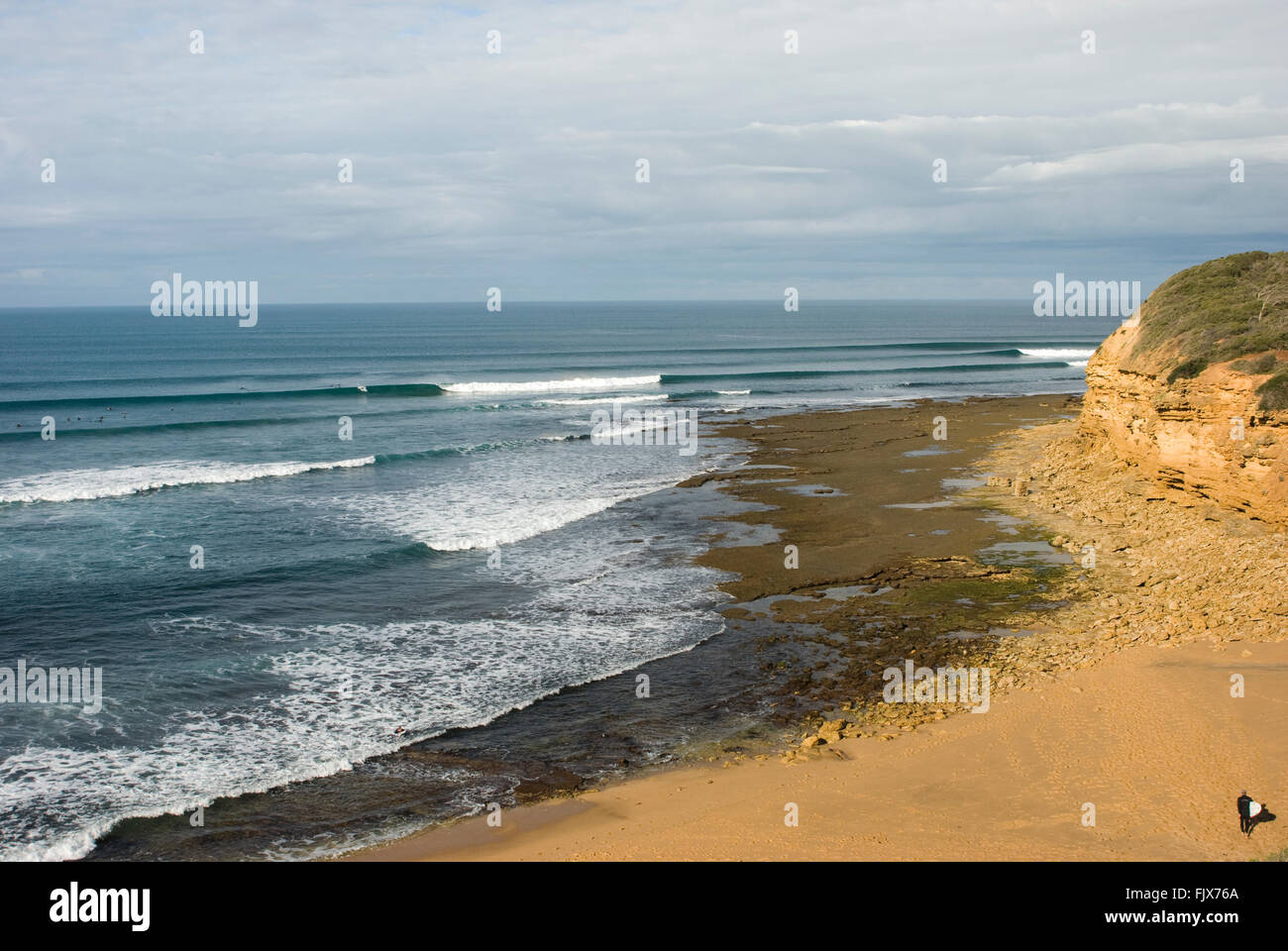
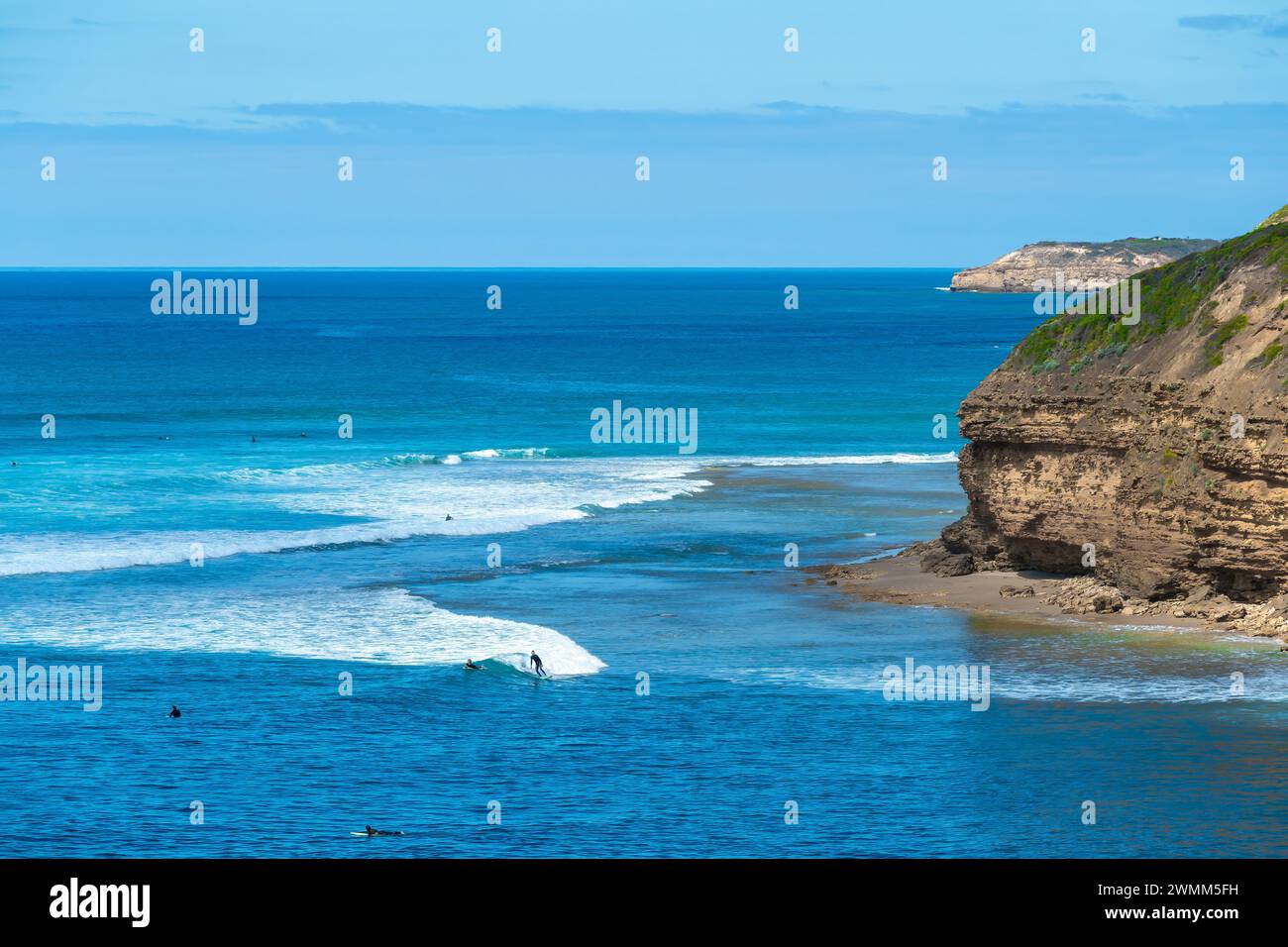
For viewers familiar with the Australian coastline, the visual cues in the film clearly indicate a North American location. The presence of Sitka spruce trees and the specific basalt rock formations (sea stacks) characteristic of the Oregon coast are absent from the Victorian Surf Coast. The real Bells Beach is defined by high limestone cliffs and a lack of the dense, dark evergreen forests seen behind Keanu Reeves and Patrick Swayze in the final shots.
The Real Bells Beach: Victoria’s Surfing Mecca
To understand why the writers chose Bells Beach as the final destination for Bodhi, one must look at the real-world significance of this location in Victoria, Australia. As of 2026, Bells Beach remains an international pilgrimage site for surfers and tourists traversing the Great Ocean Road.
Location and Geography
Bells Beach is situated approximately 100 kilometers (62 miles) southwest of Melbourne, near the town of Torquay. It is part of the Ironbark Basin and is protected as a surfing reserve—the first of its kind in the world. The geography consists of a series of points (Bells, Winkipop, and Centers) that interact with Southern Ocean swells to create long, powerful right-hand breaks.
The Rip Curl Pro
Bells Beach is synonymous with the Rip Curl Pro, the oldest continuously running professional surfing contest in the world. Winning at Bells and "ringing the bell" (the trophy is an actual brass bell) is considered one of the highest honors in the sport. This prestige is why the character of Bodhi, a man driven by the "purest" form of surfing, would naturally gravitate toward this location for his final act.
Comparison: Movie Version vs. Reality
| Feature | Point Break "Bells Beach" (Oregon) | Actual Bells Beach (Victoria, Australia) |
|---|---|---|
| Sand Color | Dark gray/black volcanic sand | Golden/tan quartz sand |
| Vegetation | Dense pine and Sitka spruce forests | Coastal scrub and Ironbark trees |
| Rock Formations | Prominent offshore sea stacks | High limestone/sandstone cliffs |
| Water Temperature | Extremely cold (requires thick 5mm+ wetsuits) | Cold to temperate (3/2mm or 4/3mm wetsuits) |
| Wave Type | Chaotic beach break/storm surge | Consistent, long right-hand point break |
| Climate | Temperate Rainforest/Maritime | Mediterranean/Cool Temperate |
Visiting the Locations Today (2026 Guidelines)
For fans wishing to visit the sites of Point Break’s legendary conclusion, both locations offer distinct experiences.
Visiting Ecola State Park (The Filming Site)
If you wish to stand where Johnny Utah threw his FBI badge into the ocean, you must travel to Ecola State Park in Oregon.
- Access: The park is accessible via a winding road from Cannon Beach. Indian Beach has its own parking area.
- Permits: As of 2026, a day-use parking permit is required (typically around $5 USD).
- Safety: The surf at Indian Beach is notoriously dangerous due to rip currents and submerged rocks. It is recommended for experienced surfers only, particularly during the winter months when the "Point Break" aesthetic is most visible.
Visiting the Actual Bells Beach (The Fictional Setting)
To see the real-world inspiration for Bodhi’s "50-Year Storm," head to the Great Ocean Road in Victoria.
- Access: Bells Beach is a short drive from Torquay. There are designated lookout platforms that provide a panoramic view of the surf without requiring a trek down to the sand.
- Best Time to Visit: The Southern Hemisphere autumn (March–May) offers the most consistent swells and is when the Rip Curl Pro is traditionally held.
- Regulations: Bells Beach is a highly regulated surfing reserve. In 2026, drone usage is strictly limited to protect the local birdlife and the privacy of athletes.
Cultural Impact of the Final Scene
The legacy of the Bells Beach finale extends far beyond the film’s initial release. It solidified the "Surf Noir" genre and created a template for the "honor-bound" rivalry between law enforcement and outlaws.
The dialogue in this scene—"I’m not gonna paddle to New Zealand!" and "Vaya con Dios, brah"—has entered the cultural lexicon. Furthermore, the scene’s philosophical core—the idea that a person’s spirit can be so tied to a geographical location or a natural phenomenon that they cannot exist outside of it—continues to resonate.
The 2015 remake of Point Break also featured a climactic surfing scene, but it chose to utilize Teahupo'o in Tahiti and Jaws in Hawaii. While the stunts were more technologically advanced, fans often argue they lacked the raw emotional grounding of the original "Bells Beach" confrontation.
Frequently Asked Questions
Did Patrick Swayze actually surf in the final scene?
While Patrick Swayze was an accomplished athlete and did many of his own stunts (including skydiving), the most dangerous surfing maneuvers in the final scene were performed by professional stunt doubles. Darrick Doerner, a legendary big-wave surfer, stood in for Swayze during the heaviest water sequences.
Is there really a "50-Year Storm" at Bells Beach?
The "50-Year Storm" is a fictional construct used for dramatic effect. While Bells Beach experiences massive swells during the winter months, the idea of a single, predictable storm that occurs exactly every 50 years is a myth. However, extreme weather events in the Southern Ocean can produce waves exceeding 20–30 feet at the break.
Why did Johnny Utah let Bodhi go?
Utah’s decision to let Bodhi paddle out is interpreted as an act of mercy and an acknowledgement of Bodhi’s nature. Utah knew that Bodhi would never survive a life in prison; by letting him go into the "storm of the century," he allowed Bodhi to die on his own terms. The act of throwing his badge into the water signified Utah's disillusionment with the system he represented.
Can you surf at Bells Beach if you are a beginner?
Generally, no. Bells Beach is an expert-level break. The waves are powerful, the "button" (the take-off zone) is crowded with highly skilled locals, and the reef can be unforgiving. Beginners are encouraged to head to nearby Torquay Front Beach or Jan Juc (on smaller days) to practice before attempting Bells.
Is there a memorial at Bells Beach for the movie?
There is no official Point Break memorial at the real Bells Beach in Victoria. The location is treated as a natural and sporting monument. However, at Ecola State Park in Oregon, local guides and film buffs often point out the specific paths and cliffside spots where Bigelow filmed the 1991 climax.
Final Recommendation
To truly appreciate the intersection of cinema and reality, one should view Point Break not as a geographical documentary, but as a tribute to the spirit of the Australian Surf Coast. Whether you are visiting the misty shores of Oregon or the majestic cliffs of Victoria, the legend of Bodhi and Utah remains a powerful testament to the allure of the ocean. For the most authentic experience, visit the real Bells Beach during the Rip Curl Pro to witness the power of the waves that inspired the filmmakers over three decades ago.
Image Gallery