Charleston Mugshots SC: Navigating Arrest Records, Public Information, and Online Data 2026
Navigating Charleston mugshots in South Carolina involves understanding state public records laws, county detention center policies, and the third-party publishing ecosystem. Accessing booking photographs requires leveraging official c...
Navigating Charleston mugshots in South Carolina involves understanding state public records laws, county detention center policies, and the third-party publishing ecosystem. Accessing booking photographs requires leveraging official channels like the Charleston County Sheriff's Office while being aware of modern online removal services and legal privacy protections.
Contents
Understanding the Legal Framework of South Carolina Public Records
Public access to arrest records and booking photographs in South Carolina is governed by the state’s Freedom of Information Act (FOIA). Under standard provisions, local law enforcement agencies must maintain records of individuals booked into custody. However, how these records are distributed online has undergone significant legislative and operational scrutiny.
The primary objective of local transparency laws is to ensure accountability within the criminal justice system. Yet, this transparency intersects with the rights of individuals who have been arrested but not yet convicted, or whose charges were ultimately dropped, dismissed, or expunged.
Key principles governing South Carolina arrest documentation include:
- Initial Disclosure: Booking logs and arrest affidavits are generally considered public records available for inspection.
- Jail Roster Updates: Detention centers update their rosters dynamically as individuals are processed, released on bond, or transferred.
- Innocence Until Proven Guilty: The publication of a mugshot does not imply guilt; it is simply an administrative record of an arrest event.
Official Channels for Accessing Charleston County Inmate Information
When searching for verified arrest data in the Lowcountry, relying on official municipal and county databases ensures accuracy and protects against outdated information found on aggregate sites. The primary entity responsible for housing inmates in the area is the Charleston County Sheriff's Office.
Charleston County Detention Center Resources
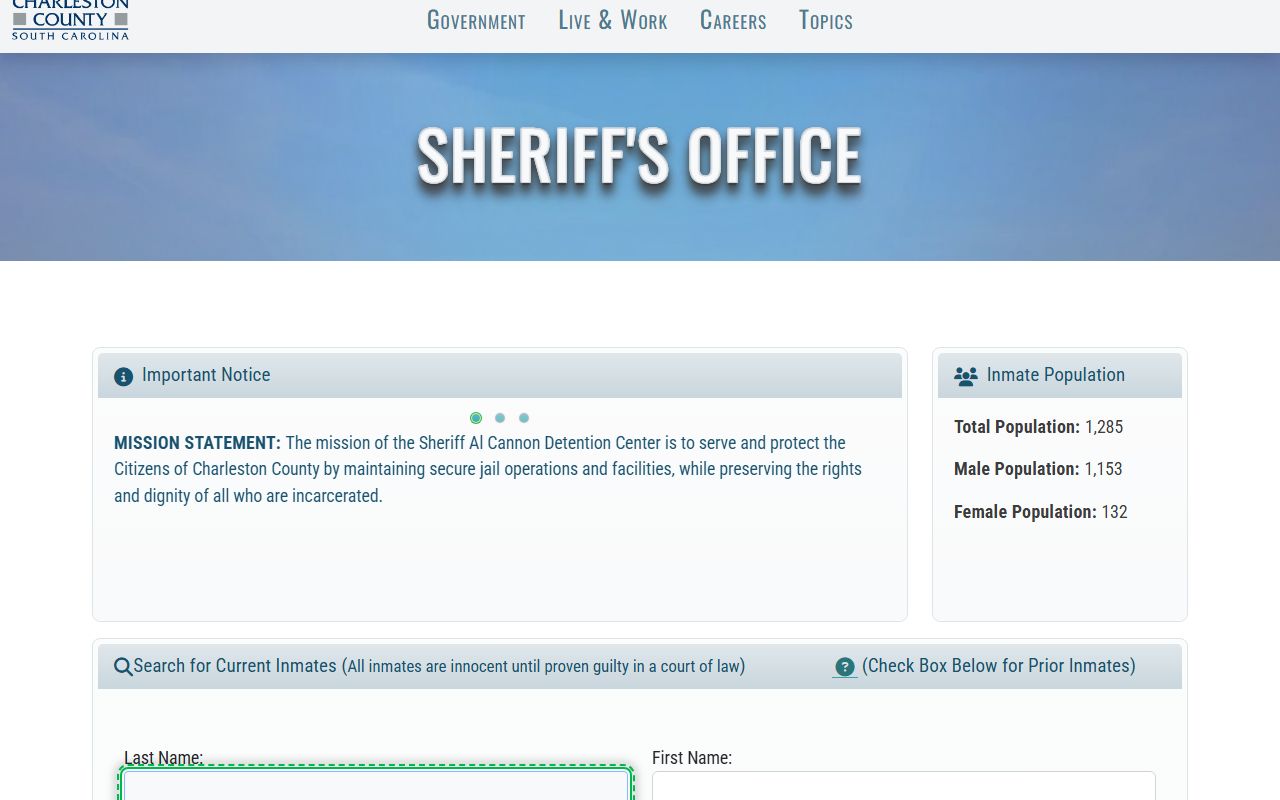
The Charleston County Detention Center, located at 3691 Leeds Avenue, North Charleston, SC 29405, maintains the official local jail intake database. Citizens seeking real-time information regarding current inmates can utilize the online inmate inquiry tool hosted directly on the Charleston County government portal.
| Resource Type | Official Provider | Access Method | Primary Function |
|---|---|---|---|
| Current Inmate Lookup | Charleston County Sheriff's Office | Online Portal / Public Terminal | Locating active detainees, bond amounts, and charges. |
| Warrant Inquiries | Charleston County Clerk of Court | In-Person / Official Phone Line | Verifying active bench warrants or outstanding court orders. |
| Incident Reports | Charleston Police Department | Records Division Request | Obtaining full police narratives for specific case numbers. |
When querying the official database, users should be prepared to input specific identifiers such as the exact legal name, date of birth, or booking number to yield accurate results. Official portals refresh frequently to reflect releases, court appearances, and transfers to state correctional facilities like the South Carolina Department of Corrections (SCDC).
The Mechanics of Third-Party Mugshot Websites and Aggregators
A vast ecosystem of third-party websites aggregates booking photographs from county jail rosters across the United States, including Charleston County. These platforms scrape public data feeds to populate searchable databases. While operating within legal boundaries regarding public domain information, these sites often create long-term reputational challenges for individuals.
Understanding how these aggregators function helps explain why an old arrest record can persistently appear in search engine results long after a legal case has concluded.
- Data Scraping: Automated bots pull daily booking logs from municipal law enforcement websites before records can be updated or sealed.
- Monetization Models: Many aggregators generate revenue through pay-for-removal schemes, charging individuals hundreds or thousands of dollars to take down their images.
- Search Engine Optimization (SEO): These sites are structurally optimized to rank high for name-based searches, frequently overshadowing professional profiles, academic achievements, or positive community contributions.
South Carolina Legislative Protections and Removal Options
In response to predatory mugshot publishing practices, various states have enacted restrictive measures. While South Carolina has debated specific anti-extortion bills targeting mugshot removal fees, individuals possess distinct legal avenues to manage their digital footprints.
Important Legal Context: Simply asking a third-party website to remove a booking photo is rarely effective without formal legal documentation. Securing an expungement through the South Carolina court system is the definitive method to clear underlying criminal history records and trigger removal obligations for official state databases.
Steps to Pursue an Expungement in Charleston
If an arrest did not result in a conviction, or if the specific charge qualifies under South Carolina statutory guidelines for expungement, clearing the record is the most effective defense against permanent public indexing.
- Verify Eligibility: Consult with a criminal defense attorney or review South Carolina Code of Laws to determine if the disposition (e.g., dismissal, Nolle Prosequi, or certain first-offense misdemeanors) qualifies for expungement.
- Obtain the Packet: Request the appropriate expungement application forms from the Charleston County Ninth Judicial Circuit Solicitor's Office.
- Pay Required Fees: Submit the necessary administrative processing fees mandated by the state SLED (South Carolina Law Enforcement Division) and local court systems.
- Processing and Sealing: Once a judge signs the expungement order, SLED and local agencies remove the record from public view, legally allowing the individual to state they were not arrested for that offense in most employment contexts.
Comparing Official Jail Records Versus Commercial Aggregators
To clearly distinguish between reliable public safety tools and commercial data brokers, the following comparison highlights key operational differences.
| Feature | Official Charleston County Sources | Commercial Mugshot Aggregators |
|---|---|---|
| Data Accuracy | High; directly tied to active law enforcement databases. | Variable; often outdated and lacking case updates. |
| Removal Policy | Controlled strictly by state retention and expungement laws. | Often requires payment or complex opt-out requests. |
| Primary Purpose | Public safety, transparency, and court tracking. | Profit generation via ad revenue and removal extortion. |
| Legal Compliance | Fully compliant with South Carolina public records mandates. | Operates in legal gray areas regarding commercial exploitation. |
Frequently Asked Questions About Charleston Arrest Records
How can I find someone currently jailed in Charleston County?
You can search the active inmate database on the official Charleston County Sheriff's Office website using the individual's full legal name and date of birth. This database provides real-time booking details, charges, and bond information.
Are mugshots public record in South Carolina?
Yes, booking photographs and arrest logs generated by law enforcement agencies are generally considered public records under the South Carolina Freedom of Information Act. However, access and online syndication are increasingly regulated by state legal standards and platform policies.
Can I force a third-party website to delete my mugshot?
Many commercial aggregators have internal removal request forms, though some demand payment. The most permanent solution is obtaining a legal expungement if your case was dismissed or met statutory eligibility requirements, which legally compels official agencies to clear the record.
Do mugshot websites update their databases when charges are dropped?
Most commercial aggregators do not automatically update records when a case is dismissed or expunged. Because their business model relies on maintaining static historical data to pressure individuals into paying fees, manual intervention or legal action is usually required.
What is the Charleston County Detention Center's contact information?
The facility is located at 3691 Leeds Avenue, North Charleston, SC 29405. Inquiries regarding visitation schedules, bond postings, and inmate mail guidelines can be directed to their main administrative contact numbers found on the official county portal.
Strategic Approach to Managing Digital Arrest Records
For individuals navigating the complexities of historical arrest data in Charleston, adopting a proactive, legally sound strategy is vital. Rely strictly on verified government resources for accurate legal statuses, pursue formal expungement pathways when eligible, and avoid engaging with predatory commercial operators who profit from personal distress.
Image Gallery