Role and Functions of the Workers' Compensation Appeals Board Chief Counsel
The Chief Counsel of the Workers' Compensation Appeals Board (WCAB) serves as the agency's executive legal advisor, directing the Board’s legal operations, overseeing staff attorneys, advising Commissioners on complex appeals, assistin...
The Chief Counsel of the Workers' Compensation Appeals Board (WCAB) serves as the agency's executive legal advisor, directing the Board’s legal operations, overseeing staff attorneys, advising Commissioners on complex appeals, assisting in drafting legal precedents, and representing the tribunal in state appellate court proceedings.
Contents
Institutional Framework of the Workers' Compensation Appeals Board
To understand the role of the Chief Counsel, one must first understand the structural framework of the Workers' Compensation Appeals Board. In states with administrative workers' compensation systems—most notably California, where the WCAB operates as a distinct judicial body within the Department of Industrial Relations—the Appeals Board functions as a specialized appellate tribunal.
The WCAB exercises judicial powers delegated by the state legislature. In California, for example, the Appeals Board consists of seven Commissioners appointed by the Governor and confirmed by the State Senate. While trial-level disputes regarding medical treatment, temporary disability, permanent disability, and liability are initially heard by local Workers' Compensation Administrative Law Judges (WCALJs) located across district offices, the Appeals Board acts as the judicial appellate body that reviews decisions issued by those trial judges.
Because the Commissioners review thousands of petitions each year, they rely heavily on the Office of the Chief Counsel. The Chief Counsel operates as the administrative and legal anchor of the Appeals Board's headquarters, leading a team of specialized appellate attorneys, legal analysts, and administrative staff who assist the Commissioners in maintaining legal consistency across the state's workers' compensation system.
Primary Responsibilities of the WCAB Chief Counsel
The Chief Counsel occupies a unique position at the intersection of administrative law, constitutional due process, statutory interpretation, and executive agency operations. The duties of the position fall into four core categories: judicial advising, appellate representation, regulatory policy drafting, and legal unit management.
- Office of the WCAB Chief Counsel
- Legal Advisory: Advises Board Commissioners
- Appellate Lit.: Responds to Writs in Court of Appeal
- Rulemaking Policy: Drafts Title 8 CCR Regulations
- Staff Management: Supervises Legal Staff & Operations
1. Legal Advisory Services to Board Commissioners
The primary mandate of the Chief Counsel is to provide high-level legal counsel to the Commissioners. When a party files a Petition for Reconsideration, Petition for Removal, or Petition for Disqualification, the matter is assigned to a three-Commissioner panel (or, in rare cases, the full Board en banc).
The Chief Counsel, supported by deputy counsels and staff attorneys, conducts thorough reviews of trial records, statutory provisions, administrative case law, and appellate precedents. The Office of the Chief Counsel analyzes complex legal arguments, identifies potential constitutional or procedural defects in lower court rulings, and prepares draft opinions, orders, and decisions for the Commissioners' review and signature.
2. Appellate Litigation and Writs of Review
Decisions issued by the WCAB are not reviewed by standard civil trial courts. Instead, an aggrieved party seeking further review must file a Petition for Writ of Review directly in the State Court of Appeal pursuant to statutory procedures (such as California Labor Code Section 5950).
When a Court of Appeal or the state Supreme Court grants a writ or requests briefing from the Appeals Board, the Chief Counsel's office represents the WCAB. In this capacity, the Chief Counsel and assigned staff attorneys prepare formal briefing, defend the Board's statutory interpretations, and present oral arguments before the appellate courts. This function is critical for defending the agency's jurisdiction and preserving uniform application of workers' compensation law across the state.
3. Regulatory Guidance and Rulemaking
Beyond resolving individual disputes, the WCAB is empowered to promulgate procedural rules that govern practice and procedure across all district offices. These rules are compiled in state administrative codes, such as Title 8 of the California Code of Regulations.
The Chief Counsel leads the legal development of these procedural regulations. This process involves:
- Analyzing legislative statutory amendments and determining necessary procedural rule changes.
- Drafting proposed administrative rules and regulatory amendments.
- Ensuring compliance with state administrative procedure acts, including public notice requirements, public comment periods, and regulatory impact assessments.
- Advising the Board on emergency rulemaking when urgent statutory mandates or judicial decisions require immediate procedural adjustments.
4. Oversight of the Legal Unit and Administrative Operations
The Chief Counsel serves as the executive manager of the Appeals Board's legal department. Responsibilities include supervising deputy chief counsels, staff counsel, and legal assistants; establishing internal case evaluation standards; managing workflow timelines; and ensuring compliance with statutory deadlines for resolving petitions.
Under administrative statutes, the WCAB must act on Petitions for Reconsideration within strict statutory timeframes—typically 60 days from the date of filing—or jurisdiction may be lost or the petition deemed denied by operation of law. The Chief Counsel implements operational protocols to ensure case files are routed, researched, and decided within these mandatory statutory windows.
Judicial Review Hierarchy in Workers' Compensation
To better contextualize where the Chief Counsel operates within the adjudicatory pipeline, the table below outlines the progression of a workers' compensation claim from trial court to the Supreme Court.
| Stage of Proceedings | Deciding Authority | Primary Objective | Role of Office of the Chief Counsel |
|---|---|---|---|
| Trial Level | Workers' Compensation Administrative Law Judge (WCALJ) | Conduct evidentiary hearings, evaluate witnesses, issue Findings & Award or Findings & Order. | Indirect: Establishes procedural regulations (Title 8 CCR) that govern trial conduct. |
| First-Level Appeal | WCAB Panel (3 Commissioners) | Review trial record upon Petition for Reconsideration or Removal; modify, affirm, or rescind trial decisions. | Direct: Researches case law, analyzes record, drafts panel decisions, and advises Commissioners. |
| En Banc / Precedential Review | Full WCAB Board (7 Commissioners) | Resolve conflicting panel decisions or establish binding precedent on major statutory issues. | Direct: Prepares comprehensive legal memoranda, evaluates statewide policy impacts, and drafts binding opinions. |
| Appellate Review | State District Court of Appeal | Review WCAB final decisions for legal error or lack of substantial evidence via Writ of Review. | Direct: Acts as respondent or amicus counsel defending the Board's decision and jurisdiction. |
| Supreme Review | State Supreme Court | Review novel constitutional issues or settle critical splits in appellate case law. | Direct: Author's Supreme Court briefs and presents oral argument on behalf of the Appeals Board. |
Key Types of Decisions Influenced by the Chief Counsel's Office
Not all decisions issued by the WCAB carry the same legal weight. The Office of the Chief Counsel plays a vital role in classifying and drafting different tiers of agency decisions, ensuring that legal standards remain clear for judges, attorneys, claims administrators, and injured workers.
- WCAB Decisions
- En Banc: Binding on all WCALJs & Panels
- Significant Panel: Persuasive, binding on specific issue
- Standard Panel: Binding only on the immediate parties
En Banc Decisions
En banc decisions are issued by the full Board (all seven Commissioners) pursuant to statutory authority. These decisions are binding precedent on all Workers' Compensation Administrative Law Judges and future WCAB panels throughout the state.
Because en banc decisions set statewide policy and interpret ambiguous statutory provisions, the Chief Counsel conducts extensive legal research, evaluates potential economic and administrative consequences, and works closely with all Commissioners to forge consensus on complex legal questions before an en banc opinion is issued.
Significant Panel Decisions
Significant panel decisions are issued by a three-member panel of Commissioners and designated as significant due to the novel legal issues addressed, complex statutory interpretations, or widespread importance to the workers' compensation community. While not strictly binding in the same manner as en banc rulings, they are treated as highly persuasive authority by trial judges and practitioners. The Chief Counsel helps identify cases suitable for significant panel designation and oversees legal editing to ensure clarity and consistency.
Standard Panel Decisions
The vast majority of cases coming before the WCAB are resolved through standard panel decisions. These decisions resolve disputes between the specific litigating parties (e.g., affirming, reversing, or remanding a trial judge's award) and do not serve as binding precedent for unrelated cases. The Chief Counsel sets the legal framework and quality control procedures that staff attorneys follow when processing these daily decisions.
Procedural Rules and Ethical Mandates
Litigants and legal practitioners interacting with the Workers' Compensation Appeals Board must follow established statutory procedures. The Office of the Chief Counsel enforces strict operational and ethical standards to maintain tribunal integrity.
Prohibition on Ex Parte Communication
A fundamental rule governing practice before the Appeals Board is the absolute prohibition against ex parte communications. Parties, attorneys, and insurance representatives are strictly forbidden from contacting the Chief Counsel, legal staff, or Commissioners directly regarding a pending case without all other parties being present or served with written copies of the communication.
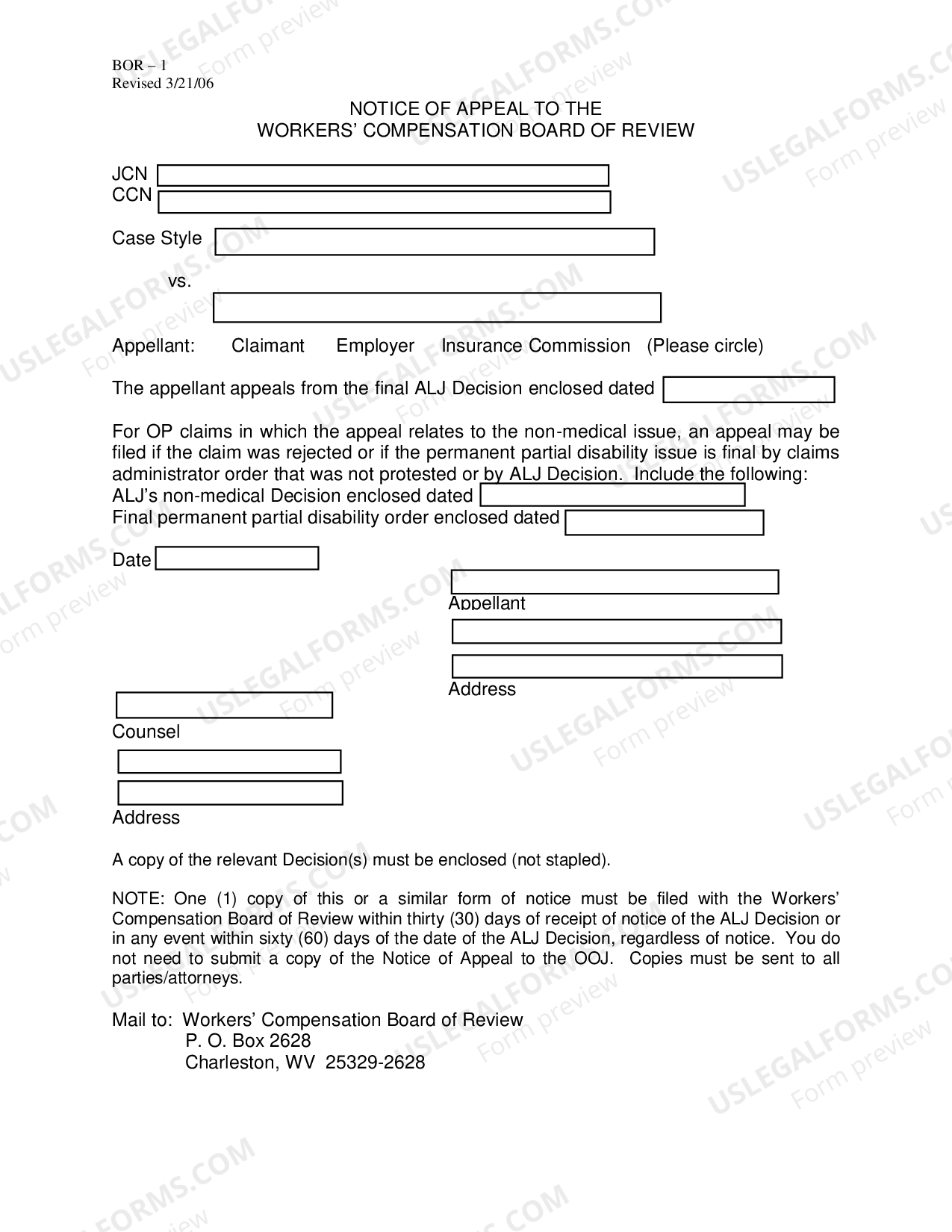
All filings intended for review by the Commissioners or the Office of the Chief Counsel must be submitted through official filing channels, such as the Electronic Adjudication Management System (EAMS) or designated district office filing locations, with proof of service attached for all interested parties.
Statutory Filing Timelines
Navigating appeals before the WCAB requires strict adherence to statutory deadlines set forth in state labor codes:
- Petition for Reconsideration: Must be filed within 20 days (plus additional days if served by mail or electronic service) from the date of service of the final order or award issued by the WCALJ.
- Answer to Petition for Reconsideration: Must be filed within 12 days (plus extensions for service method) from the date the petition was served.
- Petition for Writ of Review: Must be filed in the appropriate District Court of Appeal within 45 days after a petition for reconsideration is denied or a final decision on reconsideration is issued by the Board.
Failure to adhere to these statutory windows deprives the Appeals Board or Appellate Court of jurisdiction, leading to summary dismissal of the petition.
Frequently Asked Questions
What is the difference between the WCAB Chief Counsel and a Workers' Compensation Administrative Law Judge?
A Workers' Compensation Administrative Law Judge (WCALJ) presides over trials, evidentiary hearings, and settlement approvals at the local district office level. The WCAB Chief Counsel is an executive-level legal officer located at the headquarters of the appellate agency. The Chief Counsel advises the Board Commissioners who review appeals taken from WCALJ decisions and represents the tribunal in higher state appellate courts.
Can an injured worker or defense attorney contact the Chief Counsel to discuss a case?
No. Direct communication with the Chief Counsel or legal staff regarding an active claim violates ex parte communication rules. All legal arguments, motions, and evidence must be formally filed through official agency management systems (such as EAMS) and served on all opposing parties.
How does the Office of the Chief Counsel assist in drafting administrative regulations?
The Chief Counsel reviews statutory changes enacted by the state legislature, identifies areas where administrative regulations require updating, drafts clear regulatory language for Title 8 of the California Code of Regulations, and guides the regulations through the formal public notice, comment, and administrative approval process.
Does the Chief Counsel represent individual workers or insurance companies?
No. The Chief Counsel represents the Appeals Board as an institution. The Office of the Chief Counsel does not provide legal representation, advice, or strategy to private litigants, injured workers, employers, or insurance carriers.
Where does the WCAB Chief Counsel derive legal authority?
The authority of the Chief Counsel stems from statutory powers granted to the Appeals Board under state labor legislation (such as California Labor Code Sections 110–138.4 and 5300–6002), which empowers the Board to appoint legal staff, adopt rules of practice, and defend its decisions in state court.
Guidance for Legal Practitioners and Litigants
For attorneys, claims administrators, and self-represented litigants seeking to navigate proceedings before the Workers' Compensation Appeals Board, understanding the administrative role of the Office of the Chief Counsel offers several actionable insights:
- Focus on the Written Record: Because the Appeals Board relies heavily on the staff legal unit led by the Chief Counsel to review case files, your written petitions and briefs must be clear, concise, and fully supported by citations to the trial record (transcripts, medical exhibits, and judge's minutes).
- Cite Binding Authority Accurately: When drafting Petitions for Reconsideration, distinguish clearly between binding en banc decisions, persuasive significant panel decisions, and non-binding panel decisions.
- Monitor Rulemaking Updates: Regularly review public notices issued by the WCAB regarding proposed changes to Title 8 regulations. Participating in public comment periods allows practitioners to stay informed of shifting procedural requirements.
- Ensure Flawless Service and Timelines: The Board lacks authority to extend jurisdictional deadlines set by statute. Verify calculation of service extensions and maintain valid proofs of service for all filings submitted for Board review.
For official regulatory updates, procedural guides, and formal public notices issued by the Appeals Board, visit the California Department of Industrial Relations WCAB Page.
Image Gallery