Truth Behind the Tragic Death Legends on The Wizard of Oz Set
Contrary to persistent urban legends and viral social media claims, no person died on the set during the filming of the 1939 classic The Wizard of Oz. While the production was notoriously dangerous—resulting in near-fatal burns, respir...
Contrary to persistent urban legends and viral social media claims, no person died on the set during the filming of the 1939 classic The Wizard of Oz. While the production was notoriously dangerous—resulting in near-fatal burns, respiratory failure from toxic makeup, and permanent scarring—the famous "hanging munchkin" theory is a proven optical illusion caused by a wandering bird.
Contents
The history of The Wizard of Oz is a case study in the lack of safety regulations during Hollywood’s Golden Age. While the film remains a beacon of childhood wonder in 2026, its production was characterized by grueling conditions, chemical hazards, and technical malfunctions that nearly claimed several lives. To understand why the "tragic death" rumor persists, one must look at the real accidents that occurred behind the curtain of the MGM masterpiece.
The "Hanging Munchkin" Urban Legend: Fact vs. Fiction
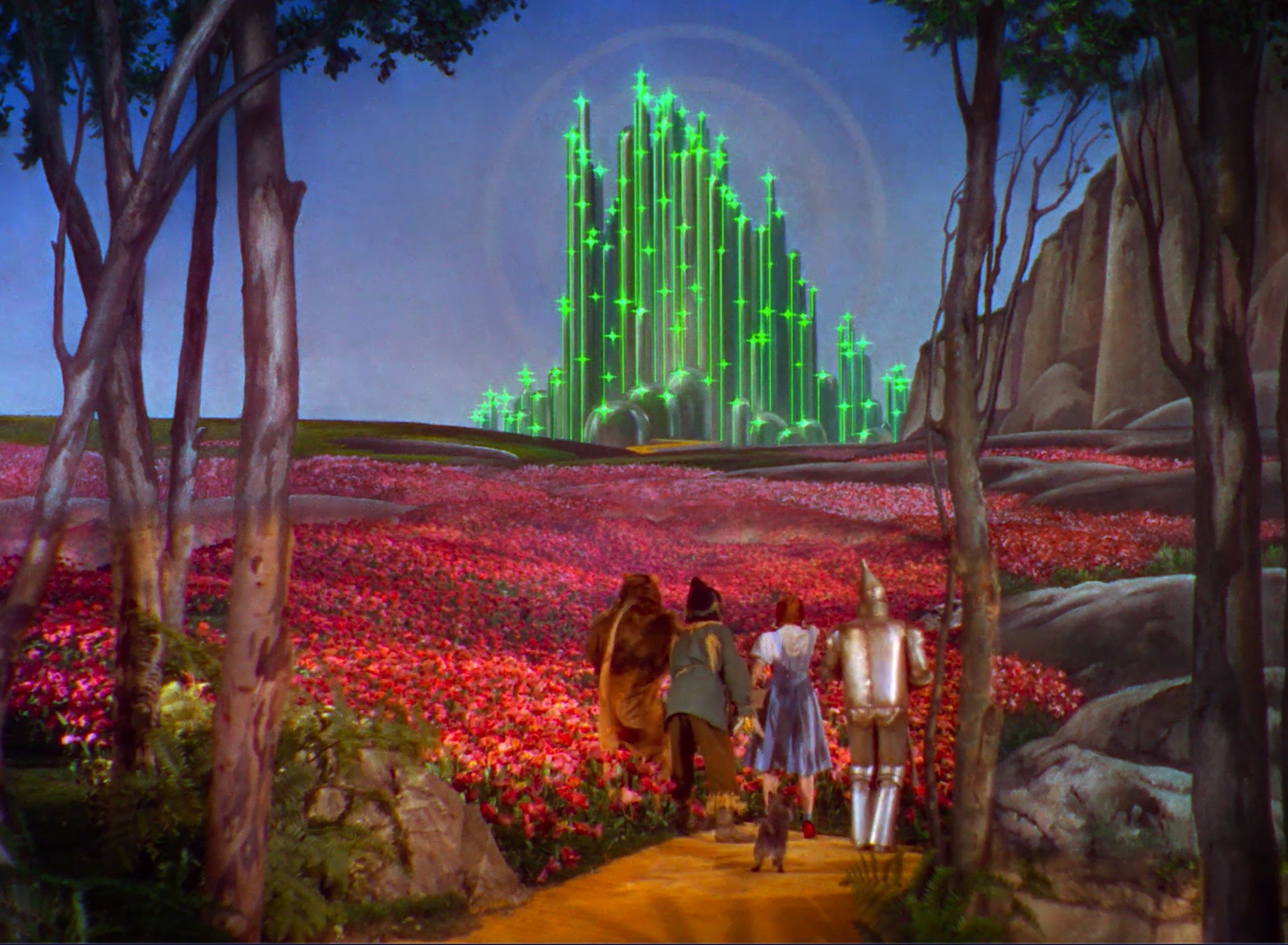
The most enduring "tragic death" associated with the film is the rumor that a Munchkin actor committed suicide by hanging himself on set, with his body visible in the background of the "We’re Off to See the Wizard" scene. This theory gained massive traction in the 1980s and 1990s with the advent of home video, as viewers attempted to pause and zoom into the low-resolution background of the forest.
In reality, there was no suicide. The dark shape moving in the background is a large bird, specifically a sarus crane or a marabou stork. To make the forest set appear more organic and "outdoorsy," MGM had rented several exotic birds from the Los Angeles Zoo and allowed them to roam the set.
Why the Rumor Persists
- Low-Resolution Transfers: Early VHS and television broadcasts lacked the clarity to distinguish the bird’s wings from a human silhouette.
- Set Depth: The "woods" were a soundstage with painted backdrops. Shadows cast by the massive Technicolor lights often created deceptive shapes.
- Remastering Proof: When the film was remastered for its 60th and 75th anniversaries in 4K resolution, the "hanging man" was clearly revealed to be a bird extending its wings.
Despite this debunking, the myth remains a staple of "cursed movie" lore. The actual tragedies of the set were not caught on camera as background accidents but occurred during technical stunts and makeup applications.
The Toxic Tin Man: Buddy Ebsen’s Near-Fatal Illness
One of the most documented medical emergencies on the set involved Buddy Ebsen, the original actor cast as the Tin Man. Ebsen had been through weeks of rehearsal and had even recorded his vocals for the film’s songs. However, ten days into filming, he suffered a catastrophic physical collapse.
The Tin Man’s costume required Ebsen to be coated in aluminum powder. In 1938, the potential for heavy metal poisoning or respiratory distress from inhaling metallic dust was not fully understood by the makeup department. Ebsen began experiencing shortness of breath and severe cramping. One night, he awoke unable to breathe, his lungs having been coated with the fine aluminum dust.
The Medical Fallout
Ebsen was rushed to the hospital and spent time in an oxygen tent. He suffered from a collapsed lung and respiratory failure. While he eventually recovered, the recovery took months, forcing MGM to replace him with Jack Haley.
The studio did learn a minor lesson: for Jack Haley’s makeup, they switched from a powder base to an aluminum paste. However, Haley still suffered a severe eye infection from the makeup, though he managed to finish the production. Ebsen, meanwhile, reportedly felt the effects of the aluminum inhalation for the rest of his life, often complaining of "the cramps" during his later career on The Beverly Hillbillies and Barnaby Jones.
The Wicked Witch’s Near-Fatal Fire Accident
If there was a moment where a death almost occurred on camera, it was during the filming of the Wicked Witch of the West’s exit from Munchkinland. Margaret Hamilton, who played the iconic villain, was a professional who performed many of her own stunts.
The scene required Hamilton to disappear in a puff of smoke and fire through a trapdoor in the stage floor. During a take, the pyrotechnic "burst" of fire was triggered too early, before the elevator platform could lower Hamilton to safety.
The Severity of the Burns
Hamilton’s makeup was copper-based, which is highly conductive of heat. The flash of fire ignited the makeup on her face and hands. She suffered:
- Second-degree burns on her face.
- Third-degree burns on her right hand.
The injury was so severe that she was hospitalized for six weeks. Upon her return, she refused to work with fire ever again. Ironically, her stunt double, Betty Danko, was also severely injured later in production. While filming the "Surrender Dorothy" skywriting scene on a smoking broomstick, the pipe used to create the smoke effect exploded. Danko suffered deep tissue damage to her legs and was hospitalized for several months.
Environmental Hazards: Asbestos and Extreme Heat
Safety standards in 1939 were non-existent compared to modern 2026 protocols. The cast and crew were subjected to environmental toxins that would be illegal on a modern film set.
The Asbestos Poppy Field
One of the film’s most beautiful scenes involves Dorothy and her friends falling asleep in a field of poppies while snow falls on them. In a move that seems unthinkable today, the production used chrysotile asbestos as the "snow."
At the time, industrial manufacturers sold asbestos-based snow under trade names like "White Magic" because it was fireproof and looked realistic under bright lights. The actors, including Judy Garland, lay on the ground and breathed in these fibers for several hours during multiple takes. While there is no direct record of a "set death" from this exposure, the long-term carcinogenic effects of asbestos are now a matter of medical certainty.
The Technicolor Heat
Early Technicolor required an immense amount of light to register images on the film strip. The sets often reached temperatures exceeding 100 degrees Fahrenheit. Bert Lahr, who played the Cowardly Lion, wore a costume made of actual lion hides that weighed nearly 90 pounds. He would finish scenes drenched in sweat, requiring the costume to be dried overnight in a specialized industrial heater to prevent rot.
| Actor/Entity | Role | Incident/Hazard | Outcome |
|---|---|---|---|
| Buddy Ebsen | Original Tin Man | Aluminum dust inhalation | Respiratory failure; replaced by Jack Haley. |
| Margaret Hamilton | Wicked Witch | Pyrotechnic malfunction | Second and third-degree burns; 6-week recovery. |
| Betty Danko | Stunt Double | Exploding smoke pipe | Severe leg injuries; hospitalized for months. |
| Judy Garland | Dorothy Gale | Strict diet/drug regimen | Long-term dependency and early death (post-production). |
| Terry the Dog | Toto | Stepped on by crew | Broken foot; replaced by a double for two weeks. |
| Entire Cast | Backgrounds | Asbestos "snow" | Prolonged exposure to known carcinogen. |
The Human Toll: The Treatment of Judy Garland
While physical accidents are the focus of "set death" rumors, the most tragic outcome of the production was the systemic mistreatment of the film's star, Judy Garland. Only 16 at the time of filming, Garland was subjected to a grueling schedule and immense psychological pressure from MGM studio head Louis B. Mayer.
To keep her weight down and her energy up, the studio reportedly provided Garland with a combination of:
- Amphetamines: To keep her awake for 16-hour workdays.
- Barbiturates: To help her sleep after the stimulants.
- Restricted Diet: She was reportedly limited to chicken soup, black coffee, and cigarettes.
Many film historians argue that the cycle of substance abuse that eventually led to Garland’s death in 1969 began on the set of The Wizard of Oz. While she did not die "on set," her life was arguably shortened by the conditions she endured during the production.
Frequently Asked Questions
Did a Munchkin really hang themselves during the "We're Off to See the Wizard" scene?
No. This is a debunked urban legend. High-definition remasters of the film have confirmed that the moving shape in the background is a large bird (a crane or stork) that was roaming the set. The rumor likely started because of the low visual quality of early VHS tapes.
Was anyone killed by the "asbestos snow" during filming?
There are no recorded deaths that occurred immediately after the poppy field scene. However, the actors were undeniably exposed to raw asbestos fibers. Because asbestos-related diseases like mesothelioma can take 20 to 50 years to develop, it is difficult to quantify the long-term impact on the crew's health, but the practice was inherently dangerous.
How many people were injured during the production?
Dozens. The most notable were Buddy Ebsen (aluminum poisoning), Margaret Hamilton (burns), Betty Danko (explosion), and Terry the dog (broken foot). Several of the Munchkin actors also reported injuries due to the height of the sets and the frantic pace of the choreography.
Why is the movie considered "cursed"?
The "curse" is a narrative created by fans to explain the high number of accidents and the tragic later lives of some of its stars, particularly Judy Garland. From a historical perspective, the "curse" was actually a lack of labor unions and safety regulations in the 1930s film industry.
Did the Tin Man’s makeup really kill Buddy Ebsen?
No, Buddy Ebsen did not die from the makeup. He was hospitalized and forced to leave the production, but he lived a long life and had a successful career, passing away in 2003 at the age of 95.
Conclusion and Final Assessment
The "tragic death on the Wizard of Oz set" is a blend of myth and misunderstood history. While the munchkin suicide never happened, the production was genuinely perilous. The near-loss of Buddy Ebsen and the severe burning of Margaret Hamilton highlight a period of filmmaking where spectacle was often prioritized over human life.
For those researching the history of the 1939 film in 2026, it is essential to distinguish between the viral legends of the internet and the documented medical emergencies that actually occurred. The true tragedy was not a secret suicide caught on film, but the systemic neglect that allowed actors to be poisoned, burned, and drugged in the pursuit of cinematic magic. If you are a fan of film history, the best next step is to watch the 4K restored version of the movie, where you can see for yourself the clarity that debunks the rumors once and for all.
Image Gallery