Fastenal Canada Fulfillment Center Photos and Operational Logistics Guide 2026
Fastenal Canada fulfillment center photos showcase a sophisticated network of high-tech distribution hubs, primarily centered in Kitchener and Milton, Ontario. These images highlight advanced Automated Storage and Retrieval Systems (AS...
Fastenal Canada fulfillment center photos showcase a sophisticated network of high-tech distribution hubs, primarily centered in Kitchener and Milton, Ontario. These images highlight advanced Automated Storage and Retrieval Systems (ASRS), high-velocity conveyor lines, and the "Blue Lane" freight system. These facilities serve as the backbone for industrial supply, providing critical support to thousands of local branches and on-site customer locations across all Canadian provinces.
Contents
As of 2026, Fastenal’s Canadian operations have matured into a model of logistics efficiency, leveraging real-time data and automated inventory replenishment to maintain the highest fill rates in the industrial distribution sector. Understanding the visual and operational landscape of these centers is essential for procurement officers, supply chain analysts, and industrial partners who rely on Fastenal for MRO (Maintenance, Repair, and Operations) and OEM (Original Equipment Manufacturer) supplies.
The Architectural and Technological Blueprint of Canadian Distribution
The visual identity of a Fastenal Canada fulfillment center is defined by its massive footprint and high-density storage configurations. Unlike traditional warehouses, these centers are engineered for velocity rather than just storage. Photos of the Milton and Kitchener facilities reveal a layout designed to minimize "touches" on every product, ensuring that a fastener or safety glove moves from the receiving dock to a regional delivery truck with surgical precision.
The infrastructure is built to support the "Hub and Spoke" model. The fulfillment centers (Hubs) act as massive inventory reservoirs that feed the local branches (Spokes). In 2026, this network has been optimized to handle over 100,000 unique SKUs, ranging from specialized heavy-duty fasteners used in oil and gas to precision tools for aerospace manufacturing.
Strategic Regional Placement
Fastenal strategically positions its Canadian centers to mitigate the geographical challenges of the Canadian landscape. By maintaining major hubs in Ontario and secondary distribution points in Alberta and New Brunswick, the company ensures that 95% of the Canadian industrial population is within a one-day shipping radius via the Blue Lane regional freight network.
Visual Tour: Inside the High-Velocity Fulfillment Environment
When examining photos of these centers, several key technical components stand out. These are not merely storage racks; they are integrated components of a multi-billion-dollar supply chain engine.
Automated Storage and Retrieval Systems (ASRS)
The most striking images from the Kitchener fulfillment center often feature the ASRS towers. These vertical storage units utilize robotic cranes that navigate aisles at high speeds to retrieve bins of product. This technology allows Fastenal to utilize the full cube of the warehouse, reaching heights that would be inaccessible to standard forklifts.
The Conveyor and Sorting Matrix
Modern 2026 photos show miles of "intelligent" conveyors. These systems use optical scanners to read barcodes on every tote, automatically diverting them to the correct packing station or shipping lane. This reduces human error to near-zero levels and ensures that custom "kitted" orders—where multiple parts are bagged together for a specific production line—are processed accurately.
The Blue Lane Freight Hub
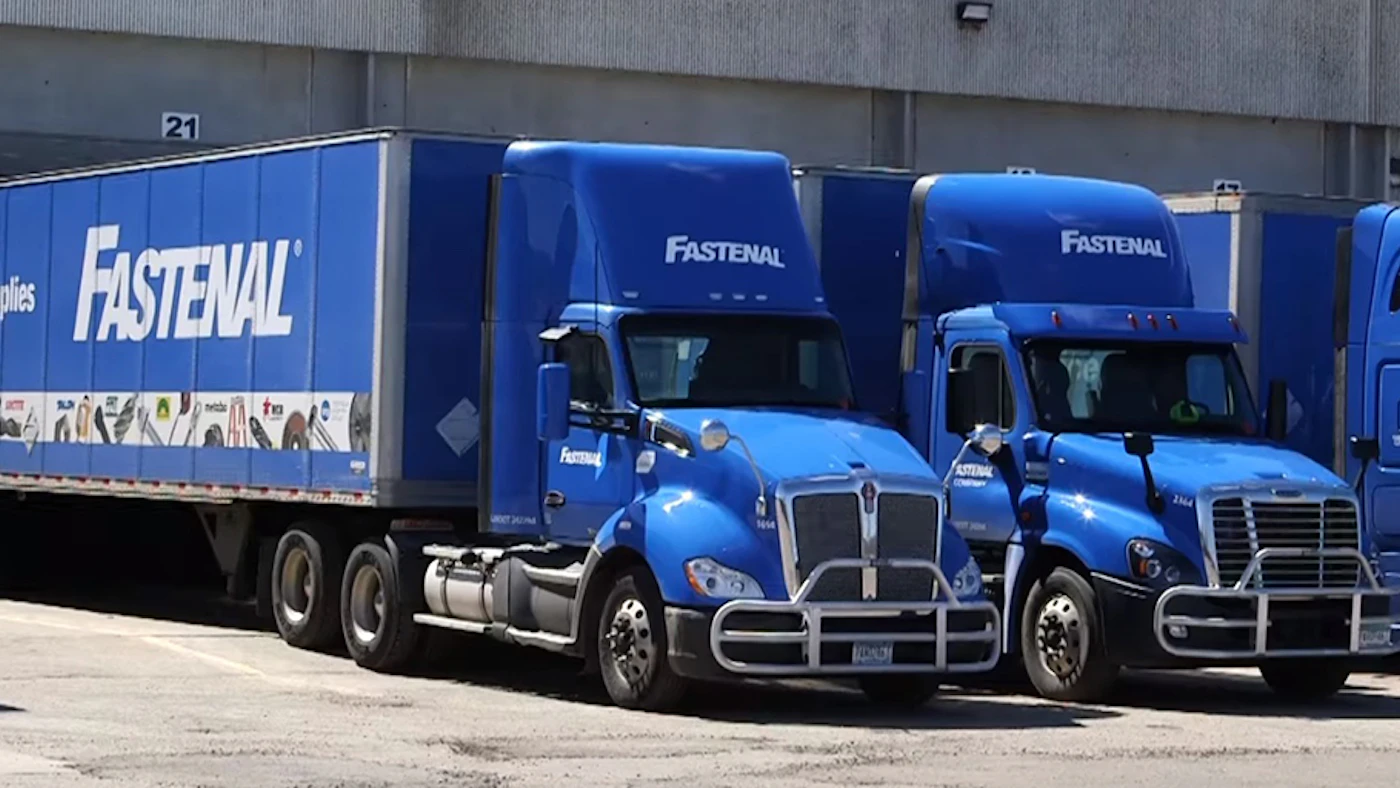
The shipping docks are often the most active areas captured in professional photography. Fastenal’s proprietary "Blue Lane" fleet is visible here. By operating its own trucking network, Fastenal bypasses the delays often associated with third-party LTL (Less-Than-Truckload) carriers, providing more predictable lead times for Canadian manufacturers.
Operational Metrics and Facility Comparison
To understand the scale of these operations, it is helpful to look at the specifications of the primary Canadian fulfillment nodes as they stand in 2026.
| Facility Location | Primary Function | Size (Sq. Ft.) | Key Technology | Regional Coverage |
|---|---|---|---|---|
| Kitchener, ON | National Master Hub | 500,000+ | Full-Scale ASRS & Robotic Picking | Eastern & Central Canada |
| Milton, ON | High-Velocity DC | 350,000 | Automated Sorter Matrix | Golden Horseshoe & GTA |
| Calgary, AB | Western Regional DC | 200,000 | Zone-Route Optimization | Western Canada & Territories |
| Moncton, NB | Atlantic DC | 120,000 | Lean Flow Consolidation | Atlantic Provinces |
| Winnipeg, MB | Prairie DC | 100,000 | Cold-Chain Logistics Capable | Manitoba & Saskatchewan |
Inventory Management: Beyond the Warehouse Walls
While fulfillment center photos show the "macro" view of the supply chain, the real innovation in 2026 is how these centers connect to the "micro" level through Fastenal Managed Inventory (FMI). Every photo of a distribution center is a snapshot of the support system for thousands of FAST Solutions vending machines located directly on factory floors across Canada.
The Digital Thread
The integration between the fulfillment center and the customer's point of use is seamless. When an employee in a Vancouver shipyard pulls a grinding wheel from a vending machine, the data is transmitted back to the Kitchener or Calgary DC. This triggers an automated replenishment order, ensuring the "photos" of the warehouse shelves always show a perfectly balanced inventory level—never overstocked, yet never empty.
Quality Control and Compliance
Fastenal’s fulfillment centers house ISO-certified testing laboratories. Visuals of these labs show technicians using hardness testers, thread gauges, and salt-spray booths to verify that imported fasteners meet the rigorous standards required by Canadian engineering specifications, such as those set by the CSA (Canadian Standards Association).
Safety and Employee Workspace Standards
A significant portion of Fastenal’s 2026 corporate photography focuses on the ergonomics and safety of the fulfillment center environment. In Canada, where workplace safety regulations are stringent (OHS), these centers serve as a benchmark for industrial excellence.
Safety and Ergonomic Protocols in 2026
Ergonomic Workstations Packing stations are now equipped with height-adjustable platforms and anti-fatigue flooring, reducing the risk of musculoskeletal disorders (MSDs) for employees processing high volumes of orders.
Electric Fleet Integration Inside the DC, all material handling equipment (MHE) is 100% electric. This eliminates internal emissions and significantly reduces noise levels, creating a healthier environment for the workforce.
Automated Guided Vehicles (AGVs) To minimize heavy lifting and pedestrian-forklift interactions, AGVs are used to transport bulk pallets across the warehouse floor, guided by floor-embedded sensors and LiDAR.
Sustainability Initiatives in Canadian Logistics
By 2026, Fastenal Canada has significantly reduced its carbon footprint, a fact often highlighted in modern facility photos through the presence of rooftop solar arrays and EV charging stations for the local delivery fleet.
- Waste Reduction: The centers have moved toward a "closed-loop" packaging system. Plastic totes are reused hundreds of times between the DC and the branch, eliminating thousands of tons of cardboard waste annually.
- Energy Efficiency: Intelligent LED lighting systems use motion sensors to only illuminate active aisles, and high-efficiency HVAC systems manage the vast interior climate with minimal energy draw.
- Localized Sourcing: While the fulfillment centers handle global products, there is a visible 2026 emphasis on "Made in Canada" industrial sections within the DC to support local manufacturing and reduce shipping-related emissions.
Comparison: Fastenal DCs vs. Traditional Industrial Wholesalers
| Feature | Fastenal Fulfillment (2026) | Traditional Wholesaler |
|---|---|---|
| Technology | Integrated ASRS & AI-Predictive Analytics | Manual Picking & Legacy WMS |
| Last-Mile | Proprietary "Blue Lane" Fleet | Third-Party Couriers (LTL) |
| Inventory Link | Direct Vending/On-Site Integration | Transactional/PO Based |
| Lead Times | Same-Day or Next-Day National | 3-5 Business Days |
| Compliance | In-House ISO Testing Labs | Third-Party Certification Only |
Career Opportunities and the Workplace Environment
For those researching "Fastenal Canada fulfillment center photos" from a career perspective, the images reflect a transition from manual labor to "technician-based" logistics. Roles in 2026 require a blend of physical agility and digital literacy. Employees are seen interacting with tablets, managing robotic cells, and overseeing the complex data flows that drive the facility.
The Milton and Kitchener hubs are frequently cited for their diverse workforces and commitment to internal promotion. The visual evidence of clean, organized, and technologically advanced workspaces makes these centers highly competitive in the Canadian labor market.
Frequently Asked Questions
Can the public tour the Fastenal Canada fulfillment centers?
Public tours are generally restricted due to safety protocols and proprietary technology. However, Fastenal often hosts "Customer VIP" tours for procurement partners to demonstrate the scale and reliability of the supply chain they are relying on. These tours provide an up-close look at the ASRS and quality lab operations.
How does the Kitchener DC handle winter weather disruptions?
Fastenal’s 2026 logistics strategy includes advanced weather-predictive modeling. Before a major snow event in Ontario, the DC "pre-ships" critical inventory to local branches to ensure customers remain supplied even if the highways are temporarily closed. The Blue Lane fleet is also equipped with specialized winter-safety equipment to maintain uptime.
What is the significance of the "Blue Lane" in these photos?
The "Blue Lane" refers to Fastenal’s internal freight network. In photos, you will see blue-branded trucks and dedicated shipping bays. This network allows the company to move product between fulfillment centers and branches without the delays, damages, or cost fluctuations associated with common carriers.
Are the products in the fulfillment centers available for direct walk-in purchase?
No, the fulfillment centers are not retail locations. They are high-volume distribution nodes. For immediate "over-the-counter" needs, customers should visit one of the hundreds of Fastenal branches located throughout Canada, which are replenished daily by these centers.
How does Fastenal ensure the quality of fasteners seen in the warehouse?
Fastenal operates one of the most comprehensive fastener testing labs in North America. Before items are binned in the fulfillment center, they undergo rigorous inspections for tensile strength, dimensions, and chemical composition to ensure they meet ASTM and CSA standards.
Conclusion: The Strategic Advantage of Visible Infrastructure
The photos of Fastenal Canada’s fulfillment centers in 2026 represent more than just buildings; they symbolize a commitment to the "Total Cost of Ownership" (TCO) model. By investing in massive, high-tech infrastructure, Fastenal ensures that Canadian industries have the parts they need exactly when they need them, reducing the cost of downtime and inventory carrying costs.
For businesses looking to optimize their supply chain, these centers provide the physical evidence of a partner capable of scaling with their needs. Whether it is through the robotic precision of the Kitchener hub or the regional agility of the Calgary DC, Fastenal Canada continues to set the standard for industrial distribution in the mid-2020s.
Image Gallery