Why Amber Heard Kept Looking at the Jury: Psychological and Legal Strategies Analyzed
During the high-profile defamation trial between Amber Heard and Johnny Depp, one of the most discussed aspects of Heard's testimony was her consistent and direct eye contact with the jury. While witnesses are often encouraged to addre...
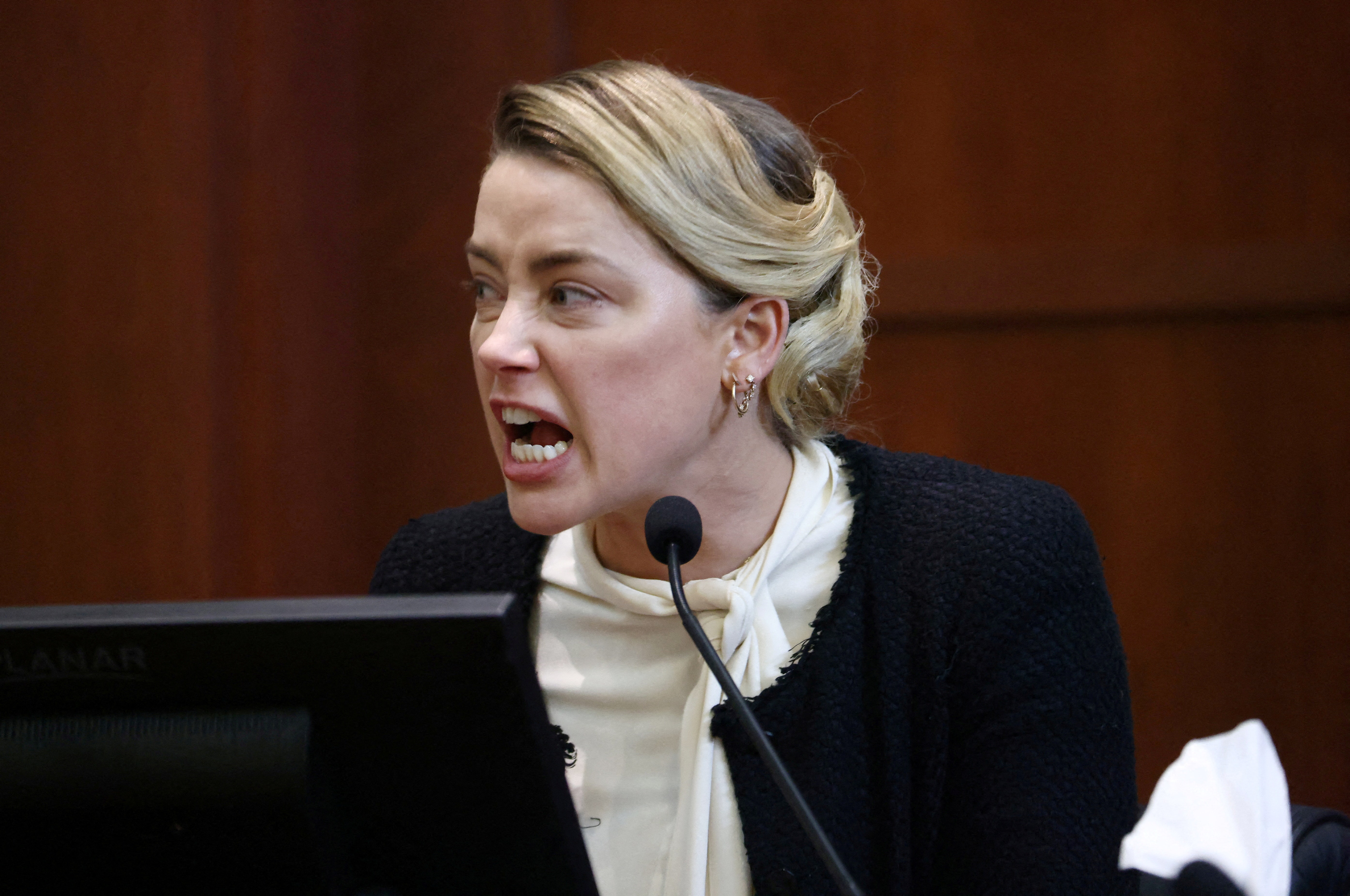
During the high-profile defamation trial between Amber Heard and Johnny Depp, one of the most discussed aspects of Heard's testimony was her consistent and direct eye contact with the jury. While witnesses are often encouraged to address the jury, Heard’s frequent turning of her head to look directly at the seven-person panel became a flashpoint for body language experts and social media analysts. This behavior was a calculated legal strategy intended to build rapport and establish credibility, though its execution polarized observers.
Contents
The Role of the Jury in the Depp v. Heard Trial
To understand why Amber Heard kept looking at the jury, one must first understand the specific legal environment of the Fairfax County Circuit Court in Virginia. In a civil defamation case, the jury serves as the ultimate "finder of fact." Unlike a bench trial where a judge decides the outcome, a jury trial relies entirely on the impressions, beliefs, and judgments of a group of citizens.
In the case of Depp v. Heard, the jury was tasked with determining not just the sequence of events, but the "intent" and "malice" behind specific statements. Because defamation law—especially regarding public figures—hinges on the "actual malice" standard, the witness's perceived sincerity is paramount. If a jury finds a witness untrustworthy or distant, the legal arguments, no matter how sound, often crumble. Heard’s legal team was acutely aware that her testimony needed to transcend a mere recitation of facts; it needed to be a persuasive emotional appeal.
Legal Strategy: The Practice of "Directing the Answer"
In trial advocacy training, many trial lawyers coach their witnesses on a technique known as "directing the answer." The standard advice given to witnesses is to look at the attorney asking the question to hear it, but to turn and deliver the answer to the jury. The logic is simple: the jury is the audience that needs to be convinced.
Humanizing the Witness
By looking at the jury, a witness attempts to "break the fourth wall" of the courtroom. In a high-stakes trial, a defendant or plaintiff can often seem like a distant character in a drama. Direct eye contact is a physiological tool used to remind the jury that the person on the stand is a human being with emotions and vulnerabilities. For Heard, whose defense relied heavily on her accounts of domestic abuse, establishing a human connection was essential for the jury to empathize with her alleged experiences.
Establishing Authority and Truthfulness
Social psychology suggests that people generally associate eye contact with honesty. Conversely, avoiding eye contact is often (though sometimes incorrectly) associated with deception or guilt. By maintaining a steady gaze toward the jury box, Heard’s legal strategy aimed to project confidence in her narrative. The goal was to signal that she was not afraid to look her "judges" in the eye while speaking her truth.
The Body Language Perspective: Sincerity vs. Performance
While the legal intent behind the eye contact was to build trust, the public and psychological reception was mixed. Body language experts who analyzed the 2022 trial—analyses that remain influential in legal training through 2026—often pointed to the "timing" and "intensity" of Heard’s gaze as the reasons why it felt "performative" to some observers.
The Mechanics of the Gaze
Most witnesses, when coached, will naturally glance at the jury periodically. Observers noted that Heard often executed a sharp, deliberate turn of the head toward the jury immediately after a question was posed. This mechanical movement can sometimes trigger the "Uncanny Valley" effect, where a behavior is close to natural but just artificial enough to cause unease in the viewer.
Emotional Congruency
Psychologists look for "congruency"—the alignment between what a person is saying and what their body is doing. When Heard described traumatic events while simultaneously maintaining intense, focused eye contact with strangers (the jurors), some experts argued this was a mismatch. Typically, individuals recounting deep trauma may look down, away, or appear internal as they relive the memory. The decision to prioritize outward engagement over internal reflection was a significant choice that shaped the trial’s atmosphere.
Comparing Witness Styles: Amber Heard vs. Johnny Depp
The contrast between the two parties provided a study in opposite testimony styles. This contrast is often cited in 2026 legal seminars as a prime example of how personality and coaching intersect on the stand.
| Feature | Amber Heard's Style | Johnny Depp's Style |
|---|---|---|
| Primary Focus | The Jury | The Lawyers/Internal |
| Eye Contact | Frequent, direct, and sustained | Intermittent, often looking down or aside |
| Pacing | Rapid shifts between attorney and jury | Slower, more deliberate, sometimes halting |
| Tone | Emotive and urgent | Reserved, often using humor or metaphor |
| Perceived Goal | Active persuasion and rapport building | Relatability through vulnerability and wit |
Johnny Depp’s approach was notably different. He rarely looked at the jury, instead focusing on his own counsel, the opposing counsel, or simply looking down as he contemplated his answers. While this could have been interpreted as being "closed off," many viewers perceived it as more "authentic" or "unfiltered." Heard’s proactive engagement, by comparison, was seen by her supporters as being brave and present, while her critics labeled it as over-rehearsed.
The Impact of the Courtroom Layout
The physical architecture of the Virginia courtroom also played a role in why Heard’s eye contact was so noticeable. The witness stand in that specific courtroom was positioned in a way that required a significant head turn to face the jurors.
In some courtrooms, the jury box is more in the witness's line of sight, making eye contact feel like a natural part of a peripheral conversation. In Fairfax, the 90-degree turn meant that every time Heard addressed the jury, it was a major physical movement. This physical necessity likely amplified the perception that she was "targeting" the jury with her gaze, rather than simply including them in the conversation.
The Risks of Over-Engaging with a Jury
There is a fine line between being persuasive and being intrusive. Legal consultants often warn that too much eye contact can make jurors feel uncomfortable or "put on the spot."
- Intimidation: Sustained eye contact from a witness can sometimes feel like a challenge or an attempt to "stare down" the jury. If a juror feels pressured by a witness’s gaze, they may subconsciously recoil from the testimony.
- Perception of Manipulation: If a jury senses that a witness is trying too hard to be liked or believed, they may become more skeptical. This is often referred to as "the reactance effect," where people resist an obvious attempt to influence their emotions.
- Distraction: If the jury becomes too focused on the witness's physical movements (like the constant head-turning), they may stop processing the actual verbal evidence being presented.
Why the Strategy Polarized the Public
The trial of Depp v. Heard was unique because it was televised and analyzed in real-time by millions. While the jury’s internal thoughts were not known until the verdict, the "court of public opinion" was highly critical of Heard's eye contact.
By 2026, the trial is frequently used as a case study in Digital Juror Perception. We now understand that Heard wasn't just testifying to the seven people in the room; she was testifying to a global audience. The "theatrical" nature of her gaze was dissected by TikTok creators and YouTube body language analysts, who often stripped the behavior of its legal context (that she was likely told to do it by her lawyers) and instead framed it as a sign of dishonesty.
Expert Analysis: The "Coaching" Factor
It is common knowledge in legal circles that Heard was represented by experienced trial lawyers who understood the importance of the jury. It is almost certain that her eye contact was a result of intensive trial preparation. The problem that arises in high-stakes litigation is when the "coaching" becomes visible.
Successful testimony feels spontaneous. When a witness appears to be following a set of "rules" (e.g., "Look at the jury when you say the word 'scared'"), the audience detects the pattern. Heard’s commitment to the strategy of jury engagement was so consistent that it became a pattern, which allowed critics to claim her testimony was a "performance" rather than a recollection.
FAQ: Understanding Courtroom Body Language
Is it normal for witnesses to look at the jury?
Yes, it is standard practice. Many attorneys instruct their clients to look at the jury because they are the ones who will ultimately decide the verdict. It is intended to show respect and transparency.
Did Johnny Depp look at the jury?
Very rarely. Depp’s testimony style was more internal. He tended to look at the person asking the question or at his own hands. This is generally considered a less "polished" but often more "relatable" way of testifying.
Can a judge tell a witness where to look?
No, a judge generally does not interfere with where a witness directs their gaze, provided it is not harassing or distracting to the court proceedings. The direction of a witness's gaze is a matter of personal style and legal strategy.
Why did people think Amber Heard was "acting"?
The perception of "acting" often came from the perceived lack of "micro-expressions" that match genuine trauma, combined with the deliberate, repetitive movement toward the jury. When body language feels synchronized with a script rather than an emotion, audiences tend to view it as a performance.
How do jurors usually react to direct eye contact?
It varies by individual. Some jurors find it helpful and feel it makes the witness more credible. Others find it intimidating or "creepy" if the eye contact is held too long or feels forced.
Final Perspective on Courtroom Engagement
The reason Amber Heard kept looking at the jury was a combination of professional legal coaching, a desire to humanize herself in the face of grave accusations, and a strategic attempt to establish a psychological bond with the triers of fact. While the strategy is a cornerstone of trial advocacy, its execution in this specific case highlights the risks of over-engagement. In the years since the trial, the "Heard Gaze" has become a cautionary tale for legal professionals on the importance of subtlety and the need for body language to appear organic rather than choreographed.
For those involved in legal proceedings or studying trial advocacy, the primary lesson remains: while the jury is indeed your audience, the most effective communication is that which feels authentic to the speaker's natural demeanor.
Image Gallery