Comprehensive Guide to LAUSD Employee Relations in 2026: Labor Contracts, Grievances, and Compliance
The Los Angeles Unified School District (LAUSD) Employee Relations framework in 2026 is managed primarily through the Office of Labor Relations (OLR). This department oversees collective bargaining, contract administration, and grievan...
The Los Angeles Unified School District (LAUSD) Employee Relations framework in 2026 is managed primarily through the Office of Labor Relations (OLR). This department oversees collective bargaining, contract administration, and grievance resolution for over 75,000 employees. By balancing the California Education Code with specific union agreements, the OLR ensures legal compliance and operational stability across the nation's second-largest school district.
Contents
The Strategic Role of the LAUSD Office of Labor Relations in 2026
As of 2026, the Office of Labor Relations acts as the primary intermediary between the District’s administration and its diverse workforce. The core mission of this department is to foster a stable labor environment that prioritizes student achievement while respecting the professional rights of educators and staff.
In the current 2026 operational landscape, employee relations are not merely about conflict resolution; they are about proactive contract management. The OLR provides guidance to principals, department heads, and site administrators on how to interpret complex articles within collective bargaining agreements (CBAs). This includes managing work hours, assignment transfers, and the implementation of new district-wide initiatives.
The technical depth of LAUSD employee relations requires an understanding of both the "Certificated" (teaching and administrative) and "Classified" (support staff) sectors. Each sector operates under different legal protections and contractual timelines. The OLR ensures that any administrative action—from a simple letter of reprimand to a formal recommendation for dismissal—strictly follows the "Due Process" requirements mandated by state law and negotiated agreements.
Major Collective Bargaining Units and Labor Partnerships
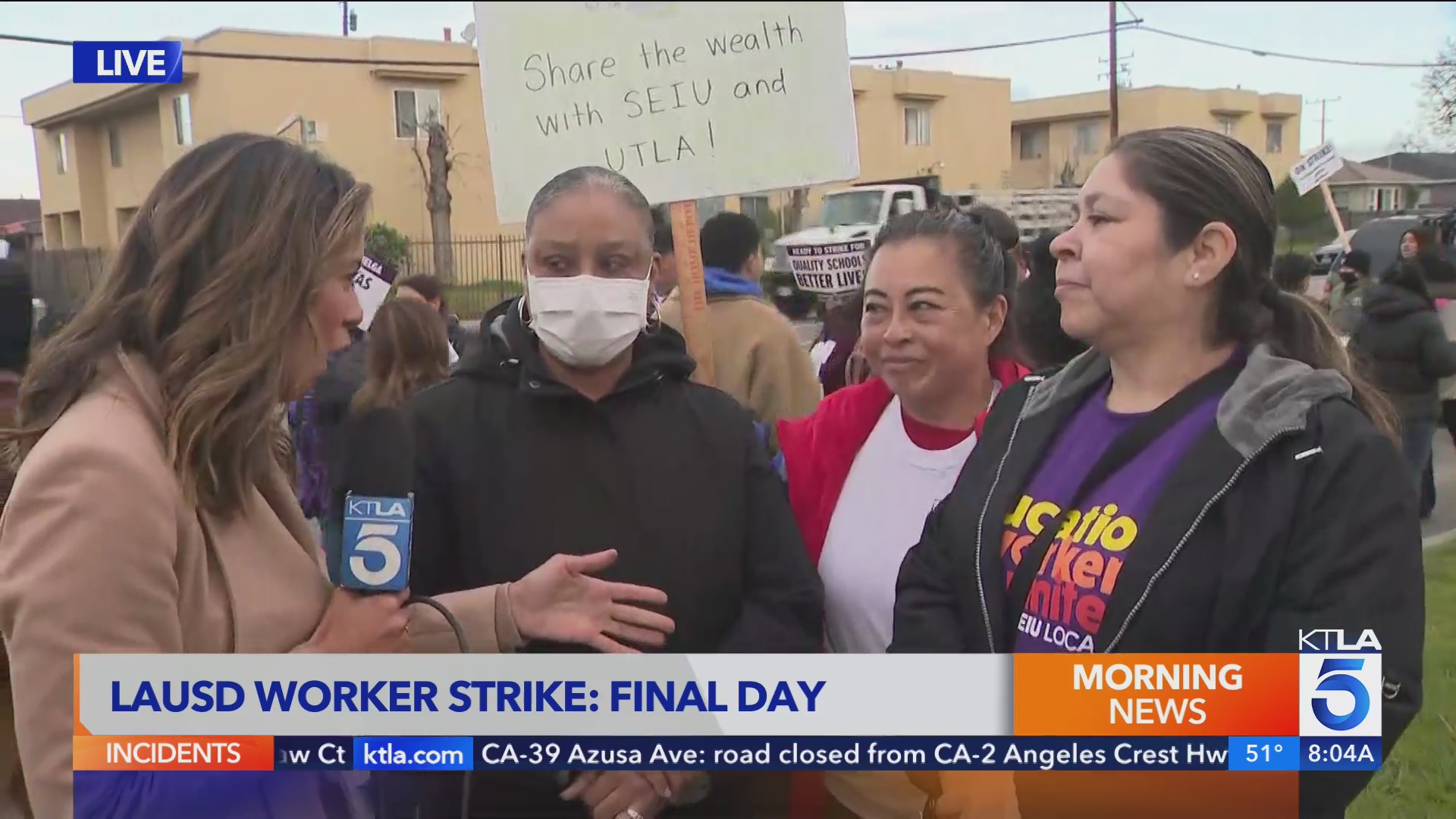
LAUSD is one of the most unionized public entities in the United States. Employee relations are governed by various agreements with distinct bargaining units. As we move through the 2026 academic year, maintaining these relationships is critical for preventing labor strikes and ensuring the continuity of services.
| Bargaining Unit | Representing Union | Primary Employee Roles |
|---|---|---|
| Unit UTLA | United Teachers Los Angeles | Teachers, Counselors, Librarians, Nurses |
| Unit B | SEIU Local 99 | Special Education Assistants, Instructional Aides |
| Unit C | SEIU Local 99 | Food Service Workers, Custodians, Drivers |
| Unit D | Teamsters Local 572 | Office Managers, Clerical Staff, Warehouse |
| Unit E | Skilled Trades Unions | Electricians, Plumbers, Carpenters |
| Unit J | AALA (Classified) | Operation Managers, Technical Supervisors |
| Unit S | Teamsters (Supervisors) | Plant Managers, Transportation Supervisors |
Each of these units operates under a specific contract that dictates salary scales, health benefits, and working conditions. In 2026, these contracts emphasize competitive compensation to combat regional teacher shortages and provide robust protections for staff safety and mental health support.
Navigating the Formal Grievance Procedure in LAUSD
A cornerstone of employee relations within LAUSD is the grievance process. A grievance is typically defined as a claim that there has been a violation, misinterpretation, or misapplication of a specific provision of the relevant collective bargaining agreement.
The 2026 protocols emphasize early resolution at the school-site level to avoid costly and time-consuming arbitration. However, when informal discussions fail, the formal process follows a standardized trajectory:
- Informal Conference: The employee and the immediate administrator meet to discuss the issue. This must usually occur within a specific number of days from when the employee knew of the alleged violation.
- Level 1 (Formal Grievance): If unresolved, the employee files a formal written grievance with the site administrator. A written response is required within a set timeframe (typically 15-20 days).
- Level 2 (District Appeal): If the employee is dissatisfied with the Level 1 response, the grievance is appealed to the Office of Labor Relations. A meeting is held between the union representative and a District Labor Relations Representative.
- Level 3 (Arbitration): If the matter remains unresolved, the union may request binding or advisory arbitration. An independent arbitrator is selected to review the facts and issue a ruling based on the contract language.
Documentation is the most critical element of the grievance process. For administrators, maintaining clear logs of meetings and directives is essential. For employees, keeping copies of all correspondence and adhering to strict filing deadlines is the only way to preserve their rights under the contract.
Compliance with the California Education Code and Labor Law
Employee relations at LAUSD are not solely governed by internal policy; they are anchored in the California Education Code and the Educational Employment Relations Act (EERA). These laws provide the foundational "floor" for employee rights that no union contract can waive.
Due Process and Skelly Rights
In 2026, the "Skelly" process remains a mandatory requirement for any permanent LAUSD employee facing significant disciplinary action, such as suspension without pay or demotion. A Skelly hearing provides the employee with the opportunity to respond to the charges before the discipline is finalized. This is a constitutional right intended to ensure that the District’s "preponderance of evidence" holds up under scrutiny.
Furthermore, the Public Employment Relations Board (PERB) serves as the regulatory body that oversees labor disputes between the District and the unions. In 2026, PERB rulings on "Unfair Labor Practices" (ULPs) continue to shape how LAUSD handles topics such as mandatory subjects of bargaining and the "duty to meet and confer" before changing working conditions.
Performance Management and the Stull Act Requirements
Under the Stull Act, LAUSD is legally required to evaluate certificated employees based on established standards. Employee relations professionals within the District work closely with the Human Resources Division to ensure these evaluations are conducted fairly and according to the negotiated cycles.
In 2026, the evaluation process is highly digitized through the Educator Development and Support (EDS) system. This system tracks observations, professional goals, and evidence of student progress. When an employee's performance falls below standards, the Office of Labor Relations guides administrators through the "Notice of Unsatisfactory Service" process. This is a rigorous procedure that requires documented support, coaching, and a reasonable period for the employee to improve before any permanent action is taken.
Weingarten Rights and Professional Representation
One of the most frequently cited aspects of LAUSD employee relations is the invocation of "Weingarten Rights." These rights entitle an employee to union representation during any investigatory interview that the employee reasonably believes could lead to disciplinary action.
In the 2026 academic year, LAUSD policy dictates that administrators must allow a union representative to be present if requested. The representative's role is not to obstruct the investigation but to ensure the employee understands the questions and to provide counsel. Failure by an administrator to honor a valid Weingarten request can lead to the dismissal of the entire disciplinary case based on procedural violations.
Managing Workplace Conflicts and Mediation Services
Beyond formal grievances and discipline, LAUSD provides avenues for conflict resolution through mediation. The District’s Employee Relations staff often facilitates "facilitated conversations" between employees or between a supervisor and a subordinate to resolve interpersonal friction that hasn't yet reached the level of a contractual violation.
These services are designed to maintain a "climate of respect." In 2026, the District has integrated Restorative Justice practices into its adult workforce relations, mirroring the techniques used with students. This approach focuses on repairing harm and improving communication rather than assigning blame.
Analysis: Pros and Cons of the LAUSD Employee Relations Framework
Operating within such a large and highly regulated system presents unique advantages and challenges for both the District and the employees.
Pros of the System:
- Predictability: Clearly defined contracts mean that both parties know exactly what to expect regarding pay, benefits, and hours.
- Protection Against At-Will Dismissal: Most LAUSD employees enjoy significant job security and cannot be fired without "just cause."
- Standardized Dispute Resolution: The grievance process provides a structured way to handle disagreements without immediately resorting to litigation.
Cons of the System:
- Bureaucratic Complexity: The sheer volume of rules and contract articles can lead to delays in decision-making.
- Adversarial Nature: The reliance on union-versus-management structures can sometimes create a "us vs. them" culture that slows down innovation.
- Strict Timelines: Missing a filing deadline by even 24 hours can result in an employee losing their right to contest a disciplinary action or a contract violation.
Guidelines for Employees and Administrators in 2026
To successfully navigate the LAUSD employee relations landscape, both staff and management should adhere to the following professional standards:
- Know Your Contract: Every employee should have a digital or physical copy of their specific bargaining unit's agreement. Ignorance of the contract is rarely a valid defense in a dispute.
- Maintain Objective Documentation: Administrators should focus on facts, dates, and observed behaviors rather than subjective opinions when drafting evaluations or disciplinary memos.
- Adhere to Timelines: Whether filing a grievance or responding to an appeal, the timelines specified in the CBA are legally binding.
- Seek Early Consultation: If an issue arises, contacting a Union Chapter Chair or the District’s Labor Relations Representative early can often prevent a minor misunderstanding from escalating into a formal grievance.
Frequently Asked Questions
What is the role of the Office of Labor Relations in 2026? The OLR is responsible for negotiating collective bargaining agreements and ensuring that all school sites and departments comply with these contracts. They provide technical expertise to administrators and handle the higher levels of the grievance process.
Can an LAUSD administrator deny my request for a union representative? Under Weingarten Rights, if you reasonably believe an interview could lead to discipline, you have the right to representation. An administrator cannot proceed with the interview until a representative is present, though they may postpone the meeting until one is available.
How long does the grievance process typically take? The timeline varies based on the level of the grievance. A Level 1 grievance is usually resolved within 20-30 days, while a matter that goes to Level 3 Arbitration can take several months or even over a year to reach a final decision.
What is a "Skelly Hearing" in the context of LAUSD? A Skelly Hearing is a pre-disciplinary meeting where an employee is given the chance to review the evidence against them and provide their side of the story before a final decision on serious discipline (like a suspension or termination) is made.
Does LAUSD offer mediation for non-contractual disputes? Yes, the District encourages informal mediation and facilitated conversations for interpersonal conflicts that do not involve a specific violation of the collective bargaining agreement or the Education Code.
For additional information on specific contract language or to initiate a grievance, employees should contact their respective union headquarters or consult the LAUSD Office of Labor Relations portal for the 2026-2027 academic year guidelines.
Image Gallery