Broward County Arrest Records: Accessing FloridaArrests.org and Official BSO Portals in 2026
Broward County arrest records are public documents accessible through the Broward Sheriff’s Office (BSO) official portal or third-party aggregators like FloridaArrests.org. These records provide details on bookings, charges, and bond s...
Broward County arrest records are public documents accessible through the Broward Sheriff’s Office (BSO) official portal or third-party aggregators like FloridaArrests.org. These records provide details on bookings, charges, and bond status for individuals processed within the county. As of 2026, accessing this information requires adhering to Florida's strict public records laws and understanding the distinction between arrest logs and final judicial dispositions.
Contents
Navigating the Broward County Arrest Record Landscape in 2026
The digital landscape for public records in Florida has undergone significant modernization. Broward County, the second-most populous county in the state, manages a massive volume of criminal justice data. For researchers, legal professionals, or concerned citizens, knowing where to look is the first step in obtaining accurate information. The primary data source is the Broward Sheriff's Office (BSO), which maintains the "Jail Search" or "Arrest Search" database.
Third-party websites, such as FloridaArrests.org, function as scrapers or aggregators. These platforms index public data provided by the county and present it in a user-friendly, searchable format. While these sites are often easier to navigate than government portals, they may occasionally lag behind official updates or contain records that have been ordered sealed or expunged by a court but have not yet been removed from the private site's cache.
The Role of FloridaArrests.org vs. Official BSO Records
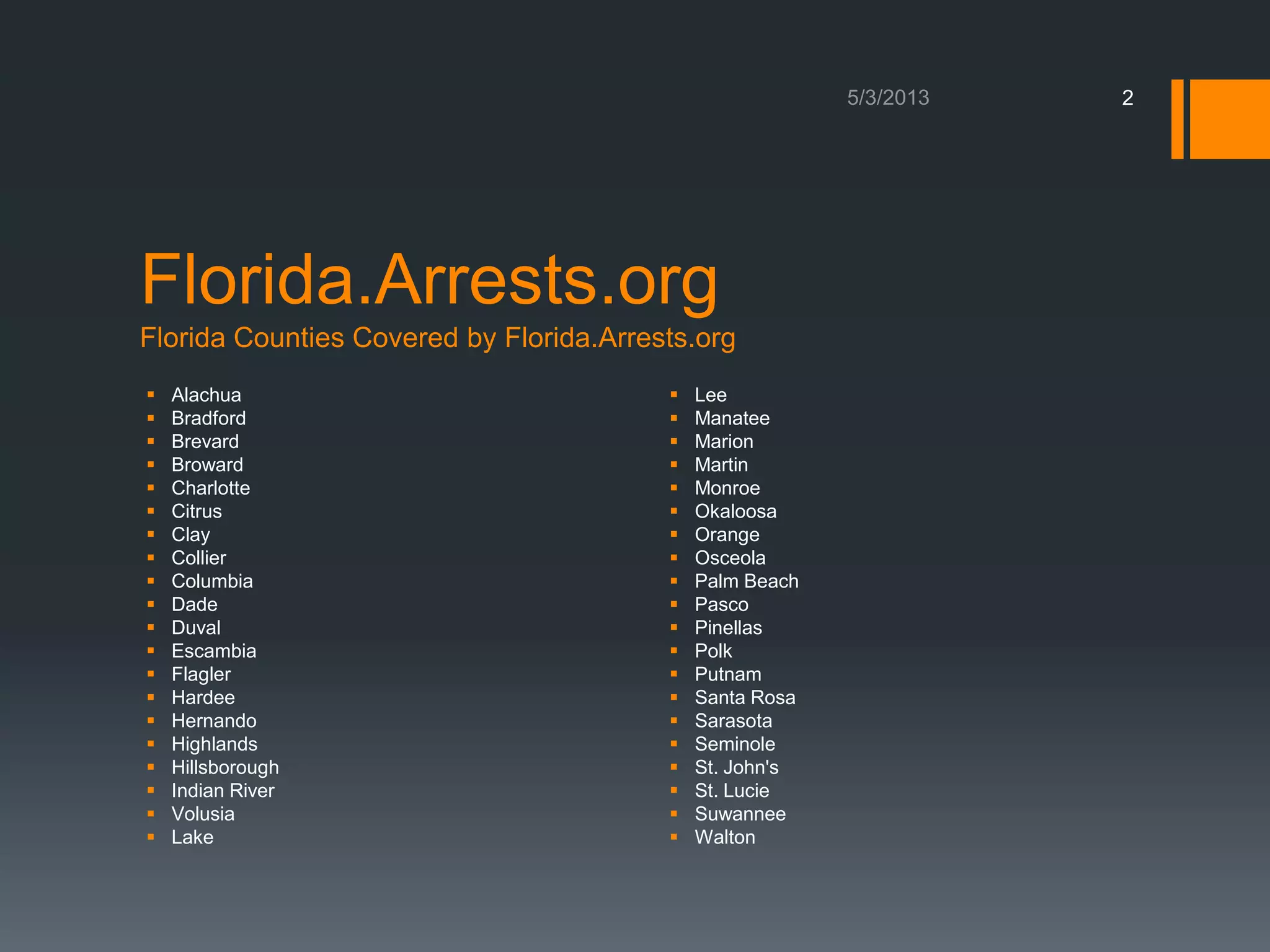
In 2026, the utility of a platform like FloridaArrests.org lies in its ability to aggregate data across multiple Florida counties, including Broward. If a user is unsure whether an individual was booked in Broward, Miami-Dade, or Palm Beach, these regional aggregators save time. However, for legal verification, background checks, or bail purposes, the official Broward Sheriff’s Office database remains the gold standard for accuracy and real-time status.
Technical Methods for Searching Broward Arrests
Searching for an arrest record in Broward County requires specific identifiers to ensure you are viewing the correct file. The system is designed to prevent identity confusion, which is common in a metropolitan area with nearly two million residents.
Primary Search Criteria
To perform a successful search in 2026, you should have at least the following information:
- Full Legal Name: The spelling must match the legal identification used during the booking process.
- Date of Birth (DOB): Essential for distinguishing between individuals with common names.
- Booking Number: If known, this is the most direct way to access a specific arrest event.
Step-by-Step Search Process
Access the Official BSO Portal Use the official Broward Sheriff's Office website to navigate to the "Arrest Search" or "Jail Search" section. This database is updated every few minutes to reflect new bookings and releases.
Input Demographic Data Enter the last name and at least the first initial of the subject. In 2026, the search interface allows for phonetic matching to account for common spelling errors in arrest reports.
Analyze Search Results The results page will typically display the subject's name, booking date, case number, and a list of charges. Each charge will include a bond amount and the current status (e.g., "Bonded Out," "In Custody," or "Released on Recognizance").
Retrieve Detailed Arrest Information Clicking on the specific booking entry provides a deeper view. This includes the arresting agency (such as Fort Lauderdale Police or Hollywood PD), the specific Florida Statute violated, and a physical description of the individual.
Understanding Florida Public Records Laws (Chapter 119)
The accessibility of Broward County arrest records is governed by Florida’s Government-in-the-Sunshine Law. Specifically, Florida Statute Chapter 119 dictates that most government records are open for inspection and copying. This transparency is why sites like FloridaArrests.org can legally operate.
Privacy Exemptions and Restricted Data
While arrest records are public, certain pieces of information are redacted or exempted under 2026 guidelines to protect sensitive data:
- Juvenile Records: Records of minors are generally confidential unless the individual was charged as an adult for a serious felony.
- Undercover Officers: Information that could identify undercover law enforcement personnel is strictly redacted.
- Victim Information: Under Marsy’s Law (Article I, Section 16 of the Florida Constitution), information that could identify victims of certain crimes is withheld from public arrest logs.
- Social Security Numbers: These are never disclosed in public arrest searches.
Comparison of Arrest Record Sources in Broward County
When seeking information, users must choose between speed and authoritative depth. The following table compares the official BSO database with the broader FloridaArrests.org aggregator.
| Feature | Broward Sheriff's Office (Official) | FloridaArrests.org (Third-Party) |
|---|---|---|
| Data Accuracy | 100% Authoritative Source | High (Aggregated) |
| Update Frequency | Real-time / Every 15 Minutes | Daily to Weekly |
| Search Scope | Broward County Only | Statewide Florida |
| Mugshot Availability | Included (Subject to state laws) | Often included |
| Certified Copies | Available for a fee | Not available |
| Removal Process | Automatic if expunged by court | Requires manual request after expungement |
| Cost | Free to search | Free to search (ad-supported) |
The Legal Life Cycle of an Arrest Record in 2026
It is critical to understand that an arrest record is not a record of a conviction. In Broward County, as in the rest of Florida, individuals are presumed innocent until proven guilty. The record found on FloridaArrests.org or the BSO site merely documents the contact with law enforcement and the subsequent booking process.
Booking vs. Disposition
- The Booking: This occurs immediately after arrest. The record shows the initial charges filed by the arresting officer.
- The Filing Decision: The Broward County State Attorney's Office reviews the arrest. They may choose to file formal charges, reduce the charges, or decline to prosecute (Nolle Prosequi).
- The Disposition: This is the final outcome of the case (e.g., Guilty, Not Guilty, Dismissed). The BSO arrest search often shows the "Current Status," but the Broward County Clerk of the Courts website provides the full judicial disposition.
Expungement and Sealing in 2026
If a case is dismissed or the individual is found not guilty, they may be eligible to have their record sealed or expunged. In 2026, Florida has implemented more streamlined digital processes for this:
- Sealing: The record exists but is hidden from the general public. It remains accessible to law enforcement and certain government agencies.
- Expunging: The record is physically destroyed by the court. Only a single confidential copy is kept by the Florida Department of Law Enforcement (FDLE).
Once a court orders a record sealed or expunged, the Broward Sheriff’s Office removes the entry from their public-facing database. However, third-party sites like FloridaArrests.org may require the individual to provide a copy of the court order to manually remove the data from their proprietary servers.
Employment and Housing: Use of Broward Arrest Records
The use of arrest records for non-judicial purposes is a highly regulated area of law. In 2026, employers and landlords in Broward County must navigate federal and state guidelines regarding the "Ban the Box" initiatives and EEOC (Equal Employment Opportunity Commission) standards.
Best Practices for Background Checks
Employers are generally discouraged from making hiring decisions based solely on an arrest record that did not lead to a conviction. If an employer finds a record on a site like FloridaArrests.org, they are legally obligated to verify the accuracy of that data through official court records before taking adverse action.
- Fair Credit Reporting Act (FCRA) Compliance: Any third-party agency performing a background check for employment or housing must comply with the FCRA.
- Direct Verification: Always cross-reference an arrest booking found on an aggregator with the Broward County Clerk of the Courts to see if the case was later dismissed.
Common Challenges and Troubleshooting
Navigating arrest records often leads to confusion due to the complexity of the legal system. Below are common issues users face when searching for records in Broward County.
Identity Confusion
In a large jurisdiction, "John Smith" may have dozens of arrest records. Always verify the Middle Name, Suffix (Jr./Sr.), and Date of Birth. In 2026, the BSO search results include a unique "Control Number" for every individual, which helps differentiate between people with identical names.
Missing Records
If you cannot find a recent arrest on FloridaArrests.org, it may be due to:
- Processing Delay: It can take several hours for a booking to appear online.
- Different Jurisdiction: The arrest may have occurred in a neighboring county like Miami-Dade or Palm Beach.
- Federal Arrests: If an individual was arrested by federal agents (FBI, DEA, Marshals), they would be housed in a federal facility (like the FDC Miami) and would not appear in the Broward County local jail search.
Frequently Asked Questions
How long do arrest records stay on FloridaArrests.org? Public records generally remain accessible indefinitely unless they are legally sealed or expunged by a court order. Third-party sites are not governed by the same removal timelines as government agencies and may continue to host information until specifically requested to remove it following a legal disposition.
Is there a cost to remove my information from FloridaArrests.org? Under Florida law, third-party sites that publish mugshots and arrest records are generally prohibited from charging a fee to remove records of individuals who were not convicted. If a site demands payment for removal of an expunged record, it may be in violation of state consumer protection statutes updated for 2026.
Can I see the mugshot for any arrest in Broward County? Mugshots are public records in Florida, but access is sometimes restricted to official government portals. While sites like FloridaArrests.org often display them, recent 2025-2026 privacy amendments in Florida have tightened rules on how these photos can be used for commercial gain or by "mugshot-only" websites.
What is the difference between the BSO and the Clerk of Courts? The BSO manages the "Who's in Jail" data, focusing on the physical custody and booking event. The Broward County Clerk of the Courts manages the "Case Record," which follows the legal proceedings from the first appearance through the final verdict or sentencing.
Does a Broward arrest record show traffic tickets? Criminal traffic arrests (like DUI or Driving with a Suspended License) will appear in arrest records. However, standard civil traffic infractions (like speeding or running a red light) are not bookings and will only be found on the Broward Clerk of Courts traffic portal.
How can I find out if someone was released from a Broward jail today? The BSO Arrest Search database includes a "Release Date" column. If the individual was released, the date and time will be populated. You can also contact the Broward Sheriff's Office Department of Detention directly for real-time custody status.
Future Trends: Digital Privacy and Public Records in 2026
As we move through 2026, the tension between public transparency and individual privacy continues to evolve. Florida remains one of the most transparent states, but "Clean Slate" legislation is gaining traction. This trend suggests that in the coming years, automated sealing of records for individuals with no prior history and dismissed charges may become the standard, potentially reducing the volume of data available on third-party aggregators like FloridaArrests.org.
When searching for records, users are encouraged to maintain a high standard of data verification. Always prioritize official county sources over third-party aggregators when the information is being used for legal, financial, or professional decision-making.
Image Gallery