The Pretty Woman Jacket Explained: The History and Legacy of Vivian Ward’s Iconic Red Blazer
The "Pretty Woman" jacket is the oversized, vivid red wool blazer worn by Julia Roberts in the opening scenes of the 1990 film Pretty Woman. Purchased by costume designer Marilyn Vance for just $30 from a movie theater usher, the jacke...
The "Pretty Woman" jacket is the oversized, vivid red wool blazer worn by Julia Roberts in the opening scenes of the 1990 film Pretty Woman. Purchased by costume designer Marilyn Vance for just $30 from a movie theater usher, the jacket serves as a narrative "shield," balancing the character’s revealing street attire with a structured, protective layer that signals her vulnerability and resilience.
Contents
In the landscape of cinematic fashion, few items carry as much symbolic weight as the red blazer Julia Roberts wears as Vivian Ward. While the film is often remembered for the floor-length red opera gown or the elegant brown polka-dot dress, the red jacket is the audience's introduction to Vivian’s world. It is the garment that defines her "working" identity before her transformation into a Beverly Hills socialite. As of 2026, the jacket remains a cornerstone of 1990s nostalgia and a primary reference point for the "oversized blazer" trend that continues to dominate contemporary street style.
The Origin Story: A $30 Piece of Cinema History
The story behind the jacket is a testament to the ingenuity of Marilyn Vance, the film's costume designer. Unlike the high-fashion pieces that appear later in the movie—sourced from luxury boutiques—the opening outfit needed to look authentic to the Hollywood Boulevard setting. Vance sought a piece that looked lived-in and slightly mismatched with the rest of the ensemble.
According to various retrospectives and interviews with Vance, the jacket was not a custom-made piece or a designer acquisition. While scouting for the film, Vance encountered a young woman—often cited as a movie theater usher—wearing a bright red, oversized blazer. Recognizing that the color and fit were perfect for the character of Vivian, Vance purchased the jacket directly from the woman for $30.
This low-budget origin is crucial to the character’s "explained" backstory. Vivian is a woman surviving on the margins; her clothes are a patchwork of utility and self-expression. The fact that the most iconic part of her opening ensemble was a thrifted, real-world item adds a layer of grit to the character that a designer jacket could not have provided. It grounds the "Cinderella" story in a reality where clothes are bought on the street, not just on Rodeo Drive.
Technical Specifications and Visual Design
The jacket is a product of late-1980s and early-1990s tailoring. Understanding its construction helps explain why it remains a favorite for fashion historians and cosplayers alike.
Silhouette and Fit
The jacket features a quintessential "power suit" silhouette, characterized by heavy shoulder pads and an intentional lack of waist definition. In 2026, this is recognized as the "boyfriend fit," but in 1990, it was a holdover from 1980s corporate wear, adapted for the street. The oversized nature of the jacket serves a dual purpose: it emphasizes Julia Roberts’ slender frame, making her look more fragile, and it provides enough length to cover the midriff-baring "cutout dress" she wears underneath.
Color and Fabric
The color is a saturated, warm-toned red—often described as "tomato red" or "carmine." This choice was deliberate. Red is a color of power, passion, and warning. On the streets of Hollywood, it makes Vivian highly visible, a necessity for her trade. The fabric is a heavy wool blend, which allows the jacket to maintain its boxy shape even when draped over the shoulders rather than worn with arms through the sleeves—a styling choice that has since become legendary.
Detailing
The jacket features wide notched lapels and a single-breasted closure with large, matching red buttons. The pockets are functional welt pockets, adding to the garment's utilitarian feel. These details are hallmarks of the "masculine-meets-feminine" aesthetic that Marilyn Vance mastered throughout the film.
The Narrative Function: The Jacket as a Shield
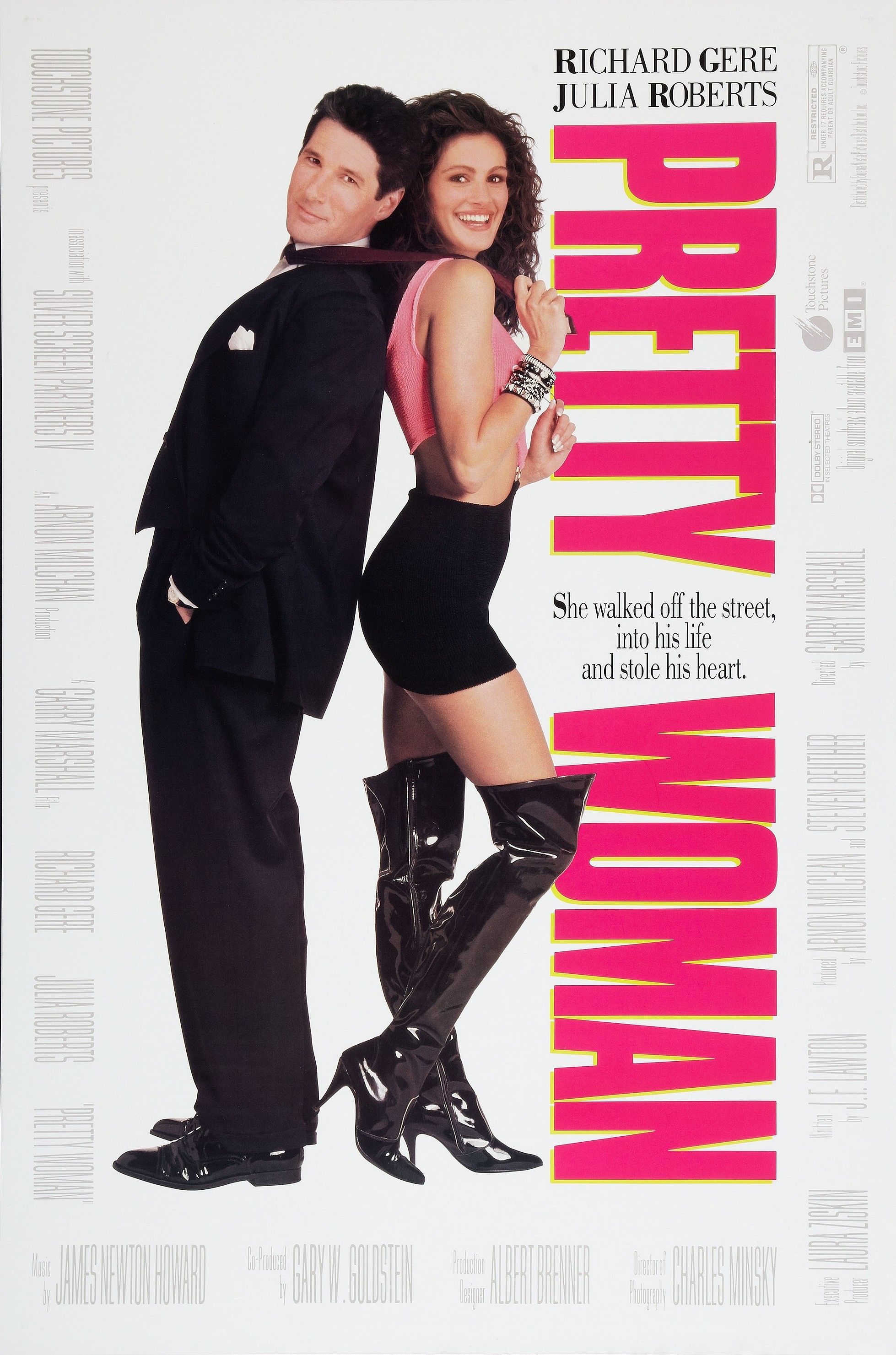
To truly explain the Pretty Woman jacket, one must look past the fabric to its psychological role in the script. In the opening sequences, Vivian is exposed. She wears a blue-and-white triacetate dress held together by a metal ring, exposing her midriff, and high PVC boots.
The jacket acts as a protective layer. When Vivian is in a "business" mindset or feels threatened, the jacket is on. It provides a level of modesty and structure that her street clothes lack. It is her armor against the cold nights of Los Angeles and the judgmental gazes of the public.
There is a pivotal moment in the film’s visual arc where the jacket disappears, signaling her transition. As Edward (Richard Gere) begins to integrate her into his world, the "armor" of the street—the red blazer, the blonde wig, and the boots—is stripped away to reveal the woman underneath. However, the jacket is the first step in her fashion evolution; it is the only piece of her original wardrobe that possesses any "structure," foreshadowing the tailored suits and gowns she will eventually wear.
Costume Breakdown: The Opening Ensemble
The jacket does not exist in a vacuum. Its impact is derived from how it contrasts with the other elements of Vivian’s outfit.
| Element | Description | Purpose in the Look |
|---|---|---|
| The Red Blazer | Oversized wool, $30 find, padded shoulders. | Provides structure, modesty, and a "pop" of color. |
| The Cutout Dress | White top, blue skirt, connected by a silver ring. | The iconic "working girl" uniform; symbolizes exposure. |
| PVC Boots | Black thigh-high patent leather with heels. | Aggressive, utilitarian footwear for the character's environment. |
| The Blonde Wig | Short, bobbed synthetic hair. | A "disguise" Vivian uses to separate her work life from herself. |
| The Jewelry | Layered silver-tone necklaces and bangles. | Adds a "cluttered" street-style texture to the look. |
The Legacy of the Jacket in 2026 Fashion
As we look at the fashion landscape of 2026, the Pretty Woman jacket remains a primary influence on the "Vintage 90s" revival. The oversized blazer has shifted from a niche movie reference to a mandatory wardrobe staple.
Modern interpretations of the jacket focus on sustainable wool and "slow fashion" production, contrasting with the fast-fashion origins of the original $30 find. Designers frequently cite the Marilyn Vance aesthetic when creating collections that balance feminine sex appeal with masculine tailoring. The "Vivian Ward Look"—the juxtaposition of a structured jacket over a revealing or feminine base—is a recurring theme on runways from Paris to New York.
Furthermore, the jacket has become a symbol of cinematic costume authenticity. In an era of 2026 where CGI often handles wardrobe details in major blockbusters, the story of a designer buying a jacket off a person on the street represents a lost art of tactile, character-driven costume design.
How to Recreate the Look Today
For those looking to source or recreate the Pretty Woman jacket in 2026, the key is to prioritize "vintage-accurate" details:
- Search for "80s Power Blazers": Look for brands like Armani, Donna Karan (vintage), or even high-street labels from the early 90s. The shoulder pads are non-negotiable.
- Fabric Weight: Avoid thin, jersey-knit blazers. The original was a structured wool or heavy blend that could hold its shape.
- The Color Palette: Look for "True Red" or "Fire Engine Red." Avoid maroons or pink-leaning reds, as they lose the aggressive energy of the original.
- Styling: To capture the Vivian Ward essence, wear the jacket oversized. If you are a size Small, look for a Large or Extra-Large to achieve that specific drape over the shoulders.
Frequently Asked Questions
Who designed the original Pretty Woman jacket?
While Marilyn Vance was the costume designer for the film, the jacket itself was a "found" item. It was a pre-existing garment Vance purchased for $30. Vance was responsible for the overall styling and the decision to pair it with the cutout dress.
Is the jacket still in existence?
Many of the original costumes from Pretty Woman are held in private collections or by the studio (Disney/Touchstone). Some items, like the red opera gown, have been displayed in museum exhibitions, but the original $30 red blazer's current location is not publicly confirmed.
What is the fabric of the Pretty Woman jacket?
The jacket is a heavy wool or wool-blend fabric. This was necessary to provide the "boxy" structure that defined the early 90s silhouette.
Why is the jacket red?
Red was chosen to make Vivian stand out against the dark, gritty background of Hollywood Boulevard. It also symbolizes her passion and heart, contrasting with the cold, grey suits worn by the corporate characters like Edward.
Was the jacket custom-made for Julia Roberts?
No. Unlike the red opera dress, which was meticulously designed and custom-fitted by Marilyn Vance and her team, the blazer was an off-the-rack (or off-the-street) find that required minimal tailoring to fit Roberts' frame.
Summary of Impact
The Pretty Woman jacket is more than just a piece of 90s memorabilia; it is a masterclass in how a single garment can explain a character’s socioeconomic status, psychological state, and narrative journey. It represents the "before" in one of cinema’s most famous "after" stories. For those analyzing the film or the fashion of the era, the jacket stands as a reminder that the most impactful costumes aren't always the most expensive—they are the ones that tell the most truth.
Recommendation for Fashion Historians: To fully appreciate the impact of the jacket, compare the opening scenes with the final "Rodeo Drive" transition. Notice how the structure of the red blazer is eventually replaced by the structure of high-end Chanel-style suits, marking Vivian’s move from a self-made shield to a socially accepted uniform.
Image Gallery