Woodinville Tax Rate Guide: Understanding Property and Sales Taxes in 2026
Navigating the woodinville tax rate involves understanding a combination of state, county, and local municipal levies that apply to property ownership and retail purchases within this Washington city, which spans both King and Snohomis...
Navigating the woodinville tax rate involves understanding a combination of state, county, and local municipal levies that apply to property ownership and retail purchases within this Washington city, which spans both King and Snohomish counties. Property owners and business operators must calculate distinct district levies including schools, fire protection, and library services to accurately project their annual financial obligations.
Contents
Understanding how your total tax burden is calculated requires looking past a single figure. Property taxes in Woodinville are determined by assessed valuations multiplied by combined district rates, while sales taxes are governed by state-wide baselines stacked with King or Snohomish county and municipal surcharges. Mastering these components ensures proper budgeting, appeals readiness, and financial compliance for local real estate and consumer transactions.
Deconstructing the Components of the Woodinville Tax Rate
The overall tax burden in Woodinville is not a monolithic fee charged by a single governing body. Instead, it represents an aggregate total of levies imposed by multiple taxing authorities providing public services across the community. Because Woodinville incorporates areas within both King County and a smaller footprint in Snohomish County, the exact line-item composition of your tax statement depends heavily on your specific parcel location.
Property taxes fund foundational public infrastructure and services. The primary entities drawing revenue from local property assessments include:
- State School Levies: Mandated state-wide funding streams dedicated to public education support.
- Local School Districts: Northshore School District or Lake Washington School District bonds and enrichment levies.
- County Governments: King County or Snohomish County operations, roads, and public health services.
- City of Woodinville: Municipal governance, local park maintenance, and police services contracts.
- Fire and Rescue Districts: Woodinville Fire and Rescue (Fire Protection District No. 36) providing emergency response.
- Library and Hospital Districts: King County Library System or Sno-Isle Libraries, along with local emergency medical service (EMS) levies.
Sales taxes operate under a different structural mechanism. Retail transactions inside Woodinville municipal boundaries combine the Washington State retail sales tax baseline with local municipal and county distributions. Knowing how these percentages break down helps consumers and business owners project Point-of-Sale (POS) accounting with precision.
Current Woodinville Property Tax Rates and Valuations
Property tax rates in Woodinville are expressed in terms of dollars per thousand dollars of assessed value. The King County Assessor and Snohomish County Assessor determine market valuations annually, inspecting parcels and updating rolls to reflect prevailing real estate market conditions.
When property values rise rapidly, statutory rate-limiting laws (such as Washington's 1% property tax revenue growth limit for regular levies) prevent local taxing districts from automatically collecting exponentially higher revenue. If overall home values increase across the board, individual levy rates typically adjust downward to ensure taxing districts collect only their authorized budget amounts, plus allowable new construction additions. However, voter-approved excess levies and bonds bypass this constraint, adding fixed dollar amounts to specific tax bills.
To evaluate a specific property's standing, property owners should review their official annual property tax statement or utilize the King County Parcel Viewer or Snohomish County Property Search tools. These portals provide historical tax distributions, showing precisely how much of your total tax dollar goes toward schools versus municipal services.
Woodinville Sales Tax Rates and Breakdown
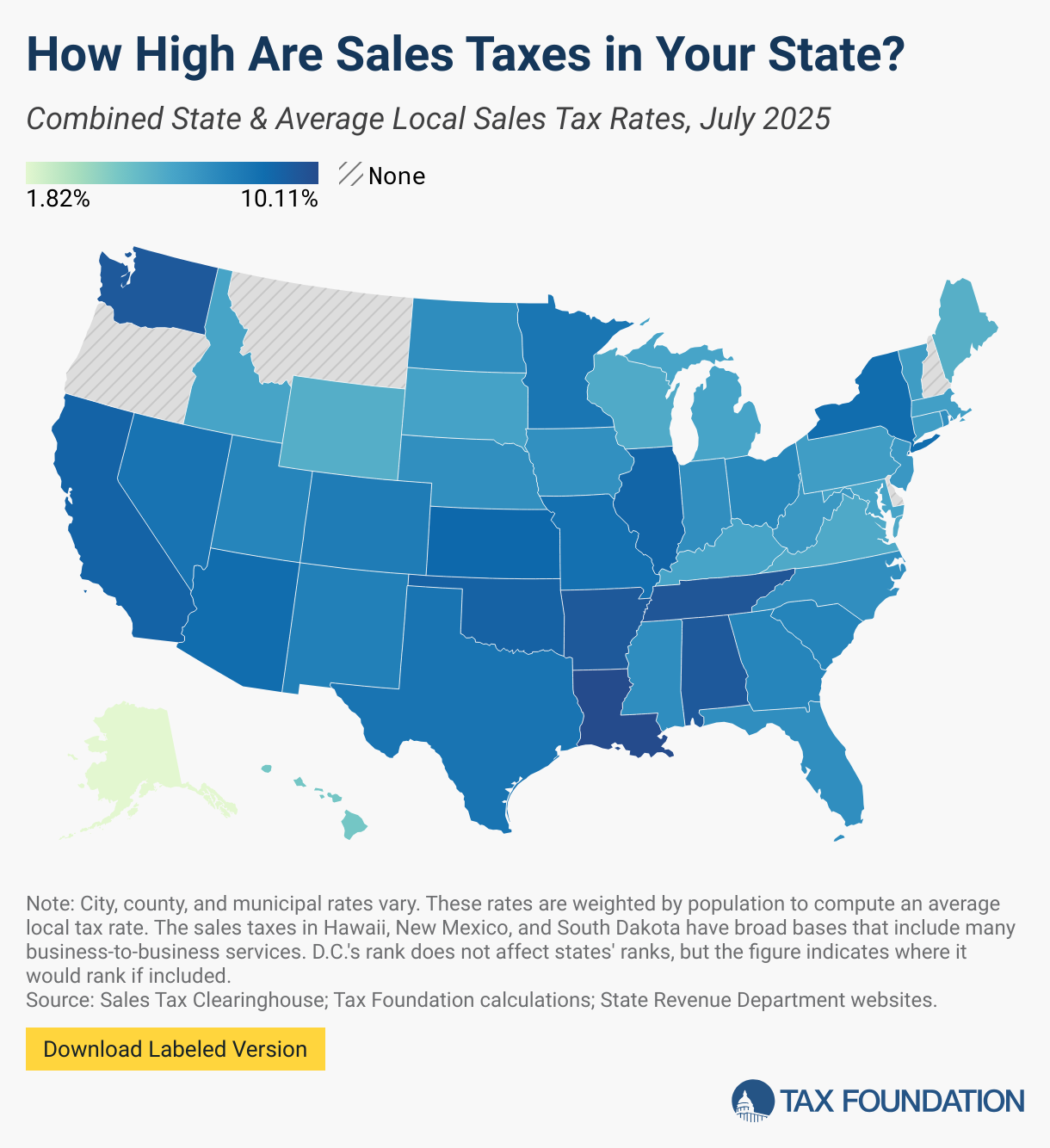
Retail sales within Woodinville are subject to a combined state and local rate. As of 2026, the standard sales tax rate for commercial transactions within the city limits of Woodinville is 10.1%.
This percentage is distributed across several legislative tiers. Understanding this split is critical for retailers configuring point-of-sale systems and for consumers evaluating taxable versus exempt goods.
| Taxing Authority | Rate Contribution | Purpose |
|---|---|---|
| Washington State | 6.50% | State general fund, education, and social programs |
| King County / Snohomish County | Varies (~1.4% - 1.8%) | County roads, transit (Metro/Community Transit), and criminal justice |
| City of Woodinville | ~1.8% - 2.2% | Local municipal services, infrastructure, and parks |
| Regional Transit Authority (RTA) | 1.40% | Sound Transit light rail and commuter infrastructure expansions |
Note: The exact combined sales tax rate can occasionally shift slightly at the margins of municipal boundaries based on specific RTA zone inclusions. Retailers must verify customer addresses using the Washington Department of Revenue (DOR) GIS mapping tool to ensure exact collection compliance.
Step-by-Step Guide to Calculating Your Woodinville Property Taxes
Calculating your projected property tax liability requires multiplying your home's assessed value by the combined levy rate of your specific tax code area, then dividing by one thousand.
Step 1: Identify Your Tax Code Area (TCA)
Every parcel in Woodinville belongs to a distinct Tax Code Area. This code groups properties sharing the exact same set of taxing districts (e.g., a specific fire district combined with a specific school district and city limits). You can locate your TCA on your county assessor's web portal or your physical tax statement.
Step 2: Determine Your Assessed Value
Locate the current assessed value of your property. Note that assessed value represents the county assessor’s determination of 100% fair market value as of January 1 of the assessment year, which forms the basis for taxes payable in the following year.
Step 3: Obtain the Aggregate Levy Rate
Find the total levy rate for your TCA, typically expressed as a rate like $9.85 per $1,000 of assessed value.
Step 4: Perform the Mathematical Calculation
Use the standard formula used by Washington county assessors: $$\text{Annual Tax} = \left(\frac{\text{Assessed Value}}{1,000}\right) \times \text{Combined Levy Rate}$$
Example: If your Woodinville home is assessed at $800,000 and your combined TCA levy rate is $10.00 per $1,000, the calculation is: $$\left(\frac{800,000}{1,000}\right) \times 10.00 = 800 \times 10.00 = $8,000 \text{ per year.}$$
Comparing Woodinville Tax Rates with Neighboring Municipalities
When evaluating real estate investments or business relocations in the Puget Sound region, comparing Woodinville's tax metrics against neighboring cities provides helpful context. While sales tax rates remain relatively uniform across King County due to county-wide transit and criminal justice add-ons, property tax levy rates fluctuate based on local voter-approved bonds and municipal budgets.
| Municipality | Approximate Sales Tax Rate | Average Property Tax Levy Rate (per $1,000 AV) | Primary County |
|---|---|---|---|
| Woodinville | 10.1% | $9.50 – $10.50 | King / Snohomish |
| Bothell | 10.4% | $10.00 – $11.20 | King / Snohomish |
| Redmond | 10.1% | $8.50 – $9.50 | King |
| Kirkland | 10.1% | $9.00 – $10.00 | King |
| Kenmore | 10.3% | $9.80 – $10.70 | King |
Property tax burdens depend heavily on the underlying ratio of assessed value to market value. Even if a neighboring city has a slightly lower nominal levy rate, higher median home valuations in that municipality can result in a higher absolute dollar amount paid annually.
Pros and Cons of Woodinville's Tax Structure
Analyzing the local tax ecosystem reveals distinct advantages and drawbacks for residents and commercial enterprises alike.
Advantages
- Transparent Assessment Appeals: Both King and Snohomish counties provide structured, accessible processes to appeal property valuations if market data supports a lower assessment.
- Exemption Programs: Washington State offers robust property tax exemption and deferral programs for senior citizens, disabled veterans, and qualifying low-income homeowners, reducing individual tax pressure.
- Targeted Investments: Local levies directly support highly rated school districts (such as Northshore) and specialized local services like dedicated fire protection districts.
Disadvantages
- High Sales Tax Burden: At 10.1%, the combined retail sales tax rate increases the cost of consumer goods, dining, and retail business operations.
- Valuation Volatility: Rapid appreciation in the Pacific Northwest housing market can lead to steep increases in assessed values, putting pressure on fixed-income households despite state levy growth caps.
- Overlapping Jurisdictions: Spanning two counties (King and Snohomish) creates administrative complexity for businesses operating across municipal borders within Woodinville.
Common Mistakes and Troubleshooting Tax Issues
Navigating local taxes frequently leads to specific administrative pitfalls. Avoid these common errors to ensure accurate compliance and financial optimization:
- Missing the Appeal Window: Property assessment appeals in King and Snohomish counties must be filed by strict deadlines—typically July 1 of the assessment year or within 60 days of the date the value notice was mailed. Missing this window forfeits your right to challenge that year's valuation.
- Confusing Assessed Value with Market Value: Assessed value is used strictly for taxation calculations. It often lags behind actual market transaction prices during fast-moving real estate cycles. Do not rely on your tax assessment for home sale pricing strategies.
- Incorrect Sales Tax Sourcing: E-commerce sellers and local retailers must utilize destination-based sourcing rules. Charging the incorrect local code rate can trigger compliance audits by the Washington State Department of Revenue.
- Overlooking Exemptions: Qualifying seniors (61+) and disabled individuals often fail to apply for income-qualified property tax exemptions or deferrals, missing out on substantial reductions in their annual tax liability.
Practical Recommendations for Woodinville Property Owners and Businesses
To effectively manage your tax responsibilities in Woodinville, implement these practical strategies:
- Audit Your Annual Valuation Notice: Review your assessment notice immediately upon receipt in the late spring. Compare your valuation against recent neighborhood comparable sales. If discrepancies exist, gather evidence and file an appeal with the county Board of Equalization before the deadline.
- Verify Business Sourcing Codes: If you operate a business in Woodinville, double-check your point-of-sale software settings with the Washington DOR GIS lookup tool to ensure you are collecting the precise 10.1% rate for city deliveries and storefront transactions.
- Explore Senior and Veteran Relief Programs: If you or an aging family member own a home in Woodinville, contact the King County Assessor's Office to check income thresholds for the Senior Citizen and Disabled Person Property Tax Exemption program.
- Escrow Monitoring: If you have a mortgage, monitor your escrow account annual analysis. Sudden adjustments in local school bonds or fire district levies can create unexpected escrow shortages, raising your monthly mortgage payment.
Image Gallery