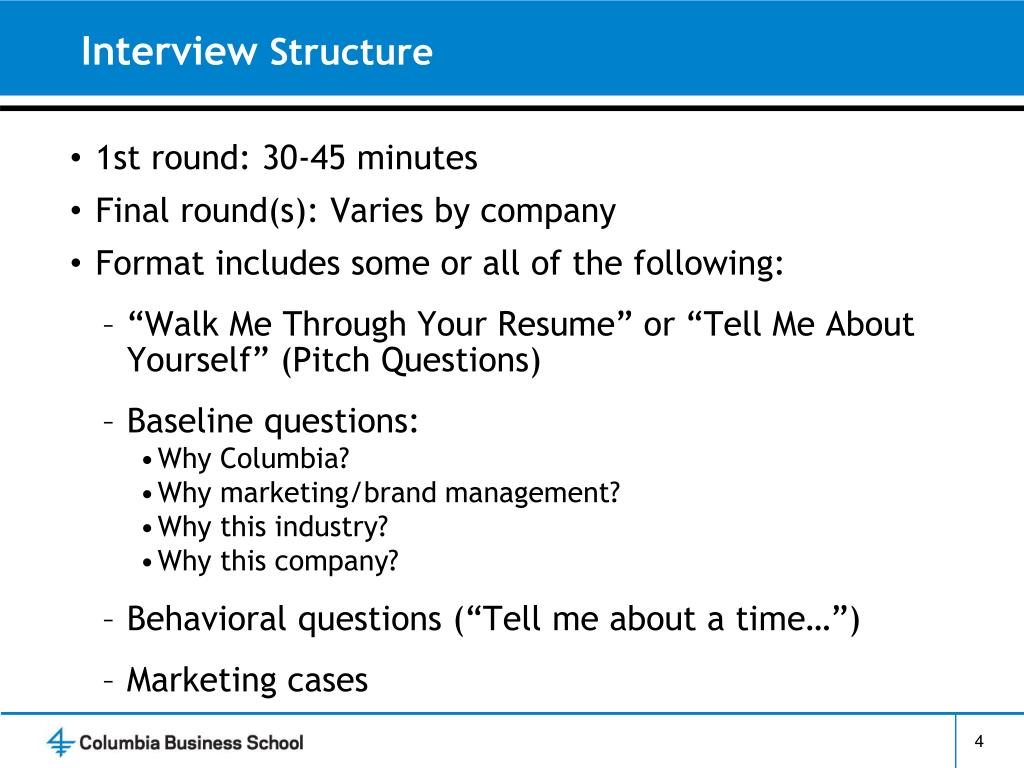
Marketing Manager Interview Presentation Examples and Strategic Playbook for 2026
Mastering marketing manager interview presentation examples requires a deep understanding of strategic frameworks, data-driven storytelling, and operational execution. This guide breaks down successful slide structures, campaign case s...
Mastering marketing manager interview presentation examples requires a deep understanding of strategic frameworks, data-driven storytelling, and operational execution. This guide breaks down successful slide structures, campaign case studies, and common presentation pitfalls to help you secure your next senior-level marketing role.
Contents
Anatomy of a Winning Marketing Manager Interview Presentation
A high-impact presentation during a marketing interview serves as a proxy for your daily work quality, strategic thinking, and ability to influence cross-functional teams. Hiring managers look for candidates who balance high-level creative vision with meticulous execution and measurable return on investment.
When you step into a presentation loop in 2026, your deck must immediately signal that you understand modern omnichannel dynamics, attribution challenges, and resource optimization. Rather than diving straight into tactical execution, build your narrative around a central business problem and guide the evaluation panel through a structured problem-solving methodology.
Core Slide Structure for Marketing Presentations
- Title Slide: Professional header, your name, the target role, and a clear subtitle outlining the agenda.
- Executive Summary: A concise overview of the core challenge, proposed strategic direction, and projected business impact.
- Situation Analysis (Audit): Data-backed breakdown of current market conditions, competitor positioning, internal capabilities, and audience segments.
- Strategy and Positioning: Your core thesis, value proposition, target persona refinement, and differentiated brand positioning.
- Tactical Execution & Channel Mix: Detailed channel breakdown, budget allocation, creative angles, and distribution timelines.
- Measurement and KPIs: Explicit attribution models, primary performance indicators, leading vs. lagging metrics, and testing frameworks.
- Resource and Risk Management: Team requirements, software tooling, potential operational bottlenecks, and mitigation plans.
High-Impact Presentation Scenarios and Examples
Different interview loops require different presentation formats. Preparing for these specific scenarios ensures you can adapt whether you are given a 48-hour take-home case study or an on-site whiteboard session.
Scenario A: The 30-60-90 Day Strategic Plan
When hiring managers ask for a 30-60-90 day plan, they want to evaluate your onboarding speed, prioritization capability, and leadership maturity.
- First 30 Days (Audit & Alignment): Focus entirely on listening, auditing existing campaigns, analyzing historical CRM data, interviewing sales and customer success teams, and reviewing tech stack integrations. Avoid recommending massive structural changes before you fully understand historical performance.
- Next 30 Days (Optimization & Quick Wins): Implement immediate efficiency gains, prune underperforming ad spend, refine audience targeting parameters, and align creative messaging with product updates.
- Final 30 Days (Scale & Innovation): Launch new campaign architectures, test emerging acquisition channels, establish formalized attribution frameworks, and scale high-performing initiatives based on early data.
Scenario B: The Past Campaign Case Study
If asked to present a successful campaign from your past experience, structure the narrative using the STAR methodology (Situation, Task, Action, Result) combined with hard financial metrics.
- The Challenge: Detail the market friction, stagnant growth, or budget constraints you inherited.
- The Strategic Pivot: Explain why traditional approaches failed and how consumer insights drove your tactical shift.
- The Execution: Highlight how you managed creative production, media buying, cross-functional collaboration, and real-time campaign optimization.
- The ROI: Conclude with definitive business outcomes, such as customer acquisition cost (CAC) reduction, lifetime value (LTV) expansion, pipeline acceleration, or incremental revenue growth.
Strategic Frameworks to Incorporate in Your Slides
Embedding recognized strategic frameworks into your presentation demonstrates professional maturity and structured thinking. Avoid generic buzzwords; instead, apply these frameworks directly to the company's business model.
Audience Segmentation and ICP Definition: Never present a generic target market. Define your Ideal Customer Profile (ICP) using firmographic data for B2B or psychographic and behavioral data for B2C, explicitly outlining pain points, buying committees, and decision triggers.
Channel Economics and Unit Attribution: Show fluency in modern finance by tying every marketing channel to unit economics. Discuss how you balance blended CAC with paid-channel CAC, payback periods, and net revenue retention (NRR) impacts.
Comparing Strategic Approaches: Traditional vs. Modern Marketing Presentations
| Evaluation Dimension | Traditional Approach | High-Impact Modern Strategy (2026 Standard) |
|---|---|---|
| Primary Focus | Vanity metrics (impressions, clicks, raw reach) | Revenue attribution, pipeline velocity, and LTV/CAC ratios |
| Data Usage | Static historical charts without context | Predictive analytics, cohort analysis, and multi-touch attribution |
| Budget Strategy | Rigid, top-down annual spending models | Dynamic, agile budget reallocation based on real-time performance |
| Cross-Functional Alignment | Siloed marketing department goals | Integrated service-level agreements (SLAs) with Sales and Product |
| Creative Angle | Purely aesthetic and brand-centric | Data-informed creative testing loops and iterative messaging |
Step-by-Step Guide to Delivering Your Presentation
Preparation extends far beyond the slide deck. How you manage the room, field questions, and handle pushback often determines your final score among interviewers.
- Send Advance Materials Cleanly: If permitted to share decks beforehand, export your presentation as a optimized PDF, ensuring readable typography, zero broken animations, and clear contrast ratios.
- Set the Agenda Early: Spend the first 60 seconds outlining what you will cover and establishing the ground rules for questions (e.g., holding questions until the end or welcoming interactive dialogue).
- Control the Narrative Pace: Allocate 60% of your time to strategy and execution, and save 40% for Q&A and collaborative discussion with the panel.
- Address the Elephant in the Room: Proactively highlight known constraints, such as limited budgets or regulatory hurdles, and explain how your strategy overcomes them.
- Handle Pushback Gracefully: When interviewers challenge your assumptions, validate their perspective, explain the data or rationale behind your decision, and pivot to an exploratory mindset.
Common Pitfalls and How to Avoid Them
Even experienced marketing managers can falter during interview presentations if they fall into common traps.
- Overcrowding Slides: Avoid walls of text. Use clean data visualizations, concise bullet points, and single-concept slides to keep the audience focused on your verbal narrative.
- Ignoring Company Economics: Presenting a brilliant brand awareness campaign to a bootstrapped startup looking for immediate performance-driven pipeline is an instant disqualifier. Tailor your tactics to their current business stage.
- Blaming the Agency or Tooling: When discussing past failures, take ownership. Highlighting how you diagnosed a broken marketing stack or managed underperforming agency partners demonstrates accountability and leadership.
- Neglecting Post-Launch Iteration: Presenting a campaign as a "one-and-done" event signals a lack of understanding regarding continuous optimization, multivariate testing, and lifecycle marketing.
Frequently Asked Questions
How long should a marketing manager interview presentation be?
Most interview presentations are structured to last between 15 to 20 minutes, followed by 10 to 15 minutes of Q&A. Aim for a concise deck of 10 to 12 slides to ensure you can speak comfortably without rushing through critical strategic points.
What should I do if I don't have exact internal data for a take-home case study?
Acknowledge the missing data points explicitly and state your working assumptions based on industry benchmarks. Interviewers evaluate your ability to formulate logical hypotheses and identify the necessary metrics when faced with incomplete information.
How do I balance creative storytelling with analytical rigor?
Use creative examples to illustrate the brand promise and customer emotional connection, then immediately follow up with hard data, cohort retention charts, and financial models that prove the commercial viability of that creative angle.
What are the most important metrics to include for a digital growth marketing role?
Focus heavily on conversion rate optimization (CRO) funnels, blended versus paid CAC, customer lifetime value (LTV), marketing-sourced pipeline contribution, and payback period efficiency.
Should I include a budget allocation slide even if none was requested?
Yes, demonstrating fiscal responsibility and resource allocation strategy is essential for a marketing manager role. Showing how you would distribute a budget across brand, acquisition, and retention proves you think like a business owner.
Strategic Next Steps
Preparing a world-class presentation requires treating the interview process like an enterprise marketing campaign. Research the company's current market positioning, audit their digital presence, identify gaps in their active campaigns, and build a tailored presentation that proves you can drive immediate, measurable growth from day one.
Image Gallery