How to Do Foundation Crack Repair in Broomfield, CO
Foundation crack repair in Broomfield, CO, requires addressing the region's expansive bentonite clay soils through systematic inspection and specific injection or stabilization techniques. Homeowners can DIY minor vertical cracks using...
Foundation crack repair in Broomfield, CO, requires addressing the region's expansive bentonite clay soils through systematic inspection and specific injection or stabilization techniques. Homeowners can DIY minor vertical cracks using high-pressure polyurethane or epoxy injection kits, but structural horizontal or stair-step cracks necessitate professional piering or carbon fiber reinforcement to ensure long-term home stability.
Contents
The unique geological landscape of the Colorado Front Range makes foundation maintenance a critical task for property owners in the City and County of Broomfield. Unlike regions with stable sandy or loamy soils, Broomfield sits atop soil layers that undergo significant volume changes depending on moisture levels. As we move through 2026, understanding the intersection of local soil science, modern repair materials, and municipal building codes is essential for any successful repair project.
Understanding the Broomfield Soil Challenge
To effectively repair a foundation in Broomfield, one must first understand why it cracked. The primary culprit in Northern Colorado is expansive soil, specifically types containing high concentrations of montmorillonite or bentonite clay. These clays act like a sponge; they swell significantly when wet (during spring snowmelts or heavy thunderstorms) and shrink when dry (during the late summer heat).
This constant "heaving" and "shrinking" exerts immense hydrostatic pressure against concrete basement walls. In Broomfield, many homes built in the late 20th and early 21st centuries utilize "floating" slabs or pier-and-beam foundations to mitigate this, but the perimeter walls remain vulnerable. When the pressure exceeds the tensile strength of the concrete, cracks form.
Before reaching for a repair kit, a homeowner must determine if the crack is "active" (still moving) or "passive" (settled). In 2026, the standard diagnostic tool involves using a digital crack monitor—a small device mounted across the fissure that tracks movement to the millimeter. If the crack widens more than 1/16th of an inch over a wet season, the underlying soil issue must be addressed before the crack itself is sealed.
Categorizing Foundation Cracks: When to DIY vs. Hire
Not all cracks are created equal. In the Broomfield area, the orientation and width of the crack dictate the repair strategy and whether a permit from the Broomfield Building Division is required.
Vertical and Diagonal Cracks
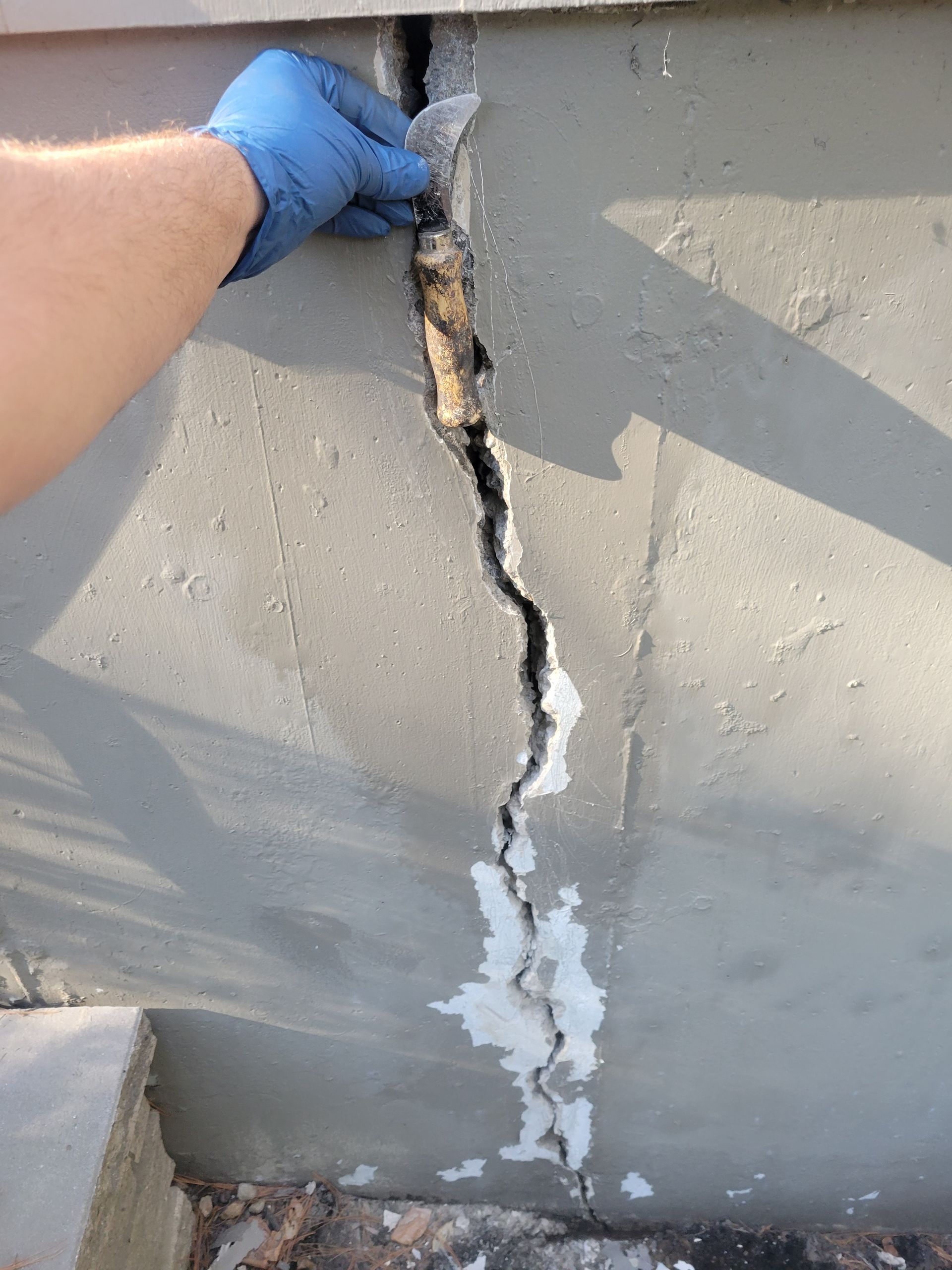
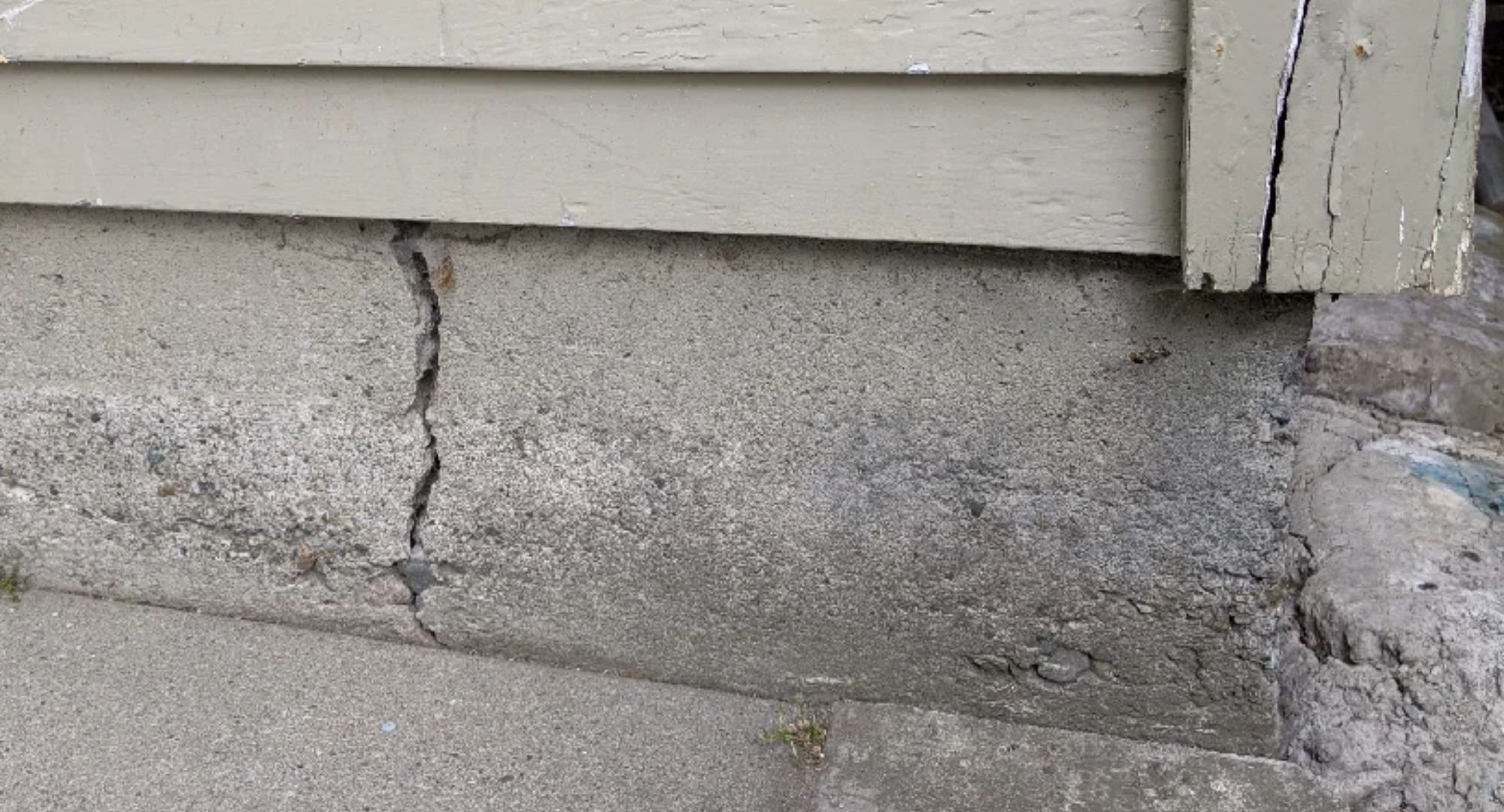
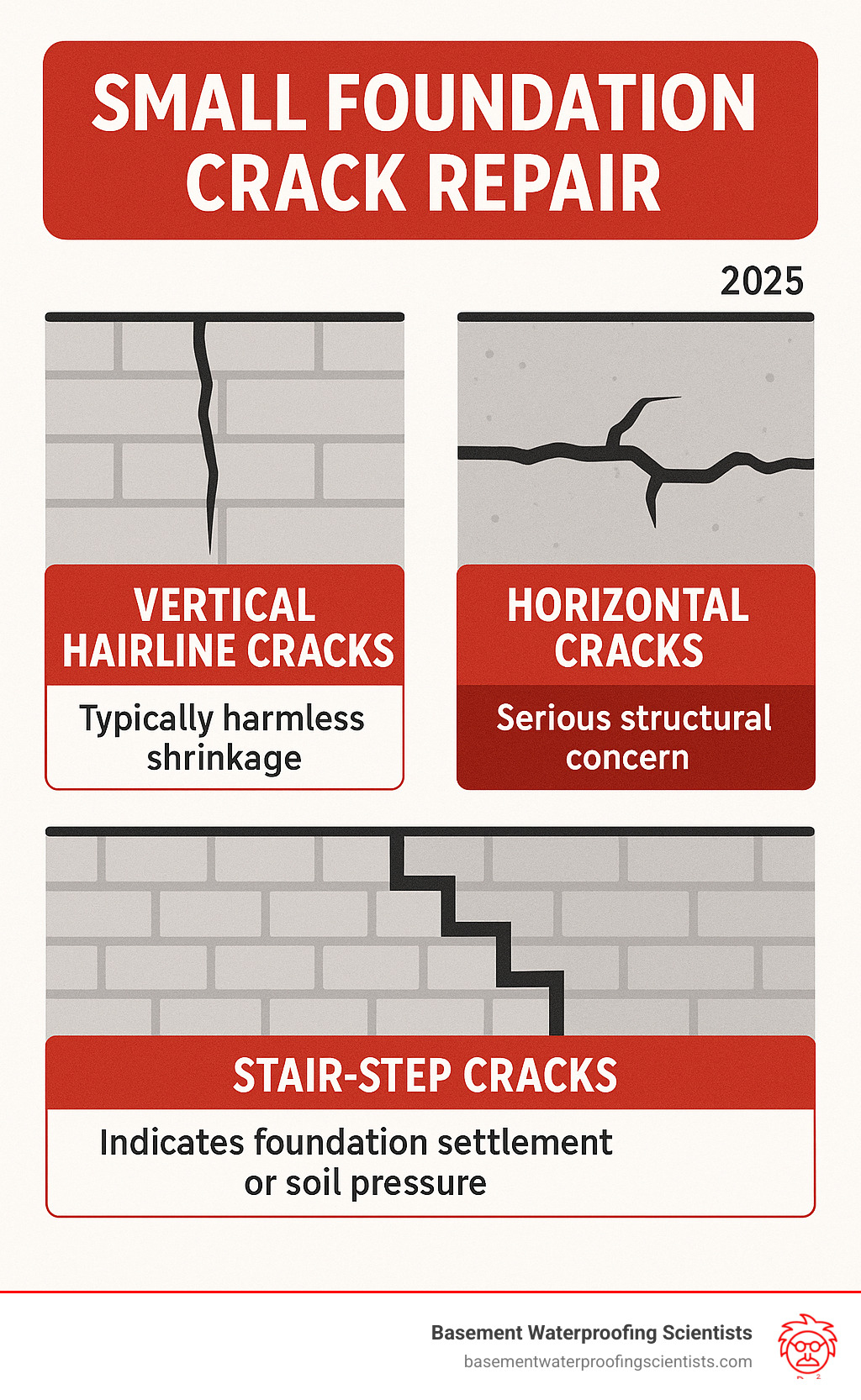
These are the most common types of cracks found in local basements. Often caused by the natural curing process of concrete or minor settling, they are generally considered non-structural if they are less than 1/8 inch wide. These are the primary candidates for DIY repair using injection methods. However, if a vertical crack is wider at the top than the bottom, it may indicate a "dropping" footer, which requires professional intervention.
Horizontal Cracks
A horizontal crack running along the middle of a basement wall is a major red flag in Broomfield. This is a classic sign of hydrostatic pressure—the wet clay outside is pushing the wall inward. This is a structural failure. Attempting to "patch" a horizontal crack with DIY filler is ineffective and dangerous, as it does nothing to stop the wall from eventually collapsing.
Stair-Step Cracks
Common in homes with brick or cinder block foundations (often found in older sections of Broomfield near 120th Ave), stair-step cracks follow the mortar lines. These usually signify that one corner of the foundation is sinking faster than the rest, a condition known as differential settlement.
DIY Step-by-Step: Low-Pressure Injection Repair
For non-structural vertical cracks that are leaking water or air, a low-pressure injection of polyurethane foam or epoxy is the 2026 industry standard for residential repair.
1. Preparation and Cleaning
The crack must be bone-dry and free of loose debris. Use a wire brush and a vacuum to remove any efflorescence (white salty powder) or old caulk. Do not use water to clean the crack immediately before repair, as this will prevent the resins from bonding.
2. Installing Injection Ports
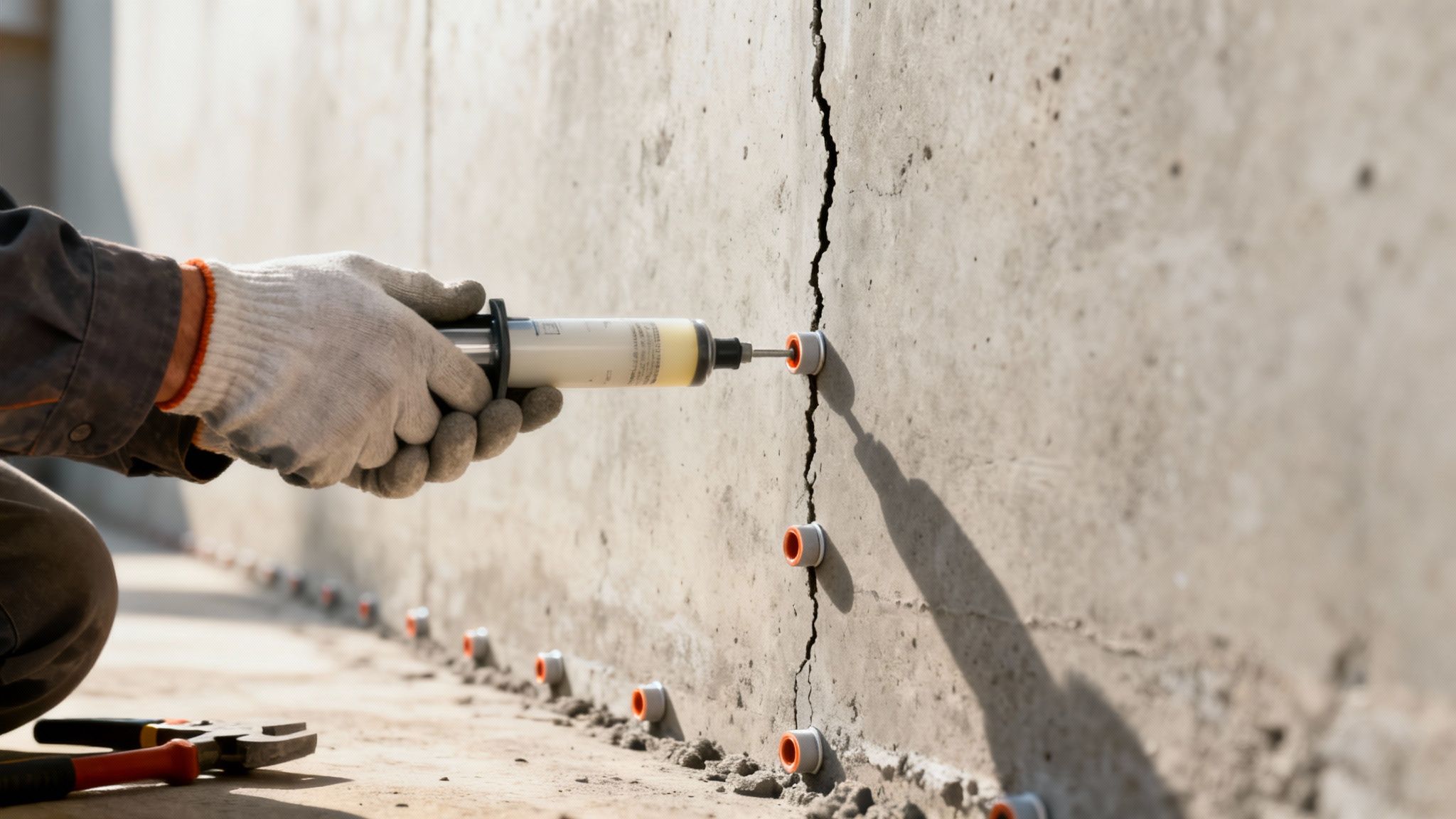
In a standard kit, you will receive plastic "ports." Apply a small amount of surface sealer (usually a fast-setting epoxy) to the back of the port, ensuring the hole in the port aligns perfectly with the crack. Space these ports every 8 to 12 inches along the entire length of the fissure.
3. Surface Sealing
Apply the surface sealer over the rest of the crack between the ports. This creates a "dam" that forces the injection material to go deep into the wall rather than leaking out the front. Let this cure for the time specified by the manufacturer—typically 45 to 60 minutes in Colorado’s low-humidity environment.
4. The Injection Process
Starting at the lowest port, attach the nozzle of your polyurethane or epoxy cartridge. Squeeze the material in until it begins to ooze out of the port directly above it. Cap the current port and move to the next one.
- Polyurethane: Best for stopping water leaks because it expands to fill the entire void.
- Epoxy: Best for adding structural strength to a crack that is not actively moving.
5. Finishing
After 24 hours, the ports can be snapped off with a hammer, and the surface sealer can be ground down with a small angle grinder for a flush finish if you plan to paint the basement walls.
Professional Structural Solutions in 2026
If the crack is horizontal or indicates significant settlement, Broomfield homeowners must look toward mechanical stabilization. In 2026, two primary technologies dominate the local market:
Piering (Push or Helical)
When a foundation has "dropped" due to soil shrinkage under the footer, contractors drive steel piers deep into the earth until they hit load-bearing strata or bedrock.
- Push Piers: Use the weight of the house to drive the steel sections down.
- Helical Piers: Are screwed into the ground and are often preferred for lighter structures or pre-construction.
Carbon Fiber Reinforcement
For walls that are bowing inward but have moved less than two inches, carbon fiber straps are an incredibly durable 2026 solution. These straps are epoxied vertically to the inside of the foundation wall. Carbon fiber is stronger than steel and does not require the excavation of the yard, making it a cost-effective choice for many Broomfield neighborhoods.
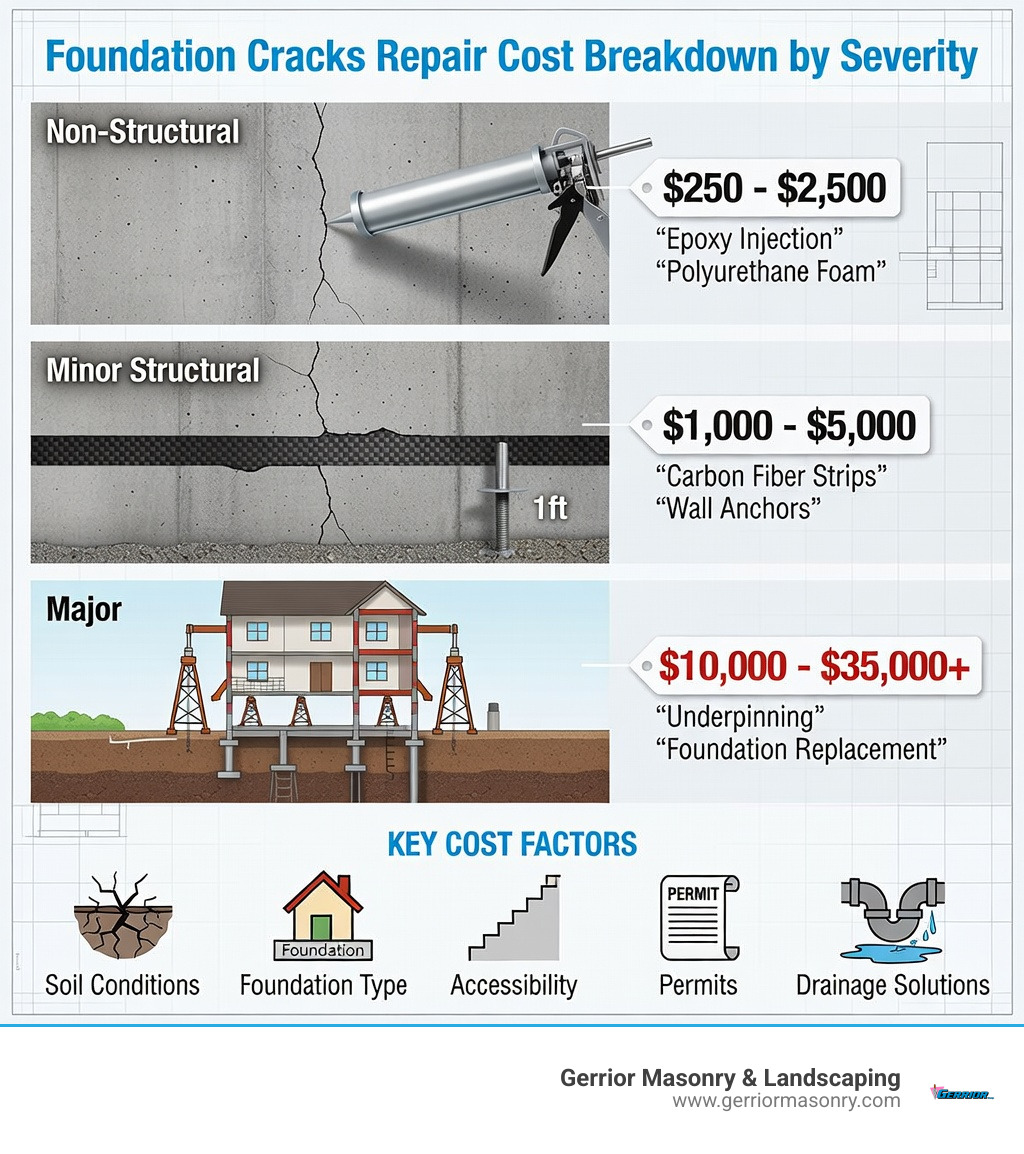
Comparison of Repair Methods
| Method | Best For | Estimated Cost (2026) | DIY Friendly? | Permanent? |
|---|---|---|---|---|
| Polyurethane Injection | Water/Air Leaks (Vertical) | $150 - $500 | Yes | Yes (for leaks) |
| Epoxy Injection | Structural Bond (Minor) | $200 - $600 | Yes | Yes |
| Carbon Fiber Straps | Bowing Walls (Horizontal) | $5,000 - $12,000 | No | Yes |
| Helical/Push Piers | Foundation Settlement | $1,500 - $3,000 per pier | No | Yes |
| Wall Anchors | Severe Bowing | $4,000 - $10,000 | No | Yes |
Local Regulations and Permitting in Broomfield
The City and County of Broomfield Building Division maintains strict standards for structural integrity. As of 2026, any repair involving the installation of piers, wall anchors, or carbon fiber straps requires a building permit.
To obtain a permit, you will typically need:
- A Structural Engineer’s Report: An independent engineer must assess the damage and design the "fix." This prevents contractors from over-selling unnecessary repairs.
- Site Plan: Showing where the piers or anchors will be placed.
- Manufacturer Specifications: Data sheets for the materials being used (e.g., the load capacity of the specific pier model).
Failure to pull a permit can lead to significant issues during the "Due Diligence" phase of a home sale. Broomfield inspectors are well-versed in foundation issues and will look for unpermitted repairs in the basement.
Preventing Future Cracks in the Front Range
Repairing a crack without addressing the root cause is a temporary fix. In Broomfield, moisture management is the most effective way to prevent foundation movement.
- Gutter Extensions: Ensure downspouts discharge water at least 10 feet away from the foundation. In Broomfield’s clay soil, water pooling at the base of the wall is the leading cause of horizontal cracking.
- Grading: The ground should slope away from the house at a rate of 6 inches of drop for every 10 feet of distance. Over time, soil settles, and "negative grading" (sloping toward the house) can develop.
- Xeriscaping Caution: While popular in Colorado for water conservation, ensure that rock mulch or xeriscaping doesn't trap water against the foundation. Use a vapor barrier beneath the rocks that directs water outward.
- Tree Placement: Avoid planting large trees like Cottonwoods or Willows near the foundation. Their roots can suck moisture out of the clay during droughts, causing the soil to shrink and the foundation to drop.
Frequently Asked Questions
Does homeowner’s insurance cover foundation crack repair in Broomfield?
In most cases, no. Standard policies typically exclude "earth movement" and "settlement." However, if the crack was caused by a sudden, covered peril—such as a major pipe burst flooding the soil—you might have a claim. Always review your specific 2026 policy riders.
Can I just use hydraulic cement to fill the crack?
Hydraulic cement is a common "old school" fix, but it is rarely recommended for Broomfield foundations today. Because it does not bond chemically with the existing concrete and is not flexible, the cycle of soil expansion will usually cause the cement plug to pop out or a new crack to form right next to it within one or two seasons.
How do I find a reputable structural engineer in Broomfield?
Look for engineers licensed in the State of Colorado who specialize in residential forensics. Avoid "free inspections" from repair companies if you want an unbiased opinion; a private engineer will charge a fee (typically $500–$900 in 2026) but will provide a neutral repair plan that you can use to get competitive bids.
What is the average cost of foundation repair for a typical Broomfield ranch home?
For a standard 1,500-square-foot ranch, minor crack injections might cost under $1,000. If the home requires 8–10 piers due to significant settlement, costs can range from $15,000 to $30,000.
Are cracks in the garage floor as serious as basement cracks?
Usually, no. In Broomfield, garage slabs are often "poured on grade" and are not structural parts of the home's foundation. While unsightly, these cracks are often cosmetic unless they are accompanied by shifting in the garage walls or the heavy "heaving" of the driveway.
Final Recommendation
If you discover a foundation crack in your Broomfield home, your first action should be to mark the ends of the crack with a pencil and date it. Monitor the crack through one full season of Colorado weather. If the crack remains stable and is vertical, a DIY high-pressure polyurethane injection kit is a viable and cost-effective solution for 2026. However, if the crack is horizontal, wider than 1/4 inch, or shows signs of stair-stepping, immediately consult a licensed structural engineer to design a permitted repair plan that addresses the underlying soil pressure.
Image Gallery