Understanding OnMain for Detroit Travelers
OnMain serves as the primary digital and physical navigation framework for Detroit’s revitalized central corridor, specifically focusing on the Woodward Avenue "Main Street" stretch. For travelers, it integrates real-time transit data,...
OnMain serves as the primary digital and physical navigation framework for Detroit’s revitalized central corridor, specifically focusing on the Woodward Avenue "Main Street" stretch. For travelers, it integrates real-time transit data, local business directories, and smart-city connectivity to streamline the experience of moving between Downtown, Midtown, and the New Center districts.
Contents
As Detroit continues its trajectory as a major Midwest hub for innovation and tourism in 2026, the "OnMain" initiative has evolved from a simple urban planning concept into a functional reality for millions of annual visitors. Whether you are arriving for a conference at Huntington Place or exploring the cultural institutions of Midtown, understanding how to leverage the OnMain ecosystem is essential for efficient travel. This guide breaks down the technical and practical aspects of the system, ensuring that your time in the Motor City is maximized through better connectivity and localized intelligence.
What is OnMain Detroit?
OnMain is a comprehensive smart-corridor initiative designed to unify the traveler experience along Detroit’s most historic and vital artery: Woodward Avenue. While many cities have "Main Streets," Detroit’s version is a multi-modal transit and commercial spine that connects the riverfront to the northern neighborhoods. The OnMain system refers to the integrated network of digital kiosks, high-speed public Wi-Fi, and the synchronized mobile interface that provides a "single pane of glass" view for anyone navigating this zone.
In 2026, the project has successfully bridged the gap between the city’s physical infrastructure and its digital services. For a traveler, OnMain is not just a website; it is the infrastructure that powers the real-time displays at QLine stations, the interactive maps found in hotel lobbies, and the hyper-local notifications that alert you to gallery openings or sporting events at Little Caesars Arena. It was developed through a partnership between the city’s planning department, local business improvement districts, and private technology partners to solve the "fragmentation problem" where visitors often felt overwhelmed by the city’s sprawling layout.
Key Features for the Modern Traveler
To effectively use OnMain, travelers should focus on three core pillars: connectivity, mobility, and local commerce. The system is designed to be "frictionless," meaning it requires minimal setup but offers high-value data throughout your journey.
Real-Time Multi-Modal Transit Integration
The most significant hurdle for Detroit travelers has historically been transit navigation. OnMain resolves this by aggregating data from the QLine (streetcar), DDOT (bus), and the People Mover into a unified stream.
- Wait-Time Accuracy: Unlike generic map applications that rely on static schedules, OnMain utilizes IoT (Internet of Things) sensors installed along the tracks and inside vehicles to provide millisecond-accurate arrival times.
- Last-Mile Solutions: The system integrates MoGo bike-share availability and scooter docking status, showing you exactly where a vehicle is available once you step off the streetcar.
- Wayfinding Kiosks: Large-scale "OnMain Pillars" are located at major intersections. These are touch-screen interfaces that allow travelers to send walking directions directly to their mobile devices via NFC (Near Field Communication) or QR code.
The Digital Concierge and Local Discovery
Detroit’s retail and dining scene is characterized by "hidden gems" located in historic buildings. OnMain acts as a digital concierge that highlights these businesses based on your current proximity. By using the OnMain portal, travelers can access curated lists of "Open Now" establishments, verified reviews from locals rather than tourists, and specific "OnMain Deals" that are exclusive to users of the corridor’s network.
Seamless Smart-City Connectivity
One of the primary benefits for international or business travelers is the "OnMain Free Connect" Wi-Fi network. This is a high-bandwidth, 6G-ready infrastructure that spans the entire Woodward corridor from Jefferson Avenue to Grand Boulevard. It allows for uninterrupted streaming and VOIP calling, which is particularly useful for travelers who may have limited data plans or need to remain connected for work while moving between meetings in different districts.
How to Access and Use OnMain Services
Accessing the OnMain ecosystem does not require a complex registration process, but knowing the "entry points" can save time. The system is designed to be "web-first," meaning you do not necessarily need to download a heavy application to your smartphone.
The OnMain Portal
Upon connecting to the "OnMain_Guest" Wi-Fi network, travelers are greeted with a captive portal that serves as the command center. This dashboard provides immediate access to:
- Safety Alerts: Real-time updates from the Detroit Police Department regarding traffic detours or crowd management during large events like the North American International Auto Show.
- District Maps: High-resolution, zoomable maps of the Downtown, Midtown, and New Center districts.
- Event Calendars: A synchronized list of events happening within a 10-minute walk of your current location.
Physical Interactivity
If you prefer not to use your phone, the physical "OnMain Pillars" (kiosks) offer the same functionality. These stations are equipped with high-visibility screens that are readable even in direct sunlight. In 2026, these pillars also include emergency "Blue Light" functionality, allowing for immediate two-way communication with city dispatchers if assistance is needed.
Requirements and Compatibility
The OnMain system is built on open-web standards. To ensure full functionality, travelers should have:
- A device capable of WPA3 security protocols (standard on most smartphones made after 2021).
- A browser that supports location services (to enable the "Near Me" features).
- NFC capabilities (if you wish to use "Tap-to-Map" features at kiosks).
Navigating the Main Street Corridor: A Section-by-Section Guide
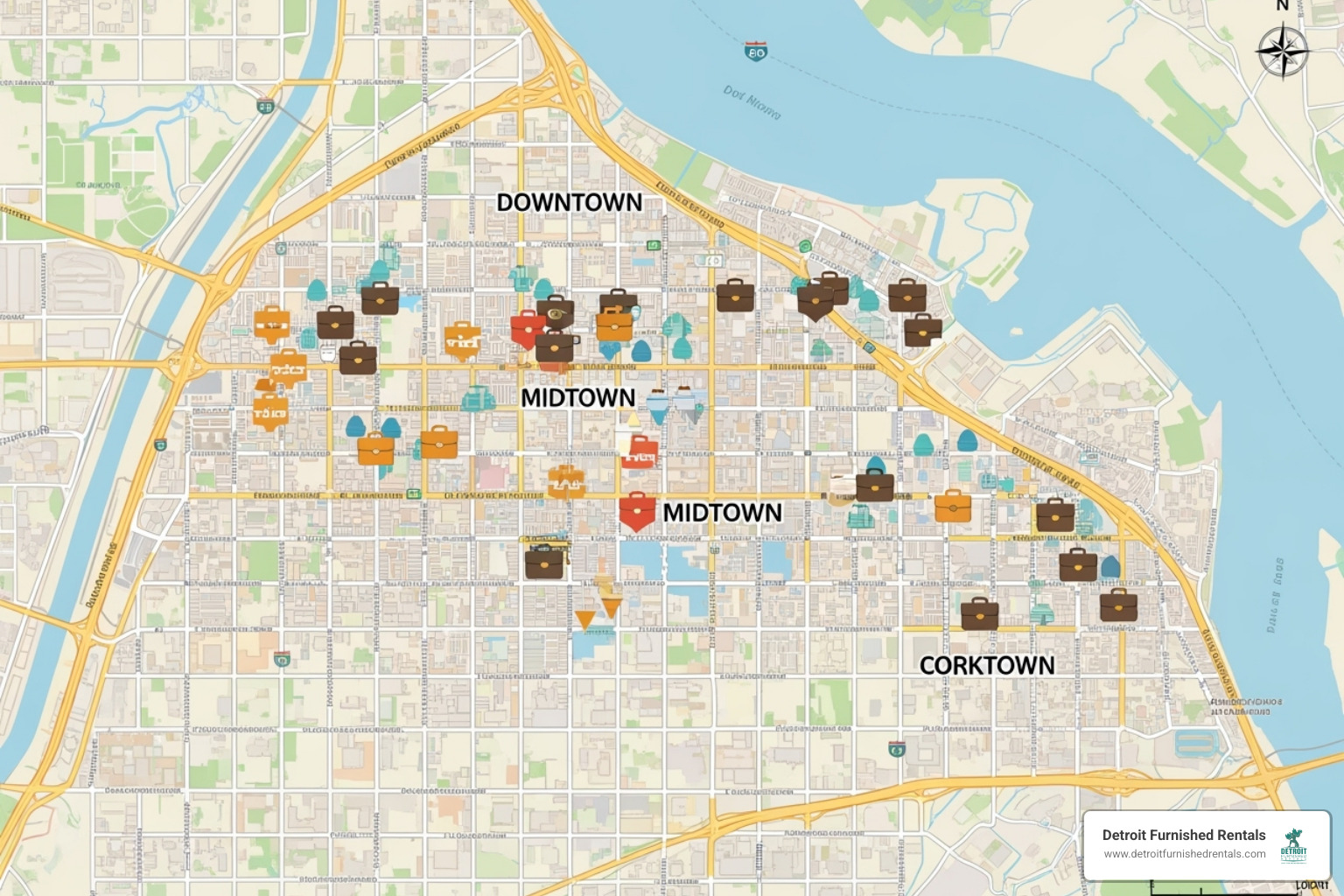
Detroit's OnMain zone is divided into three primary segments, each offering a different atmosphere and set of services for travelers.
The Downtown Core (The Southern Terminus)
This is the densest part of the OnMain network. Travelers here are typically focused on the riverfront, the Financial District, and the stadium district. OnMain provides detailed floor plans for the Renaissance Center and direct links to the "Detroit Riverwalk" maps. If you are staying at the Westin Book Cadillac or the Shinola Hotel, the OnMain portal will often recognize your location and offer specific "Hotel-to-Transit" walking routes.
The Cultural Center (Midtown)
As you move north on Woodward, you enter the Midtown segment. Here, OnMain shifts its focus toward the arts and education. It integrates the ticketing systems for the Detroit Institute of Arts (DIA) and the Michigan Science Center. A unique feature in this zone is the "Architecture Tour" mode, which uses the OnMain interface to provide audio-visual history of the buildings you are passing on the QLine.
The New Center (The Northern Terminus)
This area is home to the Fisher Building and the Henry Ford Health system. For travelers, this is often a hub for business or specialized medical visits. OnMain provides critical information regarding parking availability in the many decks surrounding the Fisher Building, which can be a significant pain point for those driving into the city.
Feature Comparison: OnMain vs. Traditional Travel Apps
While apps like Google Maps or Yelp are useful, OnMain provides a level of hyper-local integration that generic platforms cannot match.
| Feature | OnMain Detroit (2026) | Standard Travel Apps |
|---|---|---|
| Transit Accuracy | Real-time IoT sensor data (within 5 seconds) | Scheduled data / Crowd-sourced estimates |
| Connectivity | Corridor-wide 6G Public Wi-Fi | Requires cellular data or private hotspots |
| Local Discounts | Real-time, location-based "OnMain Only" perks | General coupons or expired offers |
| Emergency Services | Direct 2-way link to local dispatchers | Requires standard 911 dialing |
| Indoor Mapping | Detailed plans for major hubs (RenCen/Fisher) | Limited to basic footprints |
| Privacy | Data anonymized at the district level | Extensive tracking for advertising |
Common Pitfalls and Troubleshooting for Travelers
Even with a sophisticated system like OnMain, travelers may encounter hurdles. Understanding these common issues can prevent frustration.
- Network Hand-Offs: Occasionally, as you move between the QLine (which has its own internal Wi-Fi) and the OnMain corridor Wi-Fi, your device may hang. Solution: If your data stalls, toggle your Wi-Fi off and on to force a reconnection to the strongest "OnMain_Guest" node.
- Location Accuracy: In the dense "canyons" of the Financial District, GPS signals can bounce, leading to inaccurate "Near Me" results. Solution: Rely on the street addresses listed in the OnMain portal rather than the blue dot on the map, or use the physical kiosks which have fixed, accurate coordinates.
- Battery Drain: Constant use of high-speed Wi-Fi and location services can deplete mobile batteries. Solution: Many OnMain Pillars are equipped with wireless charging pads or USB-C ports on the side of the unit for a quick "top-up."
- Language Barriers: While the system defaults to English, many travelers forget that the language toggle is located at the top-right of every kiosk and web portal. It currently supports 12 languages, including Spanish, Arabic, and French, which are widely spoken in the Metro Detroit area.
Frequently Asked Questions
Does it cost anything to use the OnMain network or portal?
No. The OnMain digital infrastructure is a public-private utility. There are no subscription fees for travelers or locals. The high-speed Wi-Fi is funded through the Business Improvement Districts (BIDs) along the Woodward corridor as a way to encourage foot traffic and tourism.
Is my personal data safe when connecting to OnMain?
OnMain utilizes modern WPA3 encryption for its public Wi-Fi. In accordance with 2026 privacy standards, the system does not collect personally identifiable information (PII) for marketing purposes. It does, however, collect anonymized "flow data" (e.g., how many people are moving from Midtown to Downtown) to help the city optimize transit schedules and public services.
Can I use OnMain if I am traveling outside the Woodward corridor?
The full suite of OnMain services, such as the seamless Wi-Fi and interactive kiosks, is currently limited to the Woodward Avenue corridor and immediate adjacent blocks. However, the transit data and event calendars within the web portal cover the entire Greater Detroit area.
How do I report a malfunctioning OnMain kiosk?
Each physical pillar has a unique ID number printed at its base. You can report issues through the "Feedback" button on the digital portal or by alerting a "Downtown Detroit Ambassador" (the staff in neon yellow/green vests) who patrol the corridor.
Does OnMain replace the need for a QLine ticket?
No. OnMain provides the information and connectivity to find and time your ride, but it is not a payment platform for transit. You will still need to use the Dart app or a physical ticketing machine at the station to pay your fare, though the OnMain portal provides a direct link to the payment interface.
Practical Recommendations for Your Visit
To get the most out of OnMain during your Detroit trip, follow these three steps upon arrival:
- Sync Early: As soon as you arrive on Woodward Avenue, connect to the "OnMain_Guest" network. This will "warm up" your device to the local ecosystem and provide you with an immediate map of your surroundings.
- Check the "Live Feed": Before heading to a major attraction like the Detroit Institute of Arts or a game at Comerica Park, check the OnMain live feed for "District Density." This feature shows you how crowded certain areas are in real-time, allowing you to adjust your travel time to avoid long queues.
- Use the "Save to Wallet" Feature: When you find a business or event you like on the OnMain portal, use the "Save to Wallet" or "Add to Calendar" function. This ensures you have the address and any associated discount codes available offline, which is a lifesaver if you enter a building with thick historic walls that might block signals.
By embracing the OnMain framework, travelers can navigate Detroit with the confidence of a local, turning a complex urban environment into a manageable and highly rewarding experience.
Image Gallery