Gram Sevak Basic Pay Structure, Salary Scale, and Allowances for 2026
The Gram Sevak basic pay structure in 2026 is determined by state government pay commission matrices, typically falling under the 7th Pay Commission pay bands. A newly recruited Gram Sevak generally starts at a basic pay scale of Level...
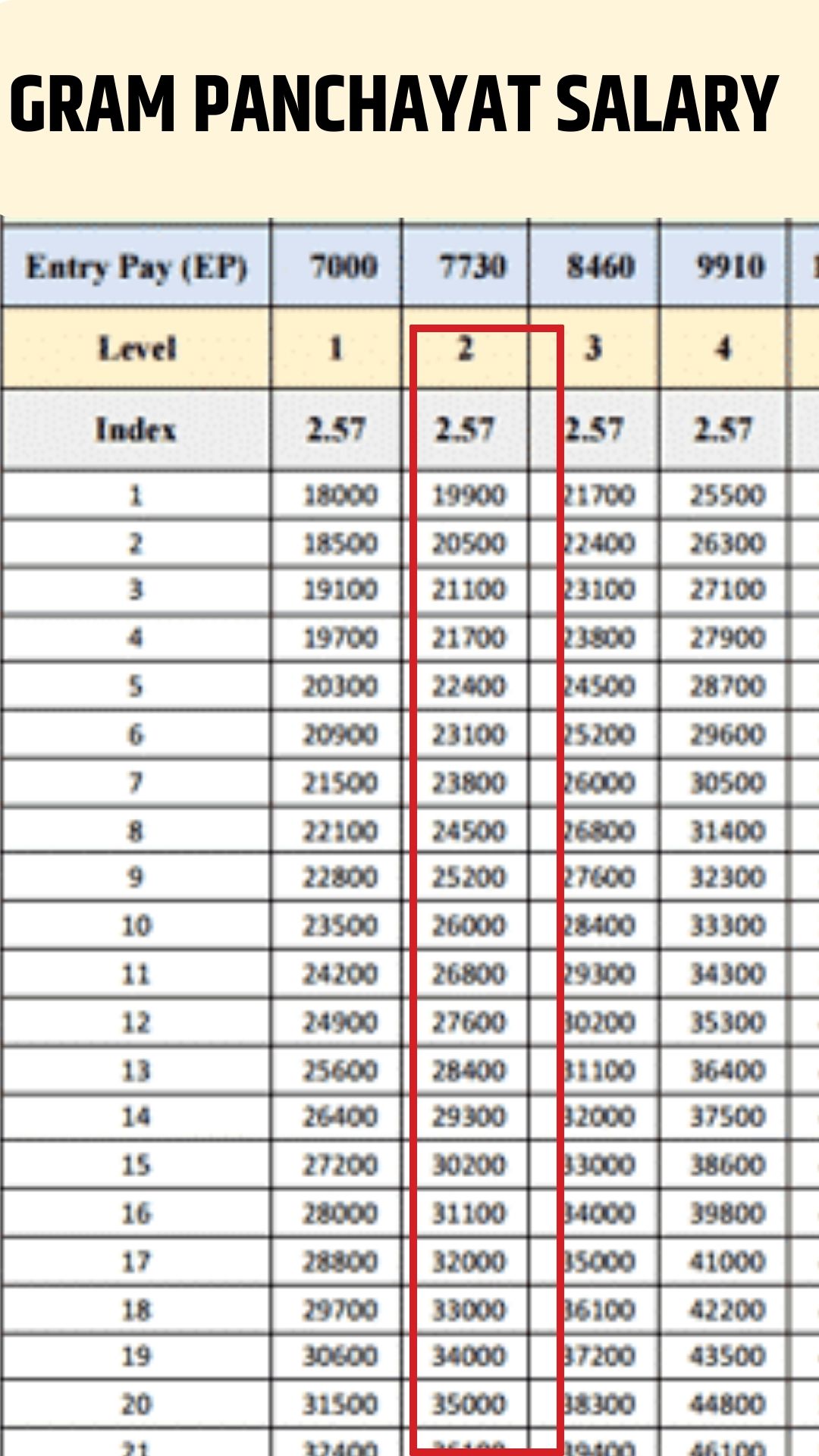
The Gram Sevak basic pay structure in 2026 is determined by state government pay commission matrices, typically falling under the 7th Pay Commission pay bands. A newly recruited Gram Sevak generally starts at a basic pay scale of Level 4 or Level 5, with initial monthly basic salaries ranging from rupees 21,700 to rupees 29,200, excluding Dearness Allowance, House Rent Allowance, and other state-mandated benefits.
Contents
Understanding the remuneration of a Gram Sevak requires a thorough examination of government pay structures, career progression pathways, and municipal administration guidelines. As frontline rural development workers employed by state panchayati raj departments, Gram Sevaks play a pivotal role in implementing grassroots welfare schemes, agricultural programs, and infrastructural projects. Navigating their compensation framework involves analyzing pay scales, allowances, deductions, and promotion trajectories in 2026.
Understanding the Gram Sevak Role and Administrative Context
The position of Gram Sevak, often designated as Village Development Officer (VDO) in several Indian states, operates at the intersection of local governance and rural administration. Appointed through state subordinate service selection boards or public service commissions, these personnel act as the primary administrative link between rural communities and district-level authorities.
Their responsibilities encompass monitoring agricultural initiatives, managing MGNREGA works, maintaining public records, and executing rural development schemes sponsored by central and state governments. Because the role is bound to state civil service rules, compensation packages do not follow a uniform national standard. Instead, they vary depending on the state government's adoption of pay commission recommendations and local cost-of-living adjustments.
Core Salary Structure and Pay Scale Matrices
The financial compensation of a Gram Sevak is anchored by the basic pay, which serves as the foundation upon which all other allowances and deductions are calculated. Under the current 7th Pay Commission framework utilized across most states in 2026, the pay scale is structured into specific Pay Bands and Grade Pays converted into Functional Pay Levels.
- Pay Band: PB-1 (Rupees 5,200 to Rupees 20,200) for legacy structures, transitioning to Matrix-based levels.
- Pay Level: Level 4 or Level 5 depending on the specific state jurisdiction and recruitment rules.
- Initial Basic Pay Range: Rupees 21,700 (Level 4, Cell 1) to Rupees 29,200 (Level 5, Cell 1).
- Maximum Pay Potential: Can scale up to Rupees 69,100 or higher over the course of a career through annual increments and promotions.
State-specific rules dictate whether newly hired candidates undergo a probationary period—often lasting two years—during which they may receive a fixed monthly stipend rather than the full foundational scale. Upon successful completion of probation, employees are transitioned to the regular pay matrix with retrospective or prospective financial regularization.
Comprehensive Breakdown of Allowances and Benefits
Basic pay represents only a portion of a Gram Sevak's gross monthly earnings. Government employees receive several supplementary allowances designed to offset inflation, housing costs, and field operational expenses.
| Allowance Type | Description and Calculation Basis | Typical Percentage / Rate (2026) |
|---|---|---|
| Dearness Allowance (DA) | Adjusted periodically based on the Consumer Price Index to counter inflation. | Varies by state; typically ranges between 50% and 53% of Basic Pay in 2026. |
| House Rent Allowance (HRA) | Provided to employees who do not occupy government-provided quarters. | Categorized by city tiers: 9%, 18%, or 27% (or lower state-specific slabs like 8%, 16%, 24%). |
| Transport Allowance (TA) | Granted to assist with commuting to and from the designated workplace. | Fixed amount based on pay level, plus applicable DA on transport. |
| Medical Allowance | Fixed monthly sum or reimbursement scheme for healthcare expenses. | Standardized flat rates ranging from Rupees 500 to Rupees 1,000 monthly. |
| Field/Cycle Allowance | Specialized allowance for rural field visits and local travel within assigned panchayats. | Nominal fixed monthly stipend determined by state rural development departments. |
Gross Salary Versus Net Take-Home Pay Calculations
Calculating the exact take-home salary requires factoring in mandatory statutory deductions from the gross salary. While gross earnings combine basic pay, DA, HRA, and local allowances, net pay reflects deductions designed for social security and taxation.
- Gross Salary Formula: Basic Pay + Dearness Allowance + House Rent Allowance + Transport Allowance + Other Allowances.
- Standard Statutory Deductions:
- National Pension System (NPS) contribution (typically 10% of Basic Pay plus DA, matched by the government employer).
- State or Central Professional Tax.
- Income Tax (TDS) based on annual taxable income slabs and chosen tax regimes.
- Benevolent fund or state insurance schemes where applicable.
For a Gram Sevak starting at a basic pay of Rupees 21,700 with a DA rate hovering around 50% and standard HRA, the gross monthly salary typically falls between Rupees 35,000 and Rupees 38,000. After accounting for NPS deductions and professional tax, the net take-home salary generally ranges from Rupees 31,000 to Rupees 34,000 during the initial service years.
Career Progression, Promotions, and Pay Scale Growth
Professional growth within rural development departments offers systematic financial advancement through regular increments and promotional opportunities. Employees receive an annual performance-based increment of 3% added to their basic pay. Furthermore, structured promotion policies allow Gram Sevaks to advance to higher supervisory roles.
- Gram Sevak / Village Development Officer (Entry Level): Level 4 or Level 5 basic pay structure.
- First Financial Upgrade (MACP / Assured Career Progression): Granted after 10, 20, and 30 years of continuous service without promotion, shifting the employee to the next higher pay level.
- Supervisor / Panchayat Extension Officer: Promotional post attained through departmental examinations or seniority, elevating the pay scale to Level 8 or Level 9.
- Block Development Officer (BDO): Gazetted officer rank achievable through higher departmental promotions or state public service commission pathways, providing significantly higher pay bands and administrative authority.
Comparison of Gram Sevak Pay Structures Across Selected States
Because local governance is a state subject under the Constitution of India, pay scales differ by region. The table below illustrates comparative benchmarks for entry-level Gram Sevak basic pay and allowances across major jurisdictions in 2026.
| State / Region | Pay Matrix Level | Starting Basic Pay (INR) | Estimated Gross Starting Salary (INR) | Probationary Terms |
|---|---|---|---|---|
| Rajasthan | Level 6 | Rupees 20,800 (Fixed during probation) | Rupees 23,000 - 25,000 (Stipend phase) | 2 Years fixed pay; regular scale post-probation |
| Uttar Pradesh | Level 3 / Level 4 | Rupees 21,700 | Rupees 34,000 - 37,000 | Regular scale with standard deductions |
| Maharashtra | S-6 Scale | Rupees 19,900 | Rupees 31,000 - 34,000 | 2 Years probationary period |
| Madhya Pradesh | 5th Pay Matrix | Rupees 5,200 + Grade Pay 2,400 | Rupees 28,000 - 31,000 | Staged percentage increase over 3 years |
| Gujarat | Class-III Matrix | Rupees 26,000 (Fixed) | Rupees 26,000 (Consolidated pay) | 5 Years fixed remuneration before regular scale |
Frequently Asked Questions About Gram Sevak Basic Pay
What is the starting basic pay for a Gram Sevak in 2026?
The starting basic pay generally ranges from Rupees 21,700 to Rupees 29,200 depending on the state's adopted pay matrix level (typically Level 4 or Level 5 under 7th Pay Commission guidelines). This foundational figure excludes additional allowances like DA and HRA.
Does a Gram Sevak receive Dearness Allowance during the probation period?
In most states, employees serving a mandatory probationary period receive a fixed monthly stipend rather than standard allowances. Once the probation period is successfully cleared, full salary arrears, regular basic pay scales, and all applicable dearness allowances are granted retrospectively or prospectively.
How are annual salary increments calculated for Gram Sevaks?
Annual increments are standardized at 3% of the existing basic pay and are applied automatically every year on July 1st or January 1st, subject to satisfactory service records and the absence of disciplinary penalties.
Are Gram Sevaks covered under the Old Pension Scheme or NPS?
Most personnel recruited in recent decades are enrolled in the National Pension System (NPS), where 10% of the basic pay and DA is deducted monthly, supplemented by a government contribution matching or exceeding statutory mandates.
Can a Gram Sevak get promoted to a gazetted rank?
Yes, experienced Gram Sevaks can advance through promotional quotas and departmental examinations to reach higher supervisory positions such as Panchayat Extension Officers and eventually Block Development Officers, which carry gazetted status and higher pay scales.
What deductions are made from the gross salary of a Gram Sevak?
Standard deductions include contributions to the National Pension System, state professional tax, income tax deductions based on the employee's tax bracket, and minor welfare or insurance fund contributions.
Conclusion and Financial Planning Recommendations
Securing a position as a Gram Sevak offers stable employment, predictable career advancement, and a secure retirement framework through government-backed pension schemes. When evaluating this career path or managing personal finances within the role, employees should closely monitor state pay commission revisions, optimize tax planning strategies under current financial regulations, and take advantage of departmental promotion cycles to maximize long-term earning potential.
Image Gallery