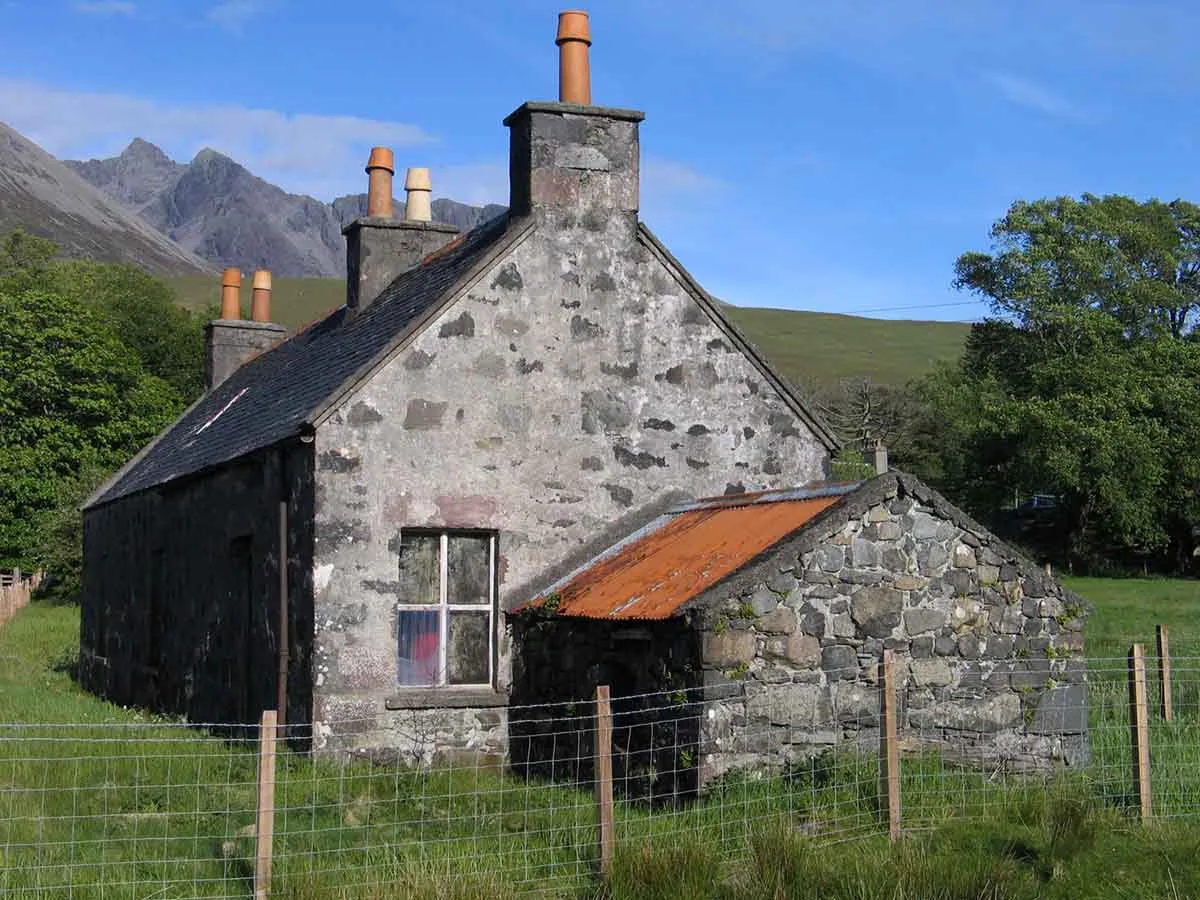
Finding Cheap Rural Cottages for Sale in Scotland: 2026 Buyer's Guide to Affordable Property
Finding cheap rural cottages for sale in Scotland in 2026 requires targeting specific regions like Dumfries and Galloway, Ayrshire, or remote parts of Aberdeenshire and the Western Isles. While "cheap" is relative, entry-level habitabl...
Finding cheap rural cottages for sale in Scotland in 2026 requires targeting specific regions like Dumfries and Galloway, Ayrshire, or remote parts of Aberdeenshire and the Western Isles. While "cheap" is relative, entry-level habitable cottages currently range from £120,000 to £175,000, with significant value found in renovation projects and homes located outside the primary Highland tourist corridors.
Contents
The 2026 Scottish Rural Property Landscape
The market for rural property in Scotland has undergone a stabilization phase as we move through 2026. Following years of volatile price growth driven by the "race for space," the current market is defined by a more pragmatic approach to valuation. For buyers seeking affordability, the search has shifted away from high-demand hubs like the Loch Lomond and Trossachs National Park or the immediate vicinity of Edinburgh and Glasgow. Instead, value is now concentrated in the "forgotten" rural fringes.
Affordability in 2026 is also heavily influenced by the Scottish Government’s ongoing commitment to the Heat in Buildings Bill. This legislation requires properties to meet stringent energy efficiency standards. Consequently, many older, traditional stone cottages that lack modern insulation or sustainable heating systems are entering the market at lower price points. These properties represent an opportunity for buyers willing to invest in retrofitting, but they require a sophisticated understanding of renovation costs and Scottish building regulations.
High-Value Regions for Affordable Cottages in 2026
To secure a cottage that qualifies as "cheap" by 2026 standards, buyers must look beyond the glossy postcards of Skye or St Andrews. The following regions offer the highest density of affordable rural stock:
Dumfries and Galloway
Located in the Southwest, this region remains one of the most underrated areas for rural living. It offers rolling hills, rugged coastlines, and traditional stone-built cottages at prices significantly lower than the national average. Areas around Newton Stewart, Castle Douglas, and the Rhins of Galloway provide excellent value for money.
Aberdeenshire and the Northeast
While Aberdeen city is influenced by the energy sector, the rural hinterlands of the Northeast—specifically inland toward the Cairngorms fringe or north toward the Moray coast—feature numerous farm cottages and "but and ben" style homes. The Buchan area, in particular, offers some of the lowest price-per-square-meter rates in mainland Scotland.
Ayrshire and the Clyde Coast
The rural interior of East Ayrshire and the northern stretches of the Ayrshire coast offer proximity to Glasgow alongside genuine rural isolation. Former mining villages and agricultural hamlets often have small cottages that serve as perfect entry-level homes for first-time buyers or retirees.
The Western Isles and Northern Highlands
For those seeking total immersion in rural life, the Outer Hebrides (Lewis, Harris, Uist) and the far north of Sutherland remain affordable. However, buyers must account for higher logistics costs for building materials and the reality of more extreme weather conditions.
Comparative Regional Property Metrics 2026
The following table outlines the expected entry-level price points and lifestyle metrics for rural cottages across high-value Scottish regions in 2026.
| Region | Entry-Level Price (Habitable) | Renovation Project Starting Price | Average Broadband Availability | Distance to Major City |
|---|---|---|---|---|
| Dumfries & Galloway | £135,000 | £85,000 | Moderate (Starlink Common) | 1.5 - 2 Hours |
| Aberdeenshire | £145,000 | £95,000 | High (Fiber Expansion) | 45 - 60 Minutes |
| East Ayrshire | £120,000 | £75,000 | High | 30 - 45 Minutes |
| Outer Hebrides | £110,000 | £60,000 | Low to Moderate | 4+ Hours (Inc. Ferry) |
| Argyll & Bute | £165,000 | £110,000 | Moderate | 2+ Hours |
Understanding the Scottish Buying Process: Legal and Financial Realities
Buying property in Scotland differs fundamentally from the English system. It is a solicitor-led process that provides more security to both buyer and seller, but it requires faster decision-making.
The "Offers Over" System
Most rural cottages are marketed as "Offers Over." This means the asking price is a minimum threshold, and the final sale price is often 5% to 15% above this figure, depending on local demand. In 2026, the gap between the Home Report valuation and the sale price has narrowed, but buyers must still have "liquid cash" to cover any amount offered above the valuation, as most lenders will only loan based on the Home Report figure.
The Role of the Home Report
In Scotland, the seller must provide a Home Report, which includes a Single Survey, an Energy Performance Certificate (EPC), and a Property Questionnaire. For cheap rural cottages, the Single Survey is the most critical document. It uses a 1–3 scale to rate the condition of the roof, walls, and services. A "Category 3" rating indicates urgent repairs are needed, which is common in older rural stock and can be used as a leverage point for price negotiations.
Land and Buildings Transaction Tax (LBTT)
For 2026, LBTT remains a tiered tax. While many "cheap" cottages fall below the primary tax thresholds, buyers purchasing a second home or a buy-to-let investment must pay the Additional Dwelling Supplement (ADS). As of the current 2026 regulations, the ADS stands at 6% of the total purchase price for properties over £40,000.
Technical Considerations for Rural Properties
Buying a cottage in the Scottish countryside involves technical challenges not found in urban property markets. Failure to account for these can turn a "cheap" purchase into a financial burden.
Critical Infrastructure Checklist
Private Water Supplies Many rural cottages are not connected to the mains water grid. They may rely on springs, boreholes, or wells. In 2026, local councils require strict water quality testing. Ensure the property has a modern filtration and UV treatment system installed.
Septic Tanks and SEPA Regulations Most rural homes use a septic tank or a small sewage treatment plant. Under Scottish Environment Protection Agency (SEPA) rules, all septic tanks must be registered. If the tank discharges directly to a watercourse, it likely requires an upgrade to a soakaway system to comply with current environmental standards.
Heating and EPC Compliance With the 2026 focus on decarbonization, cottages with oil-fired boilers or old storage heaters are becoming less desirable. Transitioning to an air-source heat pump or high-heat retention storage heaters is often necessary. Check if the property is eligible for Home Energy Scotland grants or loans.
Renovation Projects: Is it Worth it in 2026?
A popular route to owning a cheap rural cottage is purchasing a "fixer-upper." However, the cost of labor and materials in 2026 requires a strict budget.
- Structural Integrity: Traditional stone cottages (rubble fill) are prone to dampness if pointed with cement rather than lime mortar. Budget approximately £5,000–£10,000 for specialized lime re-pointing.
- Roofing: A full re-slate using Scottish slate can be expensive due to material scarcity. Many buyers in 2026 opt for high-quality composite alternatives or reclaimed slate to keep costs manageable.
- Insulation: Internal wall insulation is often the only option for traditional cottages. This reduces floor space slightly but is essential for meeting EPC targets.
- Professional Fees: Factor in structural engineer reports and architectural fees if you plan to extend. In rural Scotland, planning permission for modest extensions is generally supported, provided they respect the original character of the building.
Navigating Local Occupancy and Short-Term Let Legislation
Before purchasing an affordable cottage as a holiday home or rental, you must be aware of the 2026 regulatory environment. Many Scottish councils, particularly in the Highlands and Islands, have implemented "Short-Term Let Control Areas." In these zones, changing a residential home into a full-time holiday rental requires planning permission, which is increasingly difficult to obtain for small, affordable units that local residents could otherwise use as primary homes.
Furthermore, some rural properties come with "Section 75" agreements or local occupancy clauses, which mandate that the owner must live or work in the local area. These properties are often the cheapest on the market because the pool of potential buyers is restricted.
Strategic Advice for Finding the Best Deals
- Register with Local Solicitors: Many rural properties are sold through the ESPC, GSPC, or local solicitor firms before they ever reach national portals like Rightmove or Zoopla.
- Visit in Winter: Rural Scotland is beautiful in summer, but its challenges—muddy access roads, wind-chill, and limited daylight—are only apparent in winter. A cottage that seems like a bargain in July might reveal significant heating or access issues in January.
- Check Broadband Maps: For those working remotely, broadband is a dealbreaker. While the R100 program has expanded fiber access, many remote cottages still rely on 4G/5G fixed-wireless or satellite options like Starlink. Always perform a speed test during your viewing.
Frequently Asked Questions
Can foreigners buy cheap rural property in Scotland?
Yes, there are currently no restrictions on non-UK residents purchasing property in Scotland. However, the legal process must be handled by a Scottish solicitor, and buyers must pass standard Anti-Money Laundering (AML) checks. Non-residents may also face different tax implications depending on their home country.
What is the average council tax for a rural cottage?
Most small rural cottages fall into Council Tax Bands A to C. In 2026, this typically ranges from £1,100 to £1,600 per year, though this varies by local authority. Properties that are empty or undergoing major structural repair may be eligible for a temporary discount or exemption depending on the specific council's policy.
How much should I budget for a survey on an old cottage?
A standard Home Report is provided by the seller, but for an older rural cottage, you should consider a specialized Building Survey (Level 3). In 2026, these cost between £600 and £1,200. This provides a much deeper analysis of structural issues, damp, and timber decay than the basic Single Survey.
Are "Fixed Price" cottages better than "Offers Over"?
A "Fixed Price" indicates the seller wants a quick sale at a specific figure. This can be an excellent opportunity for buyers with cash or a pre-approved mortgage, as it removes the bidding war element. However, always investigate why a property is "Fixed Price"—it may be due to a previous sale falling through or a known issue disclosed in the Home Report.
What are the main risks of buying a remote cottage in 2026?
The primary risks include rising energy costs for hard-to-heat buildings, the potential for increasing "tourist taxes" in certain regions, and the logistical difficulty of finding tradespeople for repairs. Additionally, climate change has increased the importance of checking SEPA flood maps, even for properties not immediately adjacent to a river.
Securing a cheap rural cottage in Scotland remains a viable path to homeownership or lifestyle change in 2026. By focusing on the Southwest and Northeast, understanding the technical requirements of rural infrastructure, and navigating the Scottish legal system with a qualified solicitor, buyers can find exceptional value in one of the world's most beautiful landscapes.
Image Gallery