Unlocking the True Value of a 1976 Two-Dollar Bill in 2026
Most 1976 two-dollar bills are worth face value ($2), but uncirculated specimens, star notes, or those with rare serial numbers can command anywhere from $5 to $50 or more. Issued to commemorate the United States Bicentennial, these Fe...
Most 1976 two-dollar bills are worth face value ($2), but uncirculated specimens, star notes, or those with rare serial numbers can command anywhere from $5 to $50 or more. Issued to commemorate the United States Bicentennial, these Federal Reserve Notes are common, yet their unique historical design featuring John Trumbull's painting on the reverse continues to captivate collectors.
Contents
Evaluating the actual worth of a currency note requires moving past generalized assumptions and examining specific numismatic criteria. While millions of these notes entered circulation, their survival rates, physical preservation grades, and unique printing variations create a broad spectrum of secondary market values. Understanding how paper money is graded, authenticated, and valued helps collectors and casual owners accurately assess their 1976 $2 bills.
Historical Context and Issuance of the 1976 Series
The United States two-dollar bill has a storied and often misunderstood history. Following a hiatus in production that began in 1966 due to low public demand, the Department of the Treasury decided to revive the denomination as part of the nation's 1976 Bicentennial celebrations.
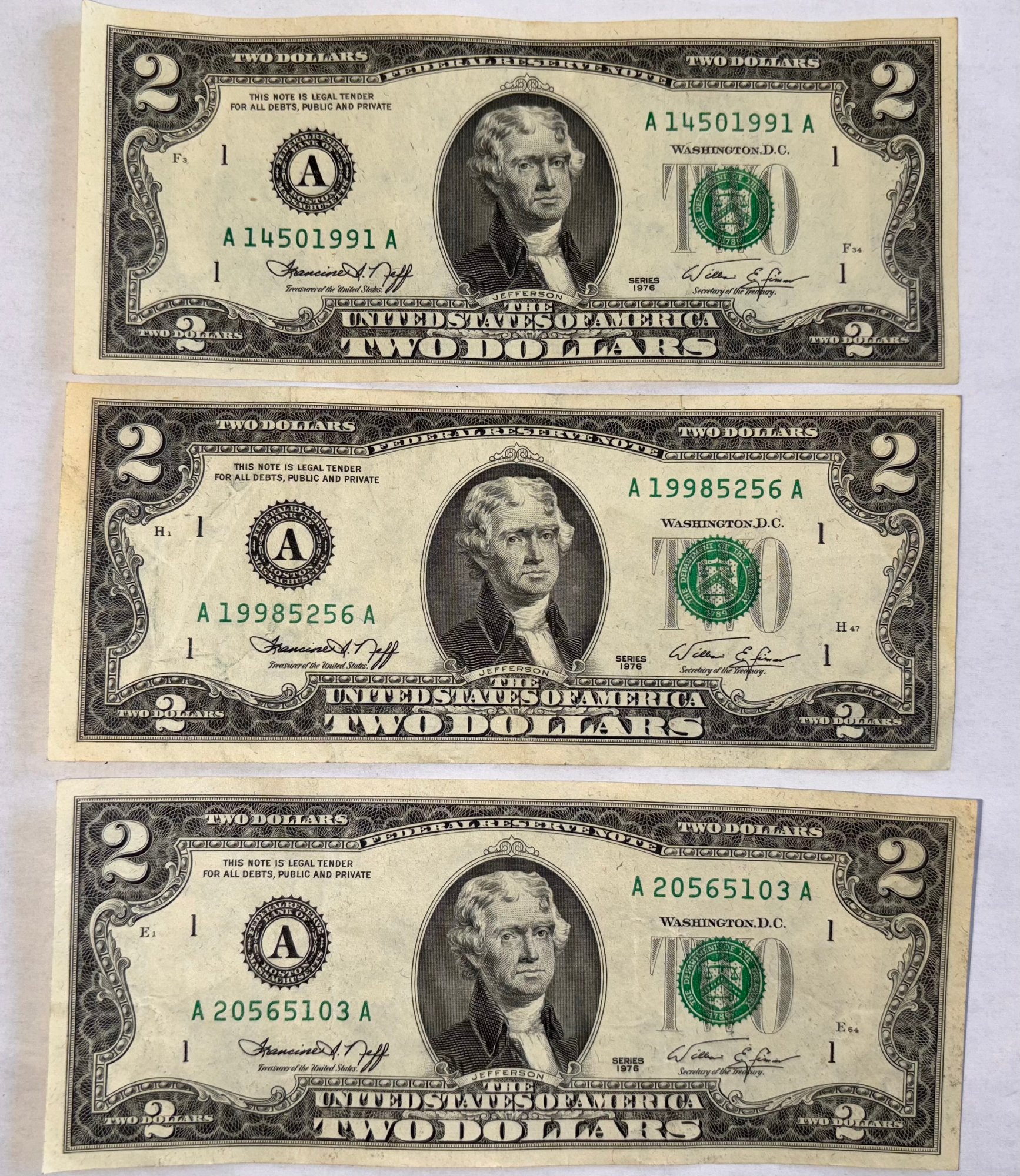
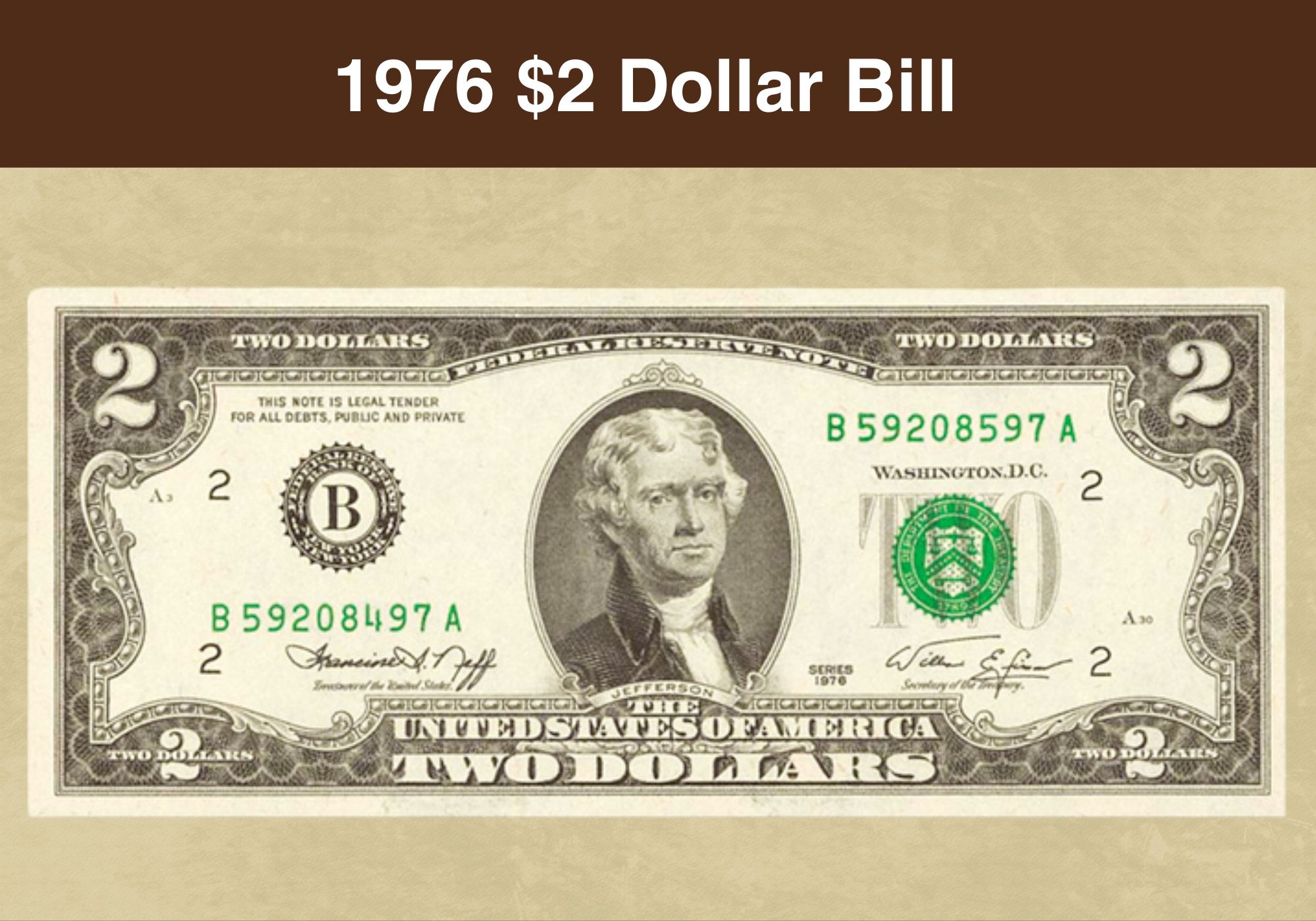
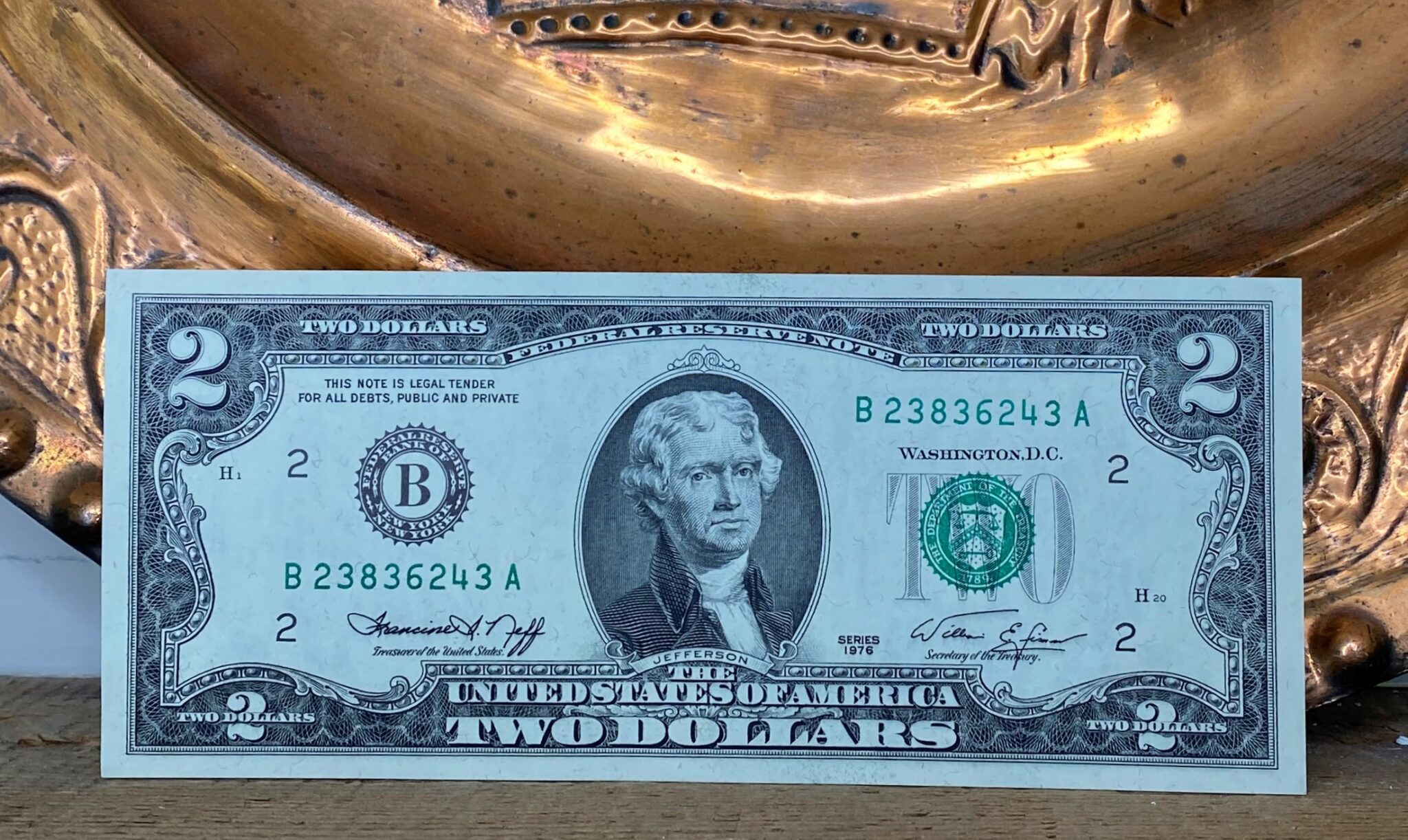
The Series 1976 $2 bill officially debuted on April 13, 1976—Thomas Jefferson's birthday. Unlike older United States Notes (which featured a distinctive red seal and serial number), the 1976 issue was produced as a Federal Reserve Note, bearing a characteristic green seal.
The front of the note retained the classic portrait of Thomas Jefferson, but the reverse underwent a complete redesign. The traditional depiction of Jefferson's home, Monticello, was replaced with an engraving of John Trumbull's famous historical painting, Declaration of Independence. This artistic change, combined with the Bicentennial context, generated immense initial public interest. Many citizens saved these bills as souvenirs rather than spending them, which is the primary reason a massive volume of Series 1976 notes survives in relatively high grades today.
Numismatic Grading and Physical Condition Factors
In the world of paper money collecting, condition is everything. A bill's physical state dictates its market value far more than its age or historical significance. Professional currency grading services, such as Paper Money Guaranty (PMG) and Professional Coin Grading Service (PCGS), use the official Sheldon Scale ranging from 1 to 70 to evaluate notes.
Examining a 1976 two-dollar bill requires careful handling, ideally with cotton numismatic gloves to prevent the transfer of skin oils. Inspecting the paper under a magnifying glass reveals microscopic details that separate a standard pocket-change find from a high-value collector's piece.
- Circulated Condition: Notes that have passed through commerce exhibit folds, creases, limpness, soil, stains, and rounded corners. Most circulated 1976 $2 bills grade between Very Fine (VF) and About Uncirculated (AU). These notes generally hold no numismatic premium and remain worth precisely face value ($2).
- Uncirculated (Choice Uncirculated to Gem Uncirculated): Notes grading 60 to 70 on the Sheldon Scale show no signs of handling. They possess original crispness, sharp corners, full original sheen, and vibrant ink colors. A Gem Uncirculated note (Grade 65 or higher) can command $20 to $50 depending on the specific Federal Reserve Bank of issue and certification status.
- Crispness and Paper Integrity: Genuine uncirculated paper money has an unmistakable tactile stiffness, known in the hobby as "crackle." Pressing or ironing a wrinkled note does not restore this integrity and is considered alteration, which severely damages the bill's value.
- Centering and Margins: Printing misalignment occurs frequently in mass-produced paper currency. Notes with exceptionally wide, even borders on all sides are more desirable to advanced collectors, whereas severely cut-off borders can reduce aesthetic appeal.
Identifying Key Varieties: Star Notes and Serial Number Anomalies
While the vast majority of 1976 $2 bills are standard issues, specific printing anomalies and rare serial numbers transform an ordinary bill into a valuable numismatic treasure. Collectors pay significant premiums for these variants.
Star Notes (Replacement Notes)
When a sheet of currency is damaged during the printing process at the Bureau of Engraving and Printing, it is pulled and replaced with a special sheet to maintain strict sequential accounting. These replacement notes feature a small star (*) at the beginning or end of the serial number instead of a regular suffix letter.
Because 1976 $2 star notes were printed in lower quantities than standard notes, they carry a higher baseline value. A circulated 1976 star note might bring $3 to $10, while an uncirculated example can easily range from $20 to $100+. The value also depends on the issuing Federal Reserve Bank; for example, star notes from certain districts had smaller print runs, making them scarcer.
Fancy Serial Numbers
Collectors avidly seek out specific mathematical patterns within the 8-digit serial numbers. Premium configurations include:
- Solids: All eight digits are the same (e.g., 77777777).
- Radars: Palindromic numbers that read the same forward and backward (e.g., 48399384).
- Repeaters: A four-digit sequence repeated twice (e.g., 12341234).
- Low Numbers: Serial numbers under 1000 (e.g., 00000456).
- Binaries: Serial numbers containing only two distinct digits (e.g., 10100110).
Valuation Breakdown of Series 1976 $2 Bills
To provide a clear roadmap for assessing individual holdings, the following breakdown categorizes expected values based on grade, type, and specific attributes.
| Note Type and Grade | Physical Characteristics | Estimated Market Value (2026) |
|---|---|---|
| Standard Circulated | Folds, creases, worn paper, smudges, handled in commerce. | $2.00 (Face Value) |
| Standard Uncirculated (Choice) | Crisp paper, sharp corners, no folds, grade 60-63. | $5.00 – $10.00 |
| Standard Uncirculated (Gem) | Flawless paper, pristine centering, grade 65+. | $15.00 – $35.00 |
| Circulated Star Note (*) | Replacement note with light handling wear. | $4.00 – $15.00 |
| Uncirculated Star Note (*) | Replacement note with pristine preservation, grade 63+. | $25.00 – $100.00+ |
| Fancy Serial Number | Radars, repeaters, low serial numbers in uncirculated state. | $50.00 – $500.00+ |
Federal Reserve Districts and First-Day Covers
Every Federal Reserve Note features a small letter and number combination designating the specific Federal Reserve Bank that ordered the currency. For the 1976 series, notes were issued by all 12 Federal Reserve Banks: Boston (A), New York (B), Philadelphia (C), Cleveland (D), Richmond (E), Atlanta (F), Chicago (G), St. Louis (H), Minneapolis (I), Kansas City (J), Dallas (K), and San Francisco (L).
Most regional variations do not drastically alter the value, as production numbers across districts were relatively balanced. However, certain district star notes exist in scarcer quantities, creating localized demand among specialized district collectors.
Another notable phenomenon from the 1976 Bicentennial release is the "First Day Cover." Thousands of stamp and coin collectors purchased uncut sheets or individual $2 bills, took them to local post offices on April 13, 1976, affixed a Bicentennial postage stamp, and had them canceled with an official postmark.
While these First Day Covers are historically fascinating, they are quite common. Most individual First Day Covers trade for $5 to $15. Uncut sheets of sixteen $2 bills, which the Treasury sold directly to the public in uncut formats, typically command $45 to $80 in pristine condition, provided they remain uncut and free of creases.
Step-by-Step Guide to Evaluating Your 1976 Two-Dollar Bill
Determining whether a specific bill is worth keeping in a collection or spending at a local store requires a systematic evaluation process.
Step 1: Check the Seal and Serial Number Color Confirm that the seal and serial numbers are green. If they are red, the bill is an older United States Note (Series 1953 or 1963), which carries a different and generally higher baseline value.
Step 2: Inspect for the Star (*) Symbol Look closely at the very beginning or end of the serial number string. The presence of a star indicates a replacement note, instantly elevating its collector potential.
Step 3: Analyze the Paper Condition under Good Lighting Hold the bill at an angle to light to check for hidden folds, creases, or pressing marks. True uncirculated notes will reflect light evenly across the surface and show absolute crispness.
Step 4: Examine the Serial Number for Patterns Review the 8-digit number for repeating sequences, low numbers, or palindromic structures.
Step 5: Compare Against Current Market Data Check recent completed sales on numismatic auction platforms or specialized currency price guides rather than asking prices on open marketplaces, which often reflect unrealistic seller expectations.
Common Misconceptions and Valuation Pitfalls
A pervasive myth persists in popular culture that two-dollar bills are inherently rare or valuable. Because people frequently save them, many individuals assume that holding onto a $2 bill from any era guarantees a significant financial return.
- The "Old Equals Rare" Fallacy: Age alone does not dictate value in paper money. Billions of modern Federal Reserve Notes were printed, meaning sheer survival numbers keep supply high.
- Bank Stampings and Collector Stamps: Some bills feature canceled postmarks or private stamps applied by novelty companies. These modifications are considered damage by numismatists and usually reduce the value of the note compared to an unaltered specimen.
- Altered Notes: Unscrupulous individuals occasionally attempt to alter standard serial numbers to mimic rare low numbers or fancy patterns. Professional authenticators easily spot these alterations under magnification, rendering the altered bill worthless.
Practical Preservation Recommendations
Protecting the physical integrity of a valuable paper note requires proper storage techniques. Standard household envelopes, rubber bands, and plastic sleeves containing PVC (polyvinyl chloride) will permanently damage currency over time by breaking down the paper fibers and causing ink discoloration.
Investing in archival-quality, PVC-free Mylar currency holders or currency albums ensures long-term preservation. Store these holders in a cool, dry, dark environment away from direct sunlight, extreme humidity, and temperature fluctuations. If a bill is determined to be of exceptional value (such as a rare low-serial star note in Gem condition), submitting it to a third-party grading service like PMG or PCGS provides both professional authentication and protective encapsulation.
Frequently Asked Questions
Are 1976 two-dollar bills rare?
No, 1976 two-dollar bills are not rare in circulated condition. The U.S. Treasury printed over 590 million of these Bicentennial notes, and millions survive today.
Can I still spend a 1976 two-dollar bill at face value?
Yes, all U.S. currency issued since 1861 remains legal tender at its full face value. Any retailer, bank, or vending machine programmed for currency acceptance must honor a genuine $2 bill for two dollars.
Why do some 1976 $2 bills have a star in the serial number?
The star indicates a "replacement note." The Bureau of Engraving and Printing uses star notes to replace misprinted or damaged sheets during production to maintain accurate accounting controls.
How do I know if my 1976 $2 bill is worth money?
Your bill is worth more than face value only if it is in pristine uncirculated condition, features a star in the serial number, or displays a rare "fancy" serial number pattern. Standard circulated bills are worth $2.
Should I clean a dirty 1976 two-dollar bill?
Never attempt to clean, wash, or iron a paper currency note. Cleaning destroys the original surface texture and finish, which professional grading services instantly detect and penalize, destroying any potential numismatic value.
Conclusion and Next Steps
Evaluating a 1976 two-dollar bill requires balancing historical appreciation with practical numismatic standards. While most notes remain modest keepsakes worth their face value of $2, careful inspection for uncirculated grades, star indicators, and unique serial numbers can occasionally reveal a hidden gem. Protect your currency properly, verify its attributes objectively, and consult professional grading references before making any major selling decisions.
Image Gallery