How to Select the Grandkid Name Necklace That Fits Your Family
Selecting the ideal grandkid name necklace requires balancing personal aesthetic preferences, metal durability, and future family expansion. By choosing modular designs—such as charm discs, stacked birthstone pendants, or adjustable ch...
Selecting the ideal grandkid name necklace requires balancing personal aesthetic preferences, metal durability, and future family expansion. By choosing modular designs—such as charm discs, stacked birthstone pendants, or adjustable chain arrangements—you can easily add new names over time while ensuring the piece matches daily wear habits, sensitivity needs, and overall family size.
Contents
1. Core Factors to Consider Before Selecting a Necklace
A grandkid name necklace is more than a piece of everyday jewelry; it serves as a wearable family tree and a sentimental touchstone. Because these items are often worn daily and held close for years, choosing the right configuration involves evaluating family dynamics, material longevity, and physical comfort.
Family Size and Expansion Potential
The most frequent challenge buyers face is planning for future grandchildren. If your family is still growing, buying a rigid, fixed-length bar necklace engraved with three names can create an awkward predicament when a fourth grandchild arrives.
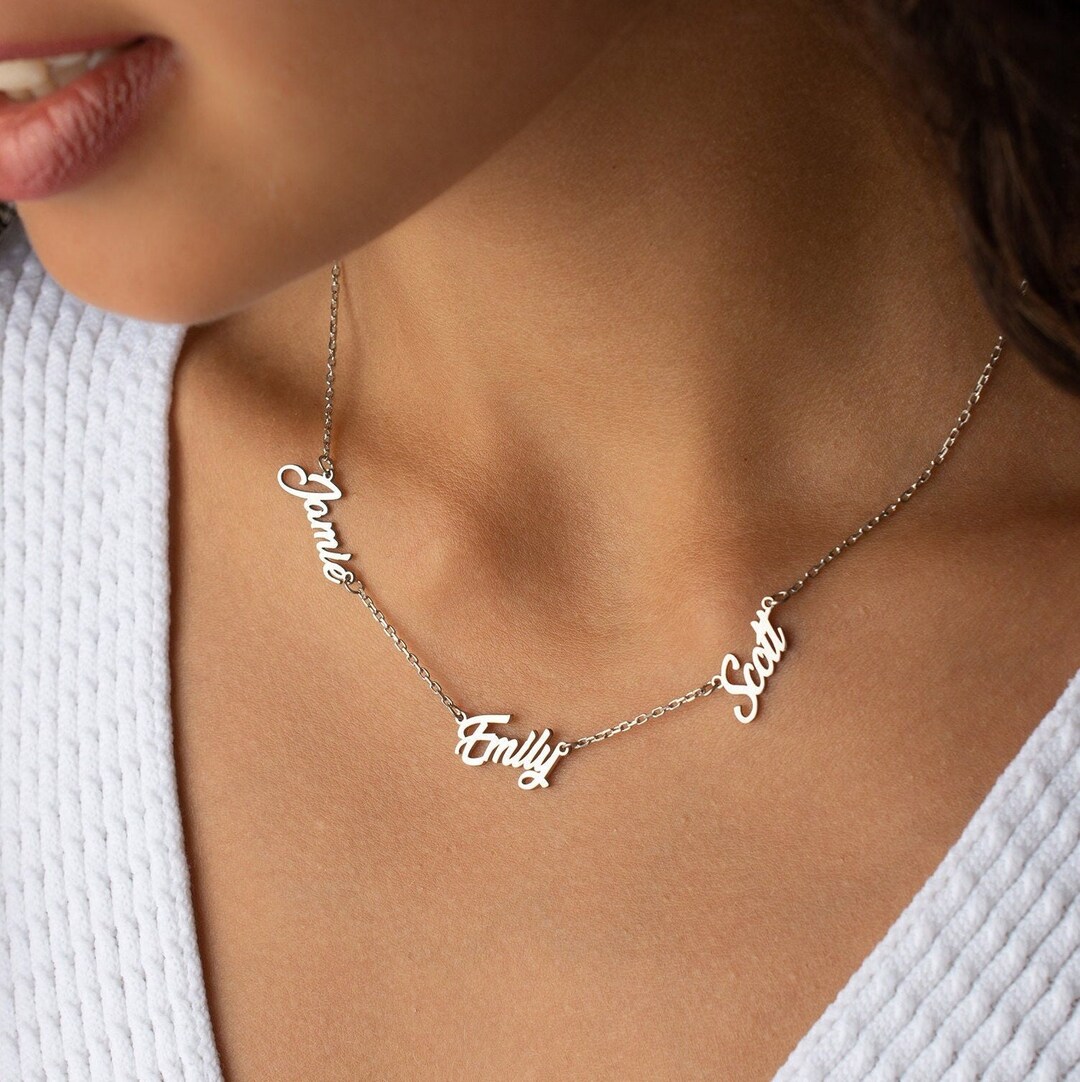
- Growing Families: Modular styles—such as individual charm discs, separate drop pendants, or spacer-bead designs—allow individual charms to be added to an existing chain without replacing the entire piece.
- Established Families: If no further grandchildren are anticipated, unified designs like engraved family tree medallions, multi-name horizontal bars, or multi-ring interlocked circles offer a polished, complete look.
Daily Wear and Metal Sensitivities
Jewelry worn continuously must withstand exposure to water, sweat, skin oils, and cosmetics. Furthermore, skin sensitivities often develop or worsen with age, making nickel-free and hypoallergenic materials essential.
- Solid Gold (14k or 18k): The standard for heirloom longevity. Solid gold does not tarnish, rust, or wear down to a base metal over time, making it ideal for sensitive skin and permanent daily wear.
- Sterling Silver (.925): A classic, high-quality option that offers durability at a accessible price point. Sterling silver requires periodic polishing to remove natural oxidation but remains a sturdy choice for frequent wear.
- Gold-Filled: Unlike standard thin electroplating, gold-filled jewelry features a thick layer of solid gold mechanically bonded to a brass or copper core. It must legally comprise at least 5% gold by weight under Federal Trade Commission regulations, offering high tarnish resistance without the solid-gold price tag.
2. Choosing the Best Layout Style for Your Family
The spatial layout of names on a necklace dictates both its visual appearance and its functional versatility. Different silhouette styles serve different aesthetic tastes and practical requirements.
[ Discs / Charms ] [ Bar Necklace ] [ Interlocked Rings ] (Easy to add new names) (Sleek, modern design) (Symbolic unity & balance) | | | | o---( )-( )---o o---[ AVA | LEO ]---o o---( ( ) )---o
Modular Charm Discs and Coins
Individual metal discs strung along a single chain remain the most flexible choice. Each disc is stamped or engraved with one grandchild’s name, initial, or birthdate.
When a new grandchild is born, you simply order an additional matching disc and slip it onto the chain. Discs can be ordered in uniform sizes or staggered in small, medium, and large diameters to create visual texture.
Engraved Bar Pendants
Horizontal and vertical bar necklaces present a modern, minimalist silhouette. A single bar can accommodate multiple names engraved side by side or stacked vertically.
However, horizontal bars have limited surface area. If you attempt to squeeze six names onto a standard 35mm bar, the font size must be scaled down drastically, which reduces legibility. Vertical bars hanging in a cluster allow each child to have their own dedicated vertical bar, providing a balanced look even as new bars are added.
Interlocked Circles and Family Trees
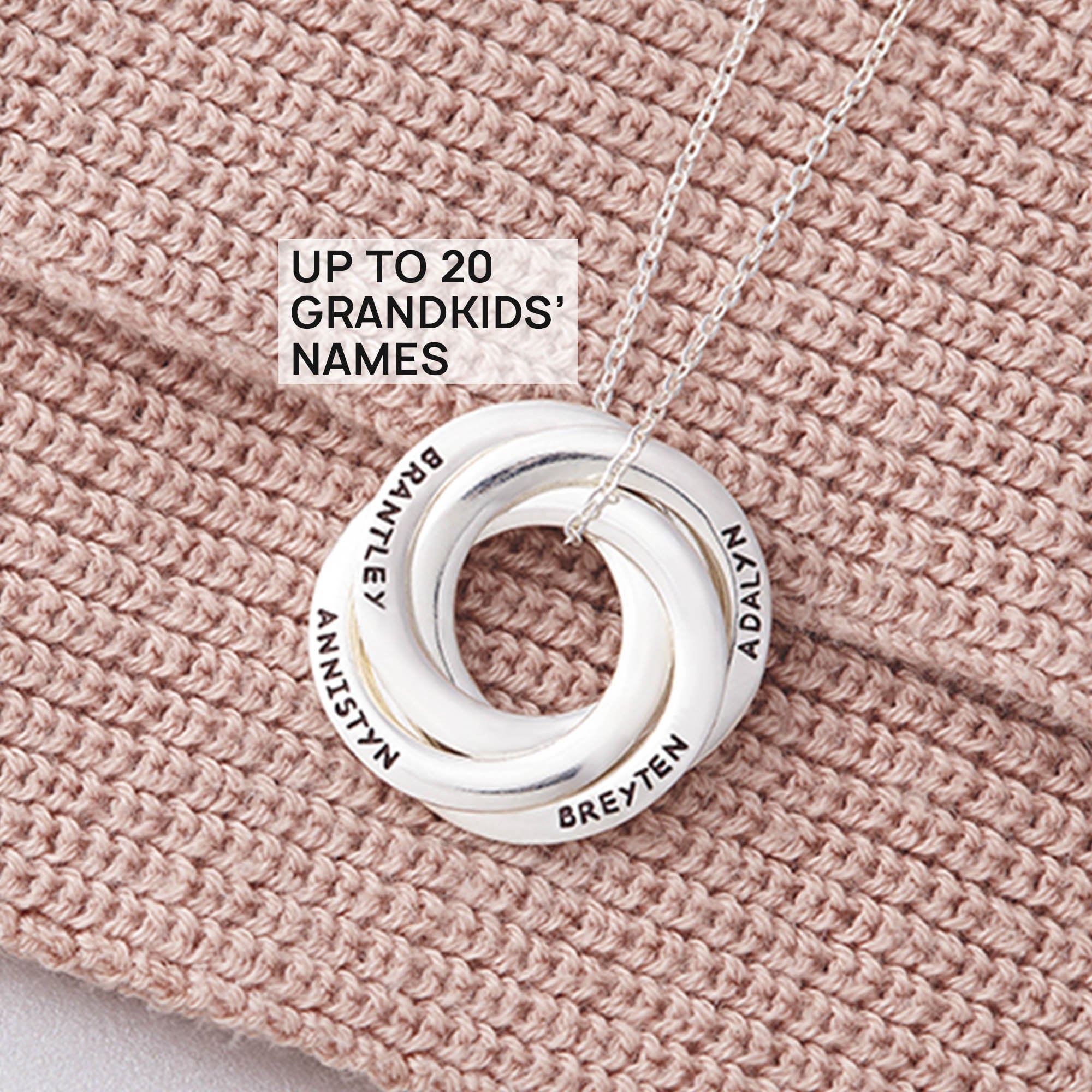
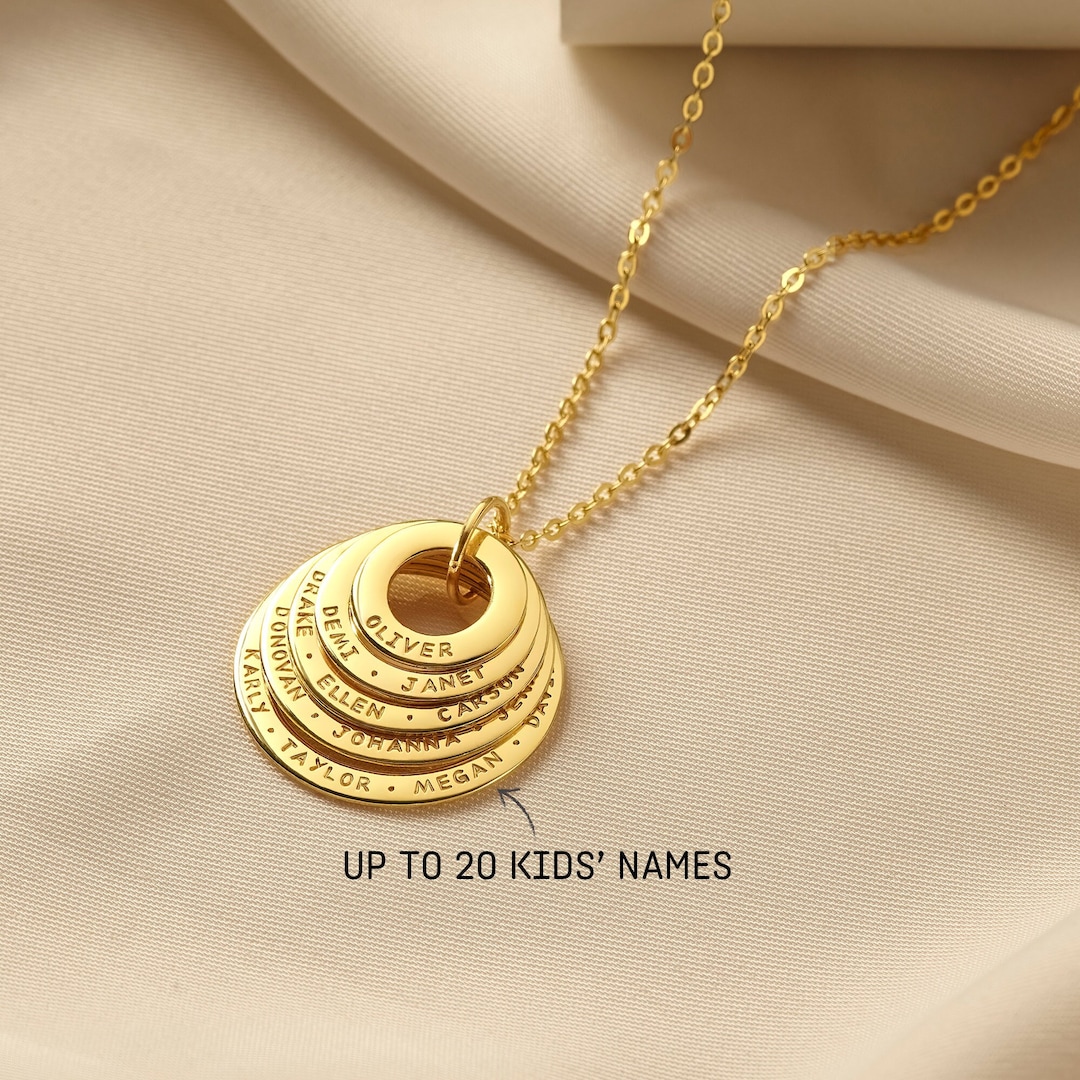
Interlocked hoop designs—often referred to as "eternity rings" or "generations pendants"—feature separate metallic rings joined together, with each ring bearing one name. This style visually symbolizes the unbreakable bond of a family.
Family tree pendants feature a central tree medallion with names carved into the branches or birthstones clustered around the foliage. While striking, complex multi-name tree pendants are generally fixed designs best suited for families whose headcount is finalized.
3. Materials, Durability, and Maintenance Comparison
Understanding the technical characteristics of common jewelry metals helps set realistic expectations for care, cost, and long-term wear.
| Metal Type | Durability Level | Hypoallergenic Rating | Scalability for New Names | Maintenance Requirements | Relative Cost |
|---|---|---|---|---|---|
| 14k Solid Gold | High (Scratch resistant, no tarnish) | Excellent (Nickel-free) | High (If using charm system) | Minimal (Occasional soap and warm water) | Premium |
| 18k Solid Gold | Medium-High (Softer than 14k) | Exceptional | High (If using charm system) | Minimal (Gentle polishing) | High Premium |
| Sterling Silver (.925) | Medium | Good (Unless alloyed with nickel) | High | Regular polishing to clear tarnish | Moderate |
| Gold-Filled (14k/20) | Medium-High | Very Good | High | Periodic light washing | Moderate |
| Gold-Plated / Vermeil | Low (Plating wears off over time) | Variable (Base metal exposure) | Low to Medium | Avoid water, perfumes, and lotions entirely | Budget |
| Stainless Steel / Titanium | Exceptional (Will not tarnish or dent) | Excellent | Moderate (Requires specialized engraving) | Wipe clean with soft cloth | Budget to Moderate |
4. Personalization Details: Typography, Engraving, and Birthstones
Once the structural layout and metal are selected, finer custom touches determine the necklace’s character.
[ Customization Options ] / | \ [ Font Style ] [ Engraving ] [ Accents ] - Script - Laser - Birthstones - Block - Hand-stamp - Symbols - Sans-serif - Deep Cut - Mini-charms
Font Selection and Legibility
The engraving style must be legible at a distance while maintaining aesthetic appeal.
- Classic Script / Cursive: Offers an elegant, traditional feel. Works best for short names or single initials. Long names in fine script can become difficult to read on smaller surfaces.
- Clean Block / Sans-Serif: Provides high legibility even at smaller font sizes (1mm to 1.5mm heights). Recommended when engraving full names alongside birthdates on compact pendants.
- Hand-Stamped Characters: Creates a handmade, organic look with slight depth variations. Hand-stamping creates deeper indentations than shallow surface etching, ensuring the text remains visible after years of wear.
Engraving Technique: Laser vs. Diamond-Cut vs. Hand-Stamping
- Laser Engraving: Uses a high-intensity beam to burn text into the metal. It allows for high precision, crisp fonts, and detailed custom artwork, though shallow laser etching may wear down over decades of constant friction.
- Diamond-Drag Engraving: Uses a diamond-tipped bit to physically carve grooves into the metal surface. It produces a reflective, traditional finish with good durability.
- Deep Mechanical Engraving: Cuts deep channels into the metal, which can be filled with dark enamel (oxidized finish) for maximum visual contrast.
Integrating Birthstones and Accent Charms
Adding birthstones is a popular way to introduce color to a monochromatic metal piece.
- Bezel-Set Birthstone Charms: Small, round gemstones set in metal rims can hang alongside name discs. This prevents gemstone prongs from snagging on delicate clothing or sweaters.
- Direct Inset Stones: Mini gemstones flush-set directly into the face of a name bar or coin disc save space while keeping the pendant smooth against the skin.
5. Chain Selection, Lengths, and Accessibility Features
A grandkid name necklace is only as reliable as the chain that supports it. Choosing the correct length and clasp mechanism ensures comfort and security.
Chain Length Options & Placement: 16 Inch: ( High Collarbone ) 18 Inch: ( Standard / Mid-Chest ) 20 Inch: ( Below Collarbone / Lower Chest ) 24 Inch: ( Extended / Deep Neckline )
Standard Chain Length Guidelines
- 16 Inches (Choker / High Collarbone): Sits near the base of the neck. Ideal for delicate single-disc pieces worn with high necklines, though it may feel restrictive for some adults.
- 18 Inches (Standard Chest Level): The most common length for women’s pendant necklaces. It falls right over the collarbone, balancing visibility and comfort with most shirt styles.
- 20 Inches (Lower Chest): Sits below the collarbone. Excellent for accommodating larger clusters of multi-name charms or layering with shorter chains.
- 22 to 24 Inches: Sits lower on the chest, making it easy to pull the necklace forward to look at the engraved names or birthstones without unclasping it.
Selecting Practical Clasps for Aging Hands
Standard small spring-ring clasps can be difficult to open for individuals dealing with arthritis, reduced fine motor control, or long fingernails.
- Lobster Claw Clasps: Larger and sturdier than spring rings, lobster clasps feature a spring-loaded lever that is much easier to depress and manipulate.
- Magnetic Clasps: High-strength neodymium magnetic converters can be attached to existing chains. They snap together automatically while maintaining strong pull tension, offering maximum accessibility.
- Adjustable Chains: Chains equipped with a slide-stopper bead allow the wearer to adjust the overall length anywhere between 16 and 22 inches, adapting to different necklines without requiring extra tools.
6. Common Pitfalls to Avoid
When designing a multi-generational custom piece, several practical mistakes can compromise long-term wearability:
- Ordering Rigid Designs for Growing Families: Purchasing a solid bar pre-engraved with current grandchildren leaves no space for future additions, leading to mismatched pieces later on.
- Ignoring Metal Hardness: Choosing very soft metals (like high-karat 24k gold or pure silver) for overlapping charm discs leads to surface scratching as the charms rub together during movement. Opt for durable 14k gold or hard sterling alloys instead.
- Overcrowding Small Pendants: Trying to fit a first name, middle name, and full birthdate on a small charm leads to micro-engravings that require a magnifying glass to read. Stick to first names or initials for small pendants.
- Selecting Delicate Chains for Heavy Pendants: As more name charms and birthstones are added to a chain, the cumulative weight increases. Ensure the chain thickness is upgraded (to at least 1.3mm to 1.5mm width) to prevent breakage.
Frequently Asked Questions
How do I add new grandkid names to an existing necklace later?
If you selected a modular charm design, you can purchase an additional disc or pendant from the original jeweler or a local goldsmith. The jeweler opens the end loop of the chain or slides the new charm onto the existing wire bail. For fixed bar necklaces, adding a new name requires either re-engraving the reverse side (if thick enough) or replacing the central bar component entirely.
What is the most durable metal for everyday wear by a grandmother?
Solid 14k gold (yellow, white, or rose) provides the best balance of structural strength, tarnish resistance, and hypoallergenic safety for non-stop daily wear. Stainless steel is an extremely durable budget alternative that will not dent or tarnish, though it has a darker gray tone compared to noble precious metals.
Should I include birthdates alongside the names?
Including birthdates depends on surface area. On medium or large coin pendants (15mm to 20mm diameter), adding a birthdate in standard numeric format (e.g., 10.12.24) beneath the name looks balanced. On small discs or vertical bars under 5mm wide, adding dates makes text tiny and difficult to read. In those cases, keeping the name on the front and placing the birthdate on the back is recommended.
What chain style is strong enough to hold multiple name charms?
Cable chains, box chains, and wheat chains with soldered links are the strongest styles for supporting weight. Avoid hollow rope chains or thin snake chains, as snake chains can kink easily when weighted with multiple floating charms, and hollow links are prone to crushing under pressure.
How do gold-filled name necklaces compare to solid gold?
Gold-filled jewelry contains a real gold layer that is hundreds of times thicker than standard electroplating, making it resistant to flaking and tarnishing for many years under normal wear. While solid gold remains the top choice for heirloom longevity, gold-filled items provide a similar look and hypoallergenic performance at a fraction of the cost.
Final Guidance and Recommended Next Steps
Selecting the right grandkid name necklace comes down to anticipating how your family piece will evolve over time. If your family is young or still expanding, prioritize modular designs—such as individual initial coins or stacked charm pendants on a sturdy cable chain—so new family members can be welcomed seamlessly into the design. For fully established families, a fixed horizontal bar, an interlocked ring pendant, or a detailed family tree piece provides a complete presentation.
Before making your final purchase, double-check spelling, select a minimum chain thickness of 1.3mm for structural integrity, and opt for high-accessibility closures like lobster claws or magnetic adapters if physical ease of use is a priority. Taking these extra structural steps ensures your custom necklace remains a cherished, comfortable daily keepsake for years to come.
Image Gallery