Why the U.S. Bank Tower Still Matters in 2026
The U.S. Bank Tower remains a vital pillar of the Los Angeles skyline because it serves as the definitive anchor for the city’s Financial District, combining peerless architectural heritage with a massive $60 million modernization. It...
The U.S. Bank Tower remains a vital pillar of the Los Angeles skyline because it serves as the definitive anchor for the city’s Financial District, combining peerless architectural heritage with a massive $60 million modernization. It represents the successful evolution of the high-rise from a mere office block into a high-tech, hospitality-driven corporate hub.
Contents
Standing at 1,018 feet, the U.S. Bank Tower was the tallest building in California for nearly three decades. While it was eventually surpassed in height by the Wilshire Grand Center, its cultural and economic relevance has only deepened as of 2026. Its importance is not merely a matter of verticality but of strategic adaptation. Under the stewardship of Silverstein Properties, the building has transitioned through the post-pandemic era by prioritizing tenant experience, seismic resilience, and a sophisticated aesthetic that newer glass-and-steel structures often struggle to replicate.
The Architectural Legacy of Pei Cobb Freed & Partners
Designed by the renowned firm Pei Cobb Freed & Partners (with Henry N. Cobb as the lead designer), the U.S. Bank Tower—originally known as the Library Tower—was a centerpiece of the 1980s Los Angeles redevelopment plan. Its history is inextricably linked to the Los Angeles Central Library. Following devastating fires at the library in 1986, the city utilized "transfer of development rights" (TDR), allowing the tower to exceed previous height limits in exchange for funding the library’s restoration.
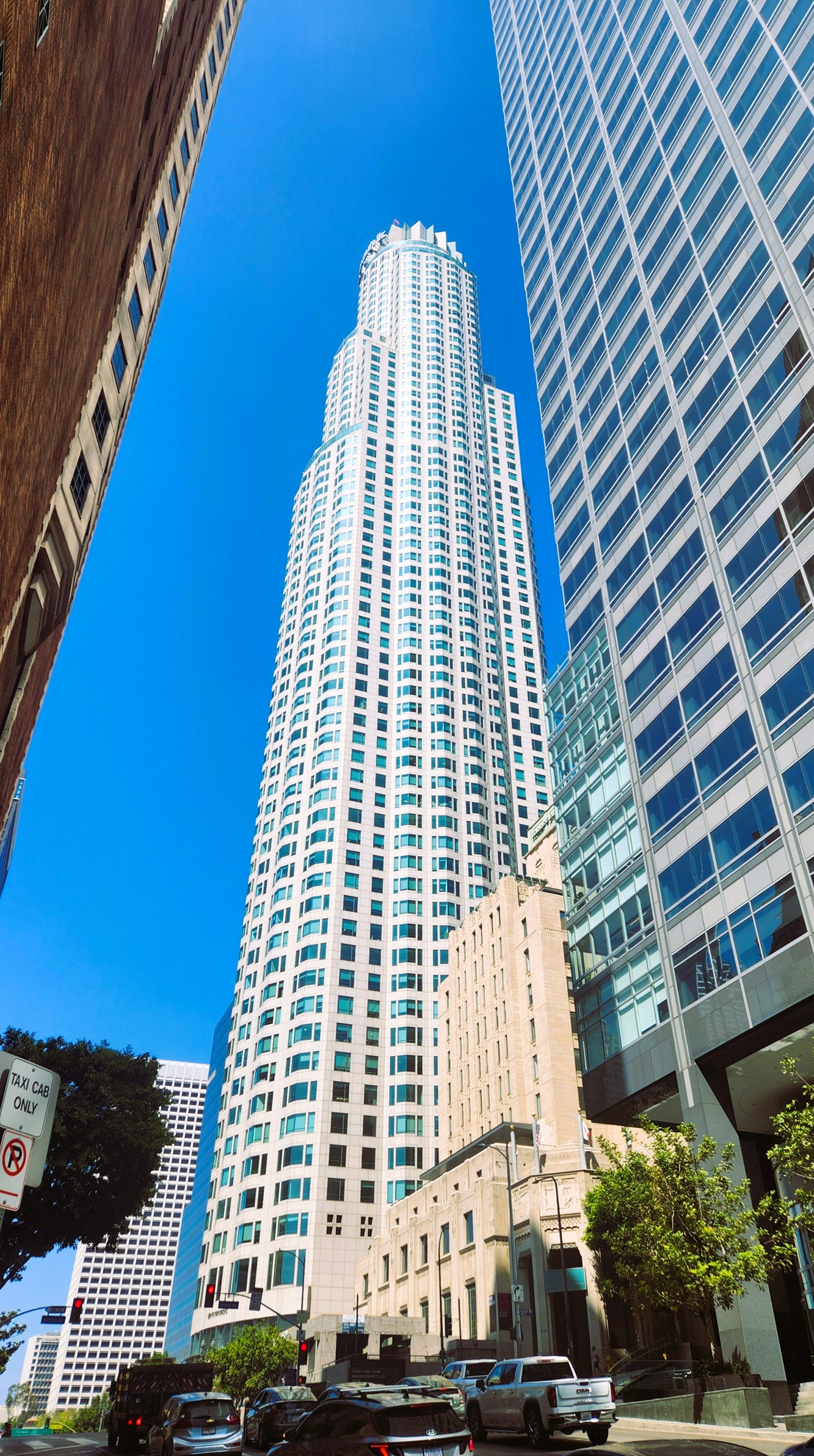
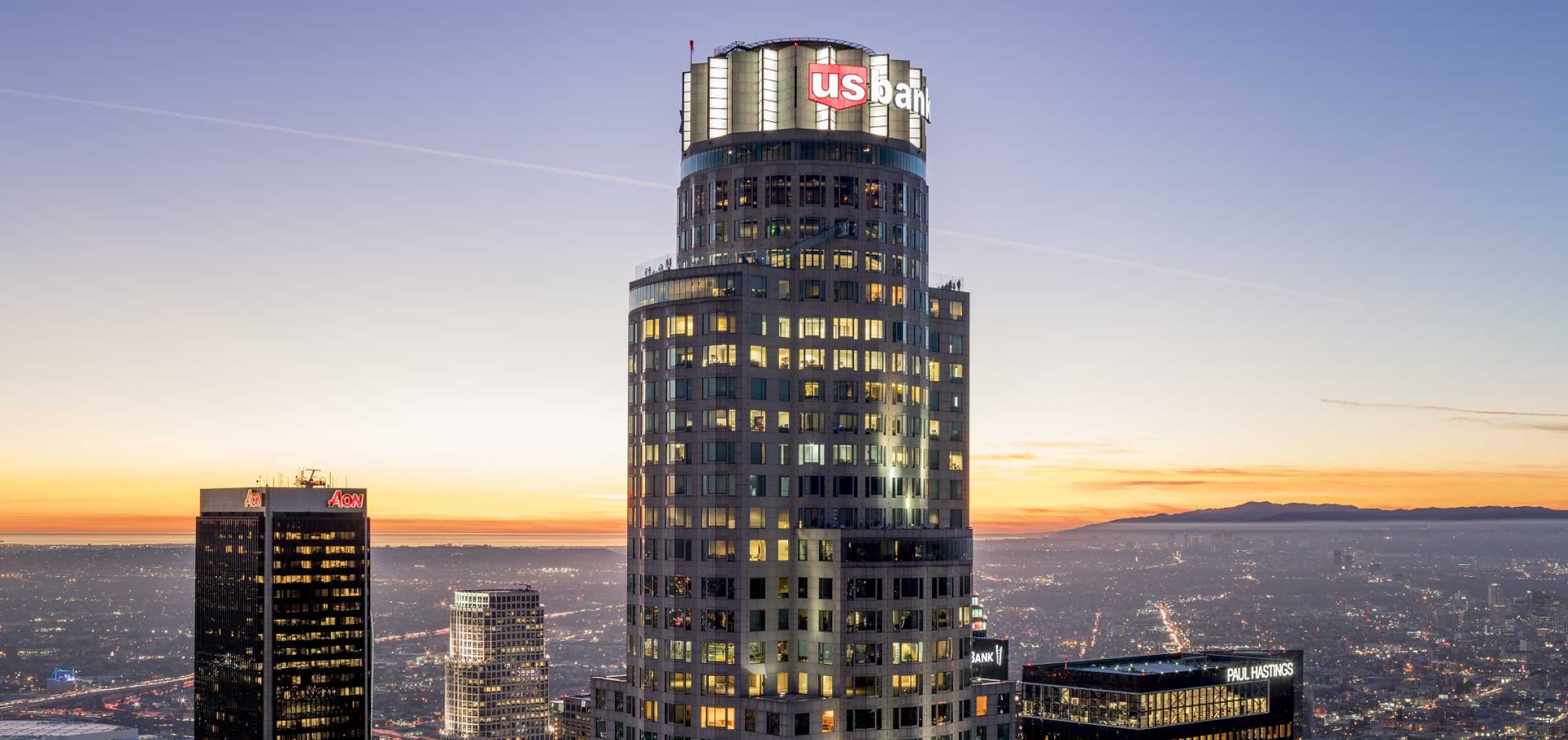
Architecturally, the building is a masterclass in geometric transition. It begins as a square at the base, transforms into a circular shape, and eventually resolves into a series of setbacks that culminate in its famous "crown." This crown is not just decorative; it functions as a beacon for the city, illuminated in various colors to mark significant civic events, sports championships, and holidays. Unlike the "spire-based" height of the Wilshire Grand, the U.S. Bank Tower’s height is comprised of usable floor space, making it a "truer" skyscraper in the eyes of many architectural traditionalists.
The use of light-colored granite and a distinctive interlocking cylinder design allows the building to catch the Southern California sun differently at various times of the day. In 2026, this aesthetic remains timeless, avoiding the dated "glass box" look of many late-20th-century developments. Its presence provides a sense of permanence and historical continuity in a city that is constantly reinventing itself.
The Silverstein Transformation: A $60 Million Rebirth
When Silverstein Properties acquired the tower from OUE Ltd. in 2020 for approximately $430 million, the commercial real estate world was in a state of flux. Silverstein, known for the redevelopment of the World Trade Center site in New York, recognized that the U.S. Bank Tower needed to be more than just a place to work. Between 2021 and 2023, they executed a $60 million capital improvement program that fundamentally changed why the building matters to the modern workforce.
The renovation replaced the previous "tourist attraction" focus—notably the OUE Skyspace and the external "Skyslide"—with a focus on high-end corporate amenities. The lobby was transformed from a traditional, somewhat sterile transit point into a "hotel-style" experience. This hospitality-centric approach includes:
- The Vista: A managed amenity floor that provides tenants with lounge spaces, high-end food and beverage options, and conferencing facilities that rival luxury hotels.
- Enhanced Connectivity: Upgrading the building’s digital infrastructure to meet the demands of 2026's tech-heavy industries, including fintech and creative media.
- Health and Wellness: Integrating modern filtration systems and wellness spaces that have become mandatory for Class A office tenants.
This shift proved that the building could adapt to the "flight to quality" trend. As of 2026, companies are moving away from older, unrenovated buildings and congregating in "trophy" assets that offer enough lifestyle perks to encourage employees back into the office. The U.S. Bank Tower's ability to retain major legal and financial firms is a testament to this strategic pivot.
Seismic Resilience and Engineering Excellence
One of the most technical reasons the U.S. Bank Tower still matters is its engineering. Los Angeles is a high-seismic zone, and the tower was built to be one of the safest structures in the world. It was designed to withstand an earthquake of 8.1 on the Richter scale, which is significantly higher than many other buildings in the region.
The core of the building is constructed with massive steel reinforcements and a unique cantilevered system that provides flexibility during ground motion while maintaining structural integrity. For corporate tenants managing billions of dollars in assets or critical legal data, the safety and "up-time" of their physical location are paramount. In the event of a major seismic event, the U.S. Bank Tower is engineered not just to prevent collapse, but to remain functional—a critical distinction for business continuity in 2026.
Comparison of Los Angeles’ Premier Skyscrapers
To understand why the U.S. Bank Tower holds its ground, it is helpful to compare it to its primary neighbor and rival, the Wilshire Grand Center.
| Feature | U.S. Bank Tower | Wilshire Grand Center |
|---|---|---|
| Total Height | 1,018 Feet | 1,100 Feet (with Spire) |
| Roof Height | 1,018 Feet | 934 Feet |
| Primary Use | Class A Office / Hospitality | Hotel / Office / Retail |
| Completion Year | 1989 (Renovated 2022) | 2017 |
| Architect | Pei Cobb Freed & Partners | AC Martin |
| Key Identity | The "Crown" of DTLA | The "Spire" and LED Screen |
| Seismic Design | High-Ductility Steel Frame | Buckling-Restrained Braces |
As shown in the table, while the Wilshire Grand is technically taller due to its spire, the U.S. Bank Tower maintains a higher roofline and more traditional office floor plates. This distinction is important for tenants who value the prestige of being at the "highest point" of habitable space in the city.
Cultural Significance and the Hollywood Connection
The U.S. Bank Tower matters because it is an inseparable part of the global image of Los Angeles. It has been featured in countless films, television shows, and video games. Most notably, it served as the primary target in the 1996 film Independence Day, and its likeness is a central landmark in the Grand Theft Auto V rendition of the city (known as the Maze Bank Tower).
This cultural footprint creates a "brand equity" that newer buildings cannot easily buy. For a global corporation, having a headquarters in a building that the entire world recognizes provides an immediate sense of stature. In 2026, as virtual and physical branding continue to merge, the silhouette of the U.S. Bank Tower remains one of the most valuable pieces of "visual real estate" in the Western United States.
The Financial District’s Economic Anchor
The building serves as a bellwether for the economic health of Downtown Los Angeles (DTLA). When the U.S. Bank Tower sees high occupancy and rising lease rates, it signals confidence in the entire Financial District. The tower's presence supports a massive ecosystem of local businesses, from high-end restaurants like 71Above—which remains one of the highest dining experiences in the country—to local service providers and transit systems.
Furthermore, the building's proximity to the Bunker Hill residential developments and the Grand Avenue Project (designed by Frank Gehry) creates a "live-work-play" synergy. As DTLA continues to transition into a more residential-friendly urban center, the U.S. Bank Tower provides the critical "work" component that keeps the neighborhood balanced and economically diverse.
Frequently Asked Questions
Can the public still visit the top of the U.S. Bank Tower in 2026?
Public access has changed significantly since the closure of the OUE Skyspace. While the Skyslide is no longer operational, the public can still access the upper floors by visiting 71Above, the upscale restaurant and lounge located on the 71st floor. This provides the same panoramic views but within a culinary and hospitality context rather than a tourist observatory.
Who is the current owner of the U.S. Bank Tower?
As of 2026, the building is owned and managed by Silverstein Properties, a major real estate investment and development firm based in New York. They acquired the property in 2020 and have since invested heavily in modernizing the building's infrastructure and tenant amenities.
How does the U.S. Bank Tower handle wind and seismic activity?
The tower utilizes a high-ductility steel frame and a series of setbacks that help break up wind loads. For seismic events, the building's foundation is anchored into the bedrock with a massive concrete mat, and the steel structure is designed to flex and dissipate energy, making it one of the most earthquake-resistant skyscrapers in the world.
Does U.S. Bank still have its headquarters in the building?
U.S. Bank remains the primary naming tenant, though they occupy only a portion of the building’s 1.4 million square feet. The tower is home to a diverse array of tenants, including prestigious law firms, hedge funds, and technology companies.
Next Steps for Prospective Tenants and Visitors
For businesses considering a move to the Financial District, the U.S. Bank Tower represents a "trophy" asset that balances prestige with modern functionality. Interested parties should engage with the leasing team at Silverstein Properties to tour the recent renovations and "The Vista" amenity floor. For architectural enthusiasts and visitors, a reservation at 71Above remains the best way to experience the building’s scale and the unparalleled 360-degree views of the Los Angeles basin, from the San Gabriel Mountains to the Pacific Ocean.
Image Gallery