Understanding Federal Tax on Life Insurance Payouts in 2026
Generally, federal tax on a life insurance payout is non-existent because the IRS treats death benefits as a non-taxable inheritance rather than earned income. Most beneficiaries receive the full lump sum without owing federal income t...
Generally, federal tax on a life insurance payout is non-existent because the IRS treats death benefits as a non-taxable inheritance rather than earned income. Most beneficiaries receive the full lump sum without owing federal income tax. However, exceptions apply if the payout includes accumulated interest, if the policy was sold for profit, or if the deceased’s total estate exceeds federal exemption limits.
Contents
The General Rule: Why Most Payouts Are Tax-Free
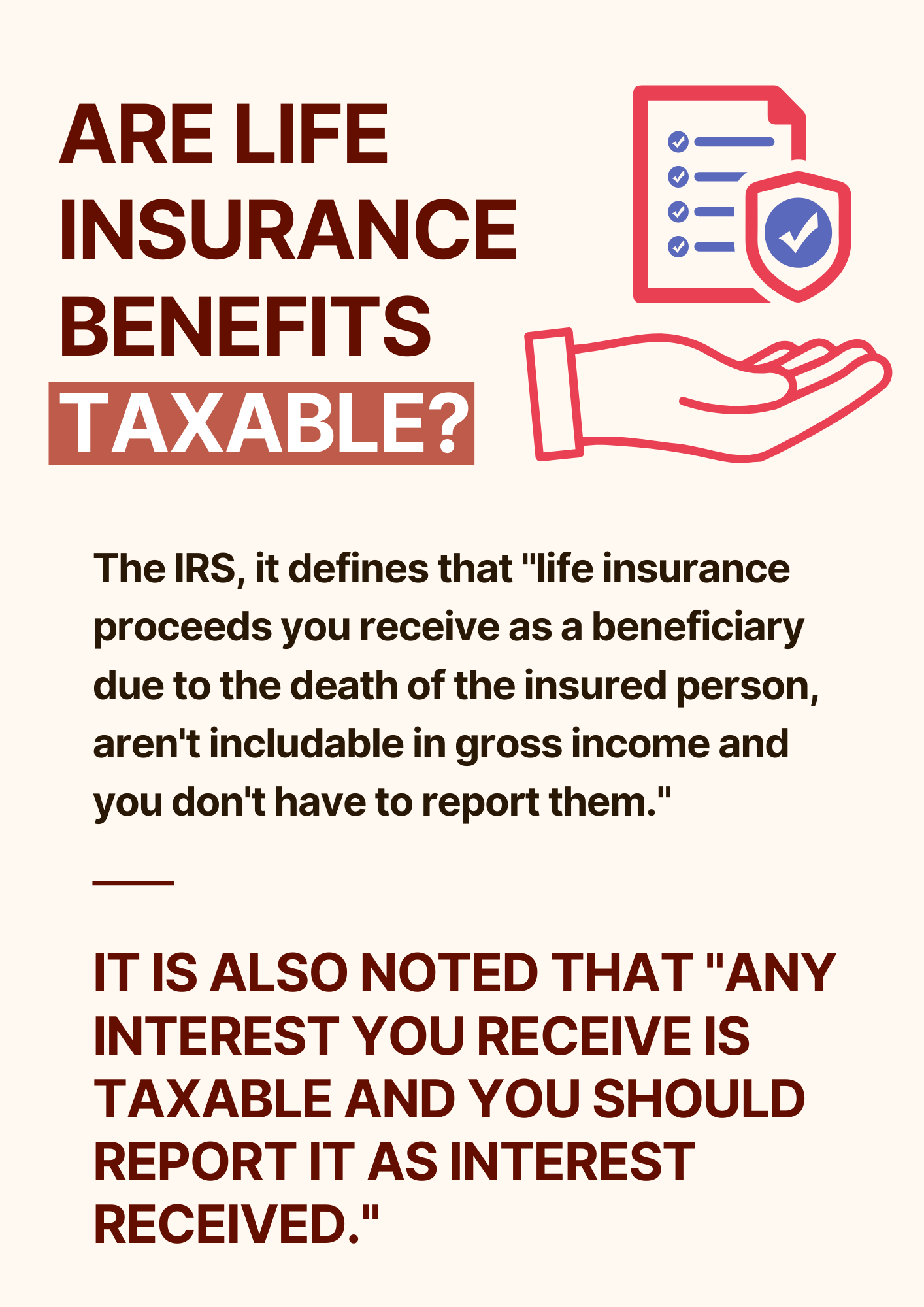
For the vast majority of Americans in 2026, a life insurance payout is a tax-free event. Under Internal Revenue Code Section 101(a), the proceeds from a life insurance contract paid by reason of the death of the insured are excluded from the beneficiary's gross income. This exemption applies whether the policy is a term life policy, a whole life policy, or a universal life policy.
The rationale behind this tax treatment is rooted in the social purpose of life insurance. The federal government views these proceeds as a mechanism to replace the financial support of a deceased family member or to cover end-of-life expenses. Taxing these funds would diminish the safety net the policyholder worked to establish. Because the policyholder typically paid for the policy with "after-tax" dollars (premiums are not tax-deductible for individuals), the eventual payout is viewed as a return of capital and a tax-free benefit.
However, "tax-free" does not mean "reporting-free" in every situation, and it certainly does not mean that the money is exempt from all forms of federal taxation. To understand the full scope of your liability, you must distinguish between income tax and estate tax.
When Federal Income Tax Applies to Life Insurance
While the principal death benefit is exempt from income tax, there are several specific scenarios where a beneficiary or policyholder might owe the IRS.
1. Interest Earned on the Death Benefit
Insurance companies often take time to process claims, or a beneficiary may choose to leave the proceeds with the insurer in an interest-bearing account. Any interest earned on the death benefit from the date of the insured’s death until the date of payment is considered taxable ordinary income.
For example, if a $500,000 policy pays out $502,000 because of accrued interest, the $500,000 is tax-free, but the $2,000 in interest must be reported on your federal tax return. The insurance company will typically issue a Form 1099-INT reflecting this amount.
2. Installment Payments (Annuities)
If a beneficiary chooses to receive the payout in installments (a "settlement option") rather than a lump sum, each payment consists of two parts: a portion of the tax-free principal and a portion of taxable interest. The IRS uses an "exclusion ratio" to determine how much of each payment is shielded from taxes. Only the portion representing the original death benefit remains tax-exempt.
3. The Transfer-for-Value Rule
If a life insurance policy was sold or transferred to another party for "valuable consideration" (money or something of value) before the insured died, the tax-free status may be lost. Under the Transfer-for-Value Rule, the death benefit is only tax-free up to the amount paid for the policy plus any subsequent premiums paid by the new owner. The remainder of the payout is taxed as ordinary income.
Exceptions to this rule: The payout remains tax-free if the policy was transferred to the insured person, a partner of the insured, or a corporation in which the insured is an officer or shareholder.
4. Cash Value Surrenders and Policy Loans
This applies to permanent policies (Whole Life, Universal Life) while the insured is still alive. If you surrender a policy for its cash value, you are only taxed on the amount that exceeds your "cost basis" (the total premiums you paid into the policy minus any dividends or previous withdrawals).
Similarly, if you take out a policy loan and the policy lapses or is surrendered before the loan is repaid, any outstanding loan amount that exceeds your cost basis is treated as taxable income.
Federal Estate Tax and Life Insurance in 2026
The most significant tax threat to a life insurance payout in 2026 is the Federal Estate Tax. This is distinct from income tax. Even if a beneficiary doesn't owe income tax on the payout, the value of the payout may be included in the deceased person's "gross estate."
The 2026 Exemption Landscape
As of 2026, the federal estate tax landscape has shifted significantly due to the sunsetting of the Tax Cuts and Jobs Act (TCJA) of 2017. The high exemption limits seen in the early 2020s (which reached over $13 million per individual) have reverted to pre-2018 levels, adjusted for inflation. This means more estates are now subject to the federal estate tax, which can be as high as 40%.
Incidents of Ownership
The IRS includes life insurance proceeds in a deceased person’s estate if the deceased held any "incidents of ownership" in the policy within three years of their death. Incidents of ownership include the right to:
- Change the beneficiary.
- Surrender or cancel the policy.
- Borrow against the cash value.
- Pledge the policy as collateral for a loan.
If the deceased owned the policy, a $2 million payout is added to the value of their homes, investments, and other assets. If the total exceeds the 2026 exemption limit, the estate—not the beneficiary—must pay taxes on the excess before distributing funds.
Comparison of Tax Scenarios for Life Insurance
The following table outlines how different components of life insurance are handled by the IRS in 2026.
| Scenario | Federal Income Tax Status | Federal Estate Tax Status | Reporting Requirement |
|---|---|---|---|
| Lump Sum Death Benefit | Generally Tax-Free | Taxable if owner was the deceased | None for beneficiary |
| Interest on Payout | Taxable as Ordinary Income | Included in Estate Value | Form 1099-INT |
| Cash Value Surrender | Taxable above Cost Basis | N/A (Insured is alive) | Form 1099-R |
| Policy Sold (Life Settlement) | Taxable above Cost Basis | N/A (New owner owns it) | Form 1099-LS |
| Employer-Paid Policy >$50k | Imputed Income on Premium | Taxable if owner was deceased | Included in Form W-2 |
Specialized Rules: MECs and Group Life
Modified Endowment Contracts (MECs)
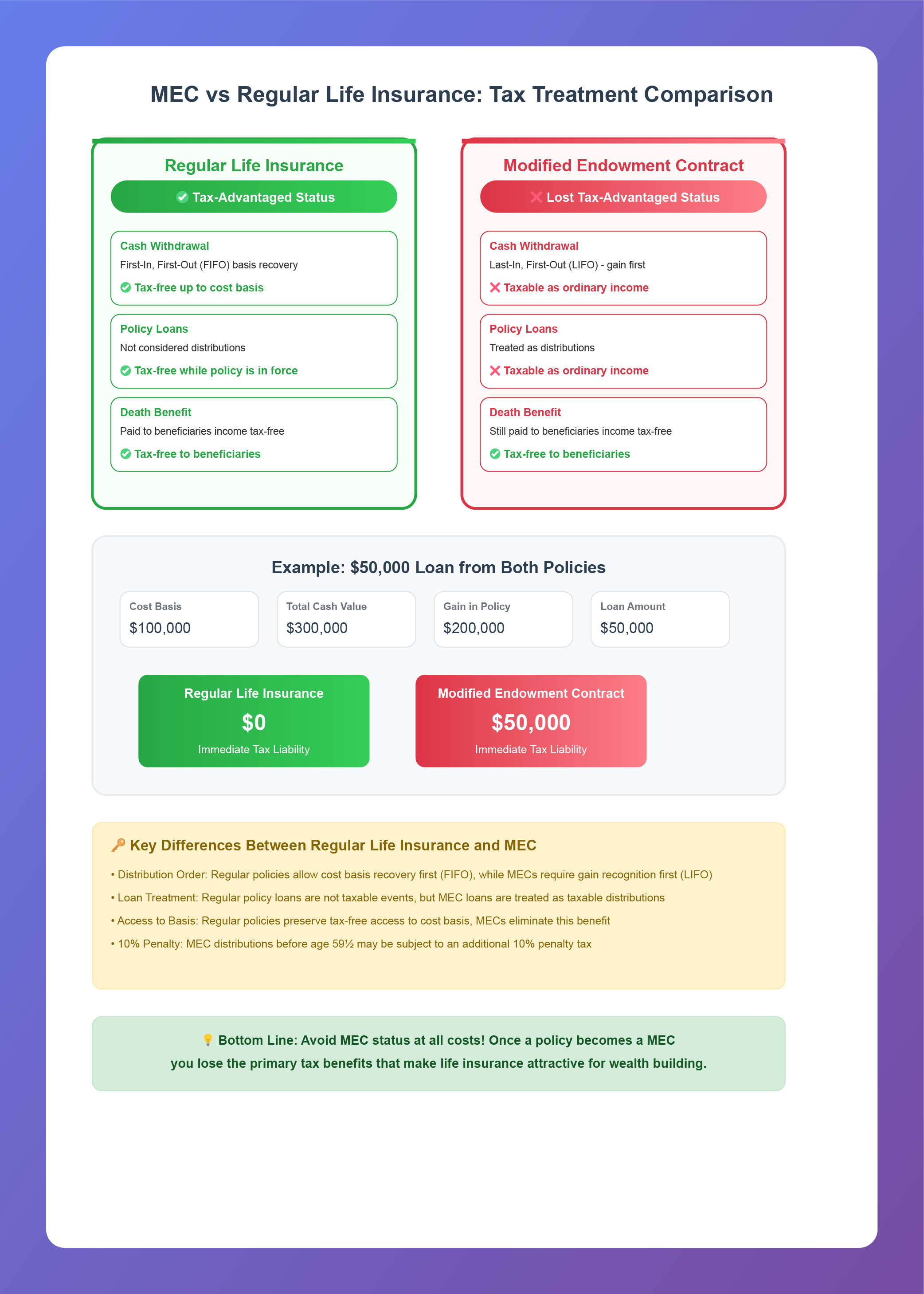
If a permanent life insurance policy is funded too quickly (exceeding the "7-pay test" limits set by the IRS), it becomes a Modified Endowment Contract. While the death benefit of a MEC is still generally tax-free to beneficiaries, "living benefits" are taxed harshly. Withdrawals and loans from a MEC are taxed on a "last-in, first-out" (LIFO) basis, meaning gains are taxed first. Additionally, if you take money out before age 59½, you may face a 10% federal tax penalty.
Group Term Life Insurance
Many employers provide life insurance as a benefit. The IRS allows you to receive up to $50,000 of group term life insurance coverage tax-free. However, if your employer pays for coverage exceeding $50,000, the "imputed cost" of the excess coverage is considered a taxable benefit. This amount is calculated based on IRS premium tables and is included in your taxable wages on your W-2. The actual payout to your beneficiary remains income tax-free, but it may still be subject to estate taxes if not structured correctly.
Strategies to Avoid Federal Tax on Payouts
For those with significant assets in 2026, preventing the life insurance payout from being eroded by a 40% estate tax is a priority.
Irrevocable Life Insurance Trusts (ILITs): The most common strategy is to have an ILIT own the policy. Because the trust owns the policy and the deceased has no "incidents of ownership," the payout is not included in the deceased's gross estate. The funds can then be distributed to beneficiaries entirely tax-free.
Beneficiary Ownership: Alternatively, an adult child or business partner can own the policy on your life and pay the premiums. Since you do not own the policy, the proceeds do not count toward your estate.
Common Questions Regarding Life Insurance Taxation
Is the payout from a "Key Person" insurance policy taxable?
If a business owns a "Key Person" policy and is the beneficiary, the death benefit is generally income tax-free under Section 101(a). However, the business must comply with notice and consent requirements under Section 101(j). If these requirements are not met, the proceeds may be taxable. Additionally, for C-corporations, the payout might affect the Corporate Alternative Minimum Tax (CAMT).
Are life insurance dividends taxable?
No, the IRS generally views dividends from a participating life insurance policy as a return of premium rather than income. They are not taxable as long as the dividends do not exceed the total amount of premiums you have paid into the policy. If dividends are left with the insurer to earn interest, that specific interest is taxable.
Do I have to report a life insurance payout on my 1040?
If you receive a standard lump-sum death benefit, you generally do not need to report it on your individual federal income tax return (Form 1040). You only need to report the portion of the payout that represents interest. If you receive a Form 1099-INT or 1099-R, you must include those amounts in your filing.
What happens if the policy has an outstanding loan at the time of death?
If the insured dies with an outstanding policy loan, the insurance company deducts the loan balance and any accrued interest from the death benefit before paying the beneficiary. The remaining payout is still income tax-free. The forgiven loan is not considered "cancellation of debt" income to the beneficiary.
Does the "Three-Year Rule" still apply in 2026?
Yes. If a policyholder transfers ownership of an existing policy to another person or a trust and dies within three years of that transfer, the IRS will still include the death benefit in the original owner's estate for tax purposes. This rule prevents individuals from giving away assets on their deathbed solely to avoid estate taxes.
Practical Recommendation
To ensure a life insurance payout remains truly tax-free in 2026, beneficiaries should immediately identify if any portion of their check is labeled as "interest." For policyholders, the most critical action is to review the total value of your estate, including the face value of all life insurance policies. Given the lower 2026 estate tax exemptions, consult with a tax professional or estate attorney to determine if moving your policies into an Irrevocable Life Insurance Trust (ILIT) is necessary to protect your heirs from a significant federal tax bill.
Image Gallery