Vice President Campaign Posters: Design Strategy, Slogans, and Print Guidelines
Vice president campaign posters serve to reinforce a shared ticket, humanize a running mate, or secure an executive student council seat. Whether designed for national electoral tickets or student government elections, successful poste...
Vice president campaign posters serve to reinforce a shared ticket, humanize a running mate, or secure an executive student council seat. Whether designed for national electoral tickets or student government elections, successful posters require high-contrast color theory, legible typography, clear hierarchical messaging, and durable substrate specifications suitable for high-traffic environments.
Contents
The Strategic Function of the Vice Presidential Poster
Political print collateral must deliver an immediate cognitive impact. Unlike top-of-ticket designs that prioritize sweeping vision and broad recognition, a vice presidential campaign poster must achieve a distinct balance: establishing individual credibility while reinforcing unity with the primary executive.
In national and state-level politics, standalone vice presidential posters are comparatively rare; running mates are predominantly integrated into a joint ticket layout. When standalone vice presidential materials are produced—such as during primary battles, convention introductions, or targeted regional appearances—the design must elevate the running mate's specific strengths, such as legislative experience, demographic representation, or regional appeal, without overshadowing the presidential nominee.
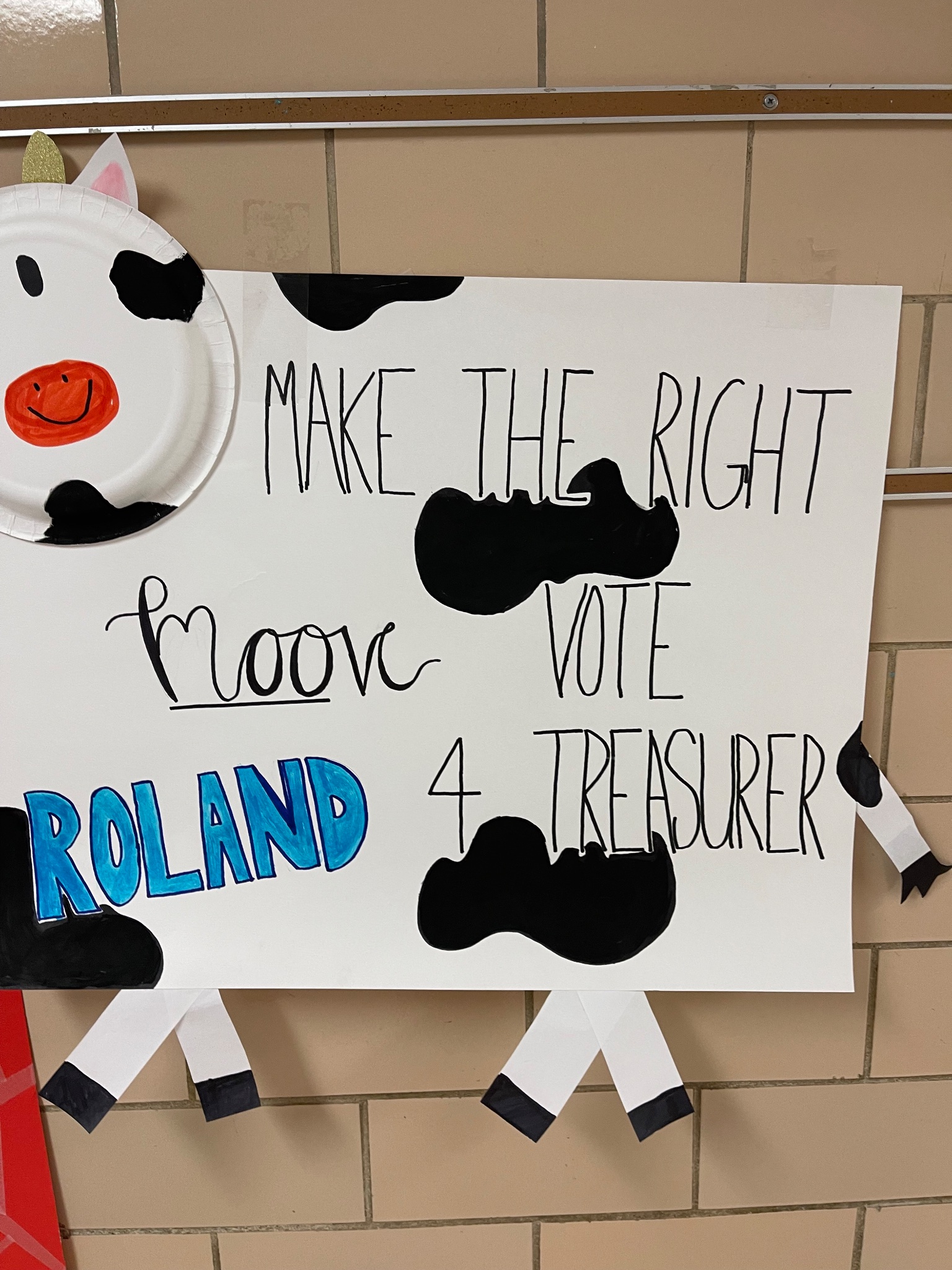
In scholastic settings, such as high school student councils or collegiate student government associations (SGAs), the vice president is often elected on an independent ballot. Here, the vice presidential candidate cannot lean on a shared presidential brand. The poster must communicate a platform centered on accountability, operational support, committee leadership, and policy execution.
Visual Hierarchy and Core Design Principles
Effective political posters are read within three seconds from distances ranging between 10 and 50 feet. Achieving clarity at this range demands strict adherence to visual hierarchy.
[CRITICAL HIERARCHY NOTE]Text hierarchy must follow:
- Name (Primary)
- Office Sought (Secondary)
- Platform/Slogan (Tertiary)
Slogans must not compete with candidate name recognition.
Typography and Font Selection
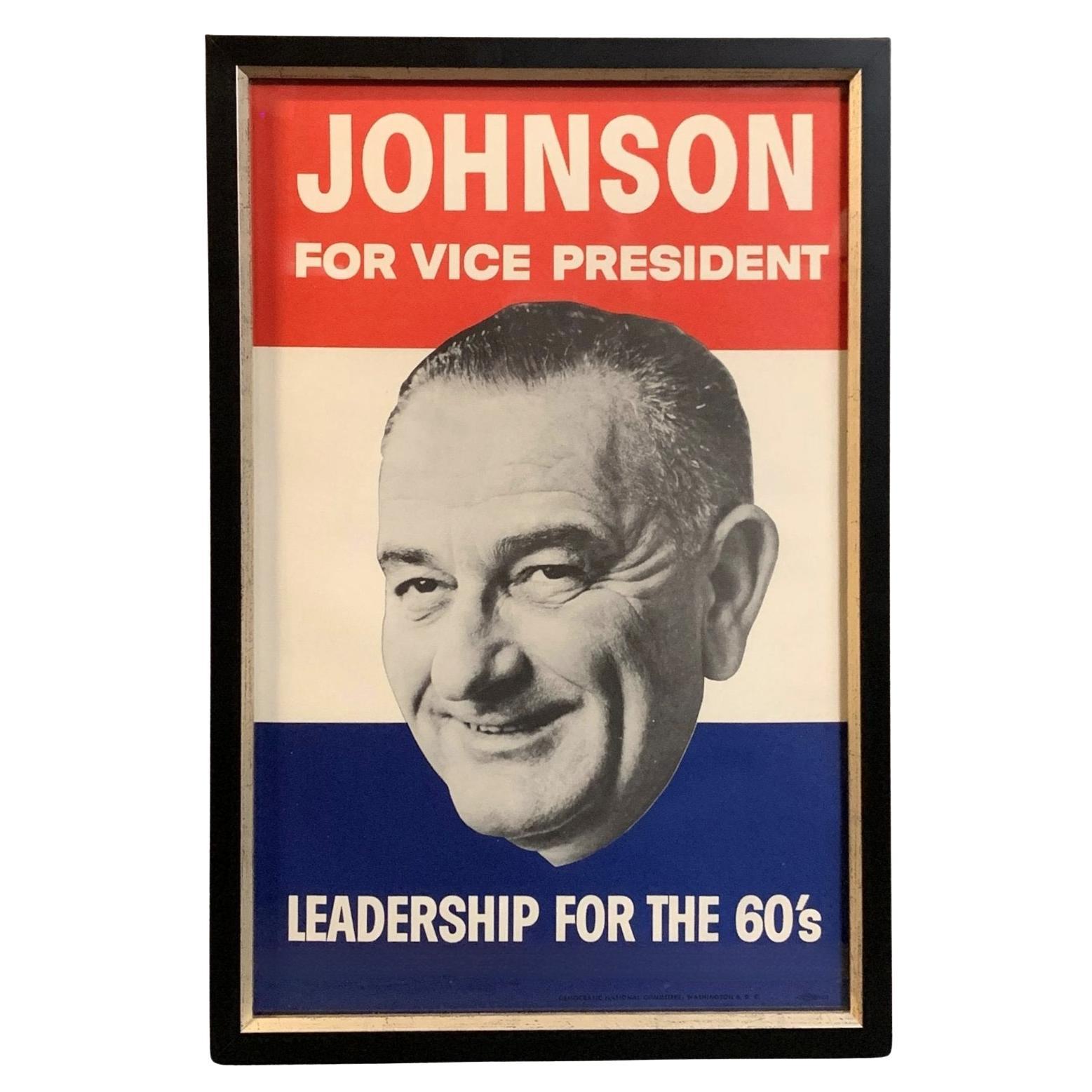
The candidate's surname must dominate the design canvas. High-impact sans-serif typefaces such as Gotham, Futura, Montserrat, and League Spartan provide maximum legibility across print and digital reproductions.
- Tracking and Kerning: Set tracking tightly on the primary surname, but maintain sufficient letter spacing to prevent ink bleed on porous cardstock.
- Typographic Weight: Use bold or heavy weights for the candidate's name. Use medium or regular weights for the secondary text indicating the office sought (e.g., "FOR VICE PRESIDENT").
- Serif Applications: Serif fonts such as Mercury, Garamond, or Georgia are occasionally deployed to convey institutional gravity, academic rigor, or traditional governance, but require larger point sizes to remain readable from a distance.
Color Theory and Psychological Positioning
Electoral print design relies on standard color conventions to telegraph political posture, but modern designs refine these palettes using specific CMYK profiles:
- Classic Bipartisan / Civic (Navy & Deep Crimson): Navy blue establishes stability, authority, and institutional trust, while crimson adds urgency and focus.
- Modern Civic (Cobalt, White, & Slate): Moving away from heavy primaries toward higher-vibrancy blues modernizes the campaign, popular in collegiate SGA elections and municipal races.
- Contrasting Accents (Gold, Bright Yellow, or Cyan): Used sparingly on callouts, ballot numbers, or election dates to direct the viewer’s eye through the visual sequence.
Candidate Photography and Imagery
When candidate portraits are incorporated, they must be formatted correctly to prevent muddy reproduction on high-speed presses. Use professional studio lighting with high fill-light ratios to eliminate harsh facial shadows. Candidates should be framed from the chest up, positioned slightly angled toward the center of the poster rather than looking outward off-canvas.
For commercial offset or large-format digital printing, images must maintain a native resolution of at least 300 DPI (Dots Per Inch) at 100% output size, converted directly to the CMYK color space to prevent out-of-gamut color shifts during the separation process.
Crafting High-Impact Vice Presidential Slogans
A vice presidential campaign slogan must clarify the office holder's specific responsibilities. Because the vice president serves as an advisor, tie-breaker, and operational manager of assemblies or student committees, slogans should emphasize collaboration, reliability, and decisive action.
Slogan Categories and Structural Examples
Service and Preparedness:Focuses on the constitutional or procedural readiness to govern.Examples: "Prepared to Serve, Ready to Lead," "A Steady Voice for Our Future."
Advocacy and Representation:Positions the running mate as the direct conduit between the electorate and executive leadership.Examples: "Amplifying Every Voice," "Representation That Delivers," "Bridging Student Voices to Action."
Operational and Administrative Competence:Highlights practical execution, committee oversight, and procedural diligence.Examples: "Results Over Rhetoric," "Focused on What Matters," "Turning Ideas Into Policy."
Substrates, Sizing, and Technical Print Specifications
Selecting the proper substrate determines whether campaign materials endure exposure or deteriorate before Election Day. Indoor hallway environments require different materials, inks, and hanging mechanisms than outdoor utility-pole or yard-sign placements.
| Print Format | Standard Dimensions | Recommended Substrate | Ink / Coating Specs | Typical Placement Environment |
|---|---|---|---|---|
| Indoor Corridor Poster | 11" x 17" (Tabloid) or 12" x 18" | 100lb Gloss or Silk Cover Stock | CMYK Offset or Dry Toner Digital; Matte Aqueous Coating | School corridors, community boards, university student unions |
| Large-Format Rally Sign | 18" x 24" or 22" x 28" | 18pt or 24pt Coated White Poster Board | UV-Cured Pigment Inks; Semi-Gloss Finish | Indoor arenas, auditorium rallies, campaign headquarters |
| Outdoor Yard / Lawn Sign | 18" x 24" | 4mm Corrugated Plastic (Coroplast) | Screen-Printed UV Inks or Direct-to-Substrate Flatbed UV | Street verges, campus quads, residential lawns |
| Window / Door Decal | 8.5" x 11" or 11" x 14" | Low-Tac Static Cling or Removable Adhesive Vinyl | Eco-Solvent or UV Inks; Scratch-Resistant Clear Overlaminate | Storefronts, office glass, campaign vehicle windows |
Prepress File Preparation Standards
Campaign print files must be prepared according to strict commercial prepress protocols to prevent costly re-runs:
- Bleed Margin: Include a minimum of 0.125 inches (1/8") bleed on all sides beyond the final trim line for sheet-fed work. Extend bleeds to 0.5 inches for large-format mounted boards.
- Safety Margin: Keep all live text, legal disclaimers, and candidate logos at least 0.25 inches (1/4") inside the final trim line to avoid clipping during guillotine trimming.
- Color Handling: Design entirely within the CMYK color profile (such as GRACoL 2006 or SWOP 2006). Never submit files containing RGB images or spot (Pantone) colors unless paying for specific PMS ink separations on a multi-station offset press.
- Black Values: For large blocks of dark background, avoid 100% Black (K). Use "Rich Black" (typically 60% Cyan, 40% Magenta, 40% Yellow, and 100% Key/Black) to produce a deep, neutral dark background without bronzing. For body text below 24pt, use pure 100% K to prevent registration misalignments.
Comparative Campaign Strategies: Ticket Posters vs. Standalone VP Collateral
The structural approach to designing a vice presidential poster depends fundamentally on whether the ticket is unified or split.
Operational Strategy Note: Unified tickets maximize brand consistency and marketing budgets through shared collateral. Standalone designs require targeted value propositions that explain why the vice president should be elected independently of the top executive.
Unified Joint Ticket Posters
On unified tickets, such as presidential general elections or paired collegiate slates, the presidential candidate's name typically occupies the upper or larger visual space. The vice presidential candidate's name is placed directly beneath, scaled between 60% to 75% of the primary nominee's point size.
- Advantages: Unifies financial resources, delivers a cohesive message, and simplifies voting decisions for straight-ticket voters.
- Design Risks: If the running mate's name is too small, it signals a lack of influence or secondary importance, alienating demographic or regional bases brought in by that candidate.
Independent Vice Presidential Posters
In non-slate configurations, the vice presidential candidate campaigns entirely on their own merits.
- Advantages: Complete control over messaging, allowing the candidate to pivot toward unique student issues or organizational reform without defending a running mate's positions.
- Design Risks: High risk of confusion among voters accustomed to unified ballots. The poster must clearly emphasize the specific office (e.g., "VICE PRESIDENT, SGA") to prevent votes from being misattributed to presidential rivals.
Step-by-Step Production and Deployment Workflow
Executing a poster campaign under tight electoral deadlines requires disciplined milestone management from creative development to placement.
Platform Audit and Dimension SelectionReview institutional or municipal campaign codes. Many universities and local jurisdictions limit poster dimensions to 11" x 17" or impose restrictions on adhesive materials. Confirm exact dimensional allowances before initiating artwork.
Concept Layout and Message HierarchyDraft rough compositions establishing the primary visual path:
- Step A: Primary candidate name.
- Step B: Clear identification of the office sought ("Vice President").
- Step C: Distinct election date or action prompt ("Vote Tuesday, Oct 14").
- Step D: Official compliance disclaimer or ballot identification number.
Asset Generation and Prepress ConversionProcure high-resolution vector logos and studio portrait photography. Assemble the artwork in layout software (such as Adobe InDesign or Illustrator). Convert all vector typefaces to outlines, embed all linked assets, set rich blacks, and export to an uncompressed, press-ready PDF/X-1a or PDF/X-4 standard.
Substrate Procurement and Batch PrintingSubmit files to commercial union printers (for civic races requiring union bug certification) or local digital print providers. Request a physical press proof if ordering more than 500 units to confirm color density and skin tone calibration.
Strategic Field DeploymentCoordinate field volunteers to hang materials in authorized, high-traffic corridors: dining halls, academic atriums, public notice kiosks, or local commercial partners. Monitor locations weekly to replace damaged collateral and maintain strict compliance with local cleanup deadlines post-election.
Regulatory and Statutory Compliance Considerations
Every political candidate must account for statutory disclosure requirements on public campaign media.
- Federal and State Disclaimer Rules: Federal campaigns must include explicit disclaimers under Federal Election Commission (FEC) guidelines (11 CFR § 110.11), stating who paid for the communication and whether it was authorized by the candidate committee. State elections enforce parallel disclosure mandates through state ethics commissions.
- Union Bug Requirements: Democratic and labor-aligned campaigns routinely require a printed Allied Printing Trades Council union label (the "union bug"). The bug verifies that the collateral was produced in an organized, fair-wage facility and must be placed unobtrusively in the lower margin.
- Campus Election Code Restrictions: Scholastic elections often prohibit using plastic tape on painted drywall, posting on non-bulletin board surfaces, or overlapping a competing candidate’s poster. Violations can lead to automatic disqualification or point deductions by election oversight committees.
Frequently Asked Questions
What are the most effective dimensions for a student council vice president campaign poster?
The standard 11" x 17" (Tabloid) size provides the best balance of cost-efficiency, visual impact, and regulatory compliance on school bulletin boards. A larger 18" x 24" format works well in broad spaces like dining halls or gymnasiums, provided school election guidelines permit it.
Should the vice president candidate include their running mate on the poster?
Only if the election operates on a joint-ticket system where a single vote is cast for both offices. In elections where the vice president is chosen independently, including a presidential running mate risks voter confusion, ties your candidacy to another person's platform, and dilutes your individual brand.
Which file format should be sent to commercial printers for political posters?
Export press-ready files as PDF/X-1a:2001 or PDF/X-4 with fonts converted to outlines, embedded high-resolution CMYK images (300 DPI minimum), and a standard 0.125-inch bleed margin. This format prevents missing-font errors and unexpected color shifts during automated prepress processing.
How should the vice presidential candidate's name be scaled relative to the president on a joint ticket?
The vice presidential candidate's name should be scaled to approximately 65% to 75% of the presidential nominee's name size. This establishes clear visual hierarchy while keeping the running mate prominent enough to project authority and ticket unity.
Ensure your campaign messaging is clear, your artwork complies with all local election guidelines, and your prepress files are correctly prepared for commercial printing before sending them into production.
Image Gallery