What Was Bon Jovi’s First Song? The Story of "Runaway" and Jon’s Early Recordings
Bon Jovi's first official song as a band was the hit single "Runaway," released in early 1984. However, Jon Bon Jovi’s first professional studio recording was actually "R2-D2 We Wish You a Merry Christmas," a track from the 1980 holida...
Bon Jovi's first official song as a band was the hit single "Runaway," released in early 1984. However, Jon Bon Jovi’s first professional studio recording was actually "R2-D2 We Wish You a Merry Christmas," a track from the 1980 holiday album Christmas in the Stars: The Star Wars Christmas Album.
Contents
The distinction between a "first song" and a "debut single" is a vital part of rock history. While "Runaway" launched the global phenomenon of the band Bon Jovi, the journey to that success began years earlier in the recording booths of New York City. As of 2026, both the novelty of Jon's Star Wars debut and the enduring legacy of "Runaway" remain central to the narrative of one of the most successful rock acts in history.
The Surprising Professional Debut: "R2-D2 We Wish You a Merry Christmas"
Before the world knew him as a rock star, a young John Francis Bongiovi Jr. was working as a "gofer" (a general assistant) at The Power Station, a legendary recording studio in Manhattan owned by his cousin, Tony Bongiovi. This proximity to the industry provided an unconventional entry point.
In 1980, producer Meco Monardo was working on a Star Wars-themed Christmas album titled Christmas in the Stars. When the production needed a lead singer for the track "R2-D2 We Wish You a Merry Christmas," Tony Bongiovi suggested his cousin. At just 18 years old, Jon Bon Jovi made his professional recording debut.
Why This Recording Mattered
Though the song was a novelty track, it served three critical purposes:
- Professional Exposure: It gave Jon his first experience behind a professional microphone in a high-stakes studio environment.
- Union Membership: It allowed him to join the Screen Actors Guild and the American Federation of Television and Radio Artists, formalizing his status as a professional performer.
- Vocal Development: It showcased his youthful, high-tenor range, which would later become a hallmark of 1980s arena rock.
The Power Station Years and Early Demos
Between 1980 and 1983, Jon utilized his access to The Power Station to record a series of demos. These recordings, eventually released years later as The Power Station Years, featured several songs that could technically be called "first songs" in terms of composition and early demoing.
During this period, Jon was writing prolifically. Songs like "Talking in Your Sleep," "More Than We Bargained For," and "Don't Do That to Me" were some of his earliest attempts at crafting the anthemic rock sound that would define the decade. These demos were not just practice; they were the ammunition Jon used to pitch himself to record labels and radio stations.
The Breakthrough: The Story of "Runaway"
"Runaway" is the definitive answer for fans looking for the band's first commercial success. Unlike the Star Wars track, "Runaway" was a song Jon co-wrote with George Karak in 1981. It possessed the keyboard-heavy, driving rock energy that would soon conquer the charts.
The Radio Contest That Started It All
In 1982, frustrated by his inability to secure a record deal despite the quality of his demos, Jon visited the fledgling radio station WAPP 103.5 FM ("The Apple") in Lake Success, New York. He spoke with the promotion director, John Lassman, and DJ Chip Hobart.
At the time, the station was looking for local, unsigned talent for a promotional compilation album. Jon handed over the demo for "Runaway." The song was so polished and catchy that it became an instant local hit. Because the song was gaining massive airplay on a major New York station without a label’s backing, Mercury Records (a division of PolyGram) eventually stepped in to sign him.
The "All Star Review" Session Musicians
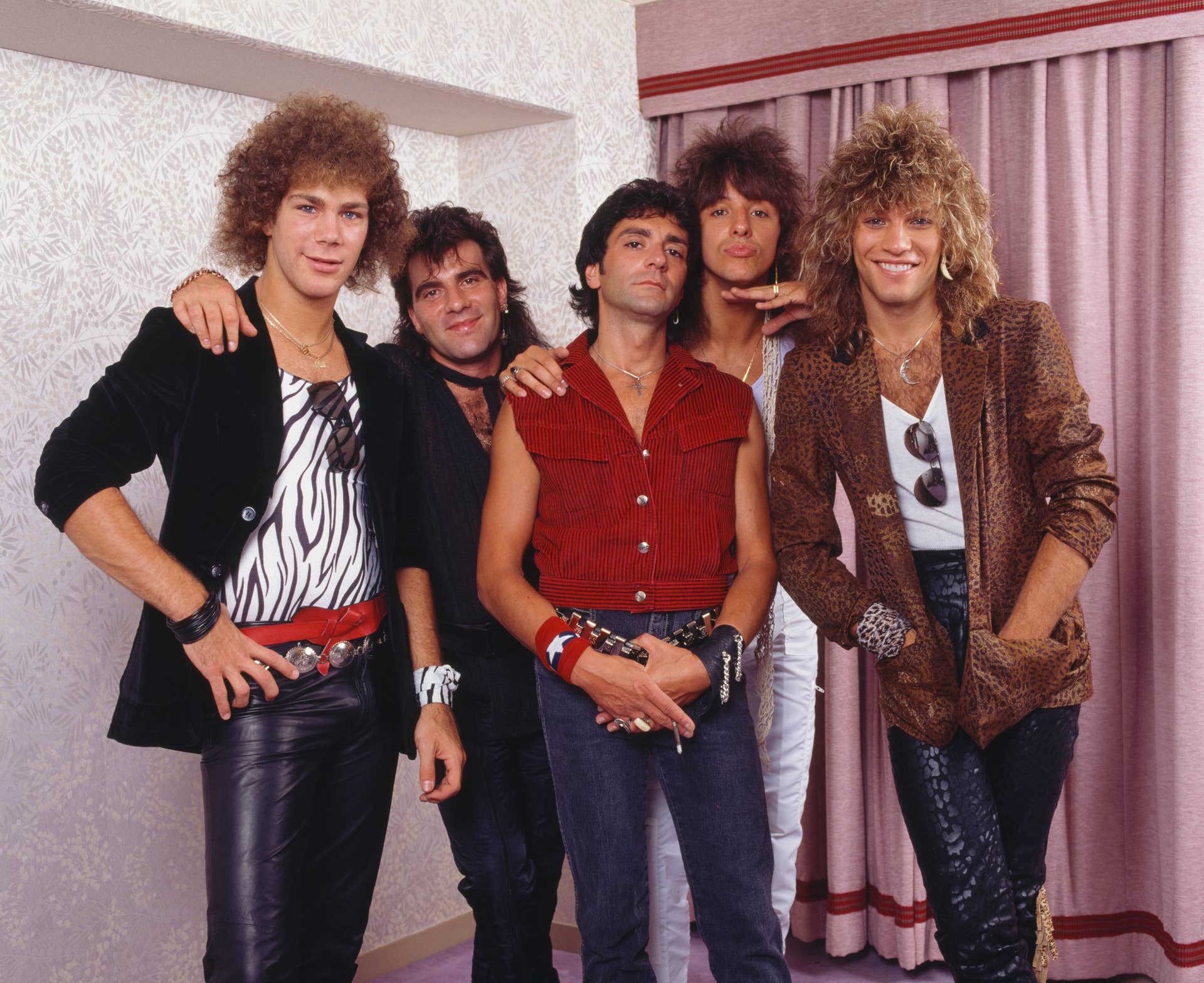
A common misconception is that the members of the band Bon Jovi (Richie Sambora, Tico Torres, David Bryan, and Alec John Such) played on the original recording of "Runaway." In reality, the band did not exist yet.
The recording featured a group of elite session musicians known as The All Star Review. This group included:
- Hugh McDonald: Bass (who would eventually become an official member of Bon Jovi decades later).
- Roy Bittan: Keyboards (famously of Bruce Springsteen’s E Street Band).
- Franke Previte: Background vocals (leader of Franke and the Knockouts).
- Tim Pierce: Guitar.
- Frankie LaRocka: Drums.
The iconic keyboard intro, played by Roy Bittan, is one of the most recognizable riffs in 1980s rock and was instrumental in the song's immediate appeal.
Evolution of the Band and the First Album
After "Runaway" became a hit, Jon Bon Jovi needed a band to tour and record a full-length album. He called his longtime friend David Bryan (then David Rashbaum), who in turn brought in bassist Alec John Such and drummer Tico Torres. Guitarist Richie Sambora auditioned later and solidified the classic lineup.
The band's self-titled debut album, Bon Jovi, was released on January 21, 1984. "Runaway" served as the lead single and the album's opening track.
| Detail | "R2-D2 We Wish You a Merry Christmas" | "Runaway" |
|---|---|---|
| Year Recorded | 1980 | 1981-1982 |
| Release Date | November 1980 | January 1984 (Single) |
| Primary Genre | Holiday / Novelty | Melodic Rock / Synth-Rock |
| Lead Artist | Jon Bon Jovi (as John Bongiovi) | Bon Jovi (The Band) |
| Songwriters | Maury Yeston | Jon Bon Jovi, George Karak |
| Chart Peak | N/A | #39 (Billboard Hot 100) |
| Significance | First professional studio credit | First commercial hit & band debut |
Technical Specifications of the "Runaway" Recording
The production of "Runaway" at The Power Station utilized state-of-the-art technology for the early 80s, contributing to its "big" sound. The studio was famous for its unique acoustic design—specifically the wooden-domed room—which allowed for a natural, booming drum sound that characterized much of the era's rock music.
- Recording Media: 24-track analog tape.
- The Signature Sound: The song relies heavily on the Prophet-5 synthesizer, which provided the haunting, staccato opening riff.
- Vocal Layering: Jon used multiple vocal overdubs to create the "anthem" feel during the chorus, a technique he would refine on later albums like Slippery When Wet.
- Mixing: The track was mixed to emphasize the snare drum and the synth-hook, a departure from the guitar-heavy mix of 70s rock, signaling the shift toward the "hair metal" and "arena rock" aesthetics of the 1980s.
Legacy of Bon Jovi's First Song in 2026
As we look at the musical landscape in 2026, "Runaway" remains a cornerstone of the Bon Jovi catalog. While the band has moved through various styles—from the pop-metal of the 80s to the roots-rock of the 2000s—the "first song" continues to be a staple of their live performances and classic rock radio.
Impact on New Jersey Rock
"Runaway" helped define the "Jersey Sound" alongside Bruce Springsteen and Southside Johnny, though with a more polished, radio-friendly edge. It proved that a local artist could bypass traditional gatekeepers by going directly to radio, a strategy that inspired countless independent artists in the decades that followed.
Persistence in Popular Culture
Even in 2026, the song frequently appears in films, television series, and video game soundtracks. Its inclusion in retro-themed media (like the massive resurgence of 80s culture in the 2020s) has introduced the track to Gen Z and Alpha audiences, ensuring that the band's "first" step remains as relevant as their later multi-platinum hits.
Frequently Asked Questions
Did Richie Sambora play on Bon Jovi's first song?
No. Richie Sambora did not play on the original recording of "Runaway." The guitar work on that track was performed by session musician Tim Pierce. Sambora joined the band after the song had already become a radio hit in New York, replacing the band's original guitarist, Dave Sabo (who later founded Skid Row).
Is "Runaway" considered hair metal?
While it has some elements of what would become hair metal—such as high-pitched vocals and a polished production—"Runaway" is more accurately classified as melodic rock or synth-rock. It was recorded before the "glam" or "hair" aesthetic fully took over the MTV landscape in the mid-to-late 1980s.
What is the rarest Bon Jovi "first" recording?
The rarest official recording is arguably the original 7-inch vinyl of the Star Wars Christmas album or the early WAPP "Homegrown" compilation album that first featured "Runaway." Among collectors, these original pressings are highly valued artifacts of the band's pre-fame era.
Was there a music video for their first song?
Yes, a music video was produced for "Runaway" in 1984. It features a young girl with telekinetic powers (a common sci-fi trope of the time) running from mysterious figures, interspersed with shots of the band performing. Interestingly, this video features the "official" band members (Sambora, Torres, etc.) syncing to the music recorded by the session musicians.
Why did Jon Bon Jovi change his name from John Bongiovi?
The name change was suggested by record executives to make the name easier to pronounce and more marketable as a "band" name rather than a solo artist. It followed the tradition of bands like Van Halen, using the lead singer's surname (slightly modified) as the collective identity.
Practical Recommendation for Fans
If you are interested in exploring the origins of the band, start by listening to the 1984 self-titled album, Bon Jovi. To understand the transition from Jon’s early demos to his professional career, seek out the Power Station Years compilation. This provides a fascinating look at the raw talent and songwriting development that eventually led to "Runaway" and the subsequent global stardom of the band.
Image Gallery