How to Choose a Sex Swing Hook: A Hardware and Safety Guide
To choose a sex swing hook, select overhead hardware explicitly rated for dynamic loads with a Working Load Limit (WLL) of at least 400 to 500 pounds (180 to 225 kg) per mounting point. Prioritize stainless steel multi-bolt ceiling mou...
To choose a sex swing hook, select overhead hardware explicitly rated for dynamic loads with a Working Load Limit (WLL) of at least 400 to 500 pounds (180 to 225 kg) per mounting point. Prioritize stainless steel multi-bolt ceiling mounts, integrated 360-degree ball-bearing swivels, and heavy-duty lag bolts anchored directly into solid structural joists or concrete.
Contents
Choosing hardware for human weight suspension requires balancing physical comfort, structural integrity, and mechanical safety. Sex swings generate complex dynamic forces—combining vertical pulling, lateral swaying, and rotational movement—that differ significantly from static overhead loads like lighting fixtures or light exercise equipment. Installing inadequate hardware or anchoring into improper ceiling material risks structural failure and personal injury.
This guide provides a comprehensive breakdown of load ratings, material standards, ceiling substrate compatibility, and rigging hardware so you can select and install a completely safe overhead hook setup.
Understanding Load Dynamics: Static vs. Dynamic Weight
When evaluating mounting hardware, the single most critical technical distinction is between static load and dynamic load.
- Static Load: The force exerted by a stationary object hanging at rest (e.g., a suspended chair with no movement).
- Dynamic Load: The total force created when a load moves, bounces, rotates, or shifts suddenly. Dynamic motion multiplies the downward and lateral forces exerted on the ceiling anchor.
The Physics of Human Suspension
If two individuals using a sex swing have a combined weight of 350 pounds (158 kg), their static weight is 350 pounds. However, when active motion, swinging, or sudden drops occur, the kinetic energy amplifies the force applied to the ceiling hardware. Dynamic motion can instantly multiply static weight by two to three times, generating temporary peak forces exceeding 800 to 1,000 pounds (360 to 450 kg).
Working Load Limit (WLL) vs. Minimum Breaking Strength (MBS)
Industrial rigging and hardware manufacturing rely on two distinct weight measurements:
- Minimum Breaking Strength (MBS): The point of absolute structural failure, where the metal snaps, bends open, or shears off under laboratory conditions.
- Working Load Limit (WLL): The maximum safe operating load designated by the manufacturer, calculated using a built-in safety factor (typically 4:1 or 5:1 below the MBS).
When choosing a sex swing hook, never rely on the Minimum Breaking Strength. Always select hardware based on its Working Load Limit. A quality hook should have a certified WLL that comfortably exceeds your combined partner weight plus an added safety margin for dynamic motion.
Key Factors When Selecting a Sex Swing Hook
Hardware stores and online retailers offer dozens of hanging brackets, but few are designed out-of-the-box for multi-directional human suspension. Focus on four core criteria when evaluating hooks and ceiling plates.
- Ceiling Joist or Concrete
- Multi-Bolt Ceiling Mount (WLL 500lbs)
- 360-Degree Ball-Bearing Swivel
- Locking Steel Carabiner (24kN)
- Heavy-Duty Extension / Shock Spring
- Sex Swing Rigging
1. Material Composition
The metallurgy of your hardware dictates its ductility, resistance to metal fatigue, and load-bearing performance:
- 304 Stainless Steel: The standard choice for heavy-duty load brackets. It offers high tensile strength, excellent durability, and strong resistance to corrosion.
- 316 Stainless Steel: Marine-grade steel providing superior corrosion resistance, ideal for humid environments or high-moisture rooms.
- Forged Carbon Steel: Exceptionally strong material used in industrial lifting. It must be galvanized or painted to prevent surface rust over time.
- Cast Zinc or Low-Grade Alloy (Avoid): Cheaper decorative or standard utility hardware made of cast iron or low-grade zinc alloys can contain hidden internal air pockets. Under dynamic side-loads, cast metal can snap suddenly without prior bending.
2. Plate Geometry and Fastener Distribution
Single-point eye bolts (a single threaded bolt screwed into wood) concentrate all tension and lateral leverage onto one single point of entry. If lateral swaying occurs, the leverage can bend the exposed shank or loosen the threads inside the wood.
Instead, look for multi-bolt flange plates (diamond, round, or rectangular plates with two to four mounting holes). Multi-bolt plates distribute structural forces across multiple anchor points:
- 2-Bolt Diamond Plates: Designed to align vertically down the centerline of a standard 1.5-inch wide wooden joist.
- 4-Bolt Square/Round Plates: Excellent for concrete ceiling installations or wide exposed timber beams, distributing force evenly in all directions.
3. Integrated Rotational Swivels
Swinging motion introduces torsional (twisting) strain. If a sex swing is suspended from a fixed, non-swiveling hook, turning or rotating inside the swing twists the suspension straps, carabiners, and the mounting screw itself. Unchecked rotational force can back out lag screws or cause metal-on-metal friction lock.
Choose mounting hardware that includes a 360-degree ball-bearing swivel, or add a dedicated industrial swivel component between the ceiling mount and swing straps. Sealed ball-bearing swivels allow continuous rotation under load without binding.
4. Shear vs. Tensile Load Orientation
Ceiling hooks operate primarily under tensile load (pulling straight down along the axis of the fastener). However, lateral movement introduces shear load (pulling sideways perpendicular to the fastener). Ensure your hardware features a thick, solid-welded eyelet or a forged shoulder to withstand continuous angular pulling without metal fatigue.
Matching Hardware to Overhead Substrates
A heavy-duty hook is only as secure as the ceiling material supporting it. Never attempt to mount dynamic suspension hardware without verifying the underlying structural framing.
Solid Wooden Ceiling Joists
Most residential ceilings consist of drywall screwed into dimensional lumber framing (typically 2x6, 2x8, or 2x10 wooden joists spaced 16 or 24 inches apart).
- Fastener Requirement: Use heavy-duty steel lag bolts (lag screws) with a minimum diameter of 3/8 inch (10 mm).
- Penetration Depth: The lag bolt must penetrate at least 3 inches (75 mm) into solid structural timber, excluding the thickness of any drywall or ceiling plaster.
- Pilot Holes: Always pre-drill a pilot hole using a bit slightly smaller than the bolt's inner shank diameter. Drilling without a pilot hole can split the wooden joist, drastically reducing holding strength.
- Centering: The lag bolt must hit the exact horizontal center of the joist. A bolt driven into the edge of a wood stud will break away under dynamic load.
Solid Concrete or Masonry
Concrete ceilings provide exceptional structural anchor points when paired with mechanical masonry anchors.
- Fastener Requirement: Use stainless steel concrete expansion anchors, drop-in sleeve anchors, or structural masonry bolts.
- Installation Note: Drill pilot holes using a hammer drill and masonry bit to the precise depth recommended by the anchor manufacturer. Blow out all dust from the hole before inserting expansion anchors.
- Caution: Do not anchor into hollow concrete blocks or soft mortar joints between bricks.
Substrates to Avoid Completely
Never install sex swing hooks directly into the following materials:
- Hollow Drywall or Plasterboard: Drywall carries no structural strength. Toggle bolts, hollow-wall anchors, and plastic expansion plugs will pull directly out of drywall under human weight.
- Drop-Ceiling Grids / T-Bar Ceilings: Suspended ceiling tiles are non-structural trim held up by thin gauge wires.
- Decorative Beams or Molding: Plastic foam, lightweight faux wood, or decorative fascia boards cannot support dynamic loads.
Hardware Comparison Matrix
The following table compares standard mounting options to help you choose the right hardware configuration based on load capabilities and ceiling structures.
| Hardware Type | Material Grade | Min. Recommended WLL | Compatible Substrate | Dynamic Safety Assessment |
|---|---|---|---|---|
| 4-Bolt Flange Plate with Integrated Swivel | 304 or 316 Stainless Steel | 500+ lbs (225+ kg) | Poured Concrete, Wide Timber Beams | Optimal: Spreads loads, prevents rotational bind, superior shear capacity. |
| 2-Bolt Diamond Pad Eye Plate | 304 Stainless Steel | 400 lbs (180 kg) | Standard 2x Wood Joists (Center-mounted) | High: Fits standard 1.5" joist face safely when lag bolts are centered. |
| Forged Shoulder Eye Bolt (Through-Bolted) | Galvanized / Forged Steel | 450 lbs (200 kg) | Solid Wood Beams (with accessible top side) | High: Highly secure when backed by heavy washers and locknuts on top of beam. |
| Lag Thread Eye Screw (Single Point) | Zinc-Plated Carbon Steel | 150–250 lbs (68–113 kg) | Wood Joists | Low / Unsafe: Risk of thread stripping or bending under dynamic side loads. |
| Standard Hammock Wall Mounts | Stamped Sheet Metal / Low Grade | 200–300 lbs (90–135 kg) | Drywall / Studs | Unsafe: Designed for static inline tension, prone to metal fatigue under movement. |
Essential Connecting Hardware: Carabiners, Springs, and Straps
Selecting the right ceiling hook is step one; connecting your swing to that hook requires equally robust intermediate hardware.
- Ceiling Plate
- Swivel
- Locking Carabiner
- Extension Spring
- Swing Rigging
Locking Carabiners
Carabiners link the swing's fabric or leather harness to the ceiling hook.
- Rating Standard: Choose carabiners certified by standard safety bodies (such as CE or UIAA) stamped with a kilonewton (kN) rating. A rating of 24 kN major axis (roughly 5,395 lbs of static strength) is standard in climbing and rigging.
- Gate Type: Always use screw-lock or auto-locking gates. Open or non-locking wire gates can accidentally brush against straps and open during movement.
- Material: Heavy-duty steel carabiners resist wear better than lightweight aluminum carabiners when clipped directly onto metal ceiling hooks.
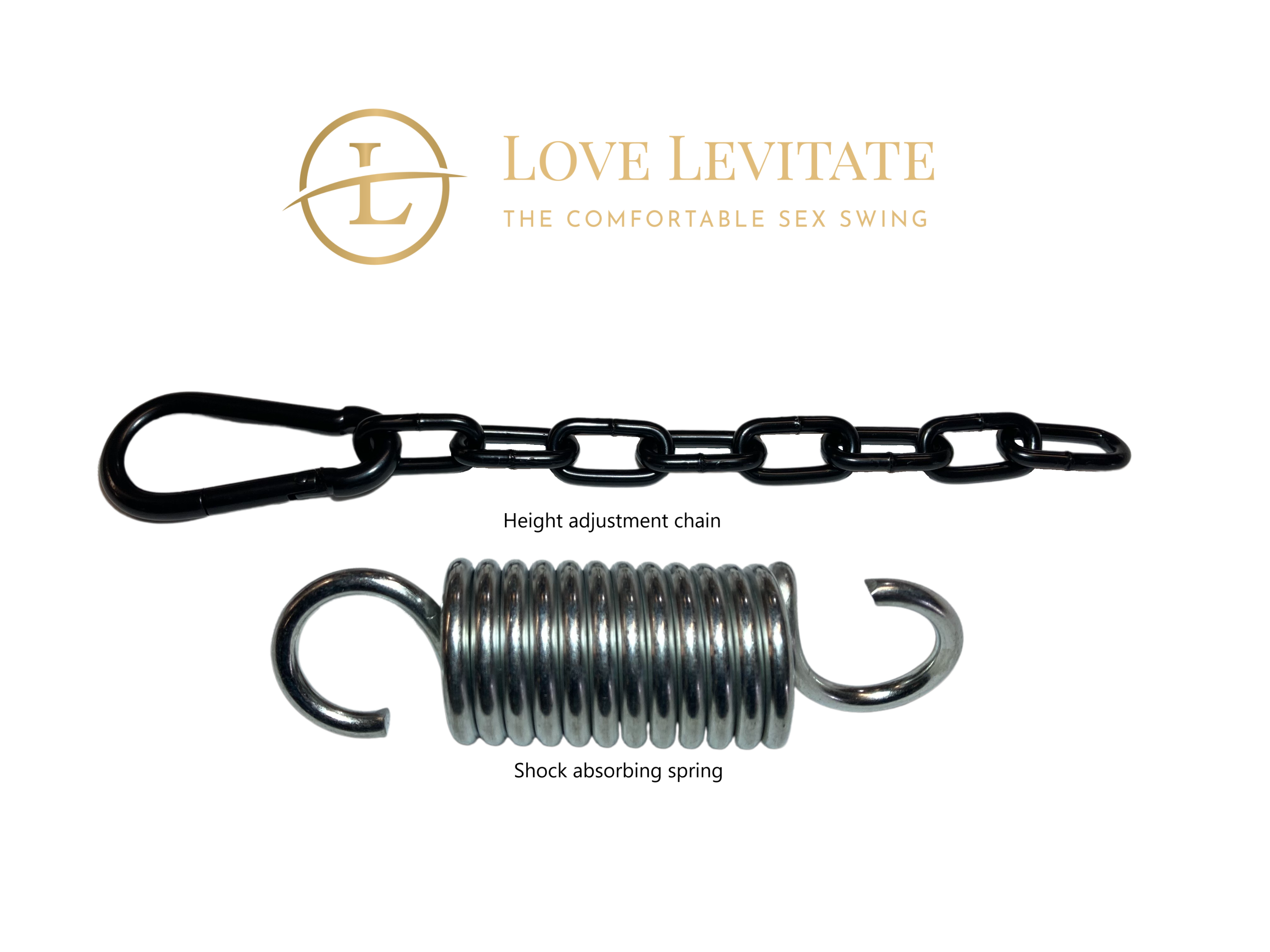
Heavy-Duty Shock Absorption Springs
Installing a specialized steel extension spring between the ceiling mount and swing rigging offers two distinct advantages:
- Impact Dampening: The spring flexes during sudden movements, absorbing shock spikes and reducing peak tension transferred into the ceiling joists.
- User Comfort: Softens rapid downward drops, creating a smooth, buoyant motion during use.
Ensure the spring's rated weight capacity matches your load requirements—overly stiff springs will not compress, while undersized springs will fully bottom out instantly.
Step-by-Step Pre-Purchase and Installation Checklist
Before buying hardware or drilling into your ceiling, execute this step-by-step verification checklist:
Phase 1: Pre-Purchase Verification
- Calculate Total Weight: Combine the static weight of all intended users, then multiply by two to account for dynamic movement. Ensure your target hardware's WLL comfortably exceeds this number.
- Locate Structural Framing: Use a electronic stud finder (preferably a deep-scanning sensor) to locate ceiling joists behind drywall. Map out both edges of the joist to locate its absolute center.
- Measure Clearance: Ensure the chosen location provides a clear 360-degree swing radius away from walls, furniture, glass, and doors.
Phase 2: Installation Requirements
- Drill Accurate Pilot Holes: Use a drill bit matching the root diameter of your lag bolts. Drill perpendicularly straight into the center of the wooden beam.
- Drive Fasteners Flush: Tighten lag bolts using a socket wrench until the plate rests firmly against the ceiling. Do not over-torque, which can strip the wood threads inside the joist.
- Inspect Assembly: Check that all carabiners are locked, springs are seated correctly, and swivels rotate freely without binding.
Phase 3: Mechanical Testing (Non-Human Load Test)
Before subjecting the installation to human weight, perform a graduated load test:
- Static Pull Test: Apply significant downward manual pressure to the mounted hardware.
- Full Weight Suspension Test: Hang a heavy dead-weight object (such as weight plates or sandbags equal to your max partner weight) a few inches off the floor for 15 minutes.
- Visual Inspection: Examine the ceiling surface surrounding the plate for cracking, drywall movement, or loose bolt heads. If any movement is observed, dismount immediately.
Frequently Asked Questions
Can I install a sex swing hook into a ceiling made of drywall?
No. Drywall, sheetrock, and plasterboard possess no structural load-bearing strength. Screws or toggle anchors installed in hollow drywall will instantly tear free under dynamic weight, causing structural damage and severe personal injury. Hardware must always be anchored directly through drywall into solid structural wooden joists or poured concrete.
What is the difference between Working Load Limit (WLL) and Minimum Breaking Strength (MBS)?
Minimum Breaking Strength (MBS) is the absolute force at which hardware snaps or fails in a factory test. Working Load Limit (WLL) is the maximum safe operational limit determined by applying a safety margin (often 4:1 or 5:1) to the breaking strength. You must always select hardware based on WLL to account for sudden dynamic forces during use.
Why is a 360-degree swivel necessary for sex swing ceiling hardware?
A 360-degree swivel allows full rotation without placing torsional (twisting) stress on the mounting plate, lag bolts, or suspension straps. Without a swivel, turning inside the swing applies rotational leverage that can unscrew lag bolts from wooden beams or cause carabiners to twist and bind.
How deep must lag bolts enter a wooden ceiling joist?
Lag bolts should penetrate a minimum of 3 inches (75 mm) directly into solid timber. Note that standard ceiling drywall adds 1/2 inch to 5/8 inch of non-structural thickness, meaning you will generally need 3.5-inch to 4-inch lag bolts to achieve the required 3-inch timber penetration.
Are standard hammock hardware kits safe for sex swings?
Most standard hammock kits are not suitable. Decorative hammock hardware is often designed for static indoor lounging or low-angle inline wall tension, and frequently uses lightweight cast metals or single-screw configurations. Sex swings require multi-point overhead mounts with rated 360-degree swivels and higher dynamic working load limits.
Practical Recommendation
When selecting a sex swing hook, prioritize industrial or climbing-rated mounting hardware over low-cost utility hooks. Purchase a 304 stainless steel multi-bolt ceiling plate featuring a built-in 360-degree ball-bearing swivel and a certified Working Load Limit of at least 500 pounds.
Mount the plate directly into the centered core of a solid wood joist using 3/8-inch steel lag bolts with at least 3 inches of wood thread engagement, or use mechanical expansion anchors in solid concrete. Pair your mount with screw-locking steel carabiners rated to 24 kN and complete a non-human heavy weight load test before use. If you are uncertain about your home's framing, stud location, or structural material, hire a licensed contractor or handyman to complete the anchor installation.
Image Gallery